On this page
What chimney repair covers
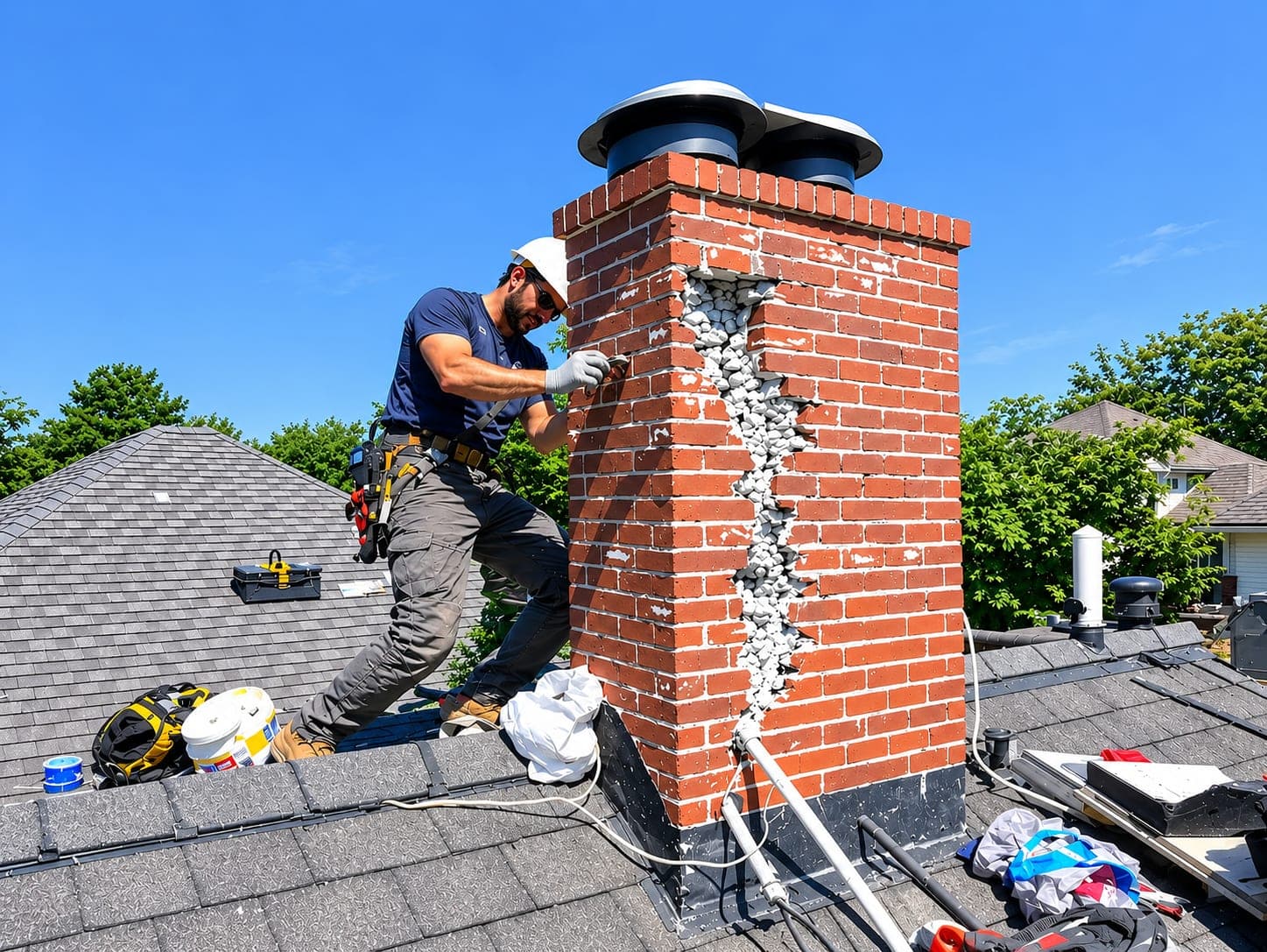
Chimney repair fixes the parts of a chimney that have worn out, cracked or come loose. That includes brick and mortar, the cap on top, the chase cover on a framed chimney, the flue, and the metal flashing where the chimney meets the roof. The goal is a chimney that keeps water out, vents smoke and gases safely, and stays structurally sound.
Most repairs are targeted. We fix the damaged section instead of replacing the whole chimney. When the damage is too widespread for patching, a full chimney rebuild is usually the better choice, and we'll tell you if that's where things stand.
Signs your chimney needs repair
Common warning signs
- Mortar joints that are sandy, recessed or missing
- Cracked, chipped or flaking bricks (spalling)
- White, chalky staining on the brick (efflorescence), which points to water moving through the masonry
- A cap that is rusted, bent, loose or missing
- A rusted or sagging chase cover on a framed chimney
- Water stains on the ceiling or wall next to the chimney
- Pieces of brick, mortar or tile in the firebox
- A chimney that leans or pulls away from the house
- Smoke that drifts into the room instead of drawing up the flue
If the fireplace hasn't been used or looked at in a while and nothing seems obviously broken, start with a chimney inspection rather than repair. If the main issue is soot, creosote or a smoky smell, a chimney sweep is the right first step.
What the visit involves, step by step
How a repair visit works
Look at the chimney
We check the outside masonry, cap, crown, chase cover and flashing, then the firebox, damper and flue from inside.
Explain what we found
You get a plain explanation of what's damaged, what's causing it, and what can wait versus what can't.
Free estimate
We write up the repair we recommend so you can decide before any work starts.
Do the repair
We protect the area around the fireplace and the roof, make the repair, and clean up the work area.
Walk through the finished work
We show you what was repaired and point out anything worth keeping an eye on.
Parts, materials and fuel types we work on
| Component | What goes wrong | Typical repair |
|---|---|---|
| Brick | Cracking, spalling, loose units | Replace damaged bricks to match |
| Mortar joints | Erosion, cracking, gaps | Grind out and repoint |
| Crown | Cracks that let water into the masonry | Patch, seal or re-pour |
| Cap | Rust, bent mesh, missing cap | Repair or replace |
| Chase cover | Rust, pooling water, sagging | Replace with a properly sloped cover |
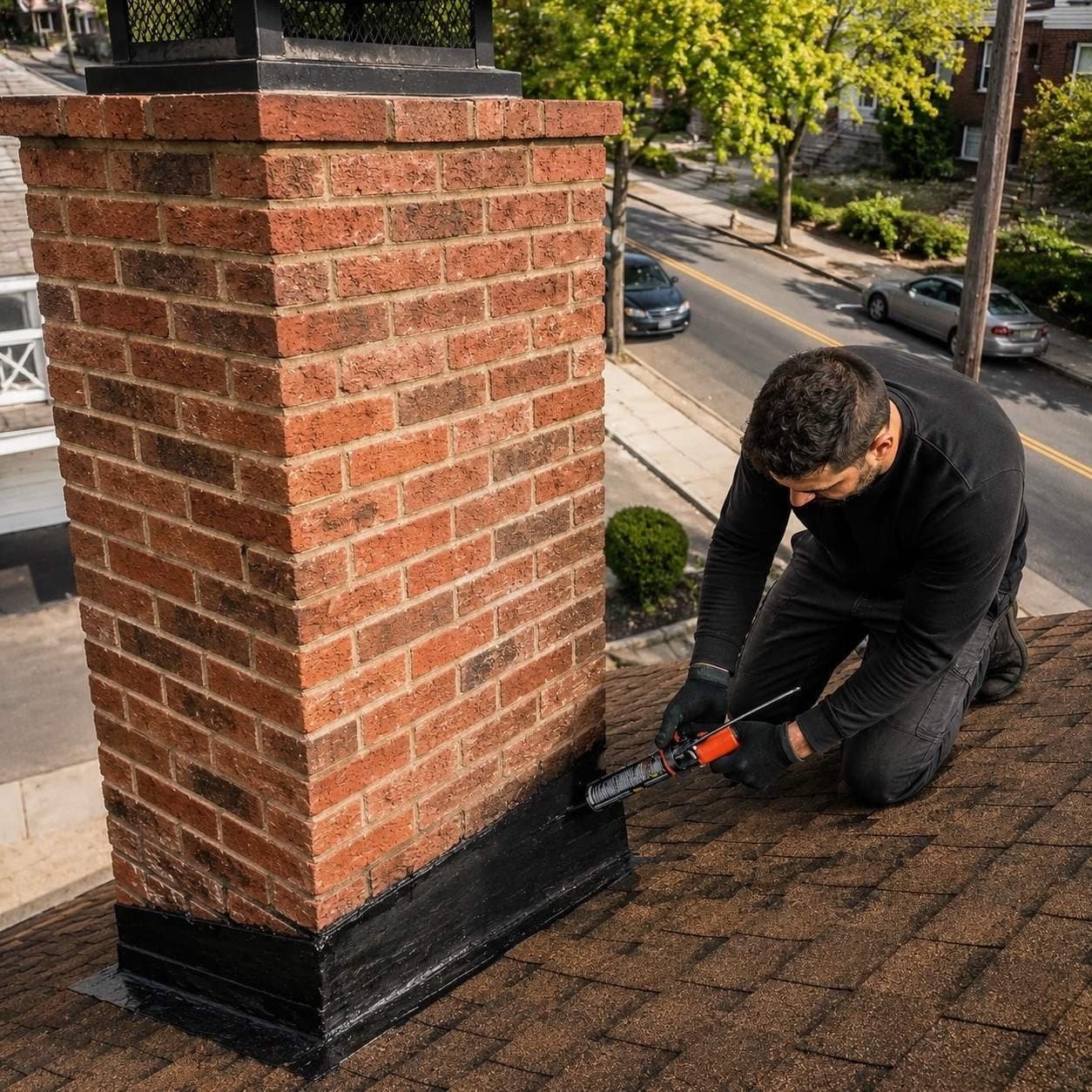
| Flashing | Lifted or rusted metal, failed sealant | Reseal or replace |
| Flue and liner | Cracked tiles, gaps, deterioration | Liner repair or new liner |
| Damper | Stuck, rusted or not sealing | Repair or replace |
We work on masonry chimneys and on prefab chimneys with framed chases, serving wood-burning fireplaces, wood stoves and gas appliances. Gas fireplace and gas appliance work is offered, and we work on all major fireplace brands. Related jobs such as chimney liner repair, chimney crown repair, chimney leak repair, chimney flashing repair and chimney damper repair are all work a technician handles.
Chimney cap repair
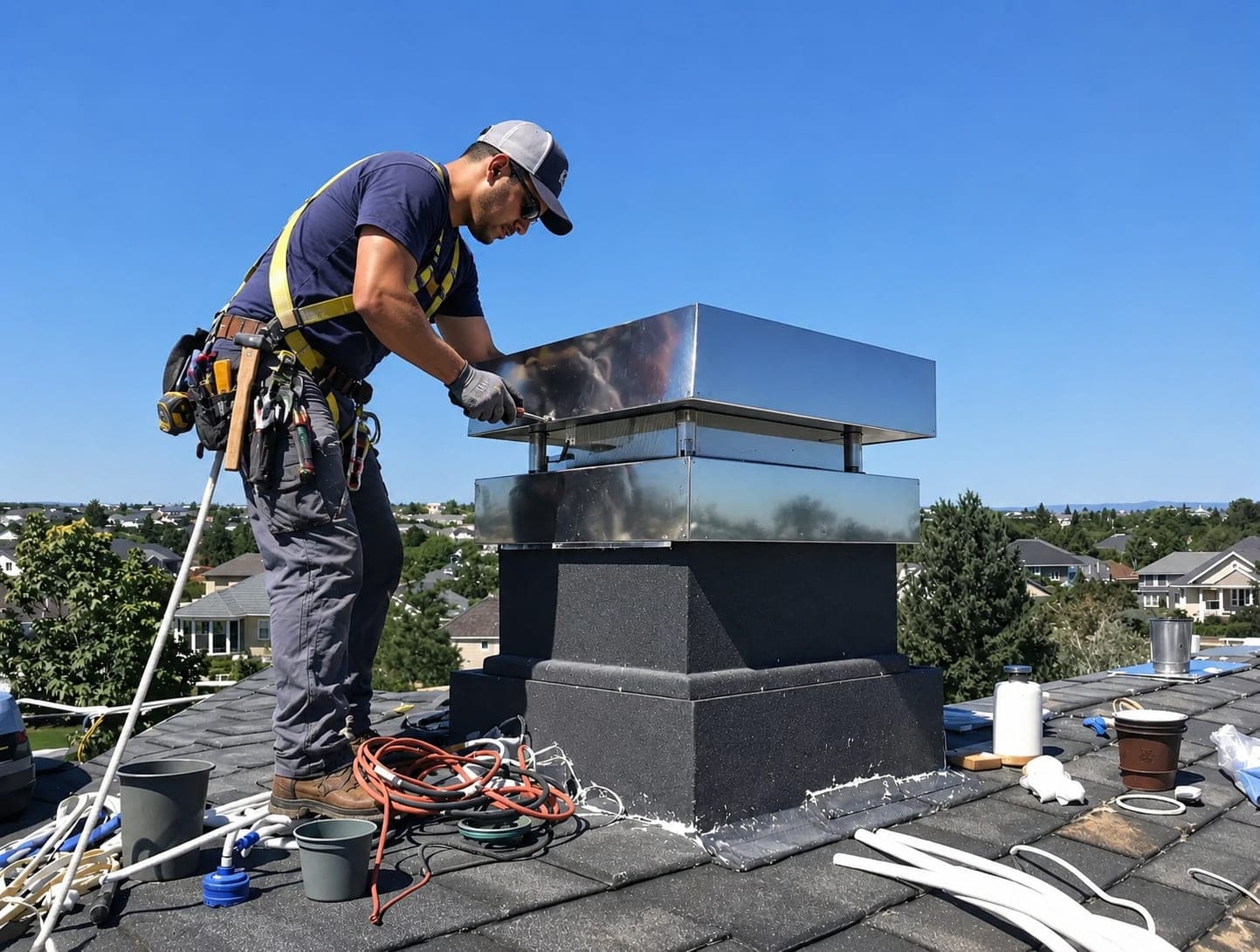
The cap keeps rain, animals and debris out of the flue. Caps rust, mesh tears, and fasteners loosen until the cap shifts or blows off. A cap with minor damage can often be refastened or have its screen repaired. A cap that is badly rusted or the wrong size for the flue is usually better replaced.
On framed chimneys, the cap often sits on a chase cover, the metal sheet that seals the top of the chase. If you're unsure which part you actually have, our guide on the difference between a chimney cap and a chase cover explains it. A rusted or leaking cover is handled through our chase cover replacement service.
Brick chimney repair
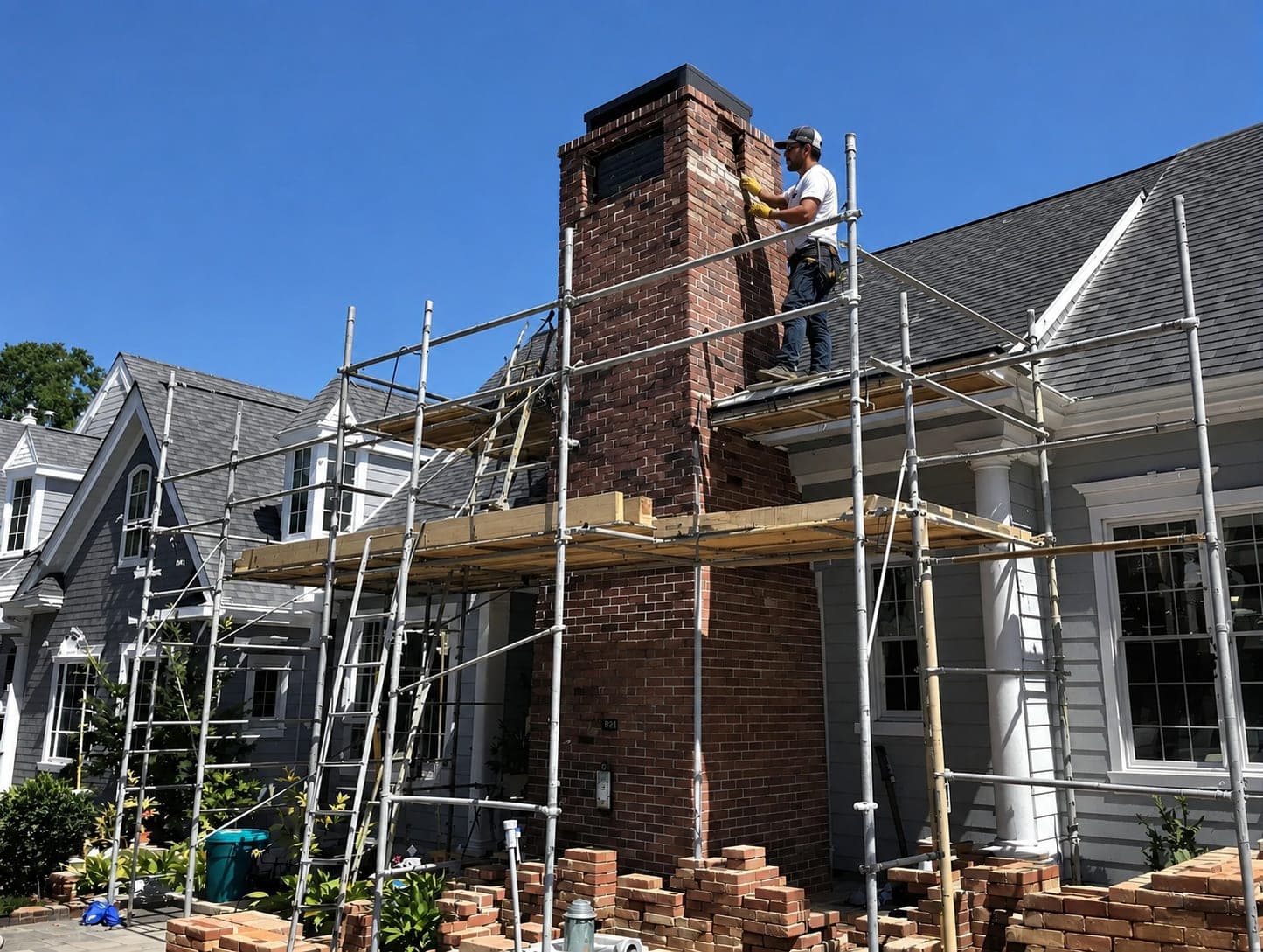
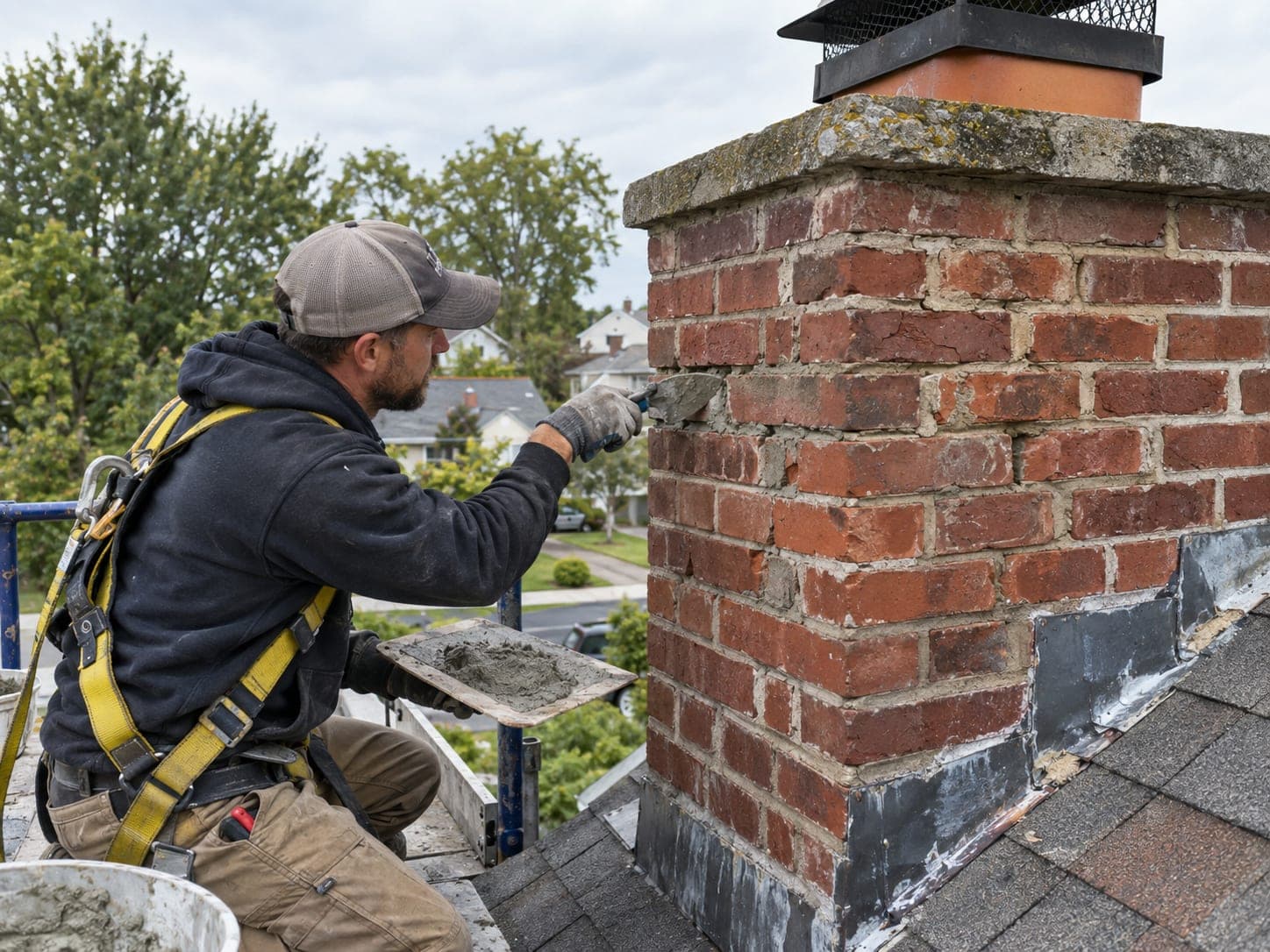
Brick fails mostly because of water. Moisture soaks in, freezes, expands and pushes the face off the brick. Once the hard outer face is gone, the softer inside wears quickly. We remove damaged bricks and set replacements that match the size and color as closely as possible, then point the surrounding joints so the new brick is firmly tied into the wall.
Replacing brick only lasts if the water source is fixed too, so we look at the crown, cap and flashing at the same time. Chimney waterproofing can be added after repairs to help the masonry shed water.
Repairing chimney mortar
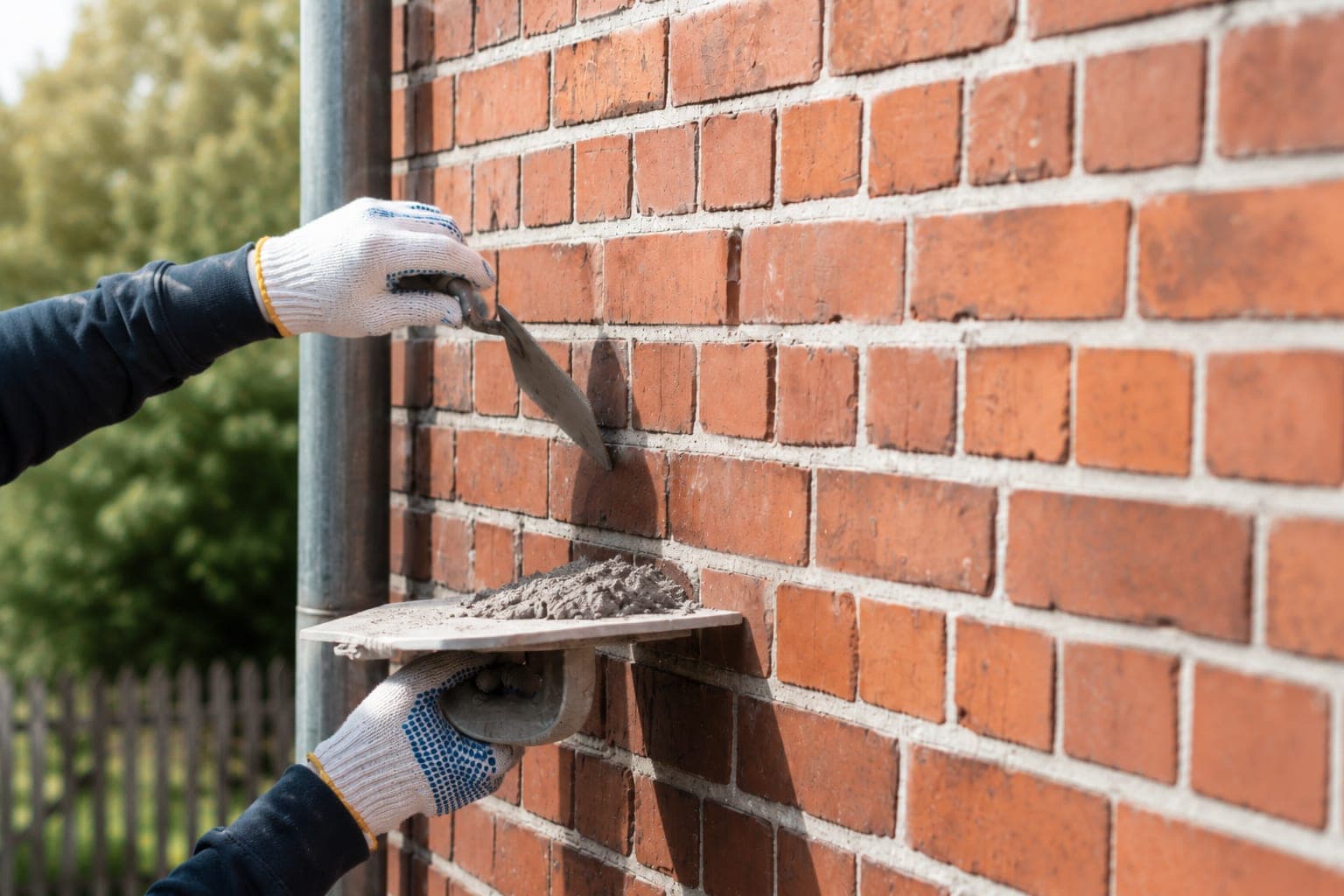
Mortar joints are meant to wear out before the bricks do, so mortar is often the first thing to need work. When joints are cracked, sandy or recessed, we grind out the old mortar to a consistent depth and pack in fresh mortar. This is called tuckpointing or repointing, and our chimney tuckpointing service covers it in detail.
Repointing makes sense when the bricks are mostly sound and the chimney is straight. If bricks are loose throughout or the chimney leans, the repair may need to go further. Our guide comparing when to rebuild versus tuckpoint walks through that decision.
Chimney restoration and how it relates to repair
Chimney restoration is a broader job than a single repair. It usually combines several repairs, such as repointing, brick replacement, a new crown, a new cap and resealed flashing, to bring an older chimney back to sound, watertight condition. Restoration can also include the firebox and smoke chamber inside. We recommend restoration when several components are failing at once and fixing them one at a time would mean more visits and leave weak spots in between.
When to stop using the fireplace
If you see falling brick or mortar, smoke entering the room, or pieces of flue tile in the firebox, stop using the fireplace until it has been looked at. A damaged flue can let heat and combustion gases reach parts of the house they shouldn't.
Booking your chimney repair
Get in touch to request an estimate. Estimates are free. Same-day visits are available where the schedule allows. We also handle commercial and property-manager work, and we offer chimney repair for homes in Oak Park and chimney repair in Evanston as well as across Chicago.