Chimney repair in brief
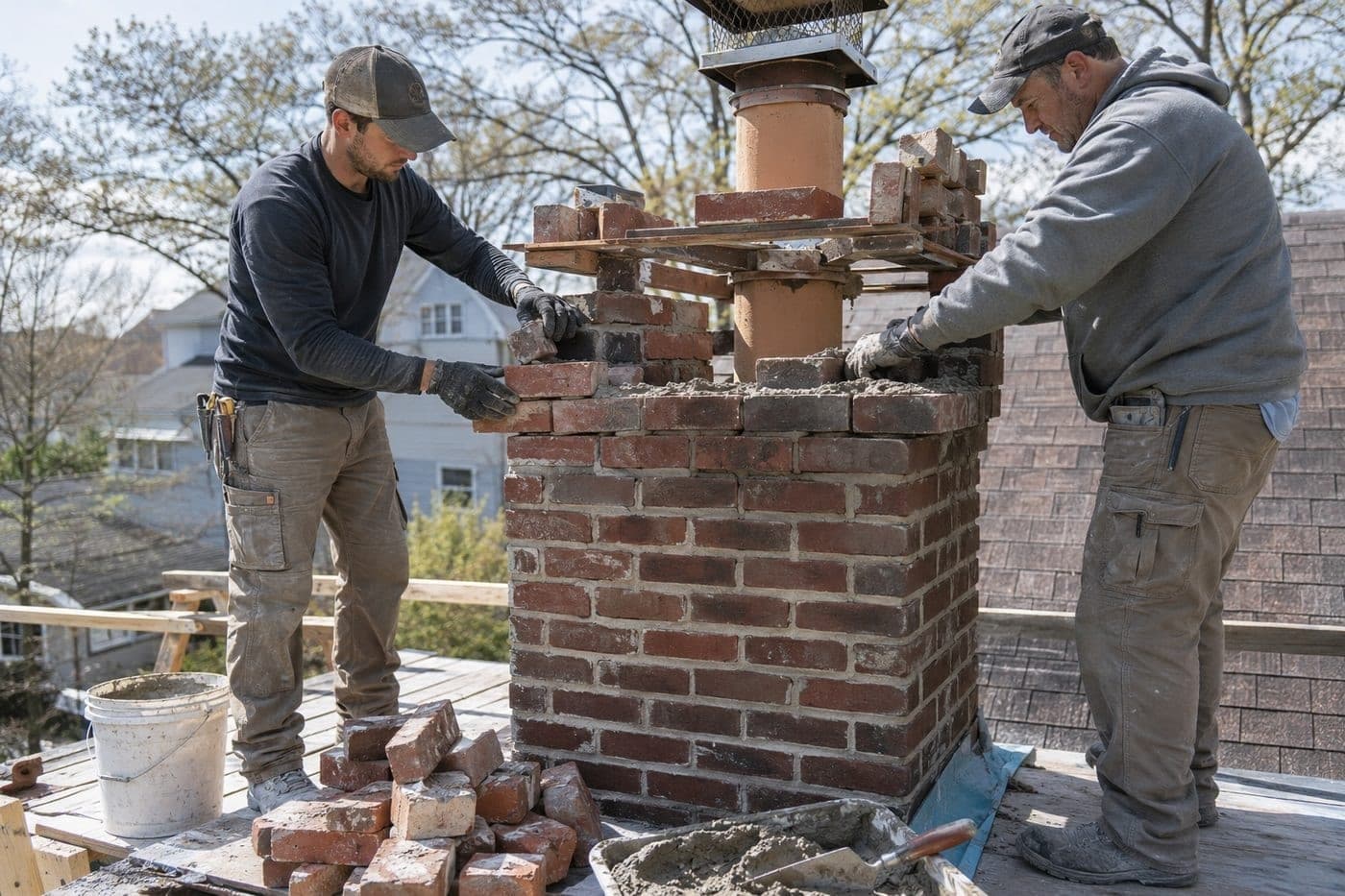
Chimney repair covers the parts of a chimney that wear out or break: brick and mortar joints, the crown that sheds water off the top, flashing where the chimney meets the roof, caps and chase covers, dampers and flue liners. The goal is to stop damage before it spreads into the roof, walls or firebox. For the full scope, the process and what each repair involves, read how chimney repair works.
What Evanston's housing age means for chimney repair
In Evanston, 40.3% of housing units were built before 1940 and 29.9% between 1940 and 1969; the median year built is 1953 (CMAP Community Data Snapshot, American Community Survey 2020-2024 five-year estimates).
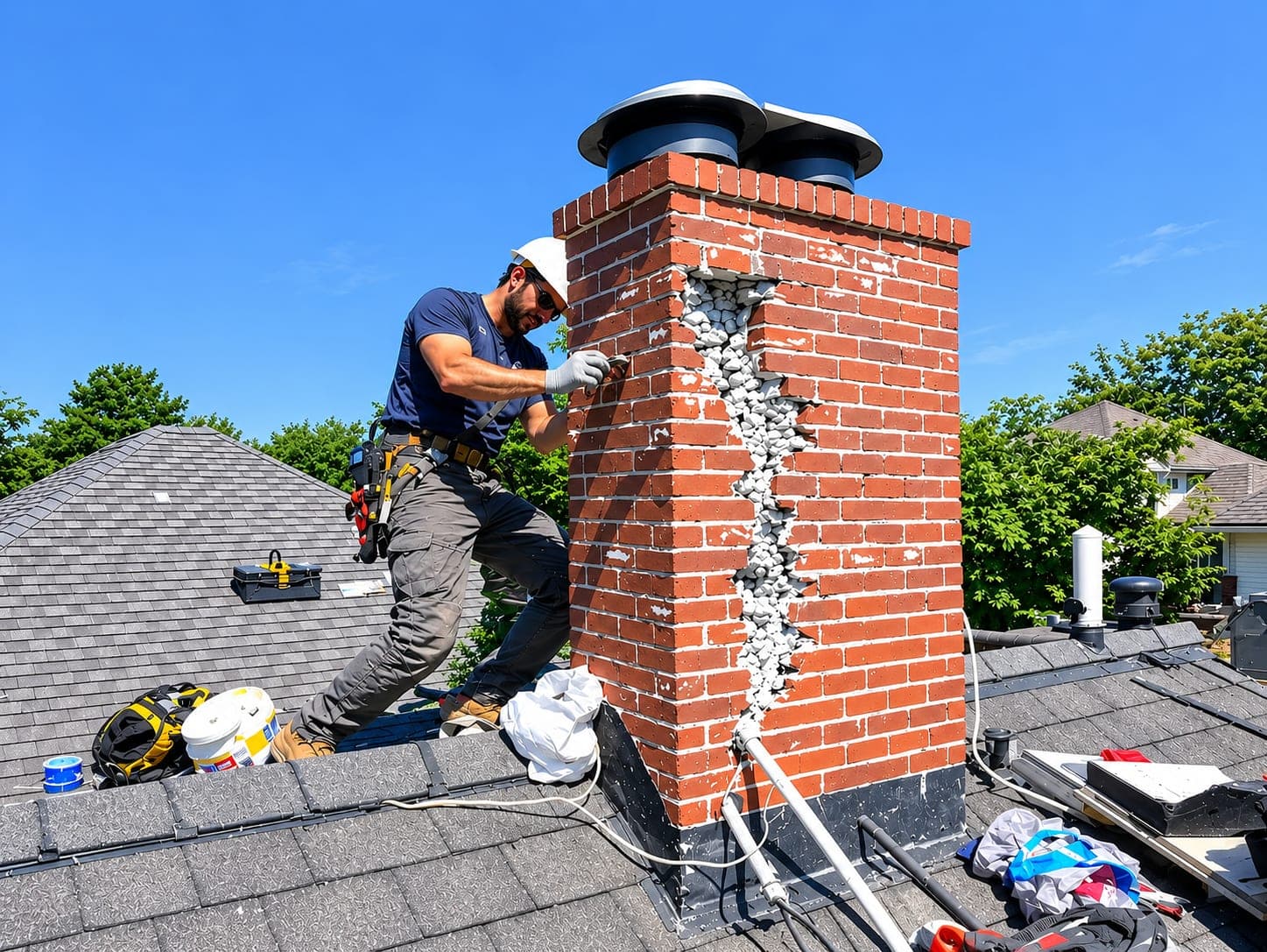
Age by itself doesn't mean a chimney is failing, but it does change what a repair visit looks for. In general, older masonry chimneys have had more years of weather working on their mortar joints and crowns, and many were built with materials and details that differ from current practice. On an older chimney, a repair usually starts with these checks:
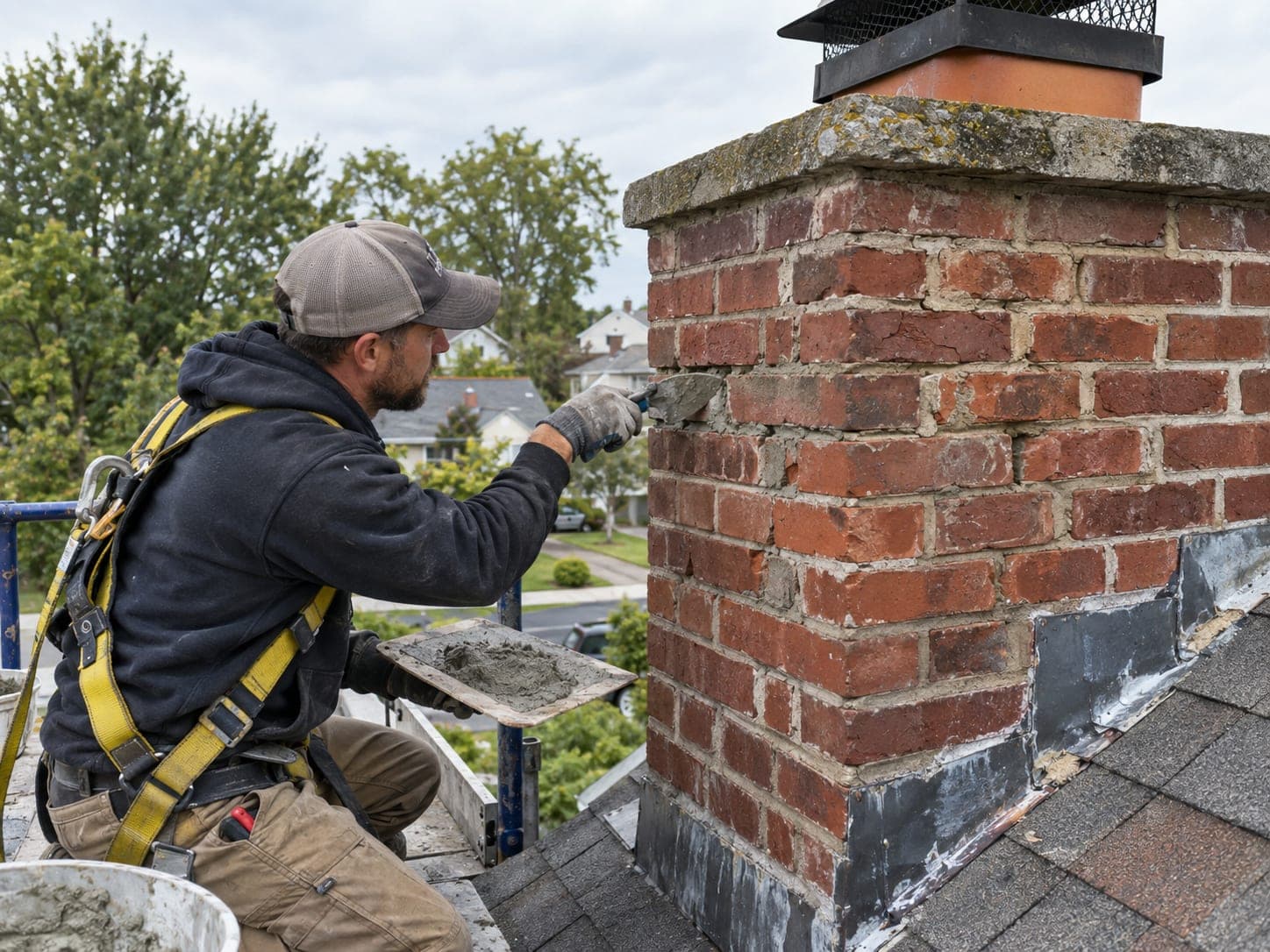
- Mortar joints: whether they are eroded or cracked enough to need brick chimney repair and repointing, and what mortar suits the existing brick.
- The crown: whether it is cracked, crumbling or missing an overhang, which lets water run down the face of the chimney.
- Flashing: whether the seal at the roofline has pulled away, a common source of leaks into ceilings and attics.
- The flue: whether the liner is cracked, missing sections or absent, which calls for flue repair or a new liner before the fireplace is used again.
- The top: whether the cap or chase cover is rusted, damaged or missing. If you aren't sure which one your chimney has, read our guide to chimney cap vs chase cover.
Historic preservation rules and chimney work
In Evanston, a Certificate of Appropriateness from the Historic Preservation Commission is required to alter landmark buildings and properties in historic districts when a permit is required and the work is visible from the public way (street, alley, sidewalk). Evanston treats repair or replacement with no change in design, materials, or general appearance as routine maintenance that does not need an issued Certificate of Appropriateness, but a Certificate of Appropriateness application must still be submitted with the permit submission (source: Historic Preservation - City of Evanston (Planning & Zoning)).
Who this applies to
The rule covers homes that are designated landmarks or sit inside a historic district, and only when the work needs a permit and can be seen from the street, alley or sidewalk. A chimney rising above the roofline is often visible from at least one of those, so it's worth confirming your property's status before repair work is scheduled.
What it changes about the repair
The key line is between matching and changing. A repair that keeps the same design, materials and general appearance counts as routine maintenance, so no issued certificate is needed, though the application still goes in with the permit submission. A repair that changes how the chimney looks, such as a different brick, a new cap style or a rebuilt top with a new profile, moves into the territory that needs an issued certificate.
Tell us at the estimate
If your home is a landmark or sits in a historic district, mention it when you request an estimate. That lets the repair plan be written around matching materials and appearance, and it tells you up front which kind of work you are dealing with.
When repair is the right call, and when it isn't
Repair fits when something is physically damaged: water stains near the chimney, loose or spalling brick, crumbling mortar, a cracked crown, a rusted chase cover or a damper that won't seal. If the fireplace is simply drafting poorly, smells of soot or hasn't been used in years, cleaning often comes first, and a chimney sweep for homes in Evanston is the better starting point. Cleaning also gives a clearer view of the flue, so any repair need shows up more plainly afterward.
Planning a repair
Same-day visits are available when the schedule allows. For everything else we do for homes in the area, from inspections to fireplace and dryer vent work, visit our main page for Evanston.
Sources (2)
The sources of the Evanston facts on this page.
- 1CMAP Community Data Snapshot | Evanston
- 2Historic Preservation - City of Evanston (Planning & Zoning)