On this page
- What dryer vent cleaning involves
- Signs it's time for a dryer vent cleaning
- Dryer vent inspection and airflow testing
- What happens during the visit
- Dryer vent blockage removal
- Roof dryer vent cleaning
- Dryer vent cleaning for rentals and property managers
- Safety and upkeep between cleanings
- Common FAQs about a dryer vent clog
- Booking a dryer vent cleaning
What dryer vent cleaning involves
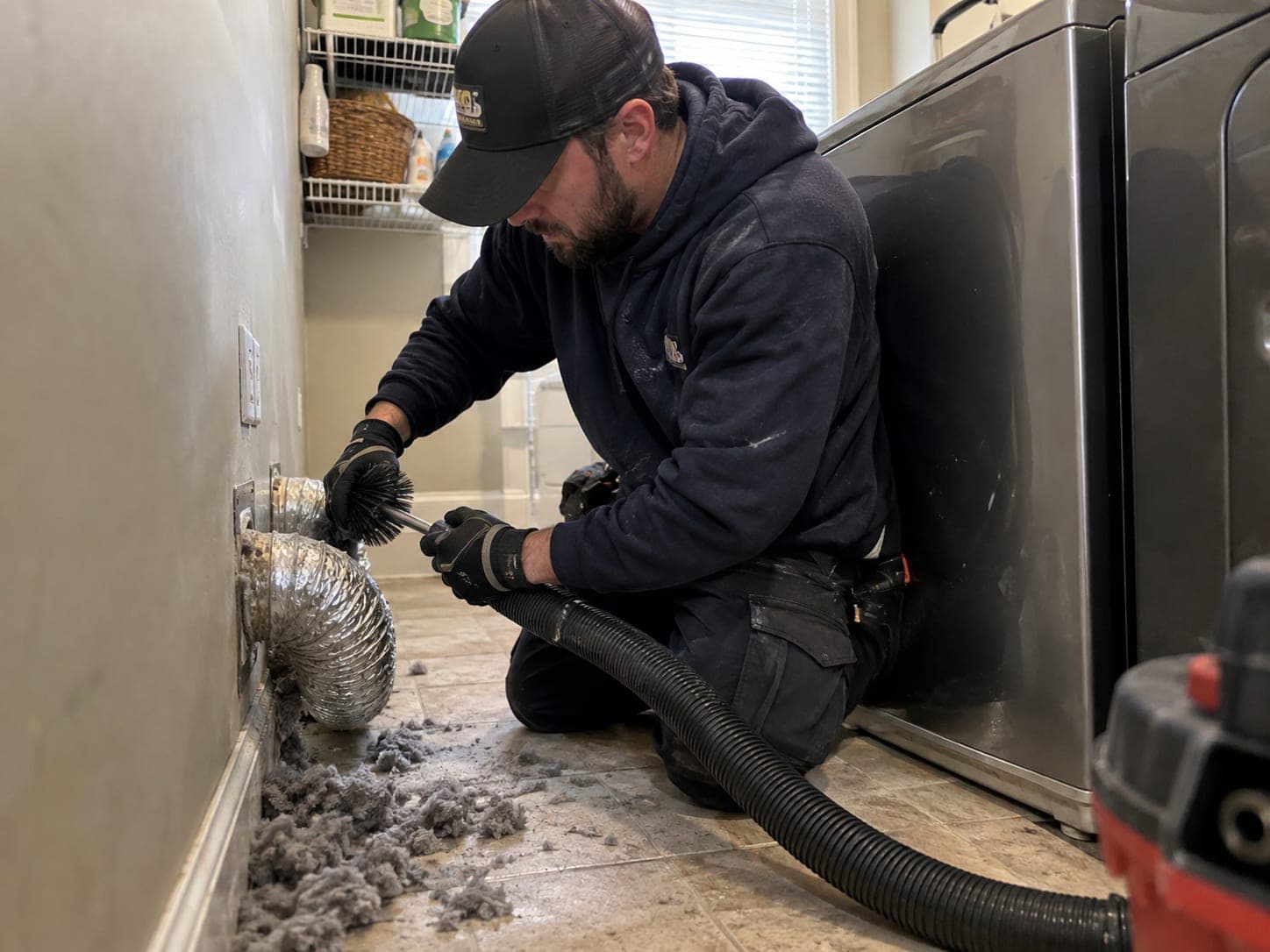
Every load pushes warm, damp air and fine lint out of the dryer, through a duct, and out of the house. The lint screen catches most of it, but not all. What gets past settles along the duct walls, packs into bends and collects at the exterior hood. Dryer vent cleaning removes that buildup along the entire vent run, not just the few feet you can reach behind the machine.
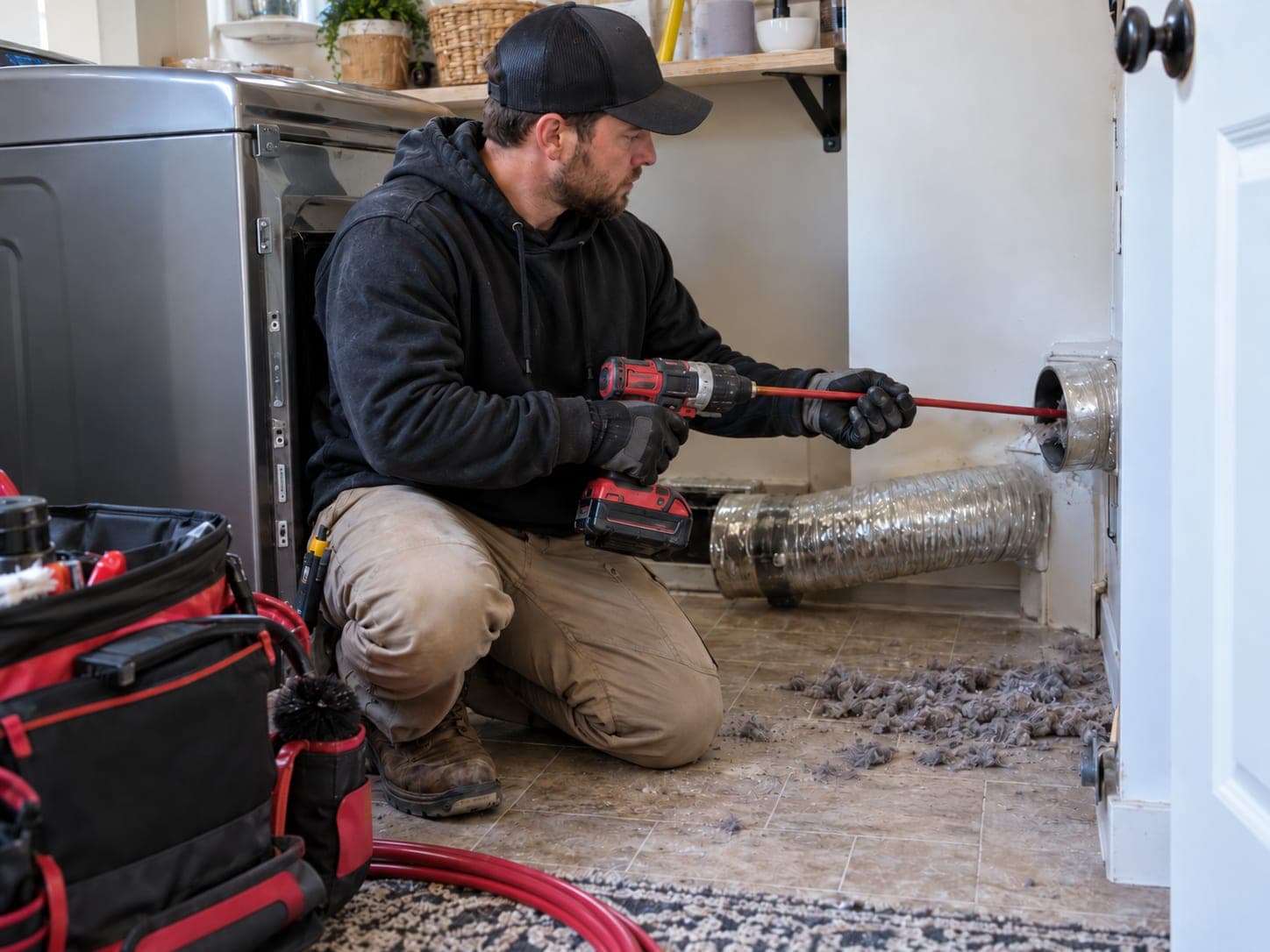
A thorough dryer vent sweep covers the connector behind the dryer, every straight section and elbow, and the termination outside, whether that is a wall hood or a roof cap. The goal is simple: let the dryer move air the way it was built to, so it dries faster and runs cooler.
The parts of the vent we clean
- The transition duct, the short connector between the back of the dryer and the wall
- The main duct run through walls, floors or ceilings
- Elbows and turns, where lint tends to pack tight
- The exterior wall hood or roof cap, including its flap or damper
- Gas and electric dryers alike. We work on all major brands.
Signs it's time for a dryer vent cleaning
Common signs of a restricted vent
- A normal load needs more than one cycle to dry
- Clothes come out unusually hot to the touch
- The dryer, or the laundry room, gets hotter than it used to
- A burning or scorched smell while the dryer runs
- Lint collecting around the dryer door, behind the machine or around the outside hood
- The flap on the outside hood barely moves, or doesn't open, while the dryer is running
- The dryer shuts itself off partway through a cycle
Most of these point to a clogged dryer vent, and cleaning is usually the fix. If the duct is crushed, torn, disconnected or made of thin plastic foil, cleaning alone won't solve it, and dryer vent repair is the right job.
Dryer vent inspection and airflow testing
Before we clean, we look at how the vent is put together: the duct material, how the sections connect, the length of the run, the number of turns, and where it exits the house. We check airflow at the termination before cleaning and again afterward, so you can tell whether the vent is actually clear. If something we find needs more than cleaning, we explain what it is and why.
What happens during the visit
A typical dryer vent cleaning, step by step
Look over the setup
We find where the vent runs and where it ends, and note the duct type, the turns and any damage we can see.
Check airflow first
We measure how well air leaves the termination with the dryer running, which gives a baseline for comparison.
Disconnect and clean the connector
We pull the dryer out, disconnect the transition duct, and clear lint from the duct and the dryer's exhaust outlet. Unplug the dryer first, and on a gas dryer turn off its gas valve.
Sweep the full run
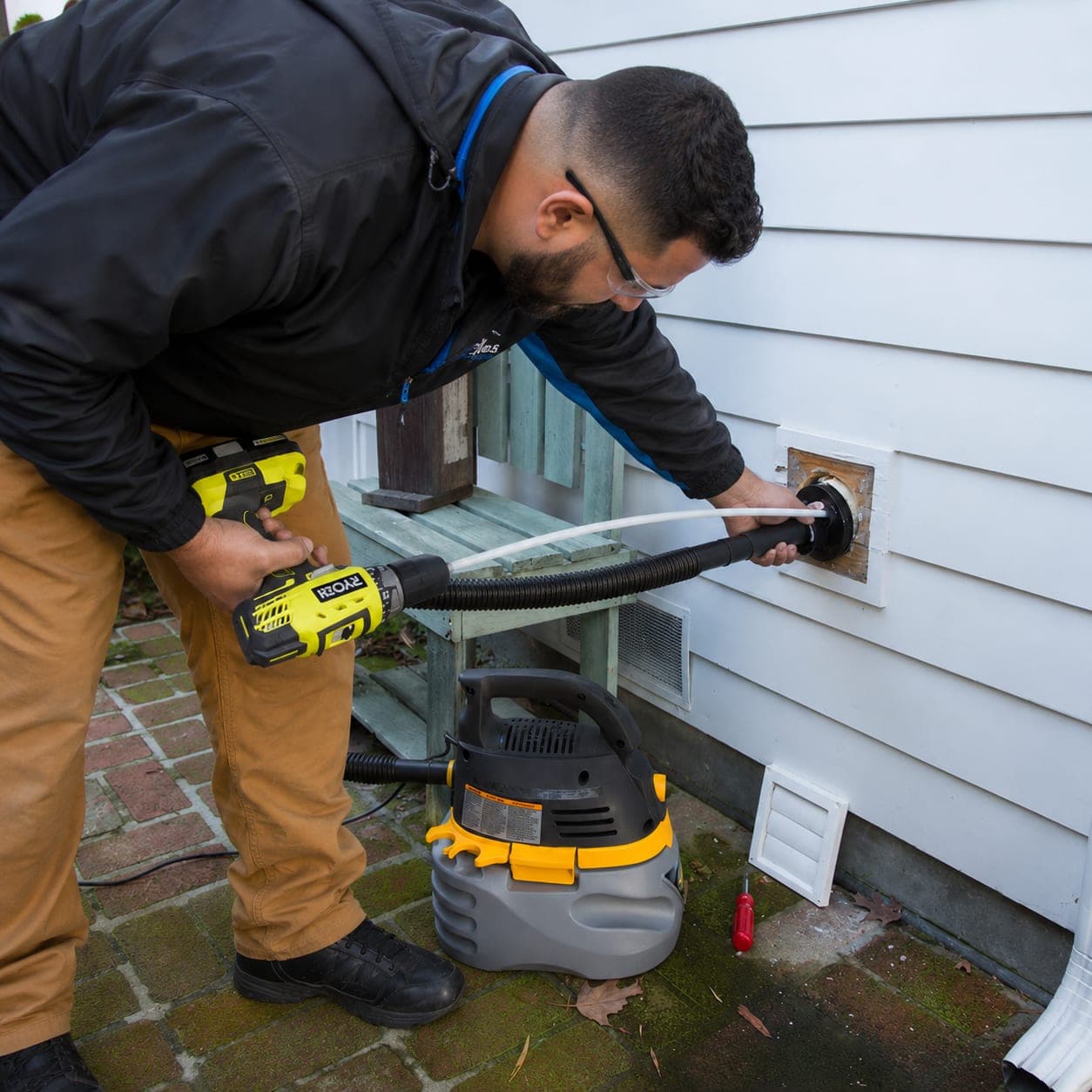
We brush the duct end to end and collect the loosened lint so it isn't pushed into a bend or left inside the wall.
Clear the termination
We clean the wall hood or roof cap and make sure the flap opens and closes freely.
Reconnect and retest
We reconnect the dryer, run it, and check airflow again at the outside opening.
Walk you through it
We tell you what we found, including crushed sections, loose joints or a damaged cover, and what each would take to fix.
Dryer vent blockage removal
Some vents are more than dusty. A clump of lint can break loose and wedge at an elbow. A bird or rodent can build a nest behind a broken flap. A long run can slowly pack solid until almost no air gets through. Blockage removal clears these obstructions, and then we check the full run to make sure nothing else is behind them. If the outside cover is cracked or its flap is stuck open, we can replace it so animals and debris stay out.
Roof dryer vent cleaning
When a dryer vents through the roof, the air has to travel upward, and lint tends to drop back and settle along the way. Roof caps also clog at the top, especially caps fitted with a screen. Screens catch lint and are generally not recommended on dryer exhaust. Roof dryer vent cleaning means working from both ends: clearing the run from inside and cleaning the cap on the roof. Because roof access is involved, this is one part of the job that homeowners are better off not doing themselves.
Dryer vent cleaning for rentals and property managers
Commercial and property-manager work is offered. In rental homes and multi-unit buildings, tenants rarely know when a vent was last cleaned, and a clog in one unit often goes unnoticed until a dryer starts overheating. We can clean the vents in several units during one visit and tell you what we found in each one, including any duct that needs more than cleaning. That makes it easier to plan upkeep around tenant turnover or a regular maintenance schedule.
Safety and upkeep between cleanings
Lint burns easily, and a restricted vent holds heat inside the dryer and the duct. That combination is why vent upkeep matters even when the dryer still seems to work. A few general habits help keep the vent clear for longer:
- Empty the lint screen before or after every load
- Wash the lint screen now and then if dryer sheets leave a film on it
- Use rigid or semi-rigid metal duct, not plastic or thin foil, and keep the connector behind the dryer free of kinks
- Check that the outside flap opens when the dryer runs and closes when it stops
- Keep the area around and behind the dryer free of stored items and lint
Gas dryers and where the vent ends
A gas dryer's exhaust carries combustion gases, including carbon monoxide, along with the lint. A blocked vent can push that exhaust back into the house, so a working carbon monoxide alarm near the laundry area is a good idea for any home with a gas dryer. As a general rule, a dryer vent should run on its own all the way outdoors. It should not end in an attic, crawl space or garage, and it should never tie into a chimney or furnace flue.
Smell burning from the dryer?
Turn the dryer off and leave it off until the vent has been checked. Emergency calls are accepted.
Common FAQs about a dryer vent clog
Can I keep running the dryer while the vent is clogged?
No, not if you can avoid it. A clogged vent traps heat and lint together, and each extra load makes the restriction worse. Hang laundry to dry or hold off on drying until the vent has been cleared.
What usually causes a dryer vent clog?
Lint building up over time is the most common cause, and long runs, extra turns and crushed flexible duct make it build faster. Nests at the outside hood and screens on the termination are other frequent culprits. There is more detail on what causes a clogged dryer vent and how each cause shows up.
Will cleaning fix a vent that keeps clogging quickly?
Sometimes. If the vent clogs again soon after a cleaning, the cause is usually the route itself: too long, too many turns, or a long climb to the roof. In that case dryer vent rerouting and relocation to a shorter, straighter path is often the lasting fix.
Booking a dryer vent cleaning
Call or request an estimate, and tell us where the dryer sits, whether it's gas or electric, and where the vent exits the house, if you know.
Free estimates.
Get in touch to schedule dryer vent cleaning, blockage removal or roof vent service for your home or rental property.
Related work covered on this page
- Dryer Vent Inspection & Airflow Testing
- Dryer Vent Lint Removal
- Dryer Vent Blockage Removal
- Roof Dryer Vent Cleaning
- Dryer Vent Cleaning for Rentals & Property Managers