On this page
What dryer vent rerouting & relocation involves
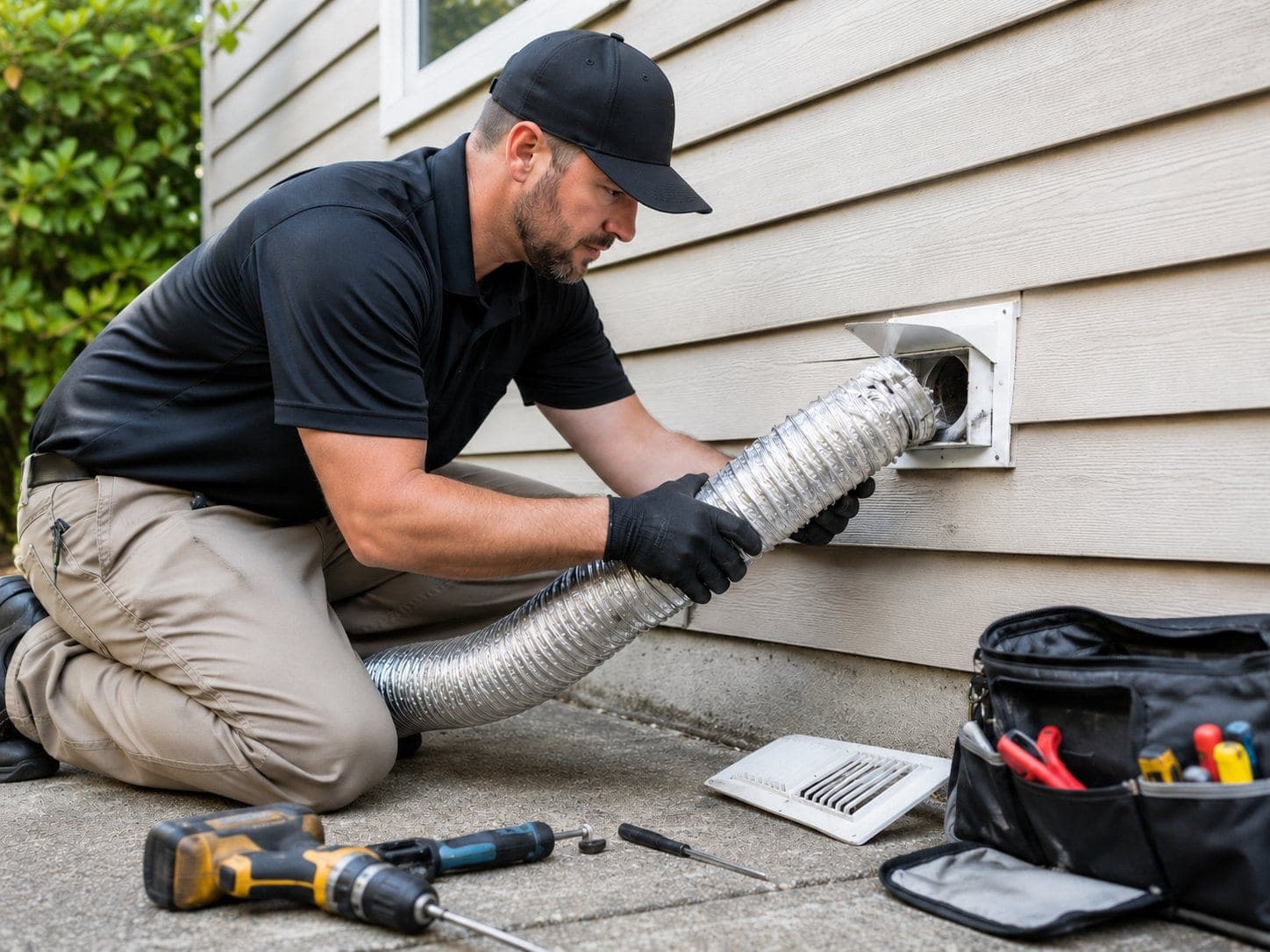
Rerouting changes the path the duct takes between the dryer and the outside. Relocation moves the exit point to a different wall or to the roof, or moves the whole vent to follow a dryer into a new room. Either way, the job usually means removing old duct, opening a new path through framing, running new duct, sealing every joint and fitting a new exterior hood.
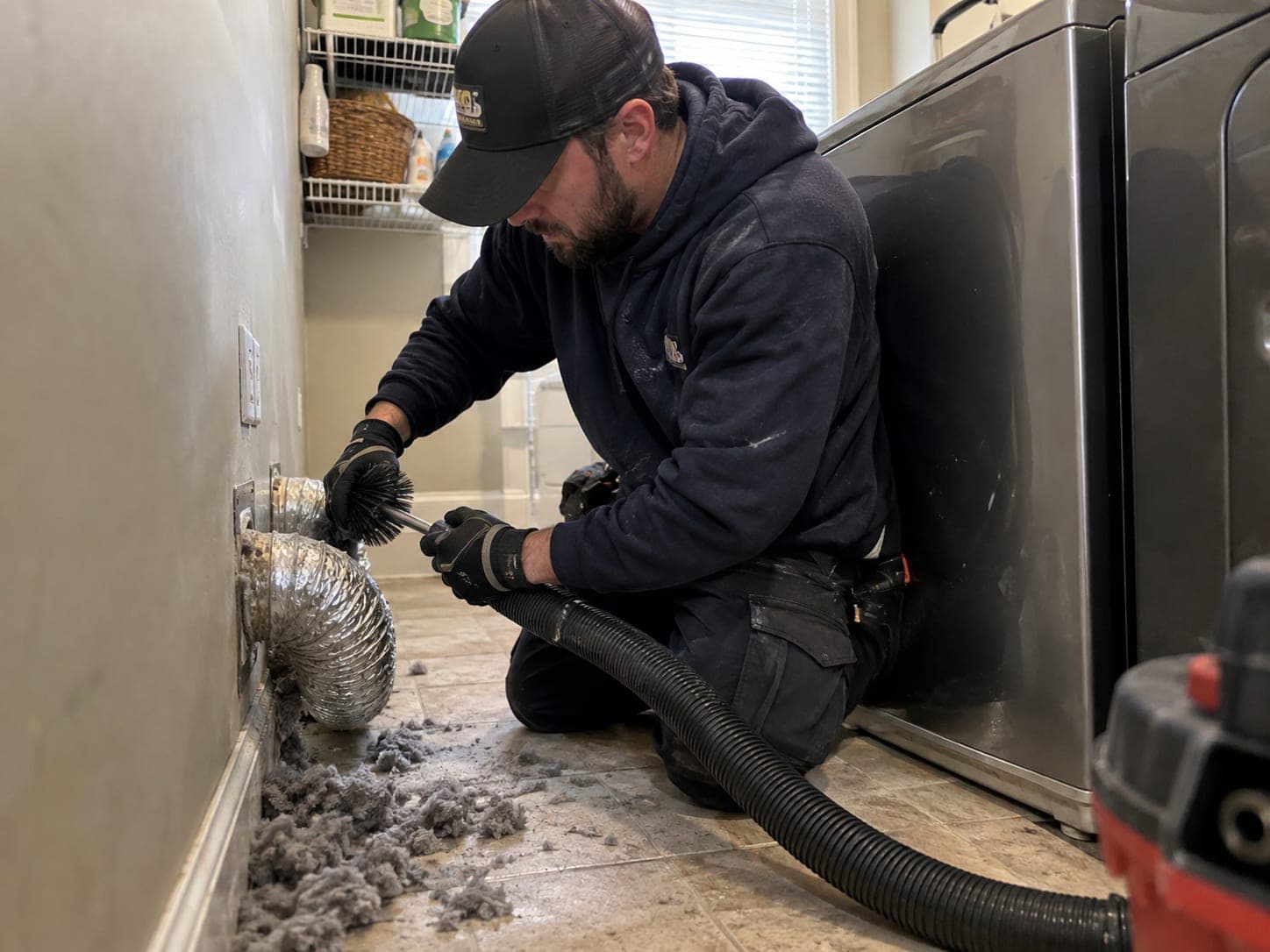
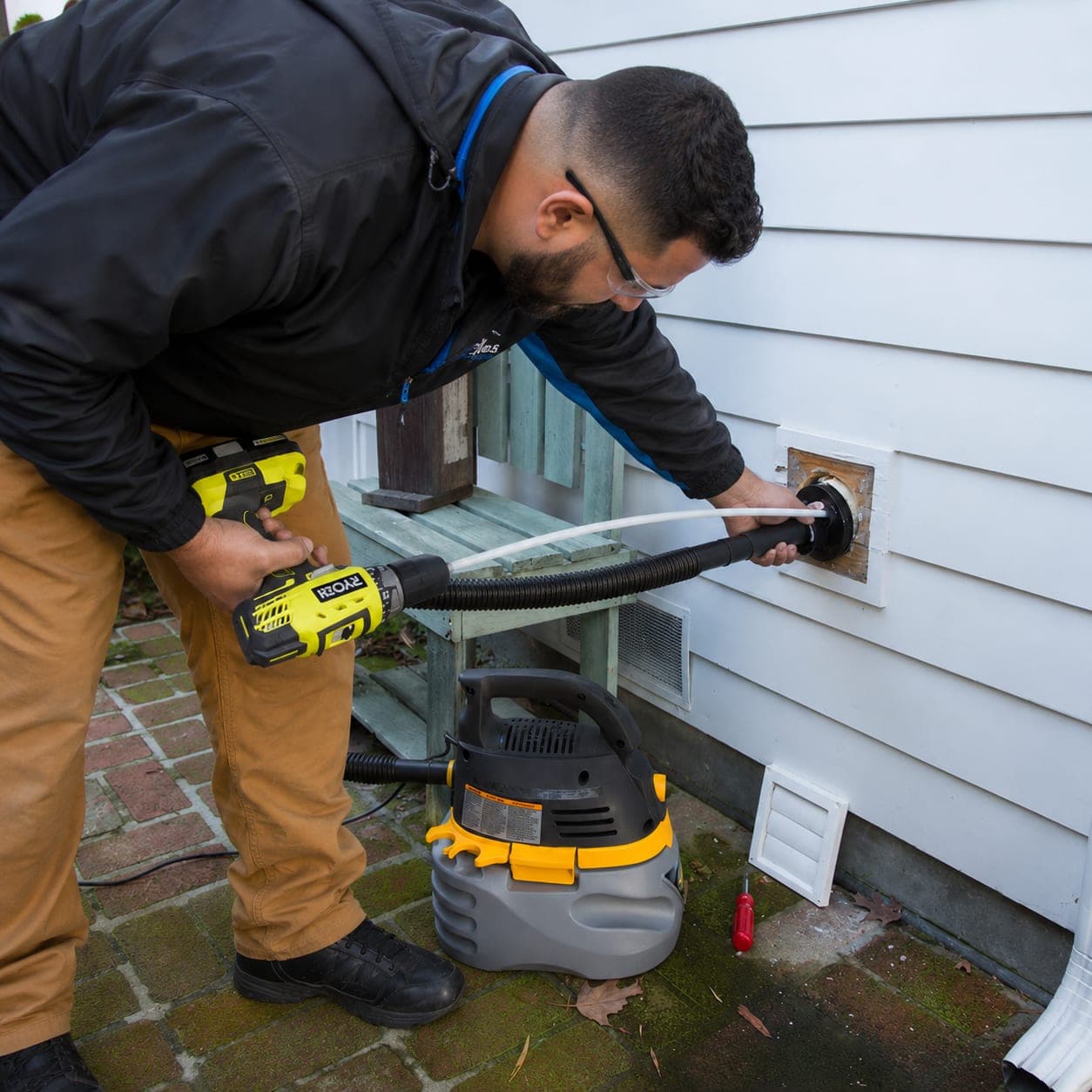
Not every slow dryer needs a new route. If the existing path is short and sound but packed with lint, dryer vent cleaning is the right job. If the route works but a section is crushed or pulled apart, or the cover is broken, the dryer vent repair service usually makes more sense.
Signs your dryer vent needs a new route
- Loads still take extra cycles to dry, even soon after the vent was cleaned.
- Lint builds up again quickly because the duct has several elbows or a very long run.
- The duct behind the dryer gets crushed because the machine has to sit tight against the wall.
- The vent ends in an attic, crawl space or garage instead of outdoors.
- Plastic or foil accordion duct runs through walls or ceilings where nobody can see it.
- The outside hood sits somewhere that's hard to reach or keep clear, such as under a deck or behind dense plantings.
- The laundry is moving to a different room or floor during a remodel.
What the visit looks like, step by step
From the old route to a working new one
Trace the current vent
We follow the existing duct from the back of the dryer to the outside, note every bend and connection, and check airflow at the exterior hood.
Plan the new path
We look for the shortest practical route to an exterior wall or the roof with the fewest turns. The dryer's installation manual lists a maximum vent length and how much each bend counts against it, and we plan the new route to stay within that limit.
Go over the plan and the estimate
You see the proposed route before any work starts, and the estimate is free.
Remove the old duct
Accessible sections of the old run come out, and openings that won't be reused are closed off.
Install the new run
Metal duct goes in with joints connected in the direction of airflow. The joints are sealed with foil tape rather than screws, because screws can snag lint.
Fit the exterior termination
A new hood with a damper that opens freely goes on the outside. Dryer hoods should not have screens, because screens trap lint.
Reconnect and test
We reconnect the dryer, make sure the transition duct behind it isn't kinked, run the dryer and check airflow at the new outlet.
Duct materials and the gas dryer question
| Feature | Rigid or semi-rigid metal duct | Plastic or foil accordion duct |
|---|---|---|
| Inside surface | Smooth, so lint moves through | Ridged, so lint catches in the folds |
| Holding its shape | Resists crushing and sagging | Kinks and sags easily |
| Inside walls and ceilings | Suitable for concealed runs | Not appropriate for hidden runs |
Inside surface
- Rigid or semi-rigid metal duct
- Smooth, so lint moves through
- Plastic or foil accordion duct
- Ridged, so lint catches in the folds
Holding its shape
- Rigid or semi-rigid metal duct
- Resists crushing and sagging
- Plastic or foil accordion duct
- Kinks and sags easily
Inside walls and ceilings
- Rigid or semi-rigid metal duct
- Suitable for concealed runs
- Plastic or foil accordion duct
- Not appropriate for hidden runs
On a gas dryer, the vent also carries combustion byproducts, so an airtight run that ends outdoors matters even more. If the dryer itself is moving, the gas supply may need to move with it. We offer gas appliance work, so the gas connection and the new vent route can be planned together.
Safety and upkeep after a reroute
Lint is flammable, and every extra foot and every bend gives it another place to settle. A shorter, smoother route reduces that buildup, but you still need to keep up with maintenance.
Habits that keep the new route working
- Clean the lint screen before every load.
- Leave room behind the dryer so the transition duct isn't crushed when the machine is pushed back.
- Check the outside hood now and then: the flap should open while the dryer runs and close when it stops.
- Treat drying times that creep back up as an early sign of buildup, and read up on how dryer vent cleaning works before the buildup gets worse.
- With a gas dryer, keep a working carbon monoxide alarm in the home.
If you smell burning
Stop the dryer, don't start another load, and get in touch before using it again. A burning smell or a dryer that feels unusually hot on the outside is a reason to have the vent checked right away.
Booking a dryer vent reroute
We run 24-hour service Sunday–Friday and accept emergency calls. We also take on commercial and property-manager work, so a building with several dryers can be planned as one job. We work on all major brands.
Call or request an estimate. It helps to know whether the dryer is gas or electric, where it sits now, and where you'd like it to go if it's moving. If bricks are falling or it looks like it could come down, keep everyone away from the area below it and call 911. If the route turns out to be fine and only one section is damaged, we'll tell you that a targeted vent repair is the better fit.