On this page
What chimney cap installation involves
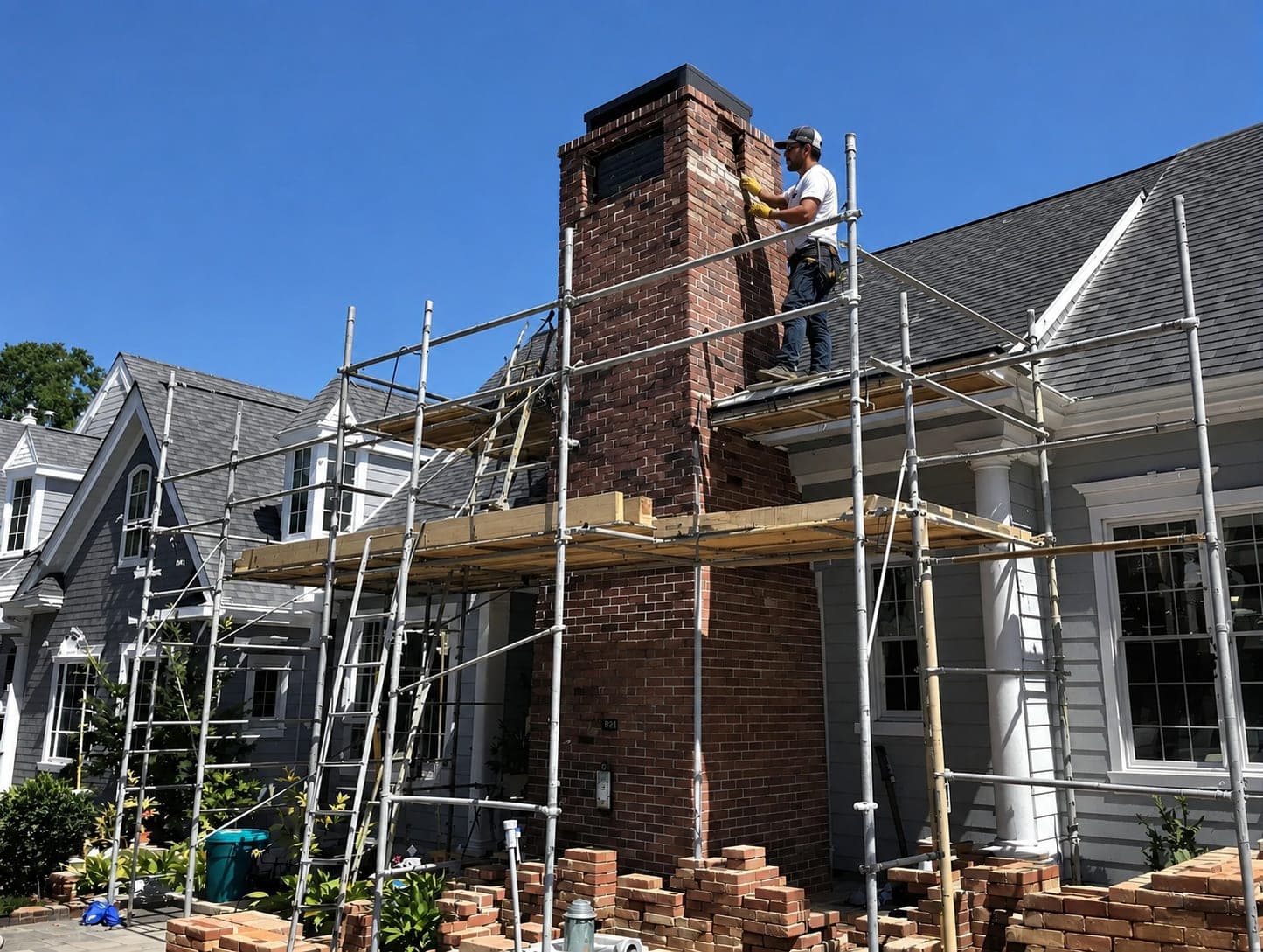
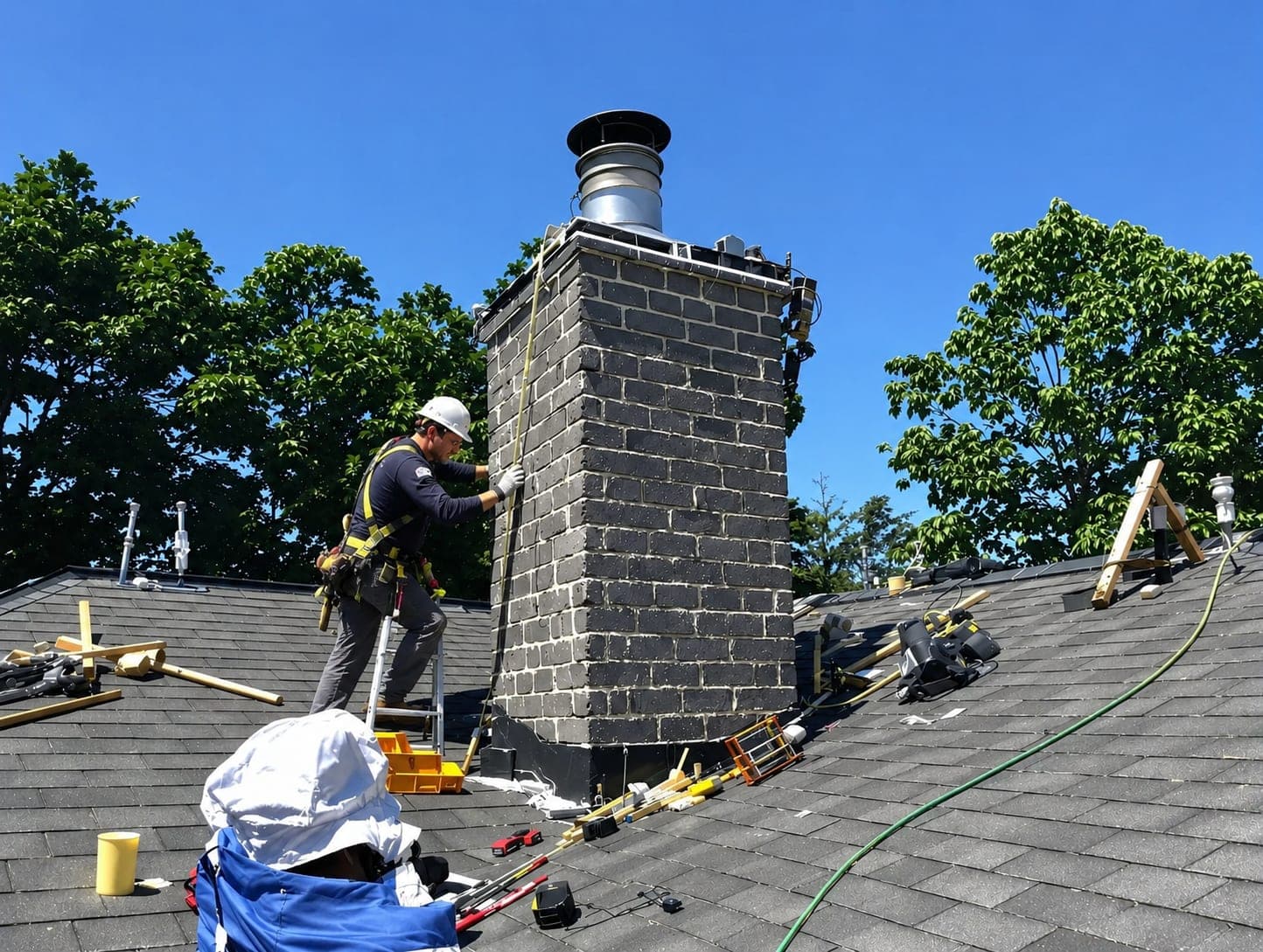
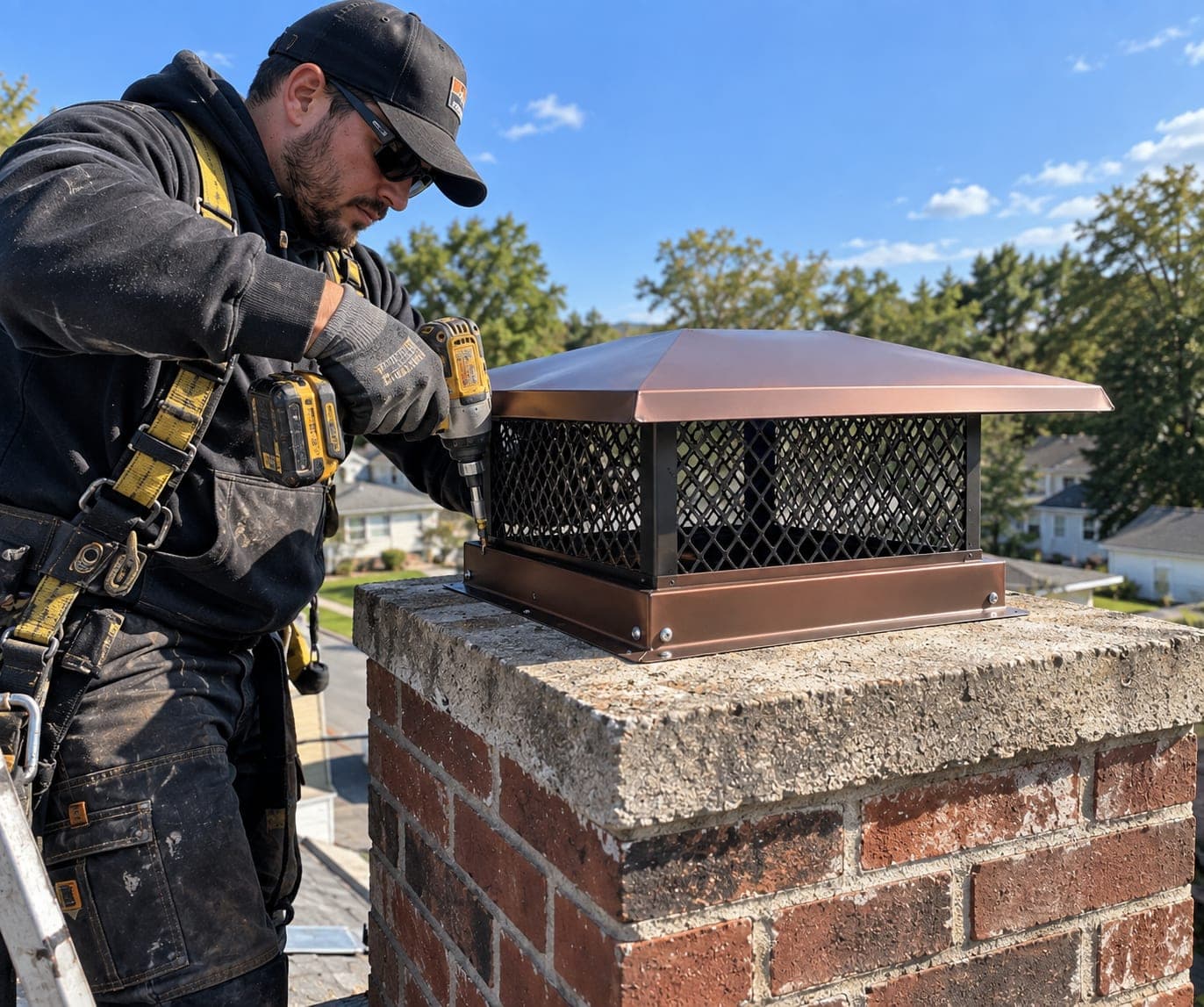
A chimney cap is a metal hood with a mesh screen around its sides. It sits over the top of the flue. The hood sheds rain and snow, and the mesh blocks animals and debris while smoke and gases still vent out. Installation means measuring the flue opening, choosing a cap that fits it, and fastening the cap securely so wind can't lift or shift it.
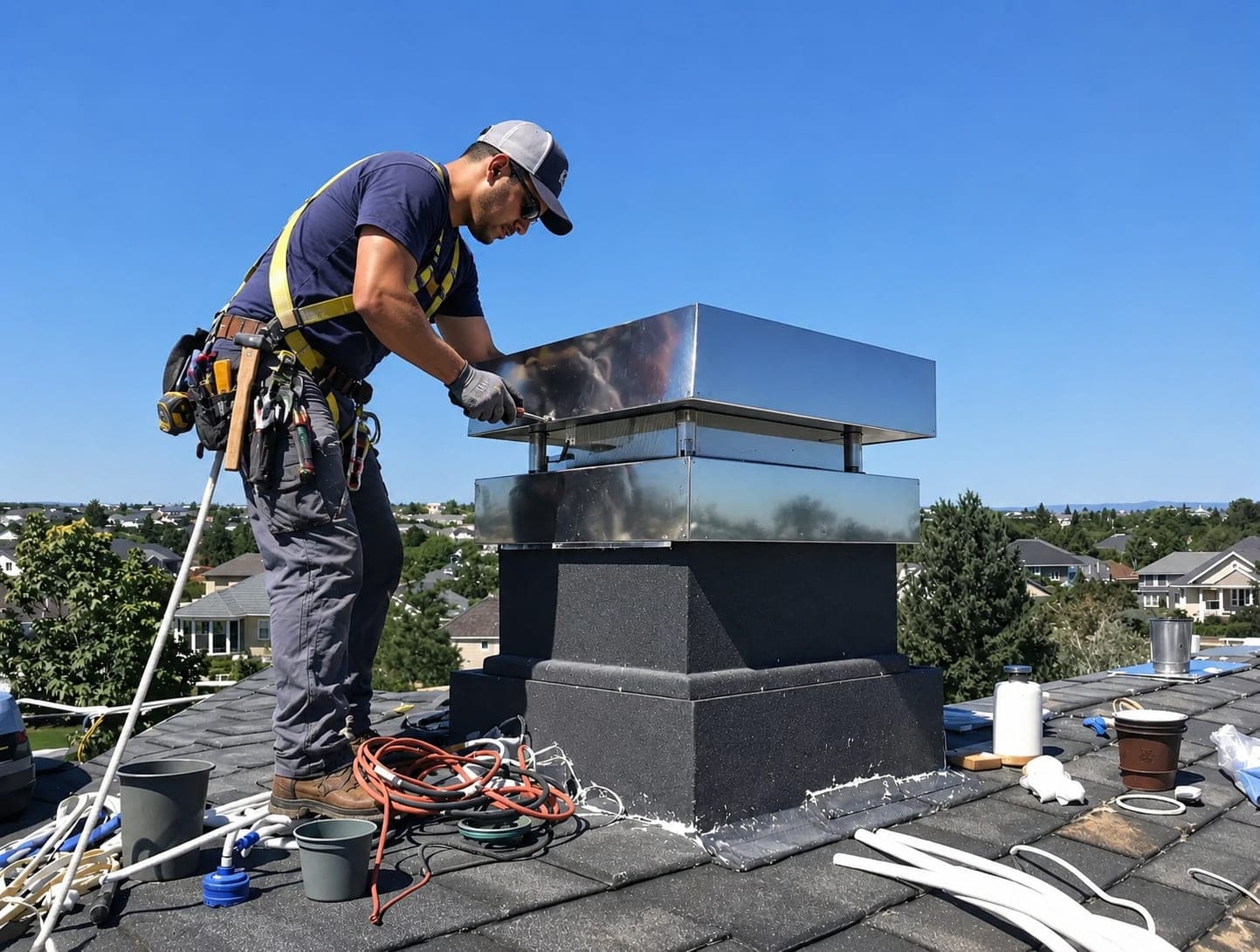
A cap is not the same as the metal panel that covers the top of a framed or prefab chimney. If you're unsure which one your chimney needs, our guide to chimney cap vs chase cover explains the difference.
Signs your chimney needs a cap
Common reasons homeowners call
- There's no cap at all, so you can see straight down the flue from the roof or yard
- Water drips into the firebox, or you see rust on the damper after rain
- Leaves, twigs or nesting material collect on the smoke shelf or in the firebox
- You hear scratching, chirping or flapping inside the chimney
- The existing cap is rusted through, bent, missing its screen or leaning
- A storm loosened the cap or blew it off the chimney
Do I really need a chimney cap?
For most chimneys, yes. Without a cap, rain falls directly into the flue, where it can rust metal parts and wear on masonry and mortar from the inside. Birds and animals can nest in the opening, and debris can build up until it blocks the flue. A capped flue avoids all three problems with very little added hardware.
Is it time to replace your chimney cap?
It's time when the cap no longer does its job. Look for rust holes in the hood, torn or clogged mesh, loose fasteners, or a cap that has tipped or partly blown off. A damaged screen is the most common failure, because once it's open, animals can get in as easily as if there were no cap.
Chimney nest and animal removal comes first
If something is already living in the flue, a new cap would trap it inside. We check the flue before we install anything. If we find nesting material or an animal, we clear it out first, and the cap goes on afterward so nothing can return. For homes with a recurring animal problem, how chimney animal screen installation works covers screening options beyond a standard cap.
Don't light a fire over a nest
Nesting material is dry and burns easily, and it can block smoke from venting. If you suspect a chimney nest, leave the fireplace unused until the flue has been checked and cleared.
What the visit involves, step by step
How we install a chimney cap
Look at the chimney top
We check the flue opening, the crown around it and any existing cap to see what's there and what condition it's in.
Check the flue
We look for nests, debris or blockages so nothing ends up trapped under the new cap.
Measure
We measure the flue tile or liner, and the crown if a cap that covers multiple flues is the better fit.
Fit the cap
We set a cap sized to your flue and fasten it securely so wind and storms won't move it.
Final check
We confirm the screen is fully closed, the cap sits level and smoke has a clear path out.
Chimney fireplace caps: types and materials
- Single-flue caps fit over one flue tile or liner and are the most common type.
- Multi-flue caps cover several flues on one chimney with a single hood.
- Stainless steel holds up well against rust and is a common long-term choice.
- Galvanized steel tends to rust sooner than stainless steel.
- Copper is durable and chosen mostly for its appearance.
If a wood fire sends embers up the flue, a cap with spark-arresting mesh adds protection through our chimney spark arrestor installation service. A cap sits on top of the flue, so if the flue itself is cracked or unlined, chimney liner installation may need to come first.
Safety and maintenance
A cap reduces the water, debris and animals entering the flue, but it doesn't replace regular cleaning and inspection. Over time, soot and creosote can clog the mesh and slow the draft, so the screen should be checked whenever the chimney is swept. If the cap sits on a crown that's cracking or a chimney with failing mortar, those masonry problems still need attention. Our guide on chimney rebuilding vs tuckpointing explains the repair options.
Book chimney cap installation
Call or request an estimate, and we'll look at the chimney and recommend the right cap. Same-day visits are available where the schedule allows. We also do commercial and property-manager work. Nearby homeowners can find chimney Cap Installation in Berwyn, chimney Cap Installation for homes in Cicero and chimney Cap Installation in Arlington Heights.