On this page
What a chimney spark arrestor does
A spark arrestor is a wire mesh screen that wraps around or sits over the top of the flue. Smoke and hot gases pass through it. Glowing embers and burning bits of paper or bark are too large to get through, so they cool and fall back into the flue instead of drifting onto shingles, decks or dry leaves.
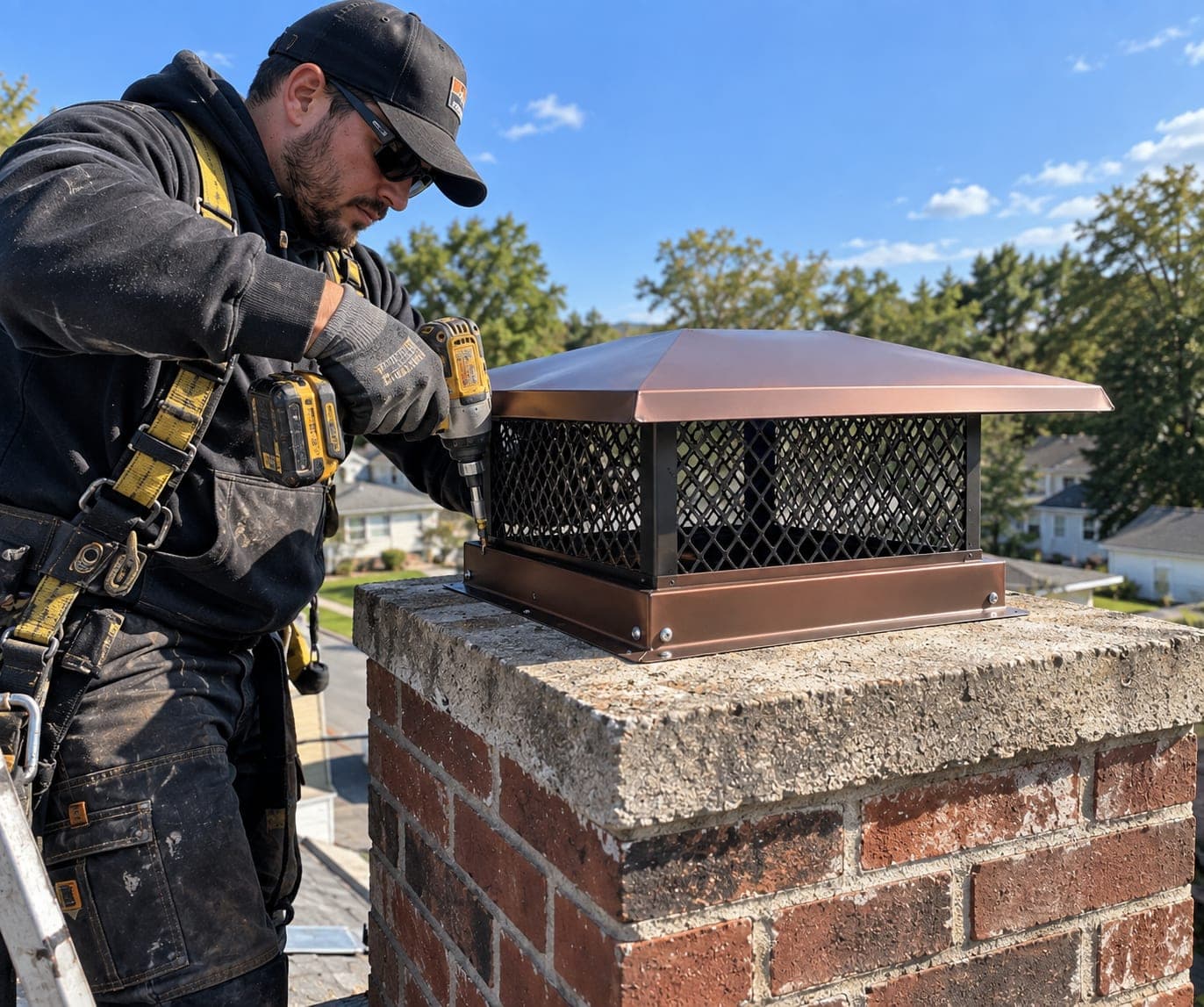
On many chimneys the arrestor is built into the chimney cap, with the mesh forming the sides below the cap's lid. On others it is a separate mesh unit that clamps onto the flue tile. If you are deciding between a full cap and a mesh-only fitting, how chimney cap installation works explains the cap side of the job.
Signs your chimney needs a spark arrestor
Common reasons homeowners book this
- You can look up at the chimney and see an open flue with no mesh at all.
- You have seen sparks or glowing flecks leaving the chimney during a fire.
- You find small scorch marks or charred bits on the roof, deck or patio furniture.
- The existing mesh is rusted through, torn, bent away from the flue or missing panels.
- Your cap has a lid but no screen around its sides.
- Birds, squirrels or raccoons have been getting into the flue through the open top.
If animals are the main concern rather than embers, our chimney animal screen installation service covers screens designed around keeping wildlife out. In practice one well-fitted mesh often handles both jobs.
What the visit involves, step by step
How we fit a spark arrestor
Look at the chimney top
We check the flue tile, the crown around it and any existing cap or mesh to see what can stay and what needs to come off.
Measure the flue
We measure the flue opening and how far the tile sticks up above the crown, since that decides whether a clamp-on unit, a mesh cap or a multi-flue cover fits.
Remove old or damaged mesh
Rusted or torn screens come off so the new arrestor seats cleanly against the flue.
Fit and secure the arrestor
The new mesh is fastened so wind cannot shift it and there are no gaps where embers can slip past.
Check the draft
We confirm smoke can still leave the flue freely, because mesh that restricts flow can push smoke back into the room.
If the visit shows a cracked crown or a damaged flue tile, we tell you before fitting anything. A spark arrestor clamped to a broken tile will not stay put, and if the masonry needs more than patching, our guide to chimney rebuilding vs tuckpointing walks through the options. A missing or failing flue liner is handled through our chimney liner installation work.
Mesh types and fuel types
| Feature | Mesh-only arrestor | Cap with built-in arrestor |
|---|---|---|
| What it is | A screen that clamps directly to the flue tile | A lid over the flue with mesh sides underneath |
| Keeps rain out | No | Yes |
| Stops embers and animals | Yes | Yes |
| Best fit | Flue tiles that stand up above the crown | Most masonry chimneys, including multiple flues under one cover |
What it is
- Mesh-only arrestor
- A screen that clamps directly to the flue tile
- Cap with built-in arrestor
- A lid over the flue with mesh sides underneath
Keeps rain out
- Mesh-only arrestor
- No
- Cap with built-in arrestor
- Yes
Stops embers and animals
- Mesh-only arrestor
- Yes
- Cap with built-in arrestor
- Yes
Best fit
- Mesh-only arrestor
- Flue tiles that stand up above the crown
- Cap with built-in arrestor
- Most masonry chimneys, including multiple flues under one cover
Spark arrestors matter most on wood-burning fireplaces and wood stoves, since those produce embers. Gas fireplaces and gas appliances vent differently and usually use the termination their manufacturer specifies, so we look at what is actually installed before recommending anything. Factory-built chimneys with a metal chase are a different setup again; chimney cap vs chase cover explains how those tops are handled.
Keeping the mesh working
Clogged mesh is a smoke problem
Soot and creosote can build up on the screen over time, especially with damp or unseasoned wood. If smoke starts rolling into the room or the fire is harder to light, a blocked arrestor is one of the things to check. Having the mesh looked at during regular chimney cleaning keeps it clear.
Booking your spark arrestor installation
Request an estimate and we will look at your chimney top, tell you which arrestor fits, and explain any repairs that should come first. We also handle commercial and property-manager work if you look after more than one building.