On this page
What fireplace repair covers
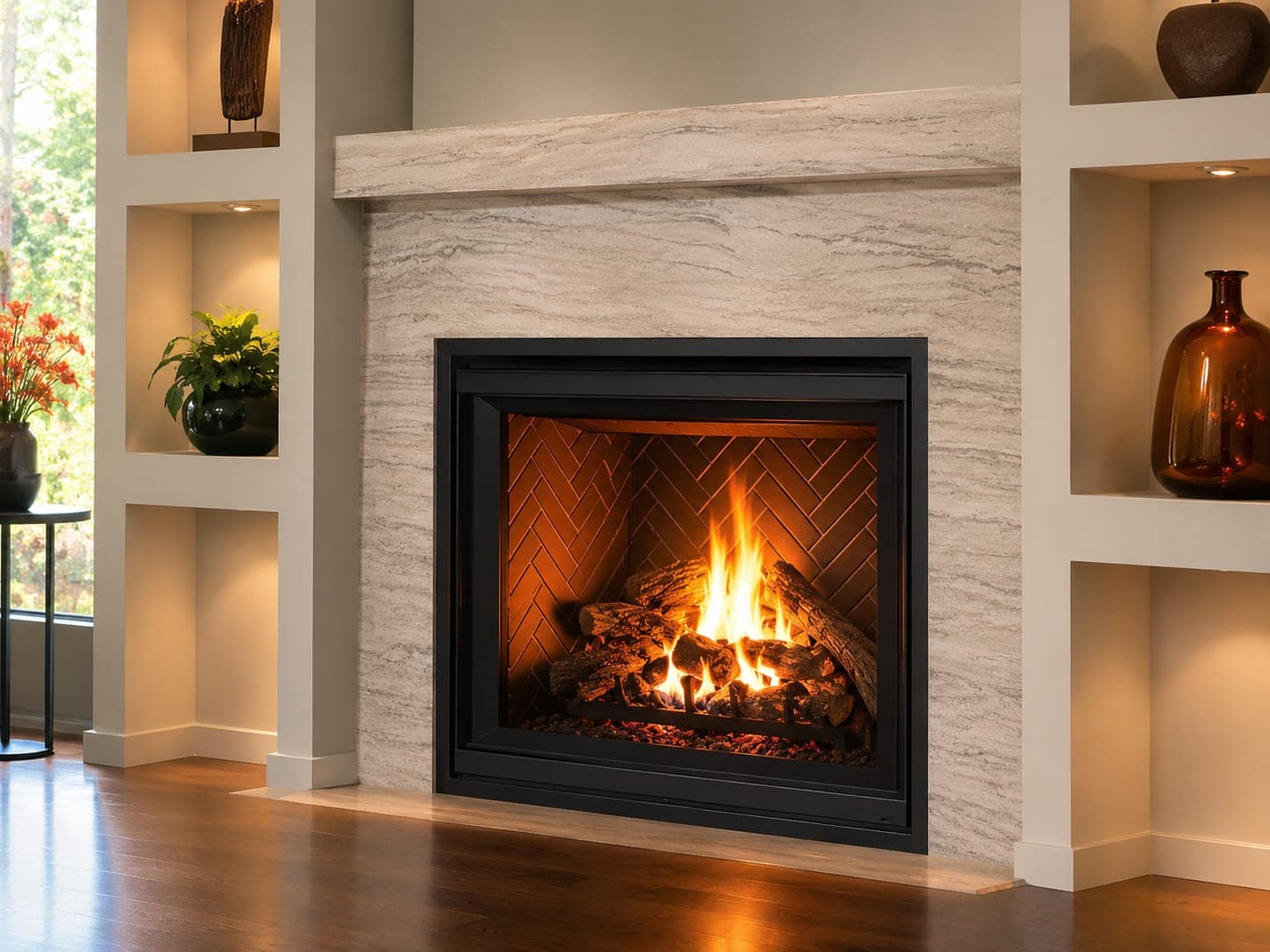
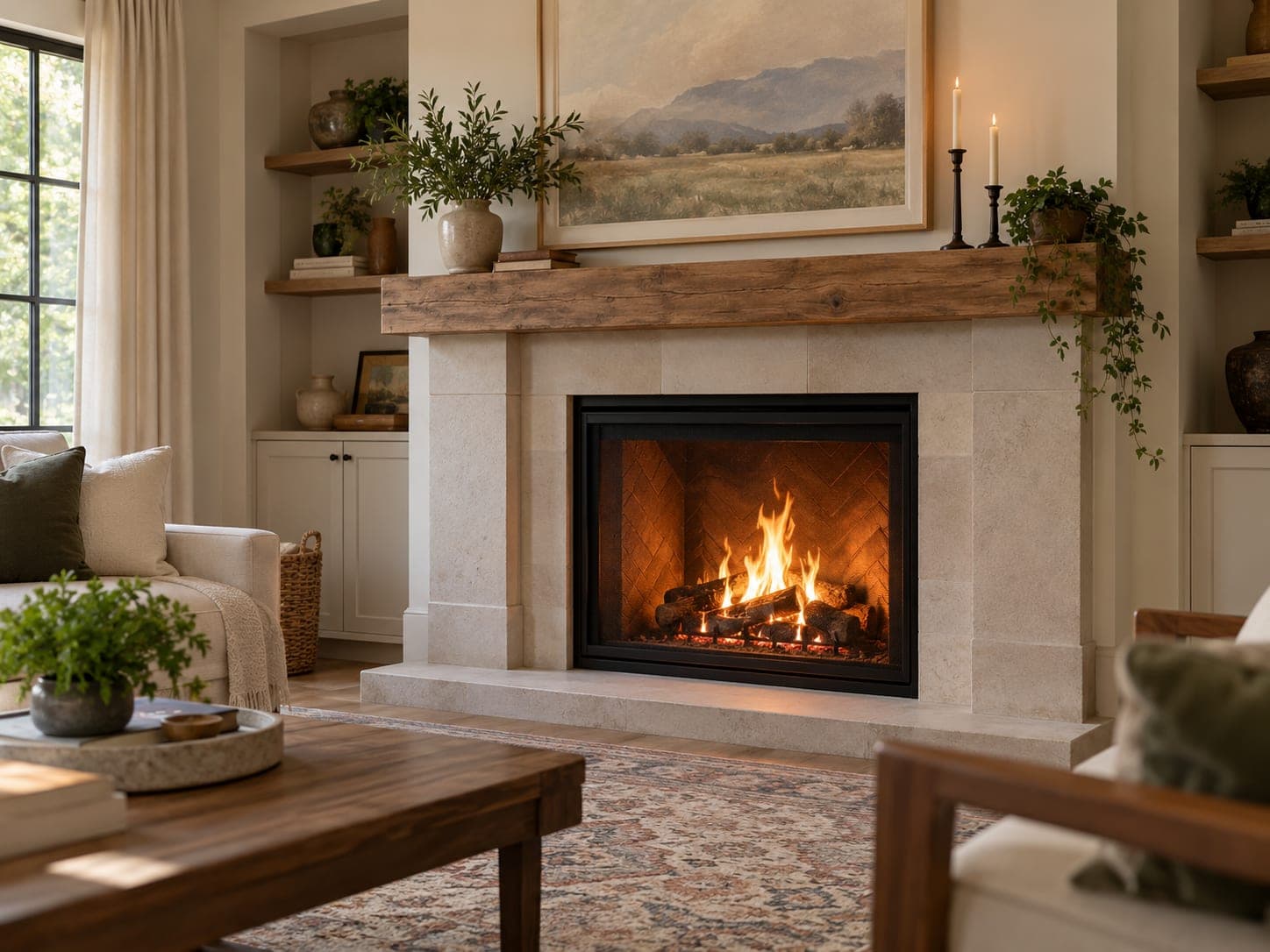
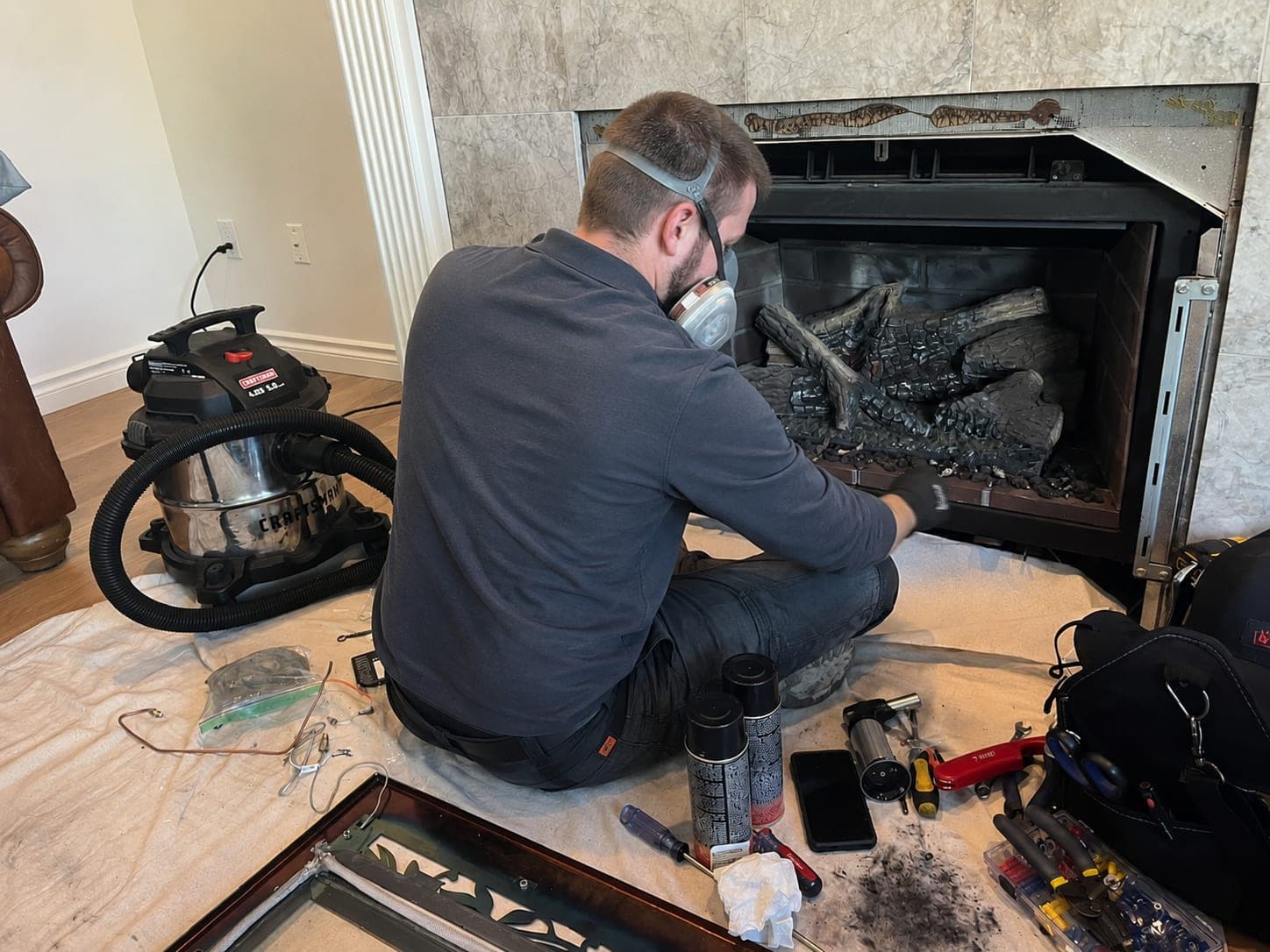
Fireplace repair means fixing the parts of the fireplace you can see and use. That includes the firebox where the fire burns, the damper that opens and closes the flue, the smoke chamber above it, and the doors and glass. On gas units it also includes the burner, logs and controls. The goal is a fireplace that burns safely, draws smoke up the chimney and holds up through regular use.
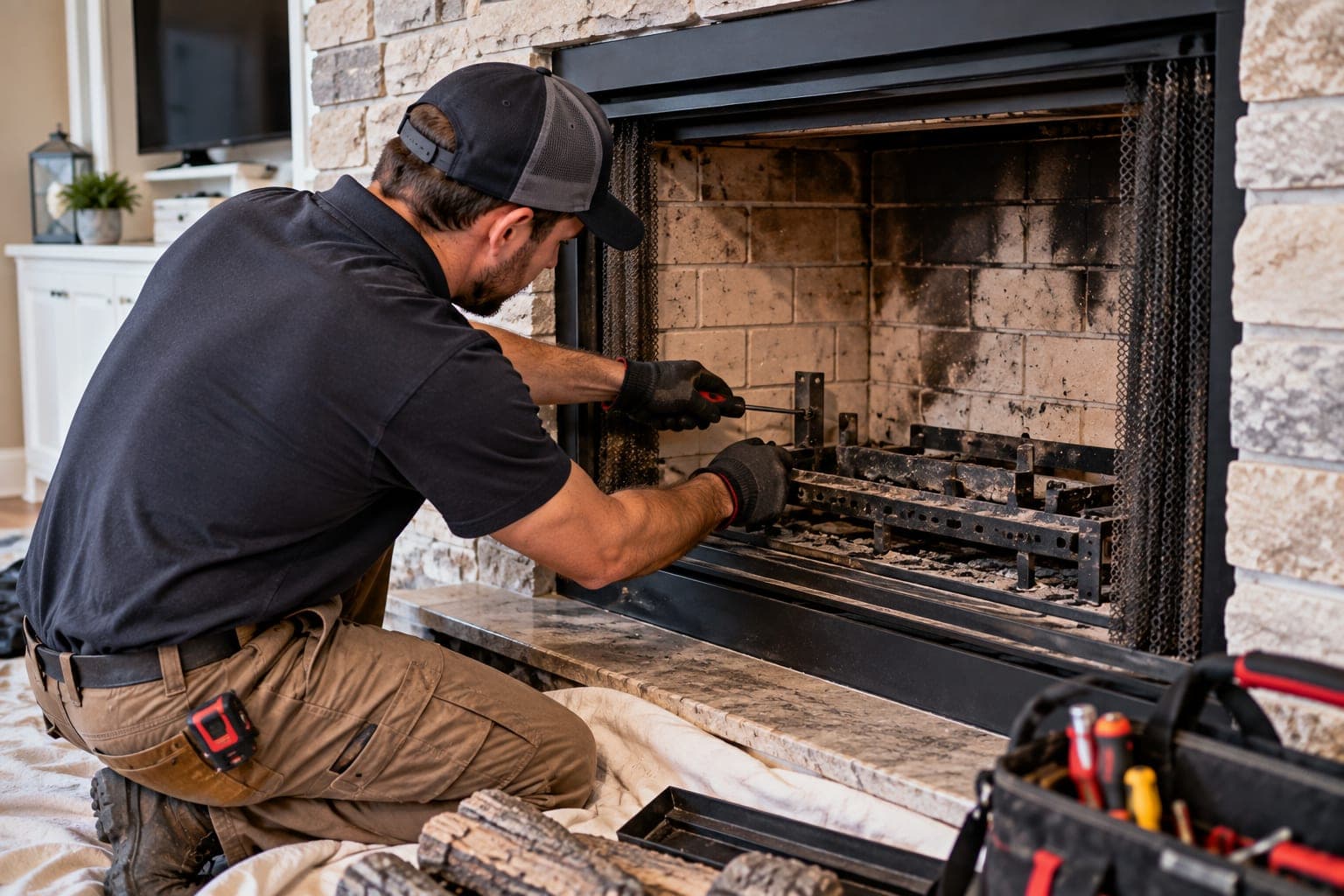
Some jobs involve a single part, such as a damper that won't seal. Others turn into fireplace restoration, where worn brick, mortar and fittings are brought back into sound condition. We look at the whole fireplace first so you know which kind of job you have before any work begins.
Signs your fireplace needs repair
Common reasons homeowners call
- Smoke rolling into the room instead of going up the flue
- Cracked, loose or missing firebrick inside the firebox
- Mortar joints that crumble or have gaps
- A damper that sticks, won't close or won't open fully
- Cold drafts coming down the chimney when the fireplace is off
- Cracked or cloudy glass, or doors that don't latch
- A gas fireplace that won't light, won't stay lit or burns unevenly
- Rust, warping or broken refractory panels in a prefab unit
Smoke in the room is the complaint we hear most often. Smoky fireplace repair can be as simple as freeing a damper, or it can point to an airflow problem in the chimney. When the cause is draft rather than a broken part, our fireplace draft repair service addresses it directly.
Fireplace damper repair
The damper is the metal plate or cap that opens to let smoke out. It closes to keep warm indoor air from escaping when the fireplace is off. Heat, soot and moisture wear it down over time: hinges rust, plates warp, handles break and seals wear out.
A damper stuck closed sends smoke into the room. One stuck open lets heated air escape up the chimney all season. Fireplace damper repair can mean freeing and adjusting the existing damper or replacing a broken handle or linkage. When the old damper can't be made to seal, it can mean fitting a new one. We tell you which option fits your fireplace and why.
How a fireplace repair visit works
From first look to finished repair
Talk through the problem
You tell us what you've noticed, such as smoke, odors, drafts, damage or a gas unit that won't run. That helps us know where to look first.
Inspect the fireplace
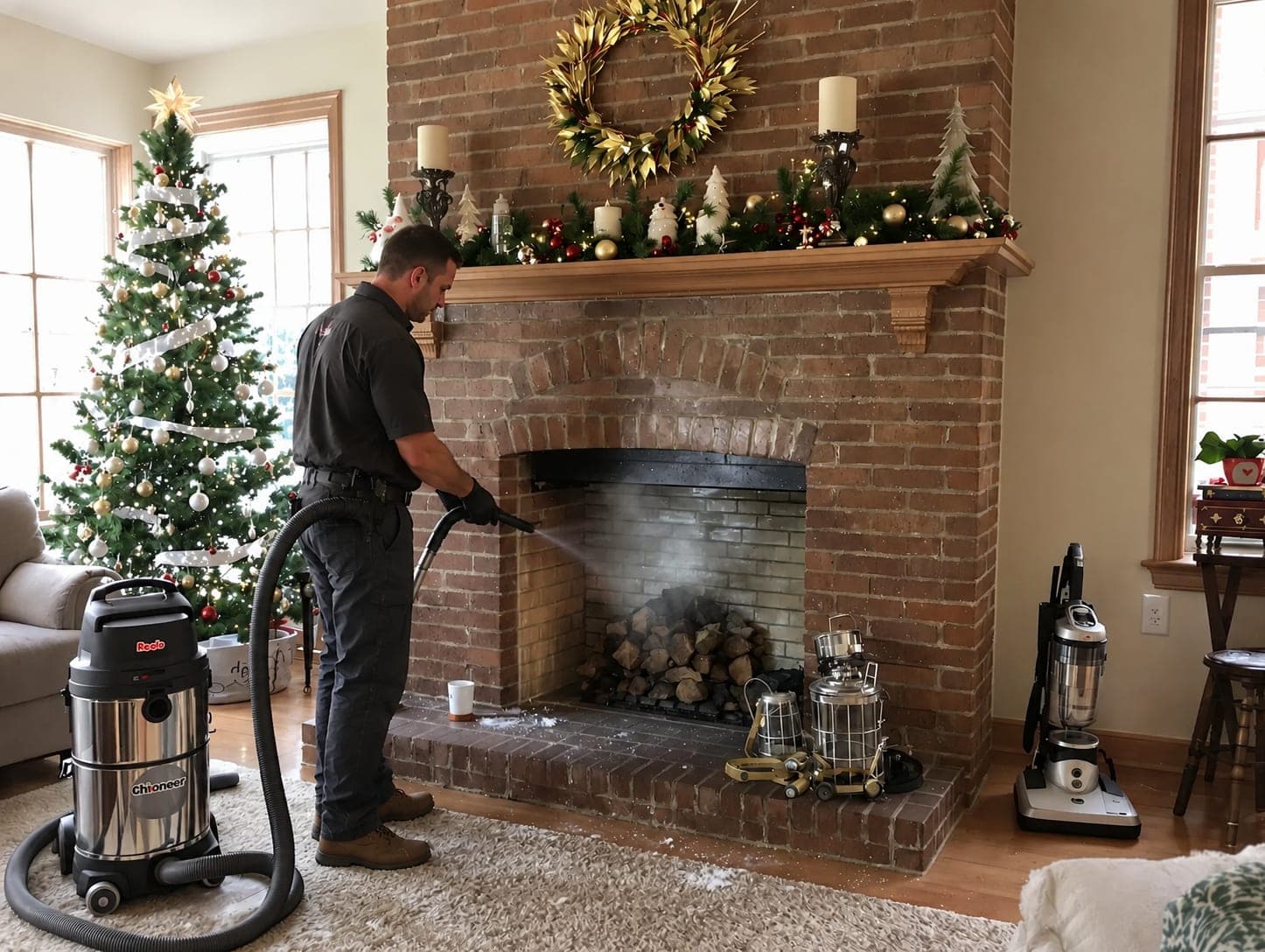
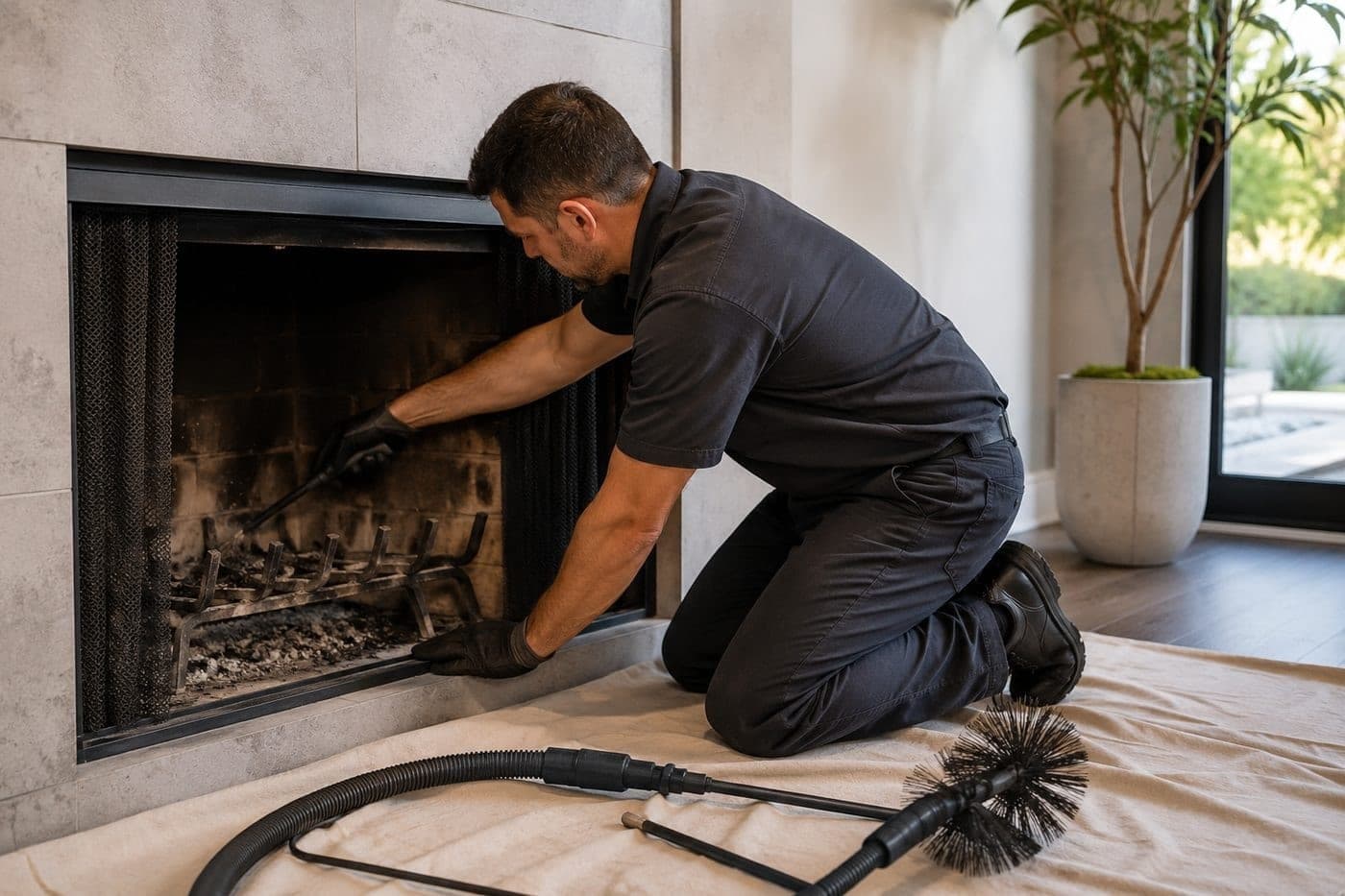
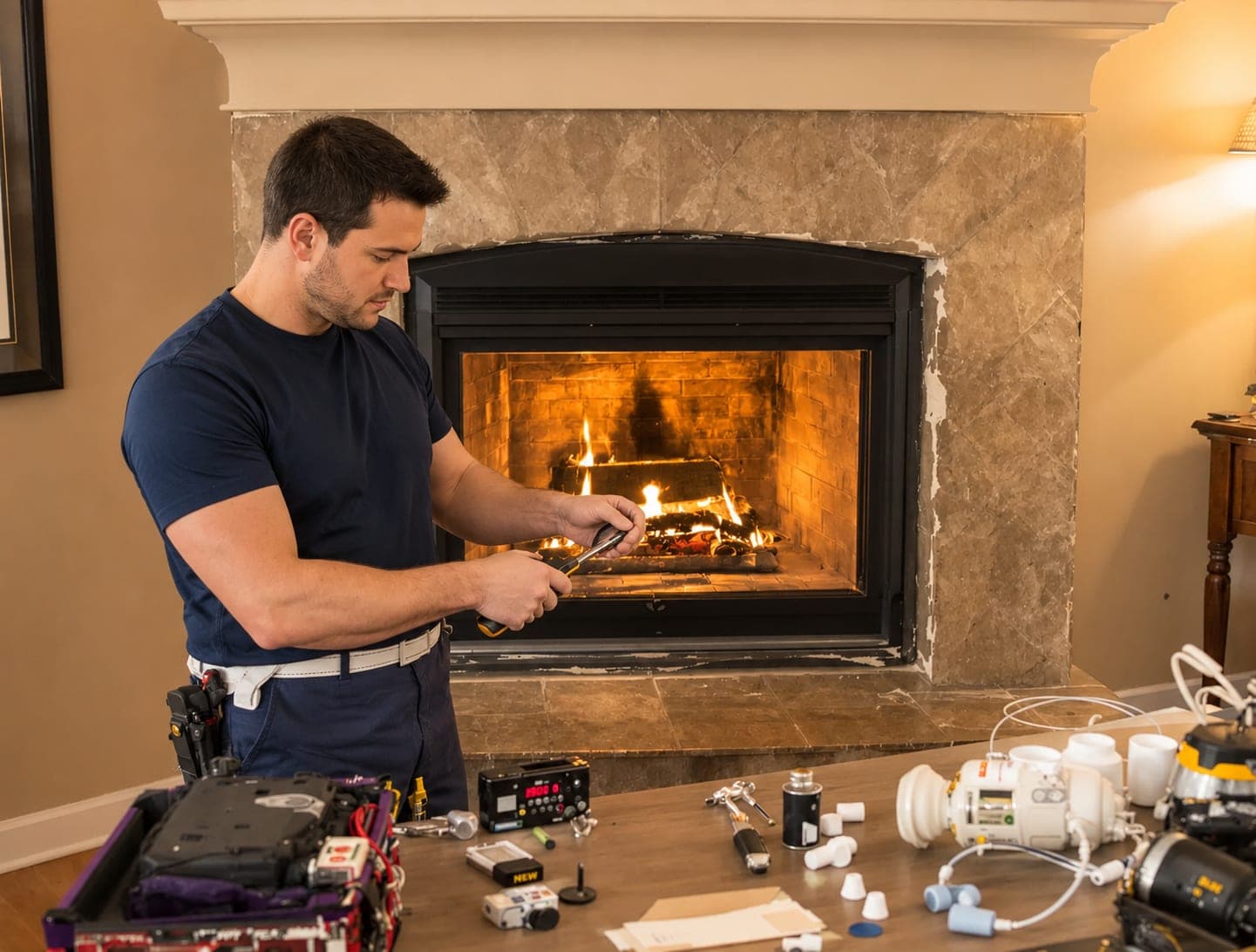
We examine the firebox, damper, smoke chamber and doors, plus the burner and controls on gas units. We also check how the fireplace and chimney work together.
Explain what we found
You get a plain explanation of the problem and the repair options, with a free estimate before any work is done.
Make the repair
Once you approve, we do the work. That might mean replacing firebrick, repointing mortar, fixing the damper or repairing doors and glass.
Check the result
We confirm the damper operates, the repaired areas are sound, and the fireplace is ready to use as intended.
Wood-burning, gas and electric fireplaces
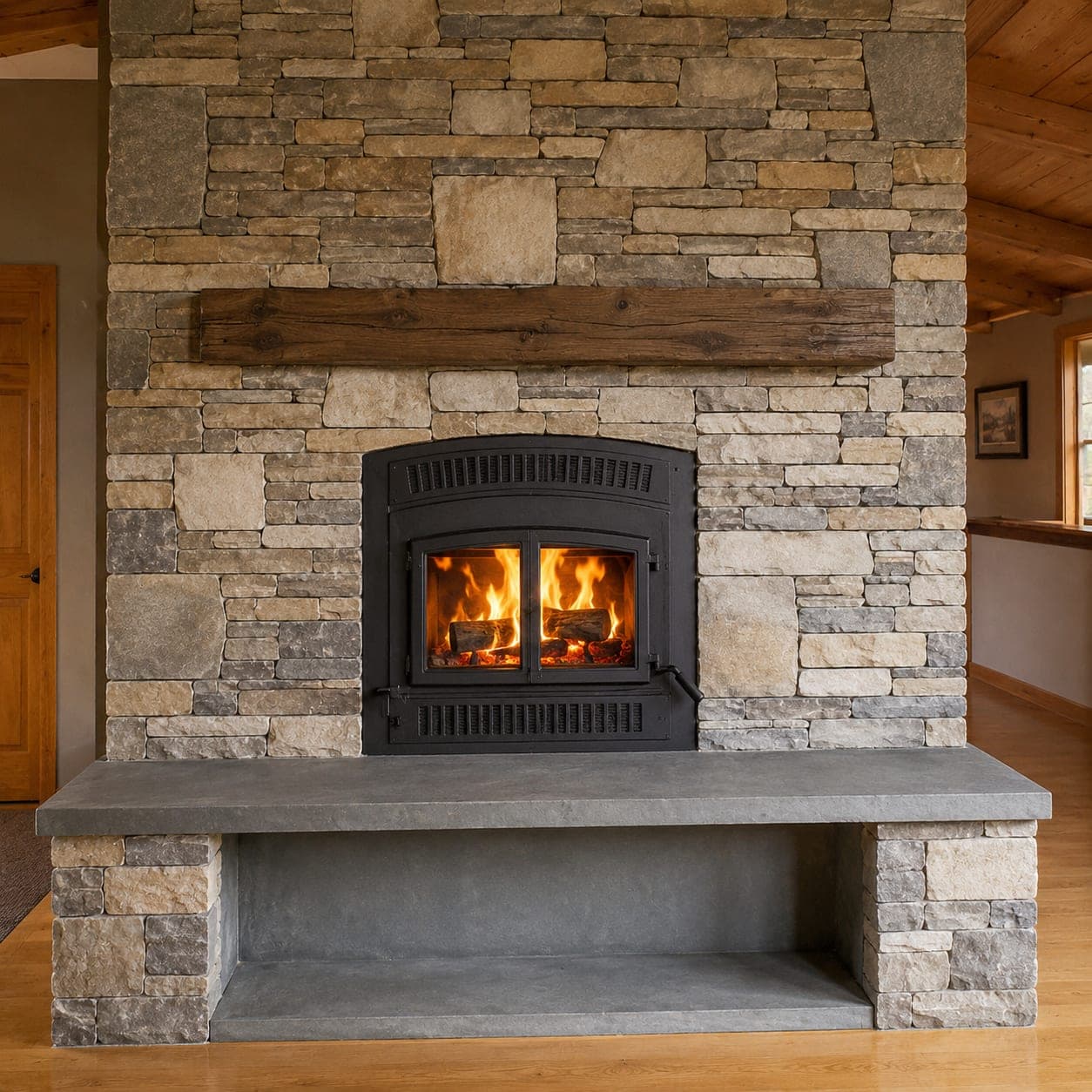
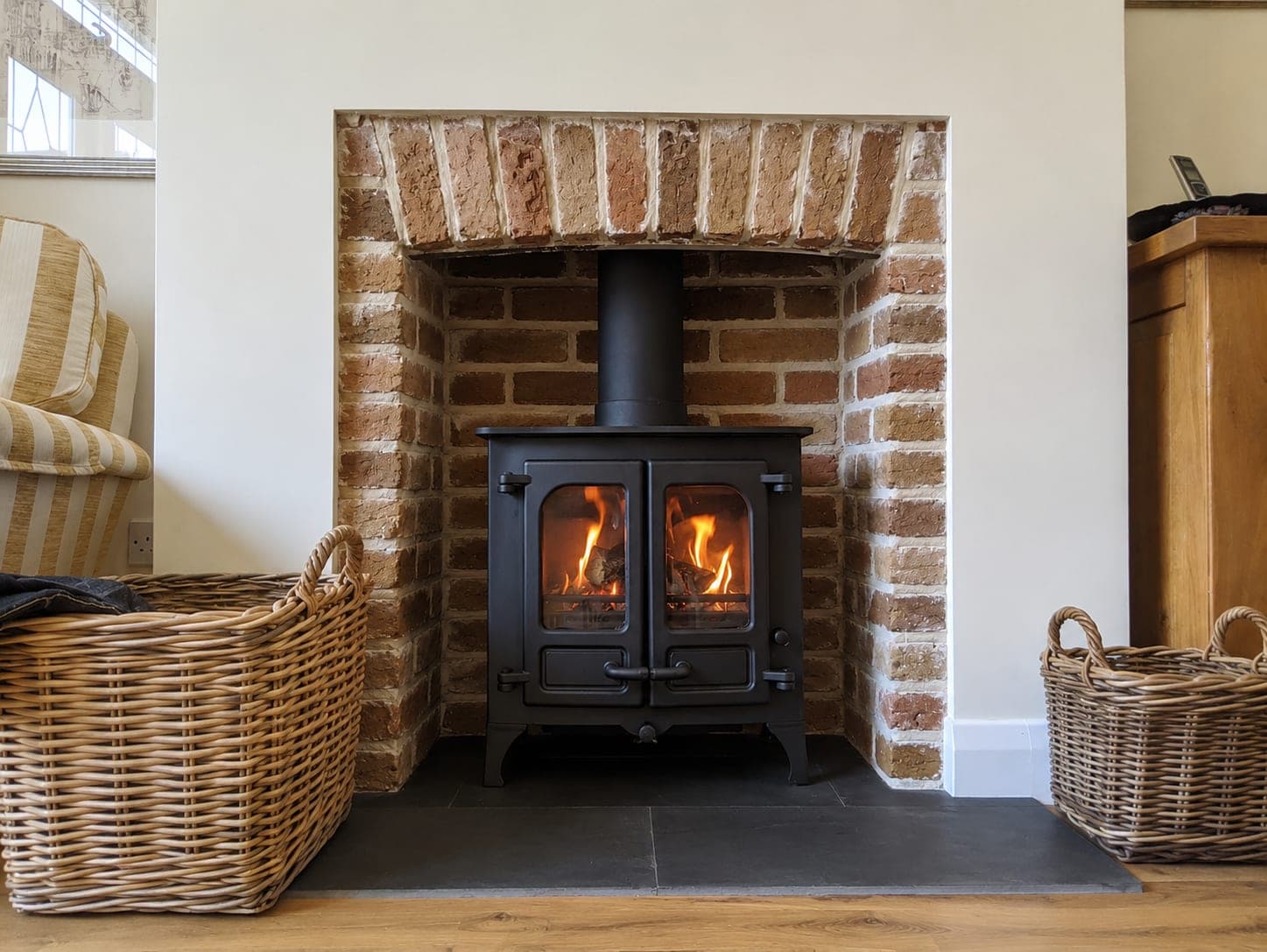
Wood-burning fireplaces mostly need masonry and firebox work: firebrick, mortar, the smoke chamber and the damper. Prefab units use refractory panels instead of brick, and those panels can crack and need replacing. Gas fireplaces have their own parts, including burners, logs, pilot assemblies and glass fronts. We handle gas fireplace and gas appliance work, and we work on all major brands.
Electric units are a different kind of job, covered by our electric fireplace repair service. If you're thinking about switching fuels rather than repairing what you have, our guide to gas vs wood fireplace conversion lays out the trade-offs.
Masonry repair and when replacement makes more sense
Firebrick and mortar take direct heat every time you burn a fire. Cracked bricks can be replaced one at a time, and failing joints can be repointed with mortar made for high heat. When damage covers most of the firebox, or a prefab unit is worn beyond its panels, replacing the fireplace can be the more practical route. In that case, we can explain how fireplace installation works so you can compare options.
Stop using a damaged fireplace
Don't use the fireplace until it has been checked if you can see gaps in the firebox, smoke is entering the room, or you smell gas near a gas fireplace. For a gas smell, leave the house and contact your gas utility first.
Booking your fireplace repair
Get in touch to describe what's happening with your fireplace and set up a visit. Emergency calls are accepted, and 24-hour service runs Sunday–Friday. We also take on commercial and property-manager work. Outside the city, we handle fireplace repair for homes in Skokie.
Related work covered on this page
- Fireplace Restoration