On this page
What wood stove cleaning covers
Wood stove cleaning is more than emptying the ash pan. Every fire leaves two kinds of residue: loose ash in the firebox, and soot and creosote that collect wherever smoke cools. In a stove, that means the baffle or burn tubes above the fire, the flue collar, the stovepipe running to the wall or ceiling, and the chimney flue itself. A proper cleaning covers the whole path the smoke takes, because a spotless firebox does little good if the pipe above it is narrowing with buildup.
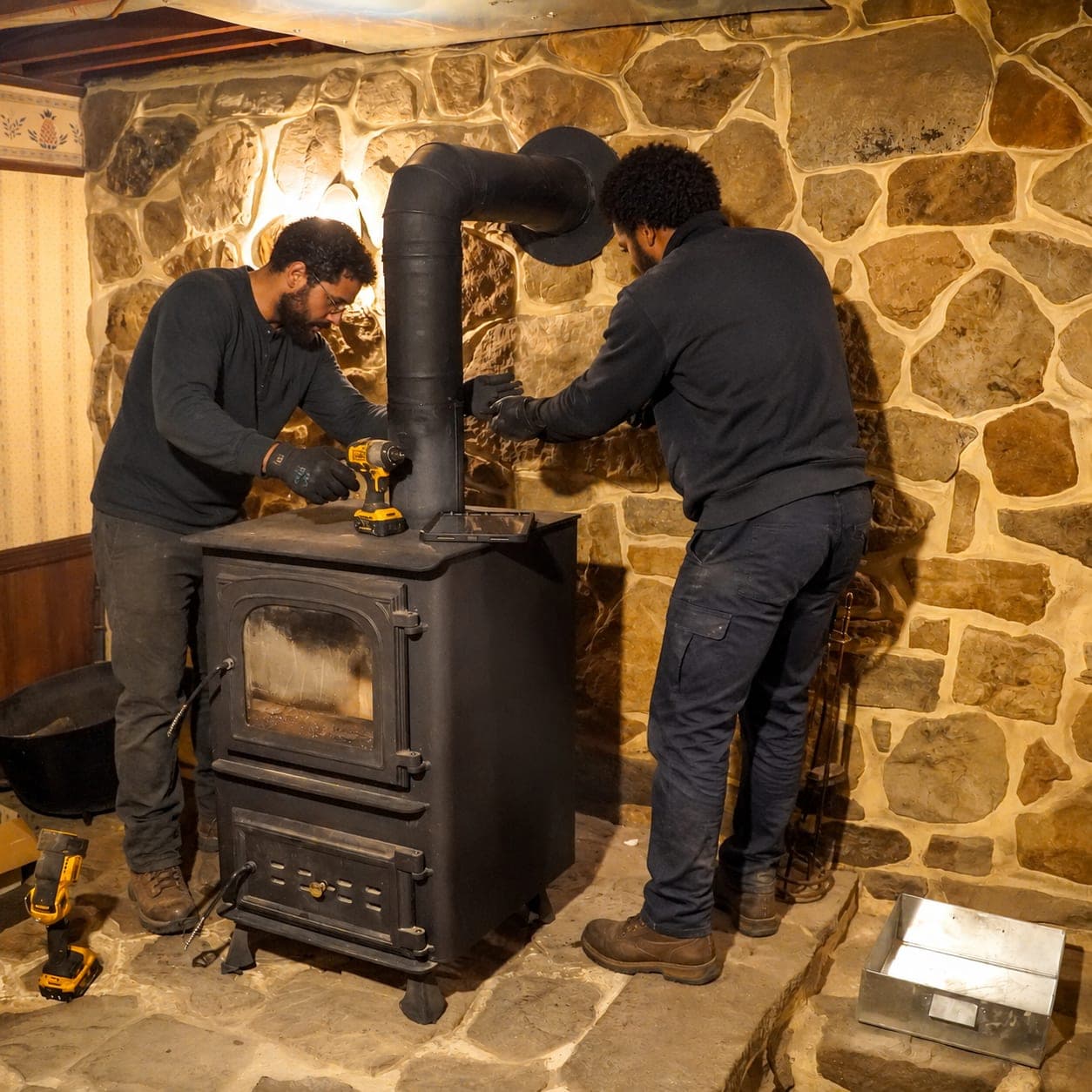
If the stove vents into a masonry chimney, the flue work overlaps with a standard chimney sweep service, and we handle both in the same visit. A stove-style unit set inside an existing fireplace has different needs, which is where fireplace insert cleaning comes in.
Signs your wood stove needs cleaning
Many stoves give clear warnings before buildup becomes a problem. Any one of these is a good reason to book a cleaning:
Common signs
- Smoke rolls into the room when you open the door to add wood
- Fires are harder to start or die down even with the air control open
- The glass blackens quickly, often within a single burn
- A sharp, tar-like or campfire smell lingers when the stove is cold
- Flaky black or shiny, glazed deposits are visible in the stovepipe or flue collar
- Debris or small pieces of creosote fall into the firebox
- The stove has not been cleaned since the start of the last burning season
Shiny, glazed creosote
Creosote that looks like hardened tar or a glossy coating is the most stubborn and most flammable form. If you see it, stop using the stove until the flue and pipe have been cleaned and checked.
What happens during the visit
Wood stove cleaning, step by step
Confirm the stove is cold
We work only on a stove that has been out long enough to be cool to the touch, so plan on no fire the night before.
Protect the room
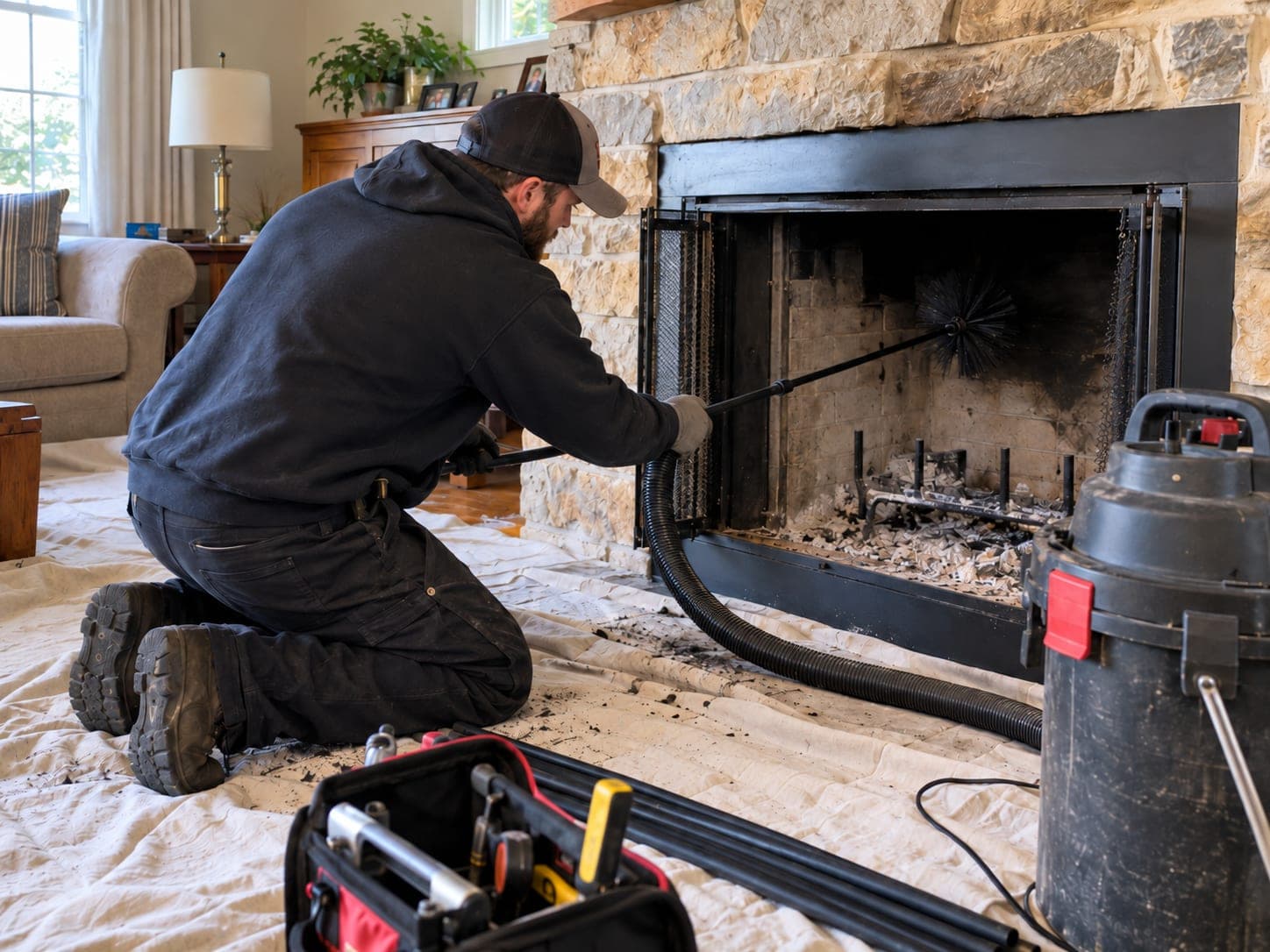
Drop cloths go down around the hearth, and we use containment and vacuum equipment built for fine soot.
Clear the firebox and ash
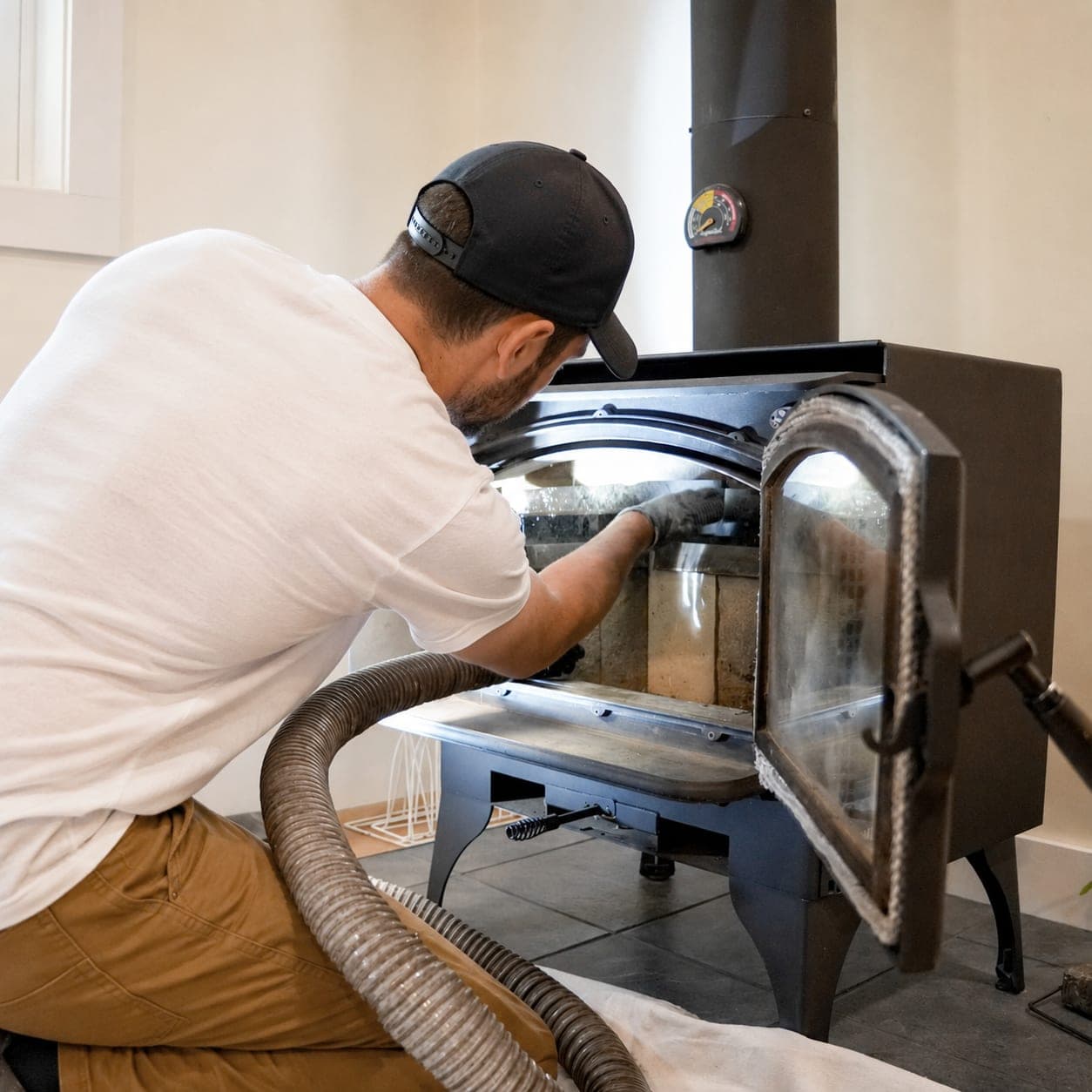
Ash and leftover coals come out, and the firebrick and interior surfaces are brushed down.
Clean the baffle or burn tubes
The area above the fire traps a lot of soot. Where the design allows, the baffle is lowered or removed so the space behind it can be cleared.
Clean the stovepipe and flue collar
The connector pipe is brushed through to the chimney or removed and cleaned, depending on how it is installed.
Sweep the chimney flue
The flue is swept from top or bottom with brushes sized to it, and loosened creosote is collected rather than left at the base.
Look over the stove and venting
We check door and glass seals, firebrick, pipe joints and the flue for cracks, gaps or damage, and walk you through anything worth attention.
Parts and fuel that affect buildup
How fast a stove gets dirty depends mostly on what you burn and how you burn it. Dry, seasoned hardwood burns hotter and cleaner. Wet or green wood, slow smoldering fires with the air turned down, and burning cardboard, trash or treated lumber all speed up creosote formation.
| Part | What builds up | Why it matters |
|---|---|---|
| Firebox and firebrick | Ash, soot | Heavy ash reduces airflow and can hide cracked brick |
| Baffle or burn tubes | Soot, fine ash | A clogged baffle chokes draft and blackens glass |
| Stovepipe and flue collar | Soot, creosote | Cooler pipe sections collect creosote fastest |
| Chimney flue | Creosote, debris | Buildup narrows the flue and is the fuel for a chimney fire |
Safety and upkeep between cleanings
Creosote is flammable, and a stovepipe or flue lined with it can ignite when a hot fire sends sparks or heat up the vent. Regular cleaning removes that fuel. Between visits, a few habits keep buildup down:
- Burn only dry, seasoned wood, and keep it covered and off the ground
- Give each fire enough air to burn bright rather than smolder
- Empty ash into a metal container with a lid and keep it outside, away from the house
- Keep a working smoke alarm and carbon monoxide alarm near the stove
- Watch the glass and the smell of the room, since changes there are early warnings
If you are weighing whether to keep burning wood at all, our guide to gas vs wood fireplace conversion walks through the trade-offs. For an open hearth elsewhere in the house, how fireplace cleaning works covers that job.
Booking a wood stove cleaning
Call or request an estimate, tell us the stove type and how it vents, and let it cool before we arrive. Commercial and property-manager work is offered as well.