If you smell gas
Leave the building right away. Don't use light switches, phones or any flame inside. Once you're outside, call the gas utility or 911. Come back in only after they say it's safe.
The short answer on gas vs wood fireplace conversion
Most masonry wood-burning fireplaces can be converted to gas, and the change makes sense if you want a fire you can start and stop in seconds, with no ash, no hauling wood and no creosote building up in the flue. Staying with wood makes sense if the real flame, the smell and the ritual of tending a fire are what you value, and you're willing to clean and inspect regularly. A conversion is not just swapping fuel. It usually means a gas line, the right venting and a chimney in sound condition.
Three ways to go: keep wood, add gas logs, or install a gas insert
A gas conversion is really one of two different projects, and they behave very differently once installed. Gas logs sit in your existing firebox and are mainly for looks. A gas insert is a sealed, self-contained unit that slides into the firebox and is built to heat the room. A fireplace conversion can take either route, and the right one depends on your goal.
| Feature | Wood-burning | Vented gas logs |
|---|---|---|
| Main purpose | Real fire and ambiance | Flame appearance with little effort |
| Heat into the room | Much of the heat goes up the chimney in an open fireplace | Low; mostly decorative |
| Effort to use | Splitting, carrying and loading wood; tending the fire | Switch, key or remote |
| Cleanup | Ash removal and creosote in the flue | Little to none |
| Venting | Open chimney flue | Damper must stay open while logs burn |
| Look and feel | Real crackle, smell and glow | Realistic flame, no crackle or smell |
| Still needs yearly inspection | Yes | Yes |
Main purpose
- Wood-burning
- Real fire and ambiance
- Vented gas logs
- Flame appearance with little effort
Heat into the room
- Wood-burning
- Much of the heat goes up the chimney in an open fireplace
- Vented gas logs
- Low; mostly decorative
Effort to use
- Wood-burning
- Splitting, carrying and loading wood; tending the fire
- Vented gas logs
- Switch, key or remote
Cleanup
- Wood-burning
- Ash removal and creosote in the flue
- Vented gas logs
- Little to none
Venting
- Wood-burning
- Open chimney flue
- Vented gas logs
- Damper must stay open while logs burn
Look and feel
- Wood-burning
- Real crackle, smell and glow
- Vented gas logs
- Realistic flame, no crackle or smell
Still needs yearly inspection
- Wood-burning
- Yes
- Vented gas logs
- Yes
Gas logs
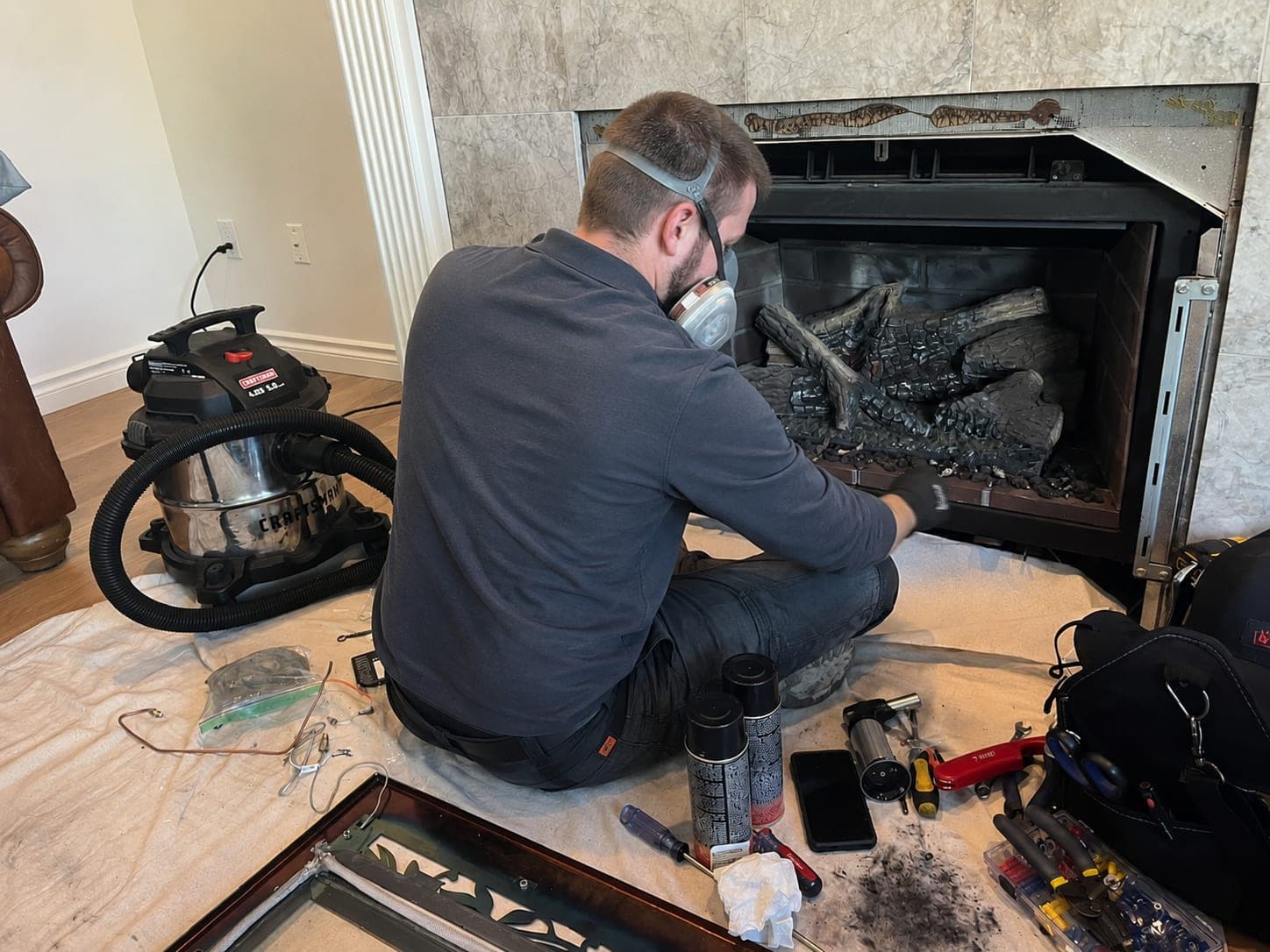
Gas logs are ceramic logs set over a burner in the existing firebox. Vented sets need the damper kept open whenever they run, so a lot of warm room air still escapes up the chimney. They're the simplest conversion and a good fit if you want an easy flame for evenings rather than a heat source. Ventless log sets also exist, and they come with their own trade-offs; our guide to direct vent vs ventless gas fireplaces explains how the two venting styles differ.
Gas inserts
An insert is a closed firebox with a glass front that fits inside your masonry opening. It pulls combustion air from outside and sends exhaust out through liners run up the existing chimney, so room air isn't lost up the flue. If heat is the goal, this is usually the stronger choice. The details of sizing, venting and fitting are covered under fireplace insert installation.
Staying with wood
Keeping a wood fireplace is a perfectly good choice when it drafts well and the chimney is in good repair. It does mean regular sweeping to control creosote, an inspection each year, and a supply of dry, seasoned wood. If your current fireplace has trouble drawing, look into what causes fireplace smoking into the room before deciding; some draft problems can be fixed, and some are a sign the fireplace would be better suited to a sealed gas unit.
What a conversion usually involves
Typical steps from wood to gas
Inspect the chimney and firebox
Cracks, a damaged flue, a missing cap or a bad damper need attention before any gas appliance goes in.
Clean out the old wood residue
Creosote and soot are swept from the flue and firebox so they don't become a fire or odor problem later.
Choose logs or an insert
The choice depends on whether you want mostly looks or real heat, and on the size and shape of your firebox.
Run a gas line
If there's no gas supply at the fireplace, a line has to be brought to it and tested for leaks.
Set up the venting
Vented logs rely on the open flue and a damper that can't fully close; inserts need liners sized for that unit.
Install, test and walk through operation
The unit is lit, checked for proper flame and draft, and you're shown how to run it and shut it off.
Gas exhaust carries a lot of water vapor, and an unlined or oversized masonry flue can take on moisture damage over time. That's one reason the venting step matters as much as the appliance. More on the gas side of the work is under how gas fireplace installation works.
What helps you decide
Questions worth answering first
- Do you want the fireplace to warm the room, or mainly to look good on cool evenings?
- How often do you actually light a fire now, and is the wood work part of the appeal?
- Is there a gas supply in the home, and how far is it from the fireplace?
- Has the chimney been inspected recently, and is the flue in good condition?
- Does the fireplace draft well, or does it smoke and smell?
- Would you want the option to go back to burning wood later?
If most of your answers point toward convenience and heat, an insert is usually the better fit. If you mainly want an easy flame, gas logs are simpler. If you love the fire itself and don't mind the upkeep, keeping wood is reasonable. Estimates are free, and gas fireplace and gas appliance work is offered, from conversions and gas lines to inspection, cleaning and repair of the chimney behind them.