On this page
If you smell gas
Leave the building right away. Don't use light switches, phones or any flame inside. Once you're outside, call the gas utility or 911.
What gas fireplace installation involves
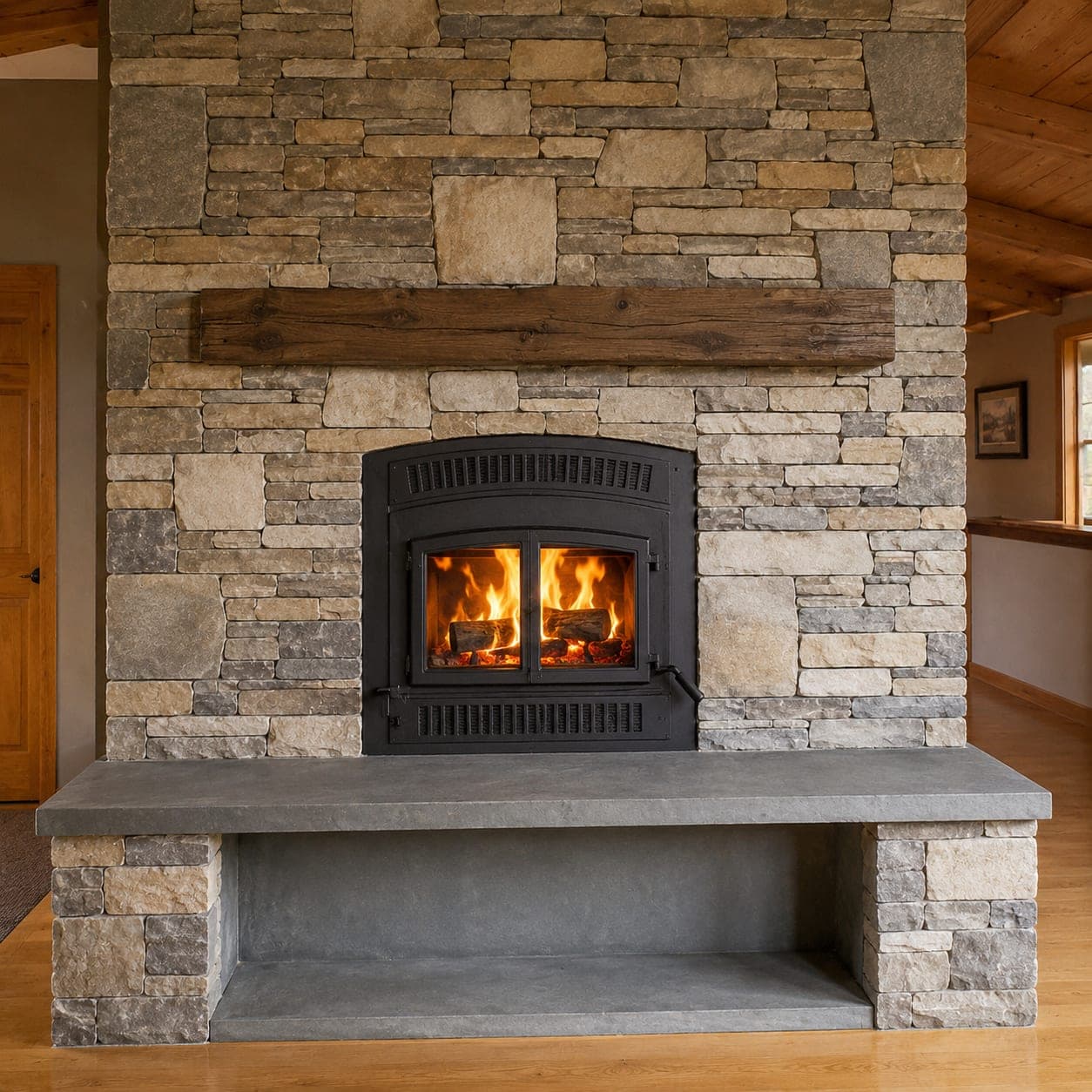
Gas fireplace installation means fitting a new gas-burning unit and connecting it safely. The job has three parts: a gas supply to the appliance, a venting path that carries combustion gases outdoors (for vented models), and the firebox itself, set into a wall, an existing masonry fireplace or a new framed surround. Most units also need a power source for ignition, a blower or a remote.
The venting choice shapes everything else, so it's worth reading up on direct vent vs ventless gas fireplaces before you pick a model. If you're starting from a wood-burning fireplace, our guide to gas vs wood fireplace conversion covers what changes when you switch fuels.
When a gas fireplace installation makes sense
- You want a fireplace in a room that has no chimney. Direct-vent units can often vent through an exterior wall instead.
- Your wood-burning fireplace goes unused because of the work of hauling wood, building fires and cleaning up ash.
- You want heat and flame on a switch, thermostat or remote, with no smoke in the room.
- An old gas unit is beyond economical repair and you're ready for a replacement.
- You're remodeling and want a fireplace designed into the new layout.
If your existing gas fireplace just won't light, keeps shutting off or has a weak flame, you may not need a new unit at all. Start with our gas fireplace repair service.
Gas fireplace logs installation
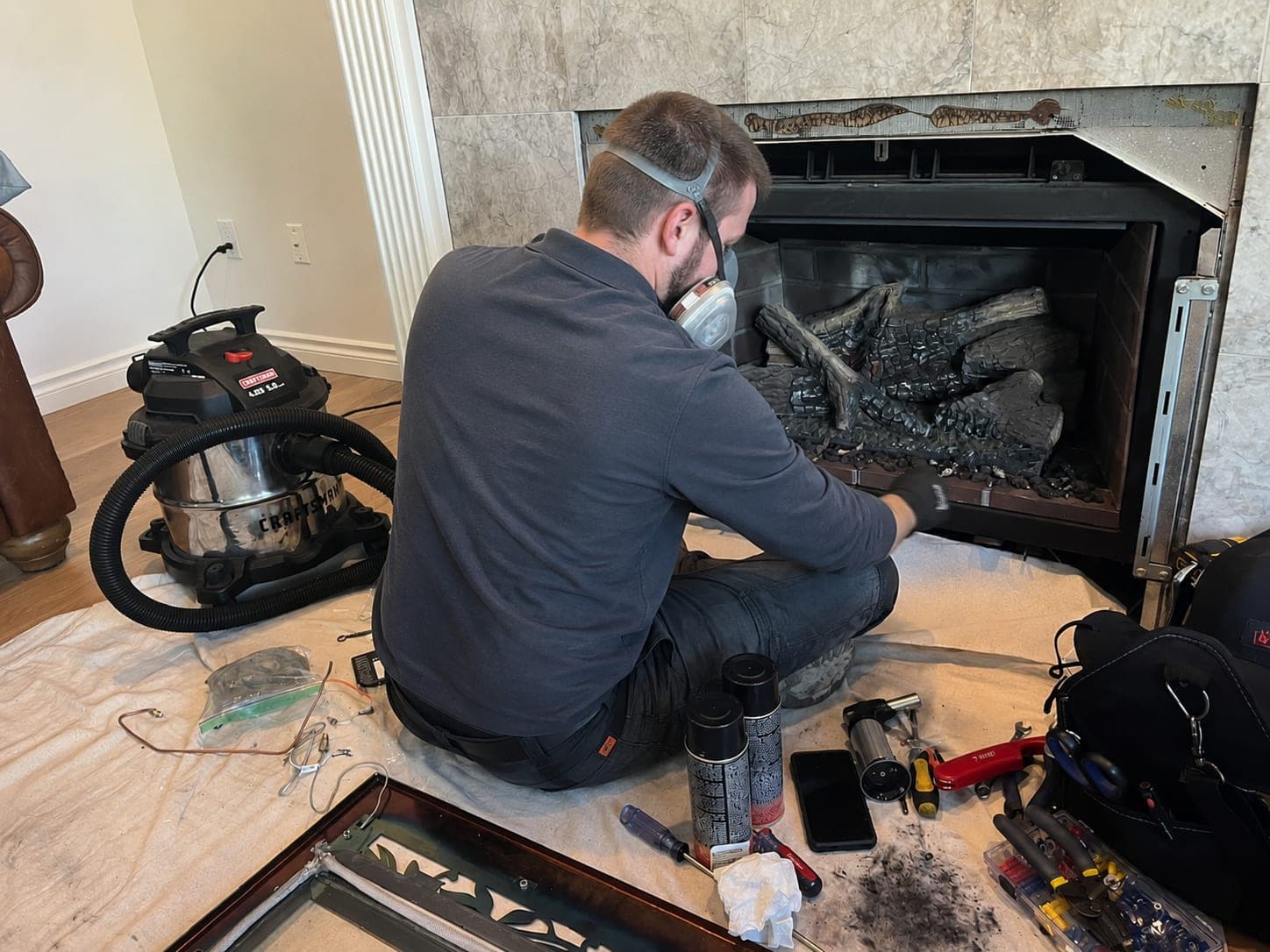
If you already have a sound wood-burning fireplace and chimney, a gas log set is often the simplest way to switch to gas. We run a gas line to the firebox, set the burner and ceramic logs, and arrange the logs so the flame burns cleanly. Vented log sets use the existing chimney, so the flue and damper need to be in good working order first. We check that before anything is installed.
Gas logs are mainly about looks and convenience. If heat output matters more to you, a sealed gas insert or a full gas fireplace usually suits better, and we'll go over that during the estimate.
Gas vs. electric fireplace installation
Homeowners often weigh gas against electric. An electric fireplace needs only a suitable outlet or circuit. There's no gas line and no venting, but the flame is an effect, and the heat comes from a resistance heater. A gas fireplace burns real fuel, gives off more heat and keeps working through a power outage if it has a standing pilot or battery backup. Many gas units still need electricity for electronic ignition, fans and remotes, so we plan for a power supply as part of the job.
If you're not sure which way to go, our fireplace installation service covers the broader options, and we can talk it through at the estimate.
What the installation visit involves, step by step
Free estimate and walkthrough
We look at where you want the fireplace, how it could vent, where the gas supply would come from and what power is nearby.
Choosing the unit and vent type
We match the model, size and venting method to the room and the house. We work on all major brands.
Gas line and venting
We run the gas line to the appliance location and install the vent pipe or prepare the existing chimney, keeping the clearances the manufacturer specifies.
Setting the unit
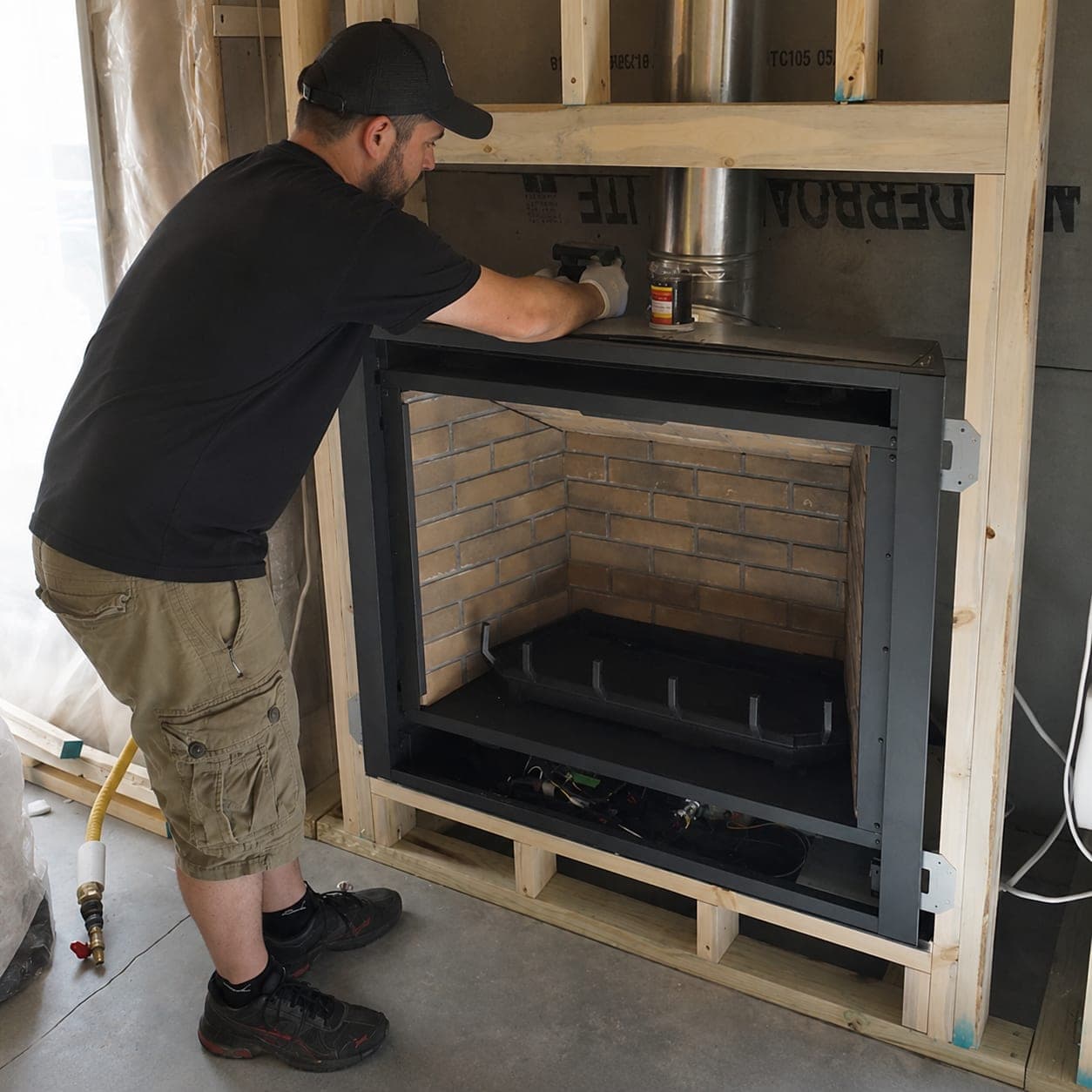
We fit the firebox or insert, connect the gas and power, and install the logs, media and glass.
Testing
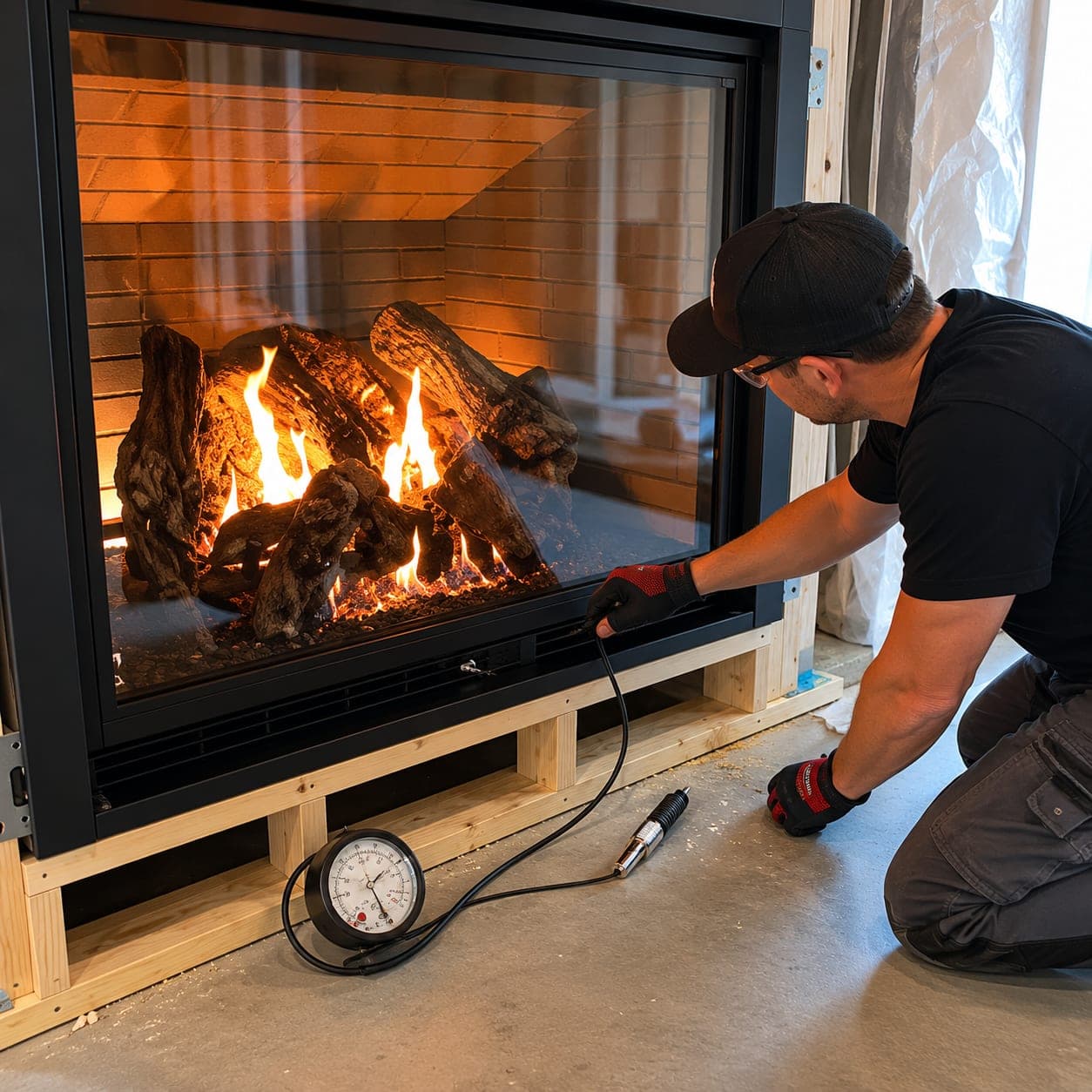
We check the connections for leaks, light the unit, adjust the flame and confirm the venting draws properly.
Handover
We show you how to operate the fireplace, the pilot and the remote, and what routine care it needs.
Safety and upkeep after installation
Habits that keep a gas fireplace safe
- Keep a working carbon monoxide alarm on every level of the home, including near bedrooms.
- Keep furniture, curtains and decorations clear of the glass front, which gets very hot.
- Don't run the fireplace with cracked glass or a door that won't seal.
- Keep the outdoor vent termination clear of snow, leaves and plantings.
- Watch for soot on the glass or a lazy yellow flame while it runs. Shut it off and have it checked.
A gas fireplace needs much less care than a wood-burning one, but it still benefits from a periodic check of the burner, pilot, glass seal and venting. Our gas fireplace service and maintenance covers that routine work.
Booking your gas fireplace installation
Call or request an estimate, and tell us where you'd like the fireplace and whether you're starting from an existing fireplace, a chimney or a bare wall. Commercial and property-manager work is offered too.