The short answer
For most homes, a direct vent gas fireplace is the safer, lower-maintenance long-term choice because combustion is sealed off from the room. A ventless (also called vent-free) fireplace puts nearly all of its heat into the room and needs no vent run, but it also releases water vapor and combustion byproducts indoors. It depends on an oxygen depletion sensor and on careful sizing and use.
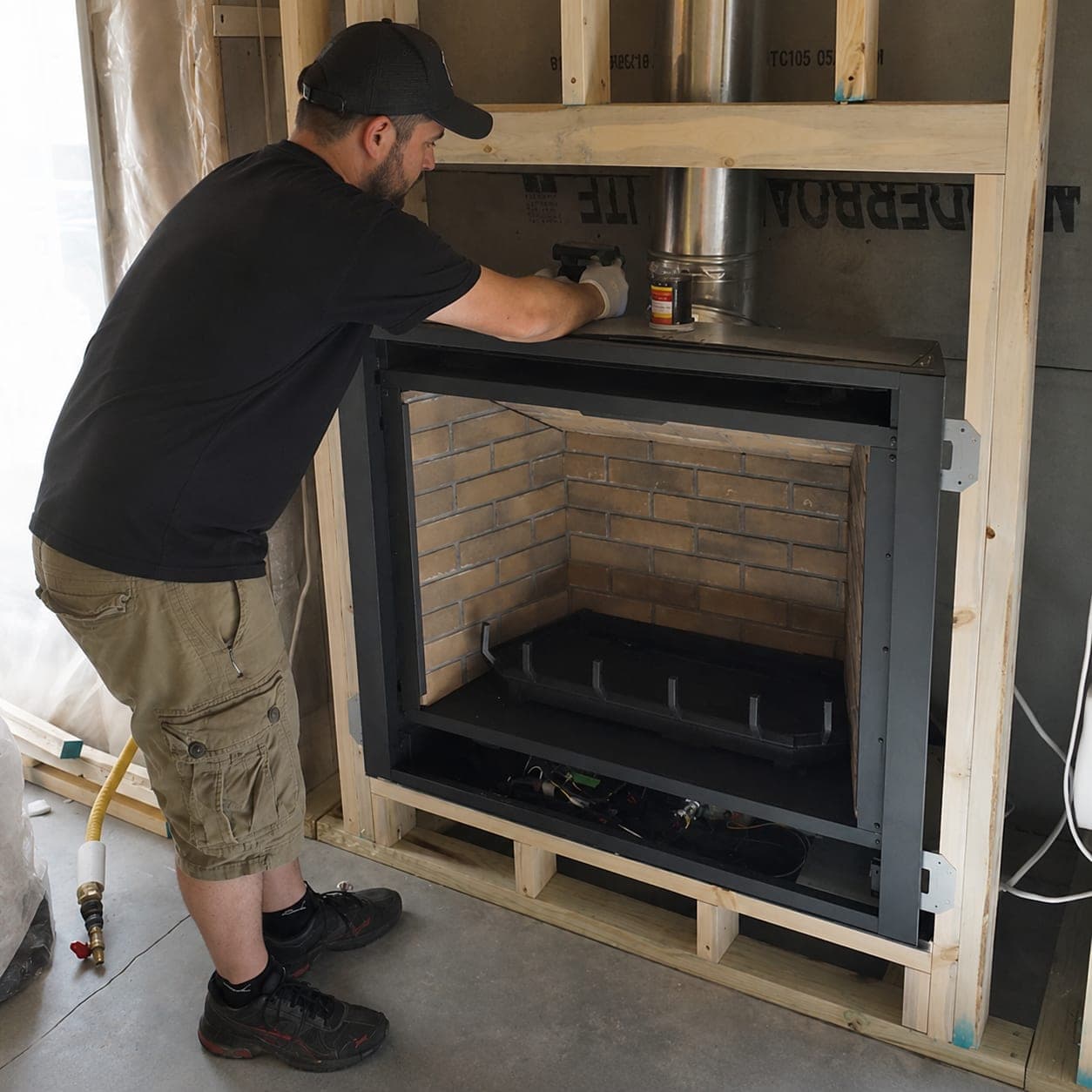
If you can run a vent through an exterior wall, the roof or an existing chimney, direct vent is usually the better fit. Ventless makes sense only in limited situations where venting truly isn't practical, it's allowed where you live, and the room is large enough for the unit's rating.
Before anything else: if you smell gas
Smell gas? Get out first.
Leave the building right away and take everyone with you. Don't flip light switches, use phones, unplug anything or light a flame inside. Once you're outside and a safe distance away, call your gas utility or 911. Don't go back in until they say it's safe.
How each type works
Direct vent
A direct vent fireplace has a sealed firebox behind a fixed glass front. A two-layer pipe (a pipe inside a pipe) runs to the outdoors. Fresh air comes in through one layer, and exhaust goes out through the other. Room air never feeds the flame, and combustion gases never enter the room. The pipe can end on an exterior wall or the roof, or it can run up an existing chimney when you use a direct vent insert with liners.
Ventless (vent-free)
A ventless fireplace has no flue or vent at all. It burns gas with air from the room, and the byproducts of combustion stay in the room. These include water vapor, carbon dioxide and small amounts of carbon monoxide and nitrogen dioxide. Ventless units are built to burn very cleanly. They have an oxygen depletion sensor that shuts off the gas if oxygen in the room drops too low. Manufacturers set limits on room size and often on how long the unit should run at a time.
Side-by-side comparison
| Feature | Direct vent | Ventless |
|---|---|---|
| Combustion air | Drawn from outdoors through the vent pipe | Drawn from the room |
| Exhaust | Sent outdoors | Released into the room |
| Indoor air quality | Sealed off from living space | Adds moisture and combustion byproducts indoors |
| Heat delivered to the room | High; some heat leaves with the exhaust | Very high; nearly all heat stays in the room |
| Installation | Needs a vent route through a wall, roof or chimney | No vent run; needs a gas line and an approved location |
| Flame appearance | Larger, more natural-looking flames are common | Flames are often smaller and bluer for clean burning |
| Odor | Typically little to none in the room | Some people notice a faint smell, especially with new units or dust |
| Where allowed | Widely accepted | Restricted or banned in some states, cities and room types |
Combustion air
- Direct vent
- Drawn from outdoors through the vent pipe
- Ventless
- Drawn from the room
Exhaust
- Direct vent
- Sent outdoors
- Ventless
- Released into the room
Indoor air quality
- Direct vent
- Sealed off from living space
- Ventless
- Adds moisture and combustion byproducts indoors
Heat delivered to the room
- Direct vent
- High; some heat leaves with the exhaust
- Ventless
- Very high; nearly all heat stays in the room
Installation
- Direct vent
- Needs a vent route through a wall, roof or chimney
- Ventless
- No vent run; needs a gas line and an approved location
Flame appearance
- Direct vent
- Larger, more natural-looking flames are common
- Ventless
- Flames are often smaller and bluer for clean burning
Odor
- Direct vent
- Typically little to none in the room
- Ventless
- Some people notice a faint smell, especially with new units or dust
Where allowed
- Direct vent
- Widely accepted
- Ventless
- Restricted or banned in some states, cities and room types
Why the venting difference matters
Moisture
Burning natural gas produces water vapor. With a ventless unit, that vapor stays indoors. In a tight, well-insulated house, it can show up as fogged or wet windows. Over time it can also contribute to mold or peeling paint. A direct vent fireplace sends that moisture outside.
Air quality and health
A ventless fireplace that is properly sized, clean and adjusted is designed to keep byproducts low. Even so, it adds them to the air you breathe. People with asthma, allergies or other breathing sensitivities often notice the difference. Dirty burners, dust on the logs or the wrong log placement can increase byproducts and odor.
Codes and where you can use one
Some states and municipalities limit or prohibit vent-free gas appliances. Many also bar them from bedrooms and bathrooms or cap the heat output for the room size. Check with your local building department before buying a ventless unit. Direct vent appliances rarely run into these restrictions.
What helps you decide
Questions to answer before you choose
- Is there a practical vent route through an exterior wall, the roof or an existing chimney?
- Do local codes allow vent-free appliances in the room you have in mind?
- Is the room large enough for the unit's rated heat output?
- Does anyone in the home have asthma, allergies or other breathing sensitivities?
- Do you already see window condensation or humidity problems in winter?
- Do you want it mainly for steady heat, mainly for looks, or both?
- Will you keep up with yearly cleaning and a check of the burner, sensor and logs?
If you have an existing wood-burning fireplace, you have more options. A direct vent insert can often use the chimney as its vent path. You can also keep the masonry fireplace and add a gas log set. Our guide to choosing between gas and wood when converting a fireplace walks through that decision. To see what a new unit involves from gas line to final venting, read about how gas fireplace installation works.
Where gas logs fit in
Gas logs come in vented and vent-free versions. Vented log sets burn in an open masonry firebox with the chimney damper open. Most of their heat goes up the chimney, so they're chosen more for looks than warmth. Vent-free log sets follow the same rules and tradeoffs as other ventless appliances. If you're weighing a log set against a full fireplace or insert, the gas fireplace logs service page explains the options we install.
Signs either type needs attention
- Soot on the glass, logs or surrounding wall
- A flame that is mostly yellow and lazy when it should be crisp, or a pilot that keeps going out
- New or stronger odors when the unit runs
- A ventless unit that shuts itself off, which can mean the oxygen depletion sensor is reacting to room air or is dirty
- If a carbon monoxide alarm sounds, get everyone outside and call 911.
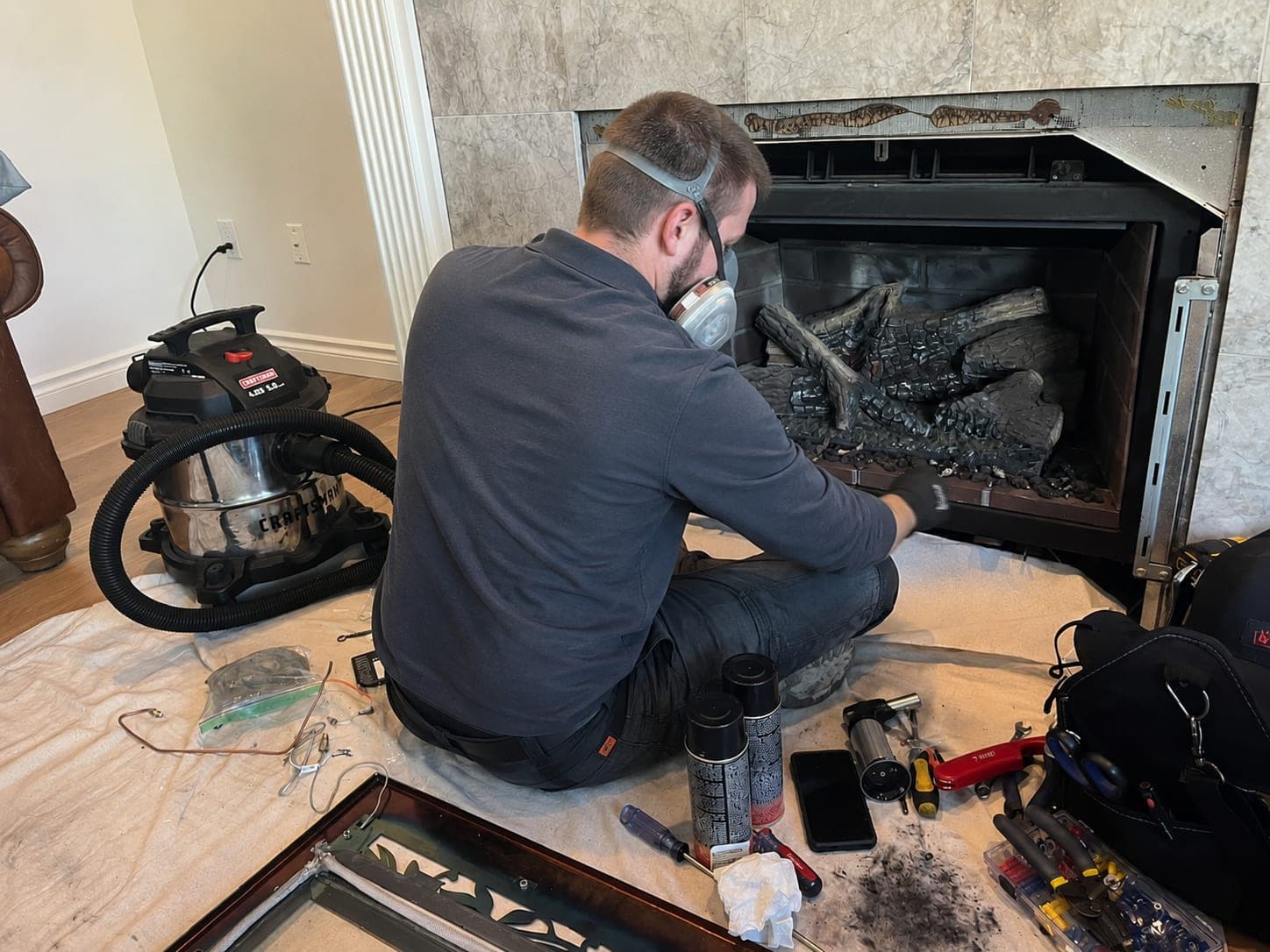
If the carbon monoxide alarm sounds, get everyone outside and call 911 or your gas utility. For the other signs, turn the unit off and have it looked at before using it again. Our gas fireplace repair work covers burners, pilots, sensors, glass and venting on both types.
We install, service and repair direct vent and ventless gas fireplaces, inserts and log sets on all major brands, and estimates are free.