When the fireplace makes the room smell
Most homeowners notice it the same way. The fire is out, sometimes for weeks, yet the living room smells like an old campfire, a wet basement or something sour. The odor may come and go with the weather, or it may get stronger when the furnace runs or a kitchen fan is on. A chimney smell is rarely just a nuisance. It usually means something is building up, getting wet or blocking the flue, and those conditions are easier to fix early.
Common signs of a chimney odor problem
Signs homeowners usually notice
- A heavy, smoky or tar-like smell near the fireplace when no fire is burning
- An odor that gets worse on humid days or after rain
- A musty, damp-basement smell coming from the firebox
- Cold air or a draft coming down the chimney
- A smell that gets stronger when exhaust fans, the dryer or the furnace run
- A rotting or animal smell, sometimes with scratching or chirping sounds
- Dark stains, flakes or a sticky black residue inside the firebox or on the damper
- Water marks on the walls or ceiling near the chimney
Possible causes of a chimney smell
Several problems can produce the same odor, so it takes an inspection to know which one is behind yours. These are the usual possibilities:
What may be causing the odor
01Creosote and soot buildup
- What you may notice
- A strong smoky, tar-like or asphalt smell, often worse in warm or humid weather.
- How it’s confirmed
- The flue walls, smoke chamber and damper are checked for deposits and how thick they are.
02Moisture getting into the chimney
- What you may notice
- A musty or sour smell after rain, damp masonry, or stains near the chimney.
- How it’s confirmed
- The cap, crown, flashing and masonry are checked for places where water gets in.
03Animals, nests or debris
- What you may notice
- A rotting or foul smell, sounds in the flue, twigs or leaves in the firebox, or poor draft.
- How it’s confirmed
- The flue is looked at from top and bottom, with a camera where needed, to find any blockage.
04Air being pulled down the flue
- What you may notice
- The smell gets stronger when fans, the dryer or the furnace run, or a cold draft comes from the fireplace.
- How it’s confirmed
- The damper seal and the way air moves through the chimney are checked while household appliances run.
05Damage that lets water and air in
- What you may notice
- Cracked crown, loose bricks, gaps around flashing or a chimney that looks out of line.
- How it’s confirmed
- The exterior masonry, crown and flashing are inspected for cracks and separation.
Creosote is worth understanding even if the smell turns out to have another cause. It is flammable, and heavy buildup is a fire risk. Read about creosote dangers and why chimney maintenance matters for the background.
How urgent is it, and when should you stop using the fireplace?
A faint smoky smell in humid weather is usually not an emergency, but it should be checked before the next fire. Some signs mean you should stop using the fireplace or stove until it has been inspected:
- Smoke coming into the room instead of going up the chimney
- Thick, shiny or flaky black buildup you can see inside the firebox or flue
- Signs of an animal or nest in the flue
- Cracks in the firebox or visible damage to the chimney
- Any smell of gas around a gas fireplace or gas logs
If you smell gas
A rotten-egg smell near a gas fireplace is not a chimney odor. Do not light anything or flip switches. Leave the house and call your gas utility or 911 from outside. Have the fireplace checked before you use it again.
Emergency calls are accepted, and 24-hour service runs Sunday–Friday. Same-day visits are available where the schedule allows.
What normally fixes a chimney smell
The fix depends on what the inspection finds. Air fresheners only cover the odor for a while. The lasting fix removes whatever is causing it and keeps it from coming back.
How the problem is usually solved
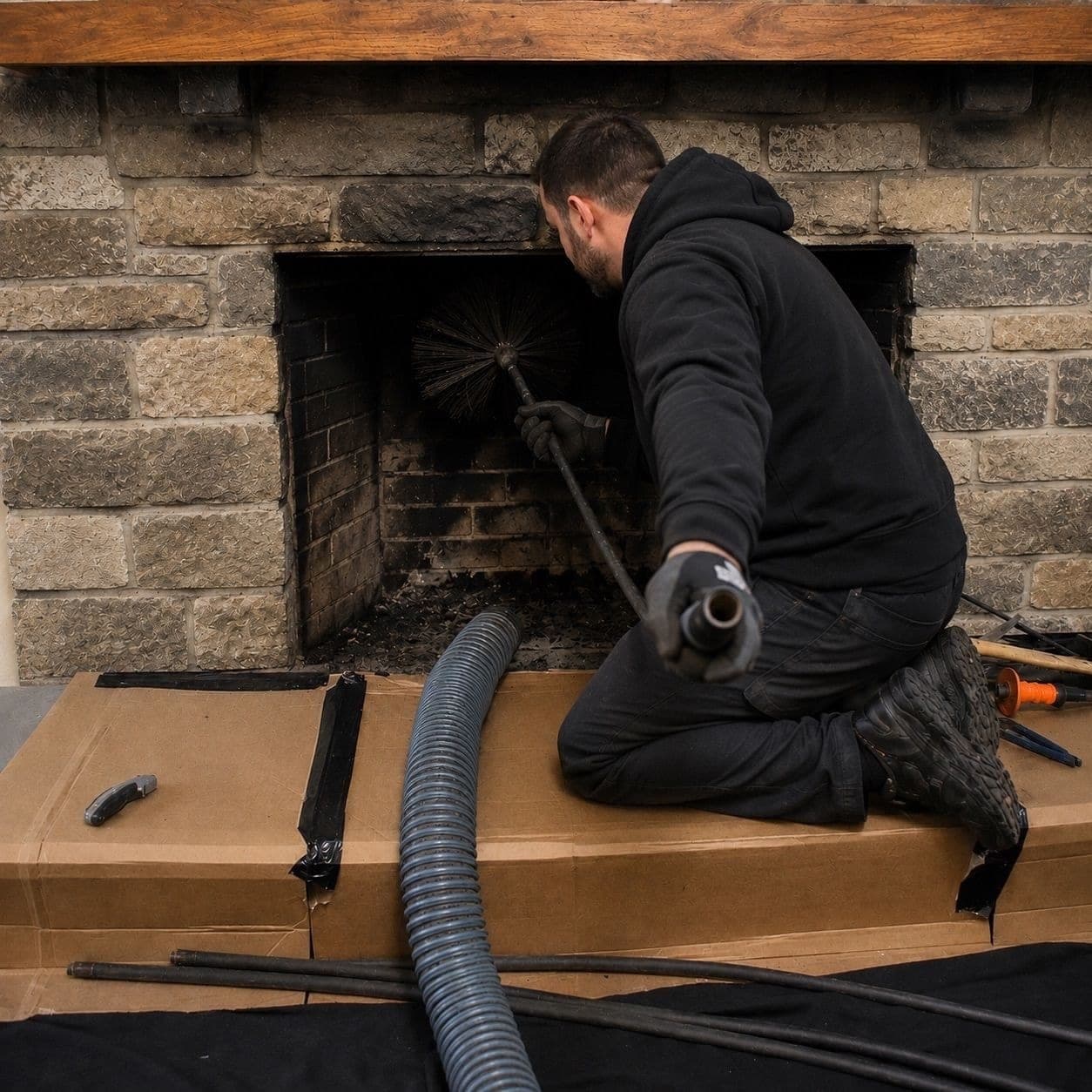
Inspect the chimney
The flue, smoke chamber, damper, cap and exterior are checked to find where the odor starts.
Clean out the source
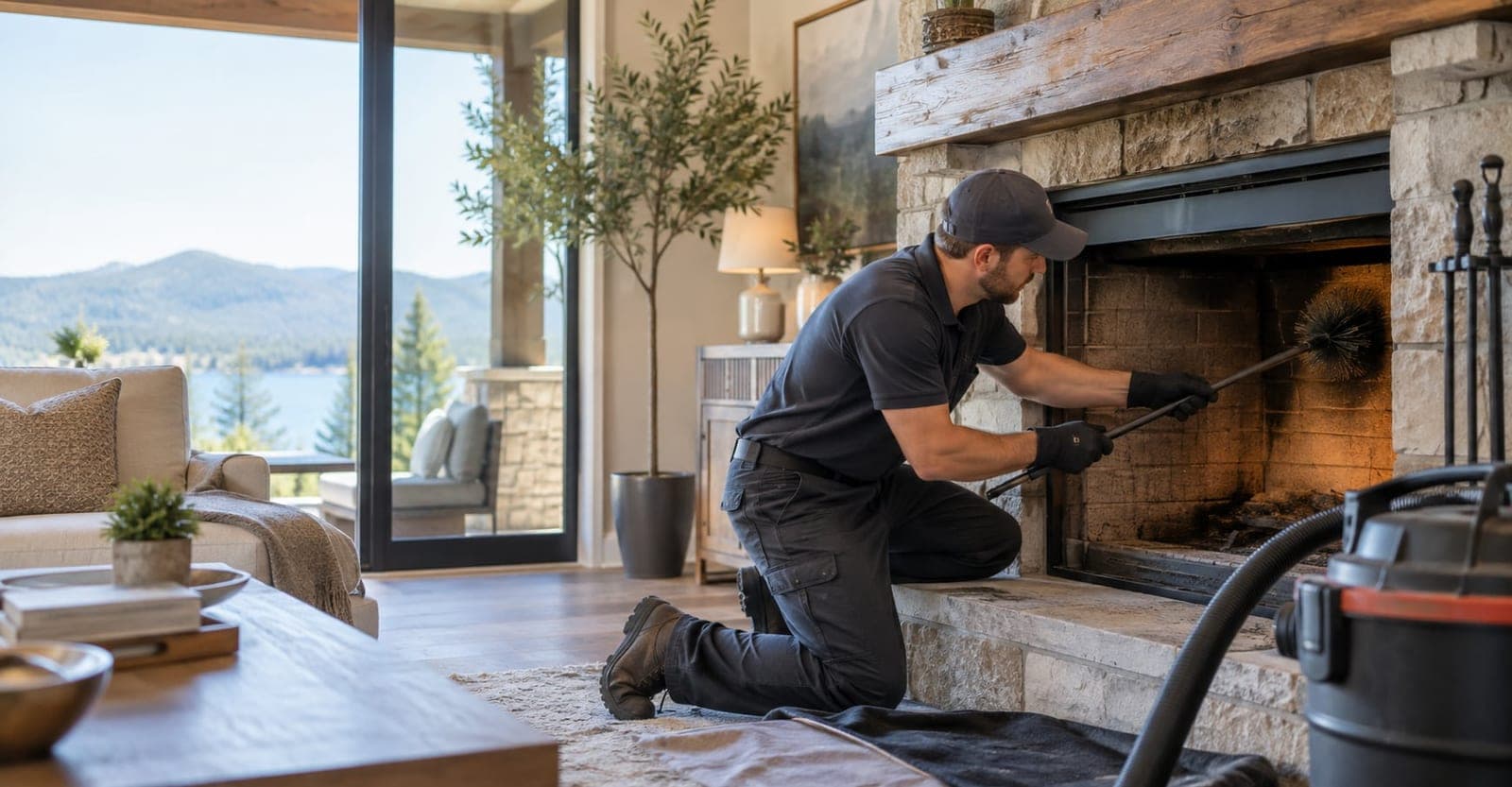
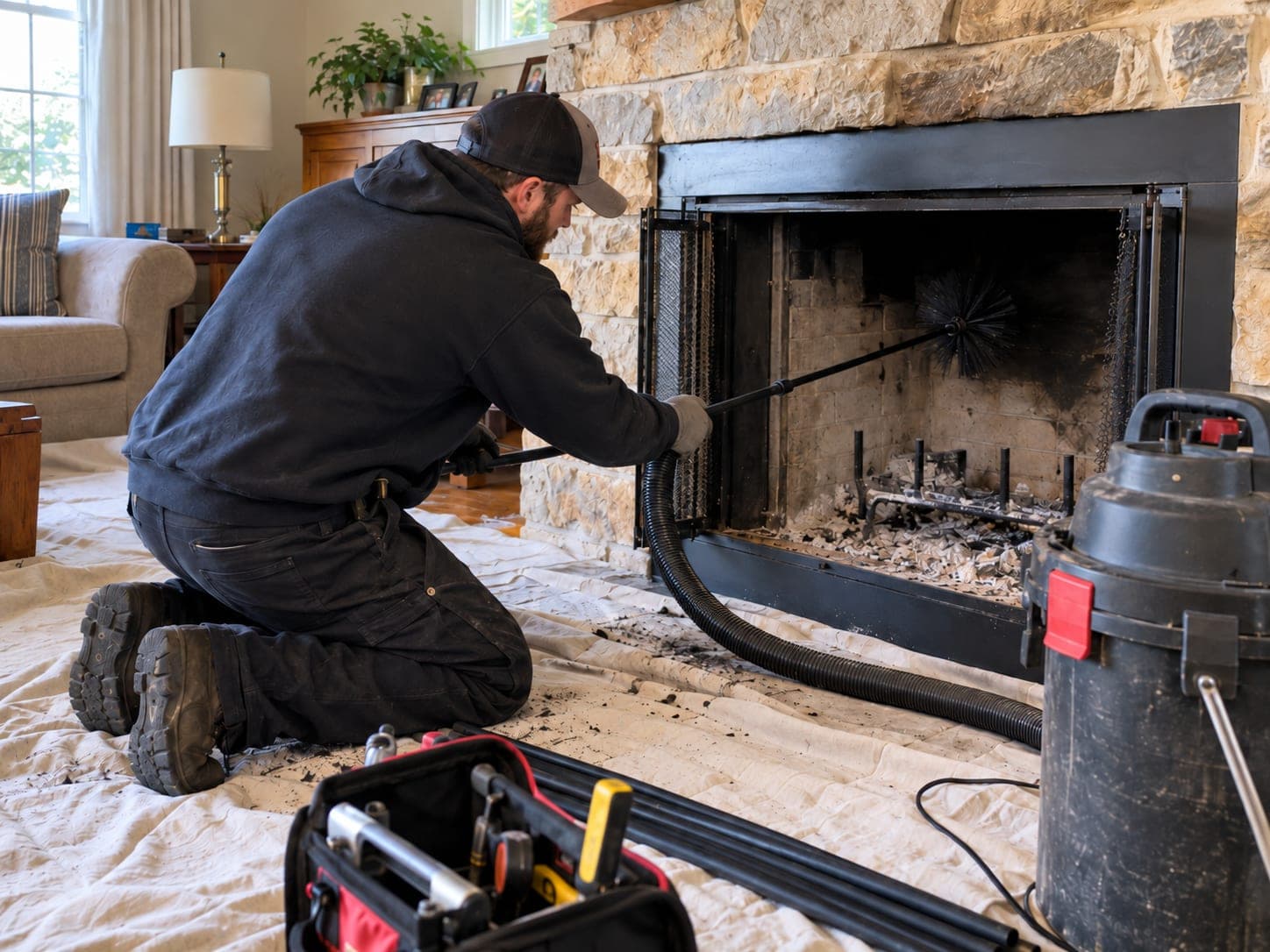
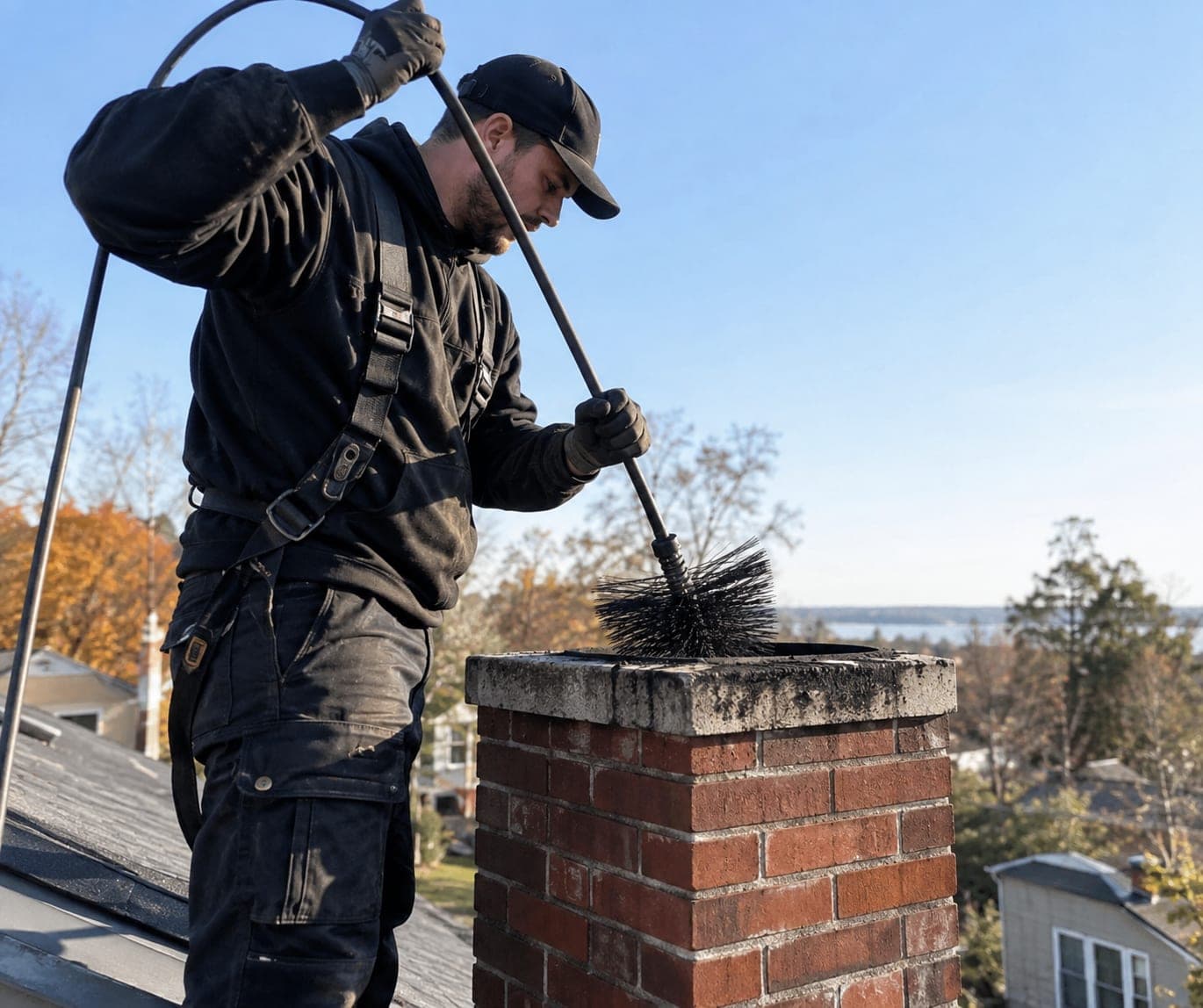
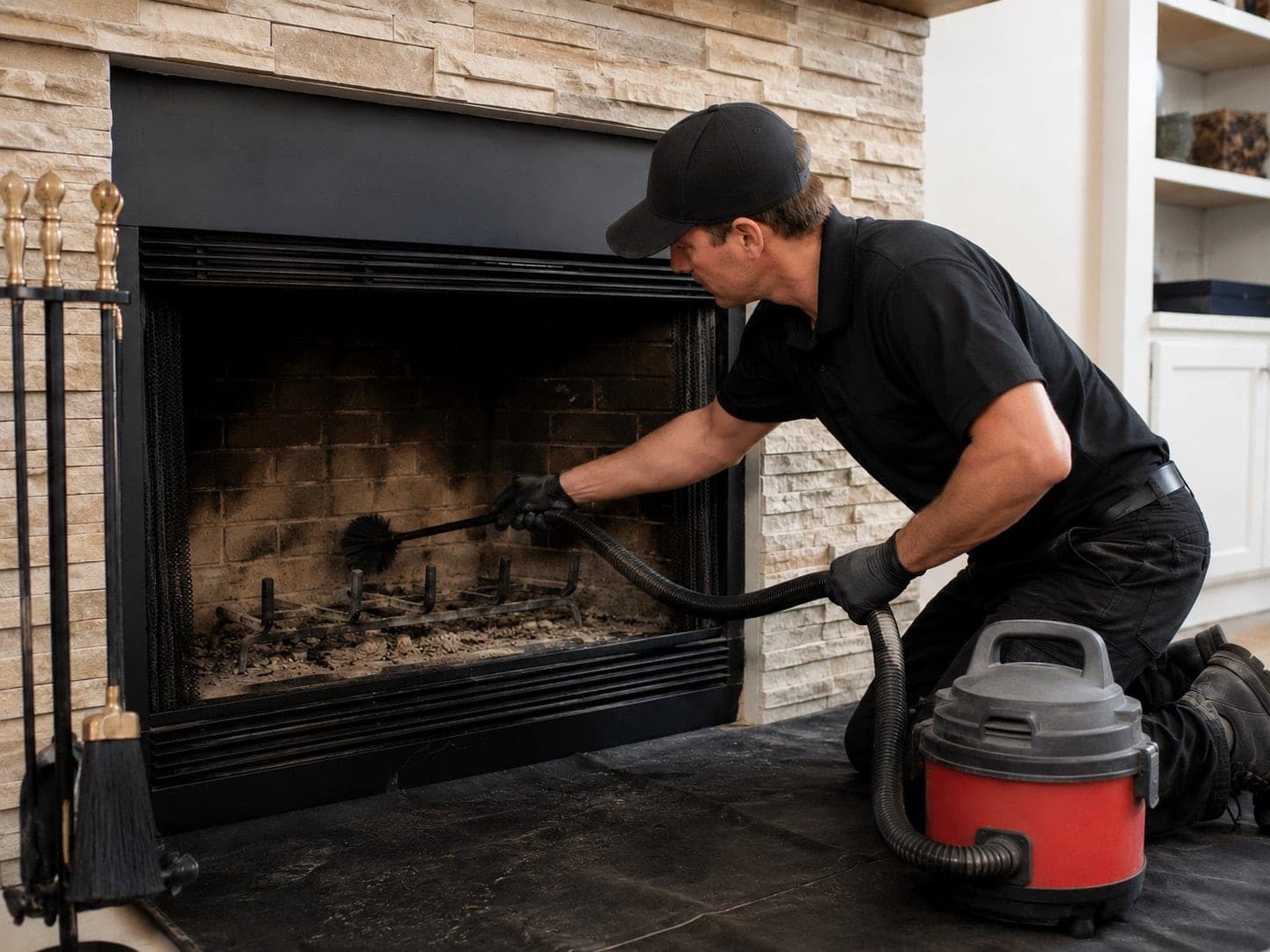
Creosote, soot, debris or nesting material is removed. A professional chimney sweep clears deposits from the flue and smoke chamber.
Treat the odor
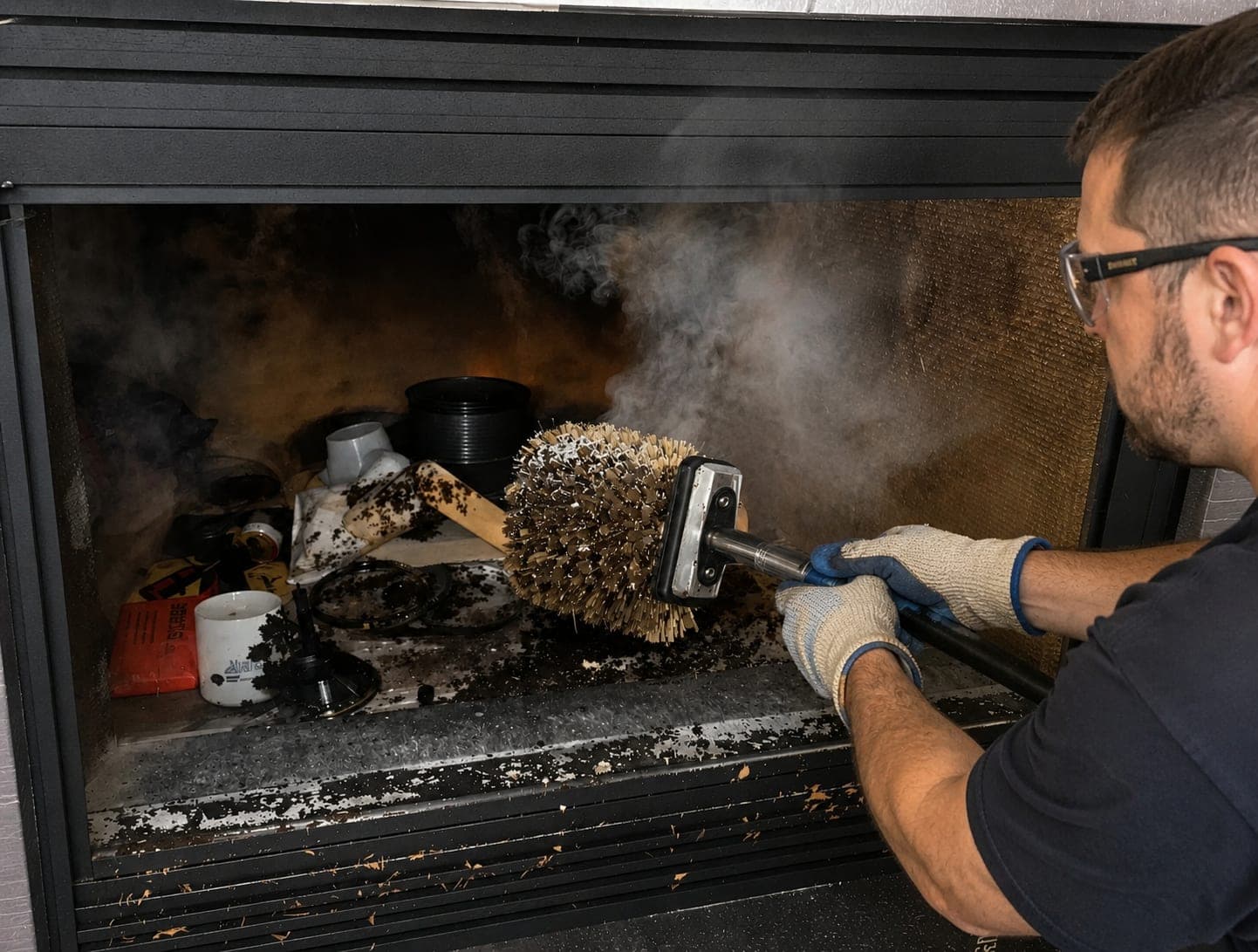
When the smell has soaked into the masonry, how chimney odor removal works covers deodorizing the flue and firebox after cleaning.
Stop water and air from getting in
A missing cap, cracked crown, failing flashing or leaky damper may need repair so the smell does not come back after the next rain.
For most homes, the core fix is our chimney odor removal service, combined with cleaning and any repairs the inspection calls for.
What not to do
- Don't burn a fire to try to burn off the smell. Heavy creosote can catch fire.
- Don't spray fragrances or chemicals into the flue or firebox.
- Don't try to pull out an animal or nest by hand from inside the fireplace.
- Don't climb onto the roof to look at the chimney yourself.
- Don't keep the damper open with fans running if the smell gets worse. Close it until the chimney is checked.