On this page
What chimney odor removal actually involves
Chimney odor removal is less about deodorizing and more about diagnosis. A chimney smells because something inside it gives off odor. That might be creosote on the flue walls, soot in the smoke chamber, water soaking into masonry, leaves and debris, or an animal that nested or died inside. The job is to find which of these is behind your smell, clear it out, and point out anything that will bring it back.
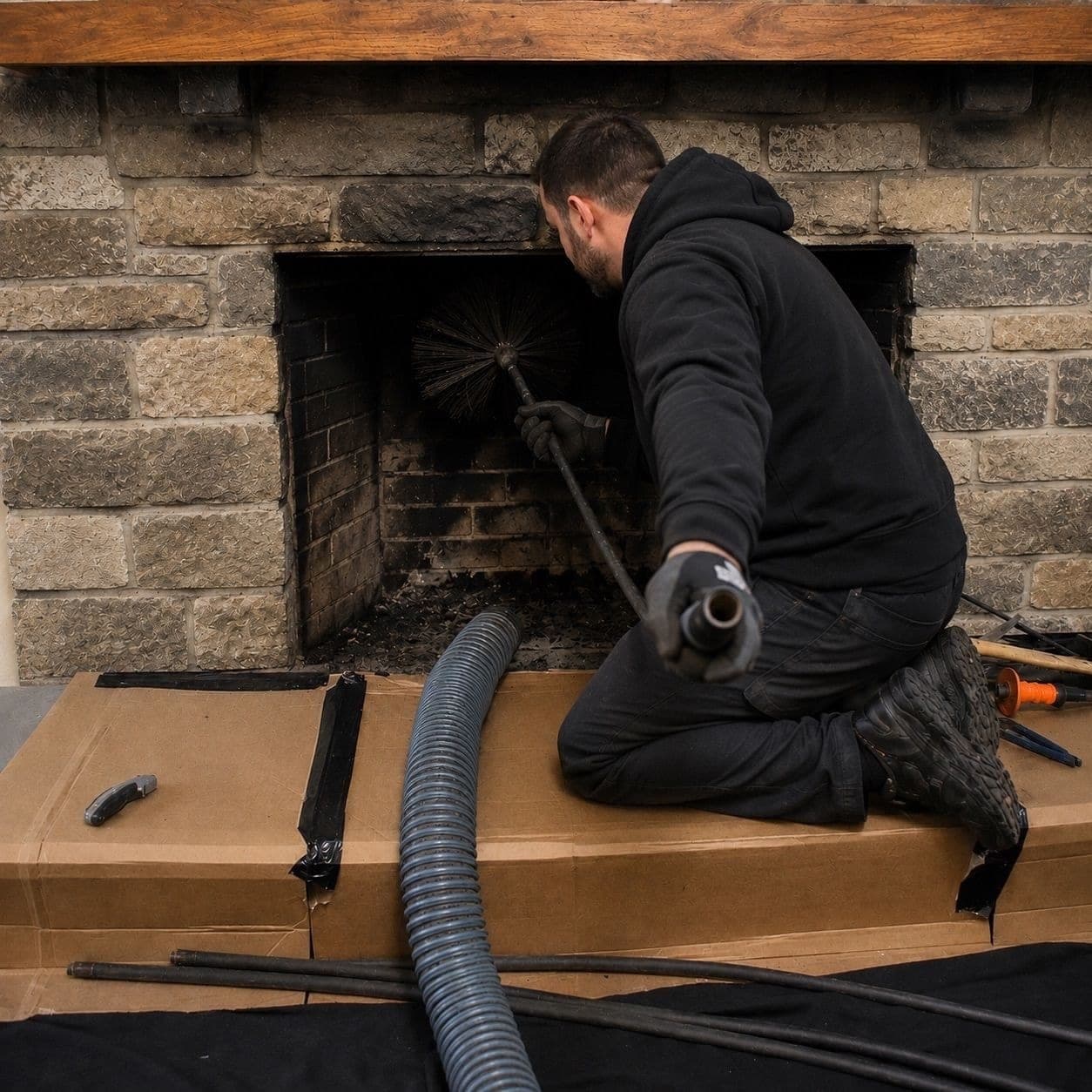
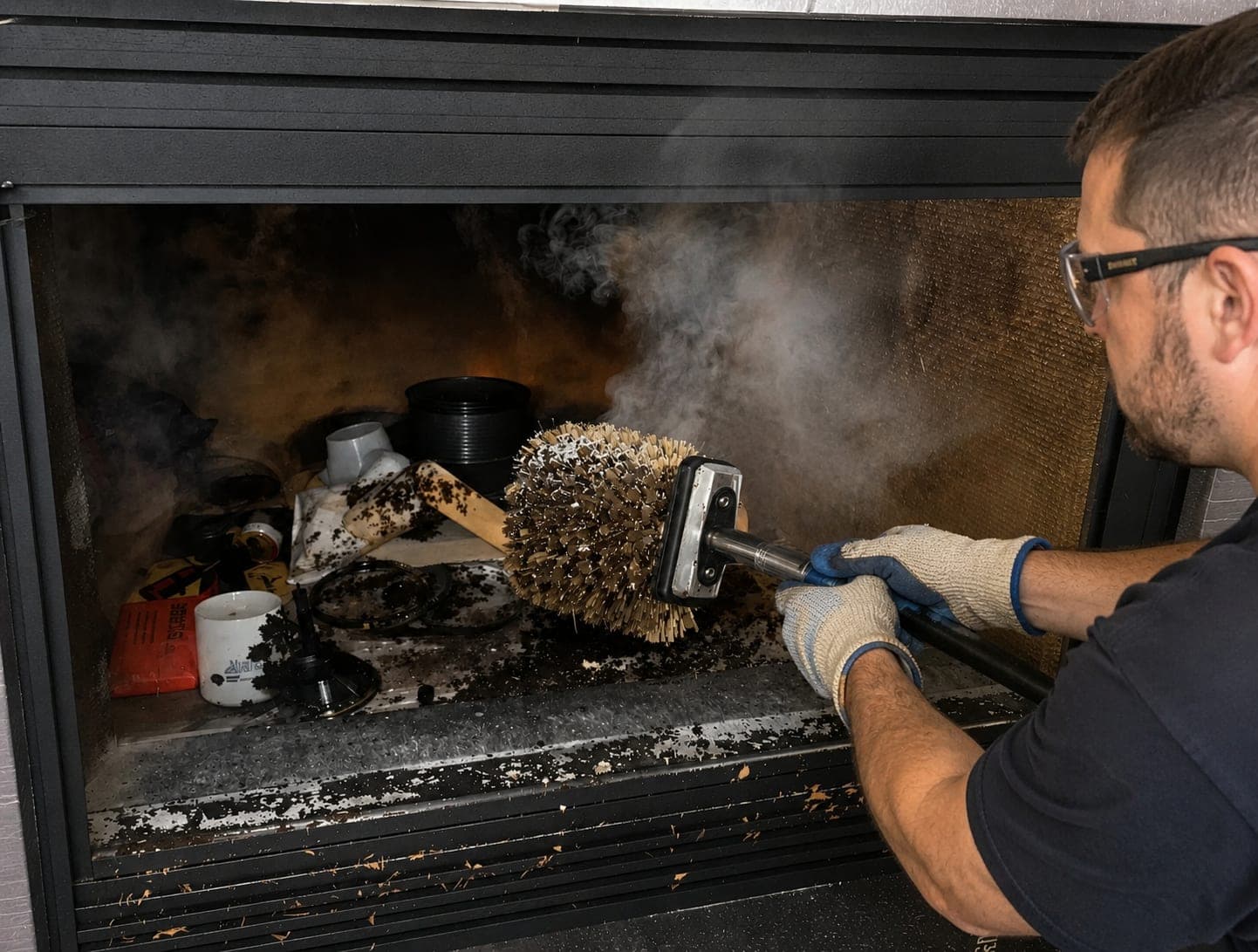
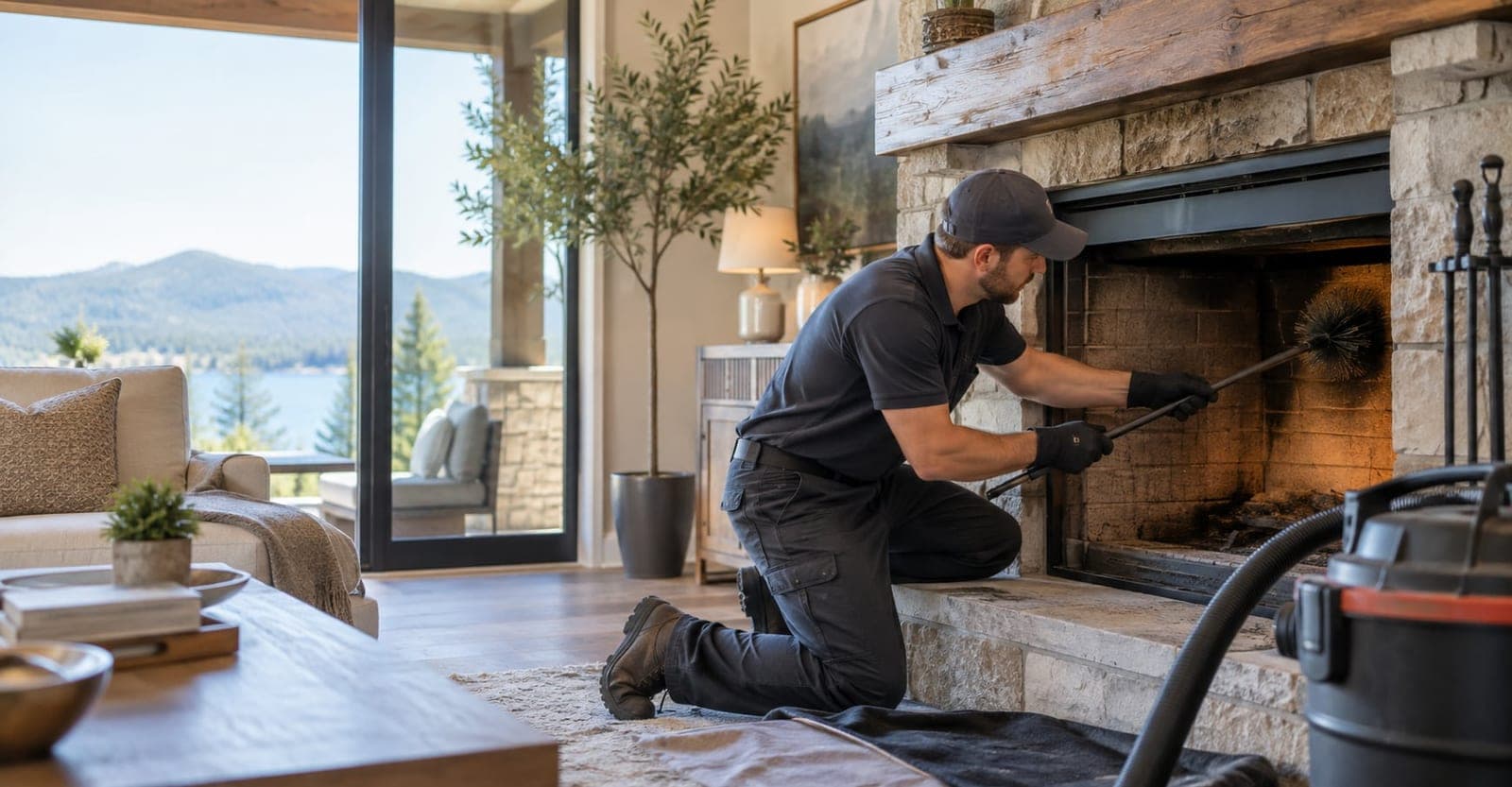
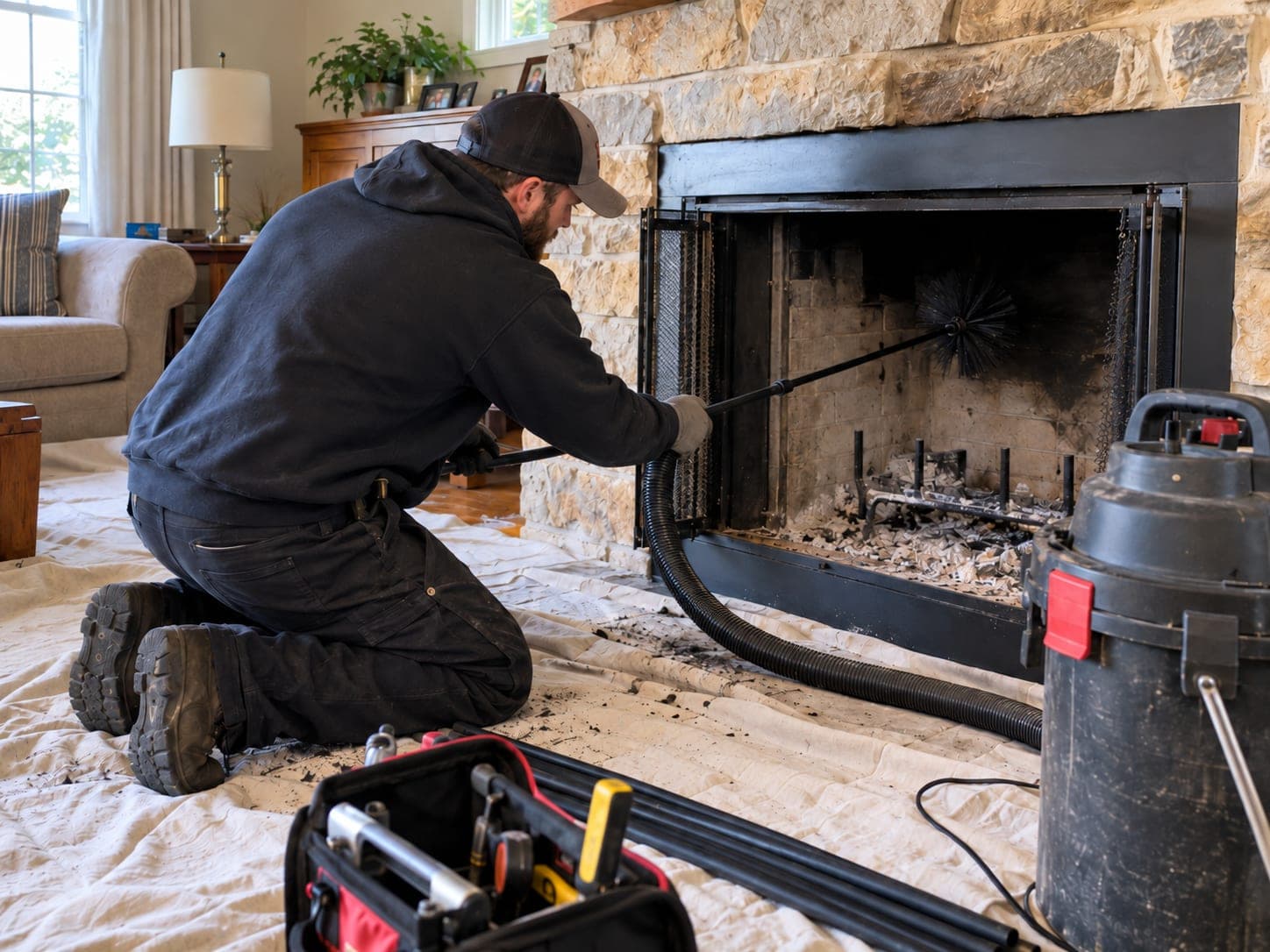
In many homes the main work is a thorough cleaning of the firebox, smoke chamber and flue. When the cause is a nest or a lodged obstruction, the work overlaps with our chimney animal and nest removal service or with clearing a blocked flue. Odor removal ties those jobs together around one goal: a fireplace that doesn't smell up the room.
Signs your home may need chimney odor removal
The type of smell and when it shows up are useful clues. For more detail on what causes chimney smell, here are the patterns homeowners describe most often.
Common chimney odors and what usually causes them
01Smoky or barbecue-like smell when the fireplace isn't in use
- What you may notice
- Often stronger on warm, humid days or when the air conditioning runs.
- How it’s confirmed
- We inspect the flue and smoke chamber for creosote and soot buildup.
02Musty, damp or basement-like smell
- What you may notice
- Often noticed after rain. You may also see staining or flaking inside the firebox.
- How it’s confirmed
- We look for moisture getting in at the cap, crown and flashing, and for wet debris in the flue.
03Sharp, rotten or animal smell
- What you may notice
- Scratching or chirping sounds from the chimney, droppings or nesting material in the firebox, or a smell that came on suddenly.
- How it’s confirmed
- We check the flue and smoke shelf for nests, droppings or a trapped animal.
04Smell that gets worse when exhaust fans or the dryer run
- What you may notice
- The odor seems to be pulled down into the room rather than sitting in the chimney.
- How it’s confirmed
- We check the damper and the draft, and look for obstructions that keep air from moving up the flue.
A rotten-egg or gas smell is a different problem
If you smell gas near a gas fireplace or any gas appliance, don't light anything or flip switches. Leave the house and call your gas utility or emergency services from outside. A gas smell is not a chimney odor job. Once the gas supply is safe, we can service the gas fireplace or appliance.
What the visit involves, step by step
How a chimney odor visit usually goes
Talk through the smell
We ask what it smells like, when it's strongest, and whether anything changed recently, such as heavy rain, a new appliance or sounds in the chimney.
Inspect the system
We look at the firebox, damper, smoke chamber and flue. A camera inspection can show parts of the flue that can't be seen from the fireplace opening.
Remove the source
Depending on what we find, that means cleaning out creosote and soot, removing nests and debris, or clearing a blockage.
Clean the fireplace area
We clean the firebox and smoke shelf, where odor-holding residue tends to collect.
Explain what could bring it back
If water entry, a missing cap or a damper that doesn't seal is part of the cause, we show you and explain the repair options.
For many homes, the core of the work looks a lot like a full chimney sweep and cleaning. The difference is that every step is aimed at finding and removing whatever is causing the smell.
Why the smell often comes back, and how to keep it away
Creosote is the most common cause of a smoky smell. It is also a fire hazard, not just a nuisance. Our guide to creosote dangers and why chimney maintenance matters explains how it forms and why regular cleaning matters for safety.
Habits that help keep chimney odors down
- Have the chimney cleaned before creosote builds up heavily.
- Keep the damper closed when the fireplace isn't in use, if it seals properly. If the fireplace has gas logs, leave the damper as the installer set it — vented gas logs need it open.
- Make sure the chimney has a cap so rain, leaves and animals stay out.
- Deal with leaks early, before water soaks into the masonry.
- Burn dry, seasoned wood. Wet wood produces more creosote.
If moisture or an open chimney top is part of the problem, the long-term fix may be a repair such as chimney cap installation, waterproofing, leak repair or damper repair. We do all of these, and we'll tell you honestly whether any of them is needed.
Booking chimney odor removal
We also take on commercial and property-manager work, and we work on all major fireplace brands. Get in touch to describe the smell and request an estimate.