On this page
What chimney blockage removal involves
A chimney only works when the flue is open from the firebox or appliance connection all the way to the top. Chimney blockage removal means finding whatever is obstructing that path and taking it out without damaging the liner or masonry. The job covers anything that narrows or closes the flue. Routine soot is a separate job.

The most common obstructions include:
- Bird nests, leaves, twigs and other debris that fall or get carried in, especially when there is no cap
- Thick creosote deposits that build up until they choke the flue, which is where our creosote removal service comes in
- Pieces of broken flue tile, mortar or brick that have come loose and dropped into the flue or onto the smoke shelf
- Damper parts that have rusted, broken or jammed in a closed position
- Nesting animals or what they left behind, which call for chimney animal and nest removal rather than simple debris clearing
Signs your chimney is blocked
A blockage rarely shows up all at once. These are the problems that usually lead homeowners to call:
Common warning signs
- Smoke spills into the room instead of rising up the chimney
- The fire is hard to start or burns weakly even with dry wood
- Sticks, leaves, nesting material or masonry chips show up in the firebox
- Scratching, chirping or rustling sounds come from inside the chimney
- A stale, smoky or musty smell hangs around the fireplace
- If a carbon monoxide alarm sounds, get everyone outside and call 911.
- You can't see daylight looking up through an open damper on a wood-burning fireplace
A smell on its own is not always a blockage. Damp deposits and trapped moisture can cause it too, and in that case chimney odor removal may be the better fit. The inspection at the start of the visit sorts that out.
Stop using the fireplace if smoke backs up
A blocked flue can push smoke and carbon monoxide back into living space. If smoke is entering the room, put the fire out if you can do so safely, ventilate the house, get people out if the alarm keeps sounding, and don't relight until the chimney has been cleared and checked. If a carbon monoxide alarm sounds, get everyone outside and call 911.
What happens during the visit
Blockage removal, step by step
Talk through the symptoms
We ask what you've noticed, when it started and what fuel the chimney serves, which often narrows down the likely cause.
Protect the room
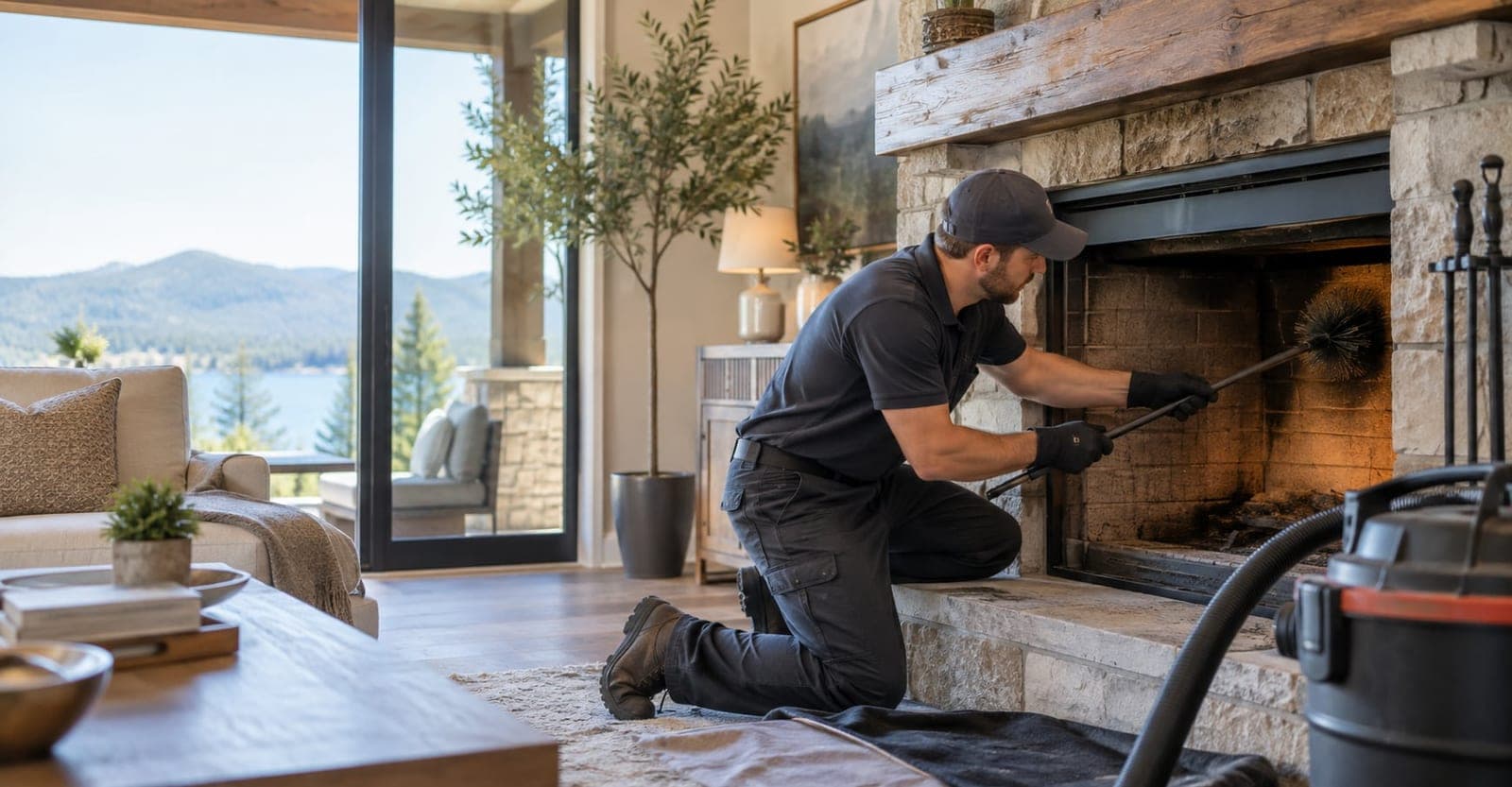
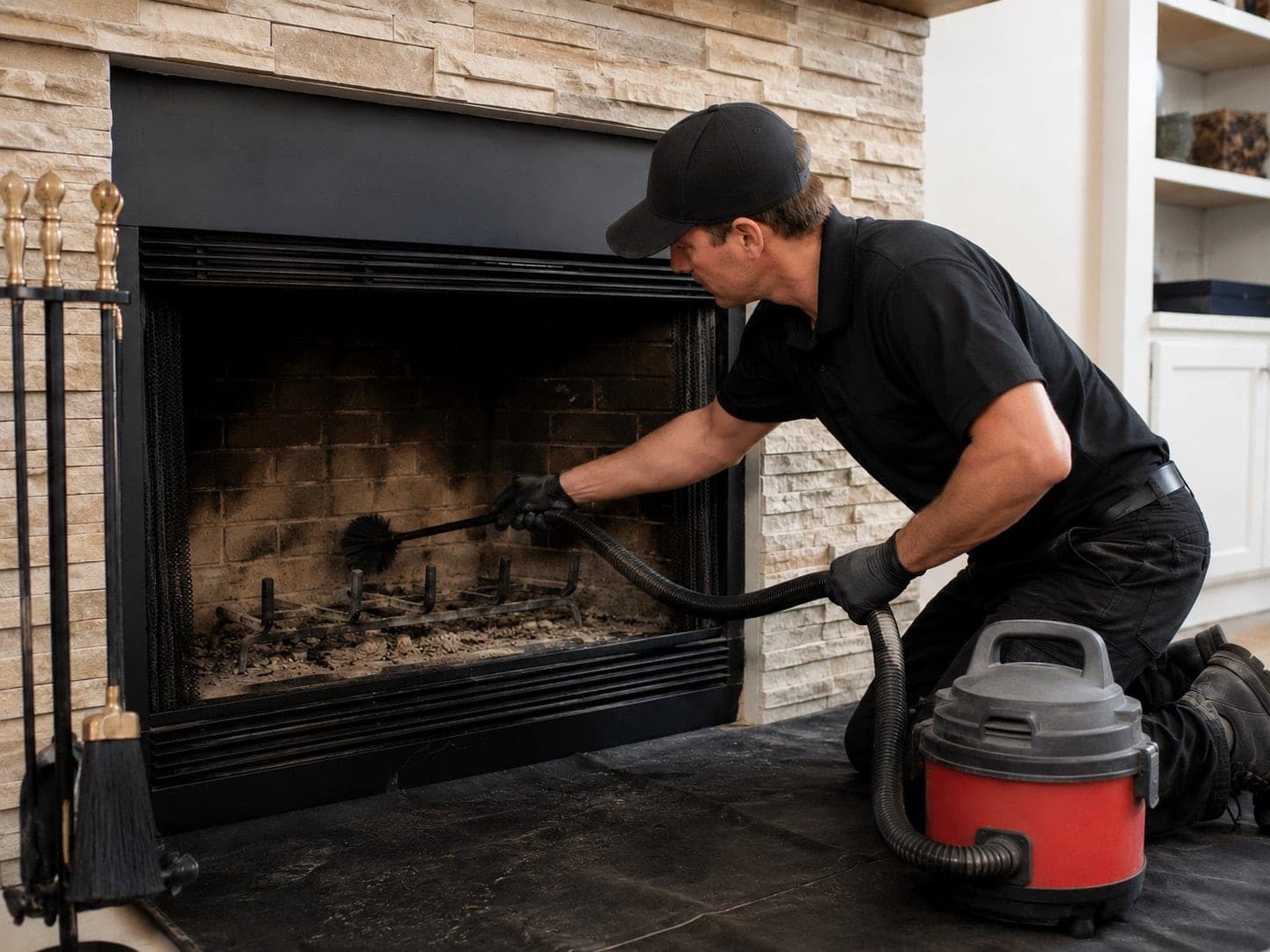
Drop cloths go down around the hearth so soot and debris stay off your floor and furniture.
Locate the blockage
We check the firebox, damper and smoke shelf from below and the flue from above. When the obstruction sits out of sight, a camera can show exactly where it is and what it is.
Clear it out
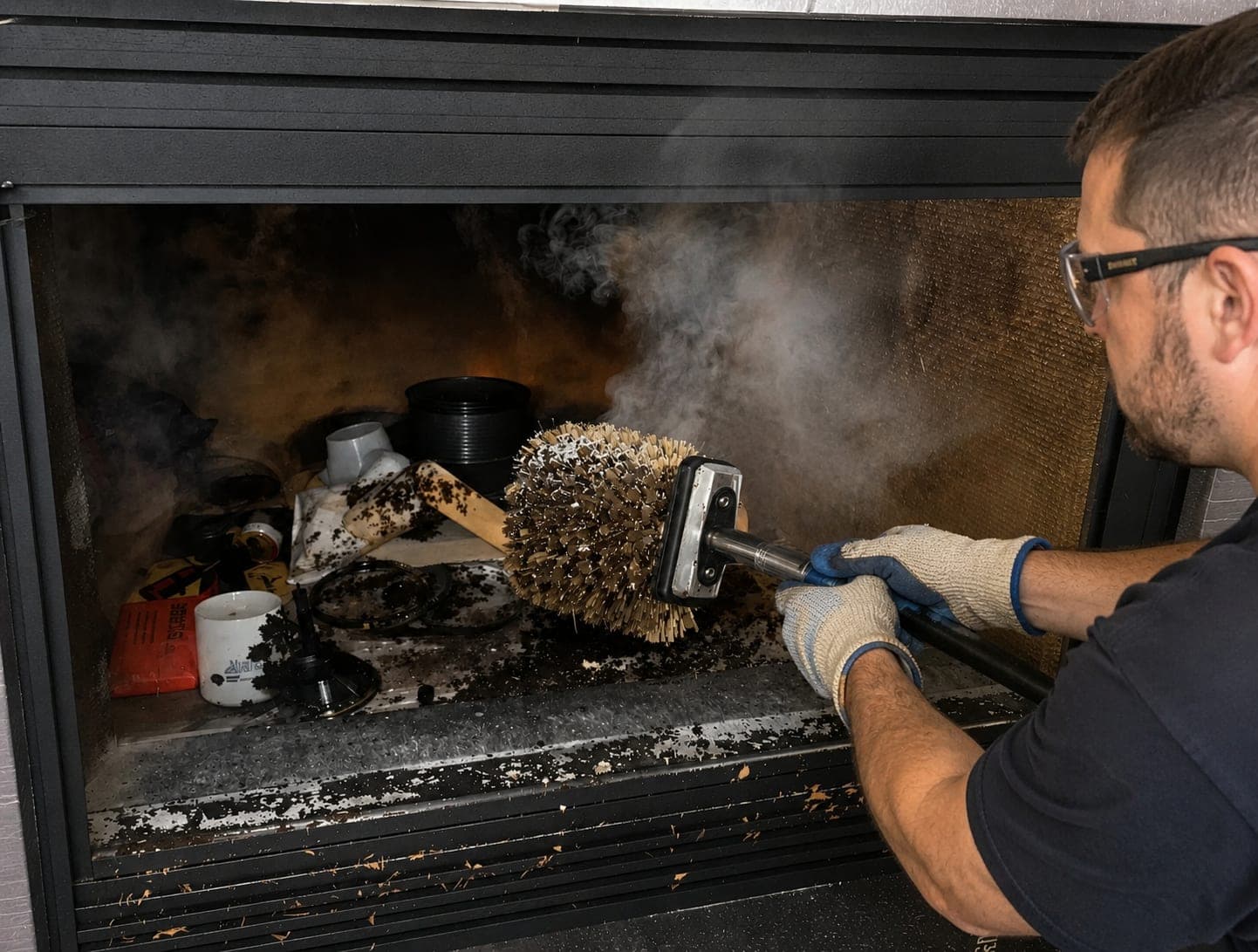
Debris and nesting material are removed by hand or with rods and brushes, hardened buildup is broken up and pulled out, and loose masonry pieces are retrieved rather than pushed further down.
Confirm the flue is open
Once the obstruction is gone, we check that the flue is clear top to bottom and that the chimney draws properly.
Explain what caused it
You get a plain account of what was blocking the chimney and anything that let it happen, such as a missing cap, a cracked liner or a failed damper, so you can decide whether to fix the cause.
Wood-Burning fireplaces, stoves and gas appliances
Wood-burning fireplaces and stoves build up creosote as well as collecting debris, so a blockage there is often part debris, part deposits. Gas fireplaces and other gas appliances produce no creosote, but their vents can still be closed off by nests or debris, and because the exhaust is hard to notice, a blocked gas vent deserves the same urgency. We work on gas fireplaces and gas appliances, and on all major brands of fireplaces and stoves.
Keeping the flue clear afterward
Most debris and animal blockages trace back to an open chimney top, so a cap or animal screen is the usual way to stop a repeat. Heavy creosote blockages point to burning habits and cleaning intervals; our guide to creosote dangers and why chimney maintenance matters covers how that buildup forms and why regular sweeping matters. If loose tile or masonry caused the blockage, the liner or chimney structure needs attention before the fireplace goes back into regular use.
Booking chimney blockage removal
Call or request an estimate and tell us what you're seeing. We also take commercial and property-manager work across the Chicago Metropolitan Area.
Free estimates.
Get in touch to describe the problem and set up a visit to clear your chimney.