On this page
If a chimney fire may be burning
Get everyone out of the house and call 911. Signs include a loud roaring or popping sound, dense smoke, a strong hot smell, or flames or sparks coming from the top of the chimney. Don't use the fireplace or stove again until the chimney has been inspected.
What creosote removal is and what it involves
When wood burns, its smoke carries unburned oils, tar and gases up the flue. As that smoke cools against the chimney walls, it condenses into creosote. The buildup narrows the flue, holds odors, and can ignite. Creosote removal is the work of getting that material out, using the right method for each kind of deposit.
Creosote usually appears in three forms, and they need different handling:
| Form | What it looks like | How it's usually removed |
|---|---|---|
| Light, flaky soot | Dry, black and powdery; falls off when brushed | Regular brushing during a sweep |
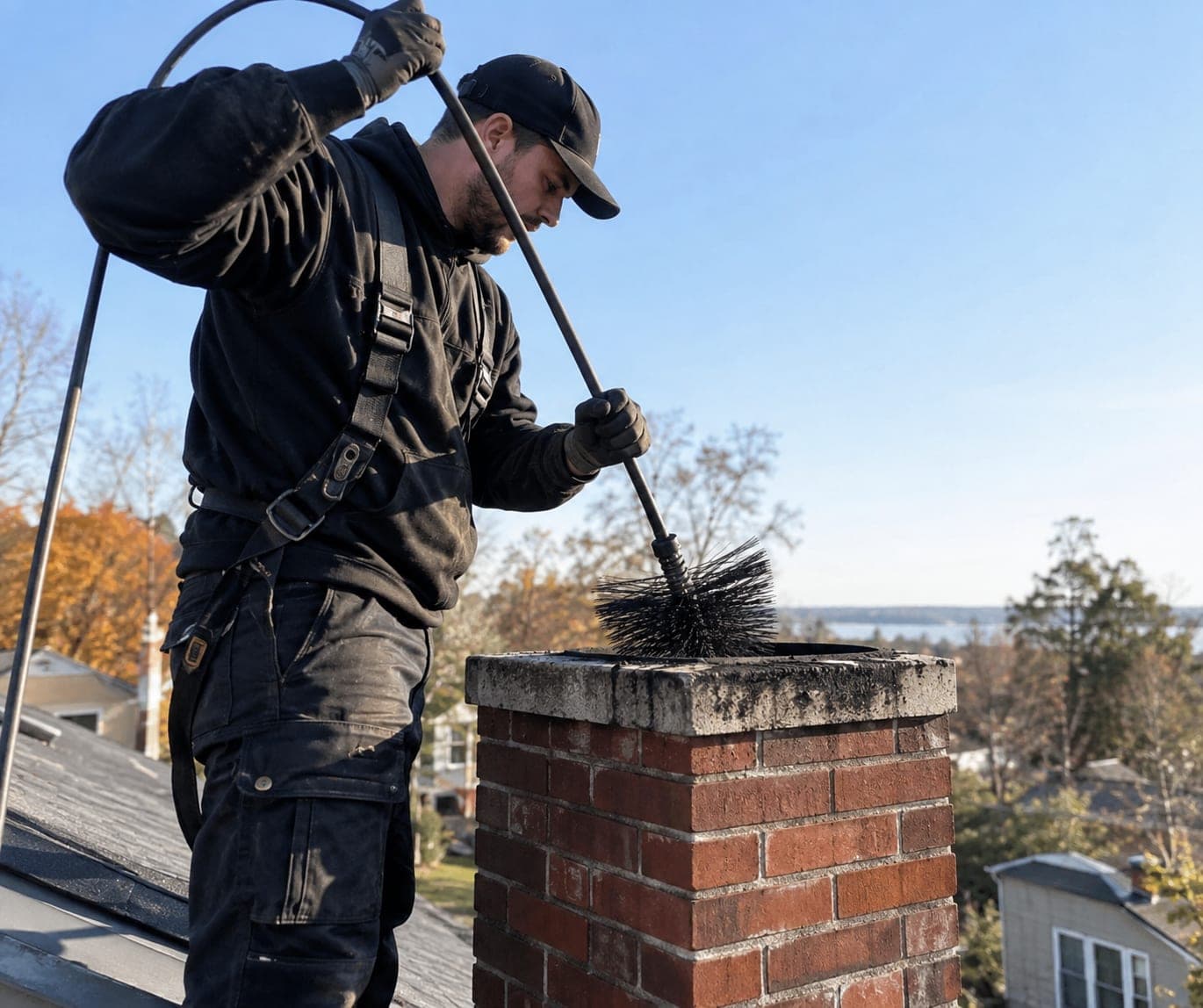
| Crunchy or tar-like | Thicker, puffy or sticky deposits that cling to the flue | Stiffer brushes or rotary tools |
| Glazed | Hard, shiny, dark coating, sometimes dripping like tar | Treatment that loosens or breaks down the glaze, followed by mechanical removal; heavy glaze can take more than one visit |
Light soot is handled during a regular chimney sweep and cleaning. Creosote removal is the deeper job for buildup that ordinary brushing won't clear.
Signs your chimney needs creosote removal
Call for creosote removal if you notice:
- A strong smoky or tar-like smell from the fireplace, especially on humid days or with the air conditioning running
- Black flakes, chunks or crumbs falling into the firebox
- A shiny, dark or dripping coating on the damper or the visible part of the flue
- Smoke drifting into the room instead of drawing up the chimney
- Fires that are hard to start or keep burning
- Dark staining or tar seeping near the fireplace opening or on a stove's flue pipe
- A chimney that hasn't been cleaned in a long time, or one that has had a chimney fire
Odors and poor draft have other causes too. A lingering smell after the flue is clean may call for chimney odor removal. A nest or debris blocking the flue traps smoke, which speeds up creosote buildup, so we may recommend removing animals and nests from the chimney along with the cleaning.
What the creosote removal visit involves, step by step
How the work is done
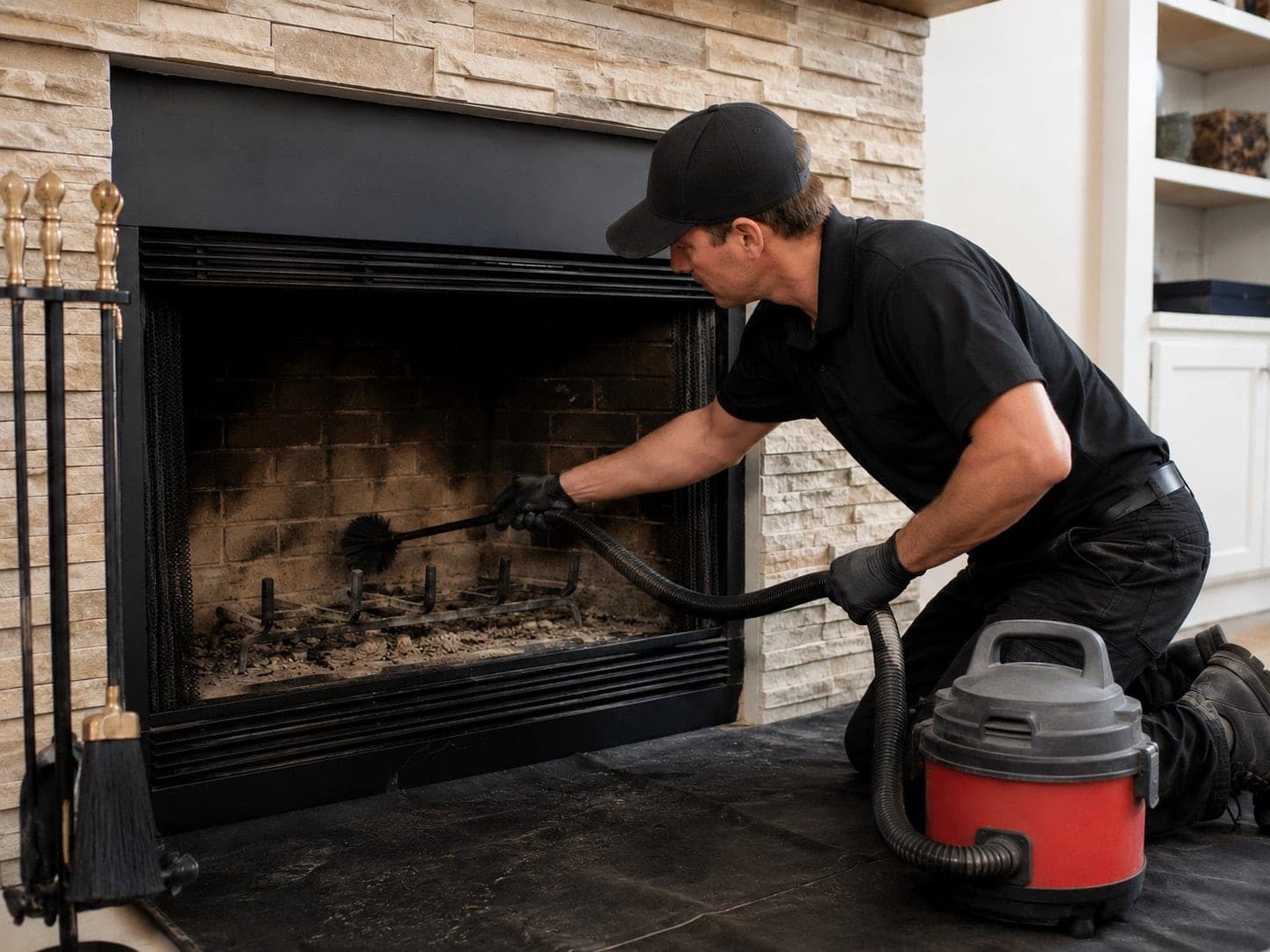
Protect the room
Drop cloths go down around the hearth, and the opening is sealed off so soot and debris stay out of your living space.
Look at the buildup
We check the firebox, damper, smoke chamber and flue to see how much creosote there is, what form it's in, and whether anything is blocking the flue.
Remove loose and crunchy deposits
Brushes and rotary tools sized to the flue scrape off soot and the thicker, tar-like layers.
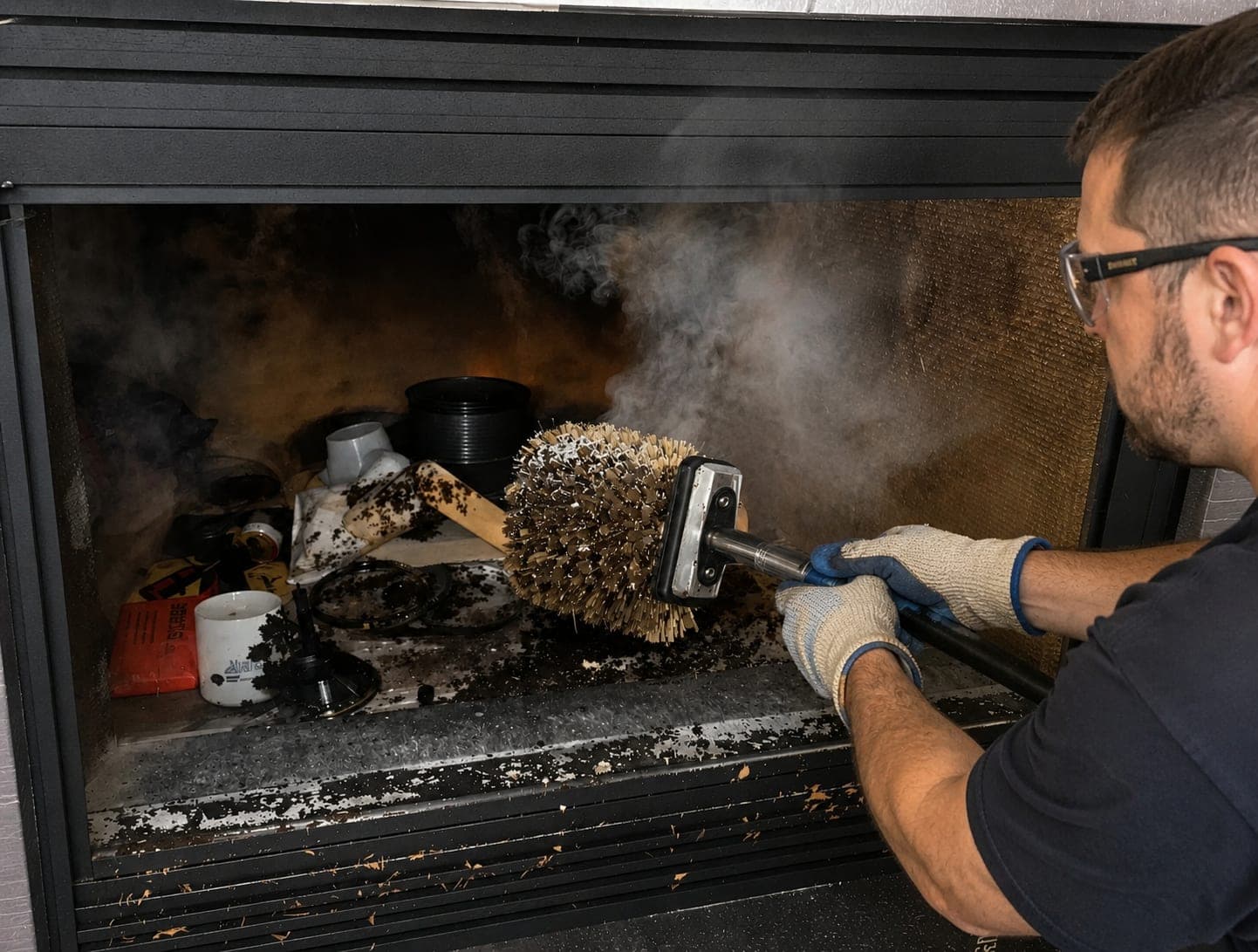
Treat glazed creosote
Hard glaze is loosened or broken down so it can be removed. Very heavy glaze may need more than one treatment and visit.
Clean up
Debris is collected from the smoke shelf and firebox and vacuumed away.
Review what we found
We show you what came out and point out any damage, such as cracked flue tiles or a sticking damper, so you can decide on next steps.
Fireplaces, inserts and wood stoves
Creosote builds up wherever wood is burned: masonry fireplaces, prefab fireplaces, fireplace inserts and wood stoves with their connector pipes. Inserts and stoves often need their own attention because the flue pipe and the liner above them can collect deposits quickly.
What makes creosote build up faster
- Unseasoned or wet wood produces more smoke and moisture, so more residue condenses in the flue.
- Low, smoldering fires and a damper closed down too far keep smoke cool and slow.
- A flue that is too large or too cold for the appliance lets smoke cool before it leaves the chimney.
- Restricted airflow from a partial blockage or a damaged cap traps smoke inside the chimney.
To understand why buildup is a fire risk and how regular care keeps it in check, read about creosote dangers and why chimney maintenance matters.
Booking creosote removal in Chicago
Commercial and property-manager work is offered too. Call or request an estimate to get started.