On this page
What a chimney sweep involves
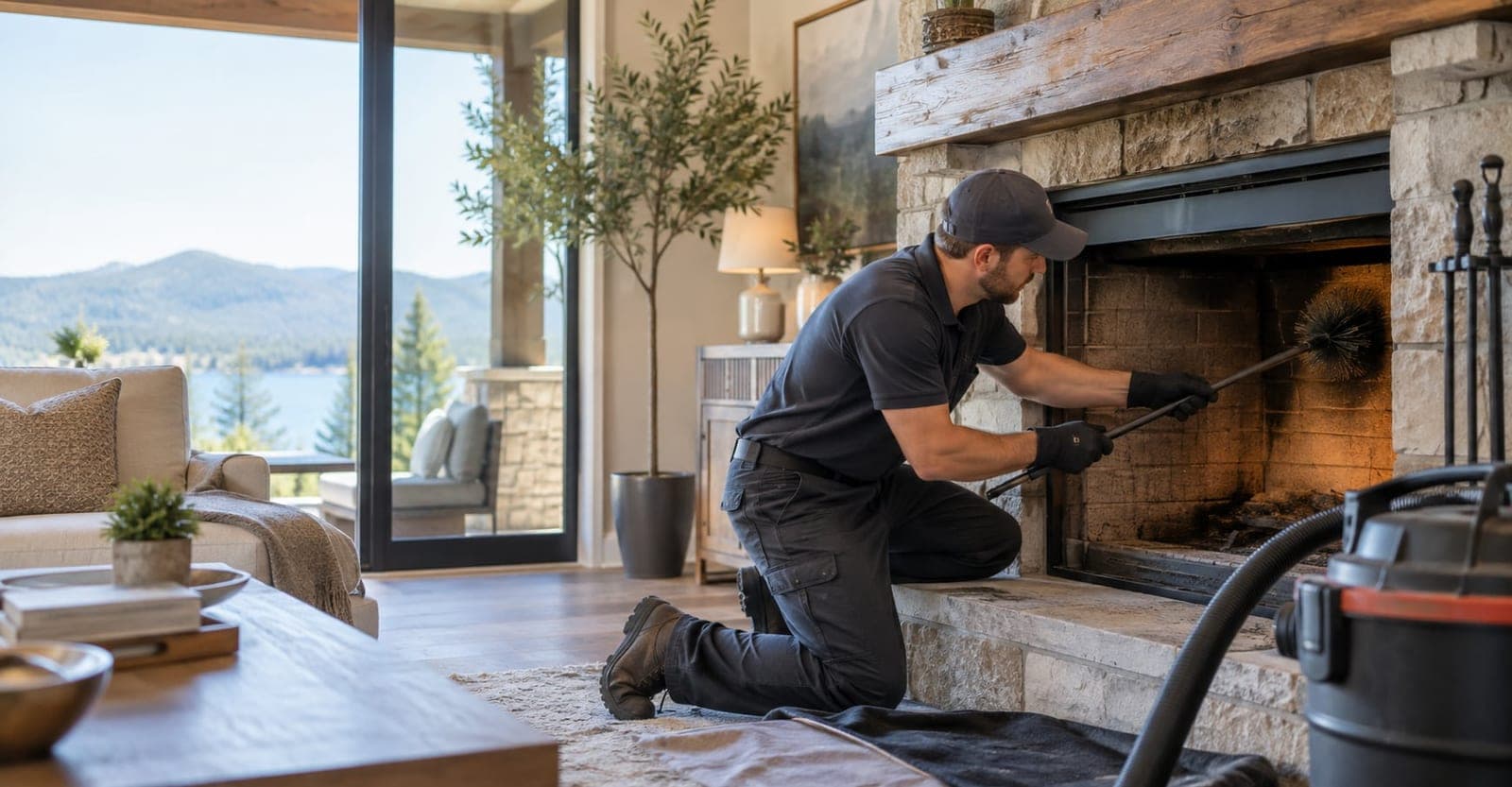
Every fire leaves residue behind. Soot and creosote form as smoke cools on its way up the flue, and they stick to the inner walls. Over time they narrow the passage and become fuel for a chimney fire. A chimney sweep is the job of brushing and vacuuming that residue out of the flue, the smoke chamber, the damper area and the firebox. We also remove anything that has fallen in or been carried in, such as leaves, nests and broken bits of masonry.
Chimney cleaning and chimney sweep: Same job, two names
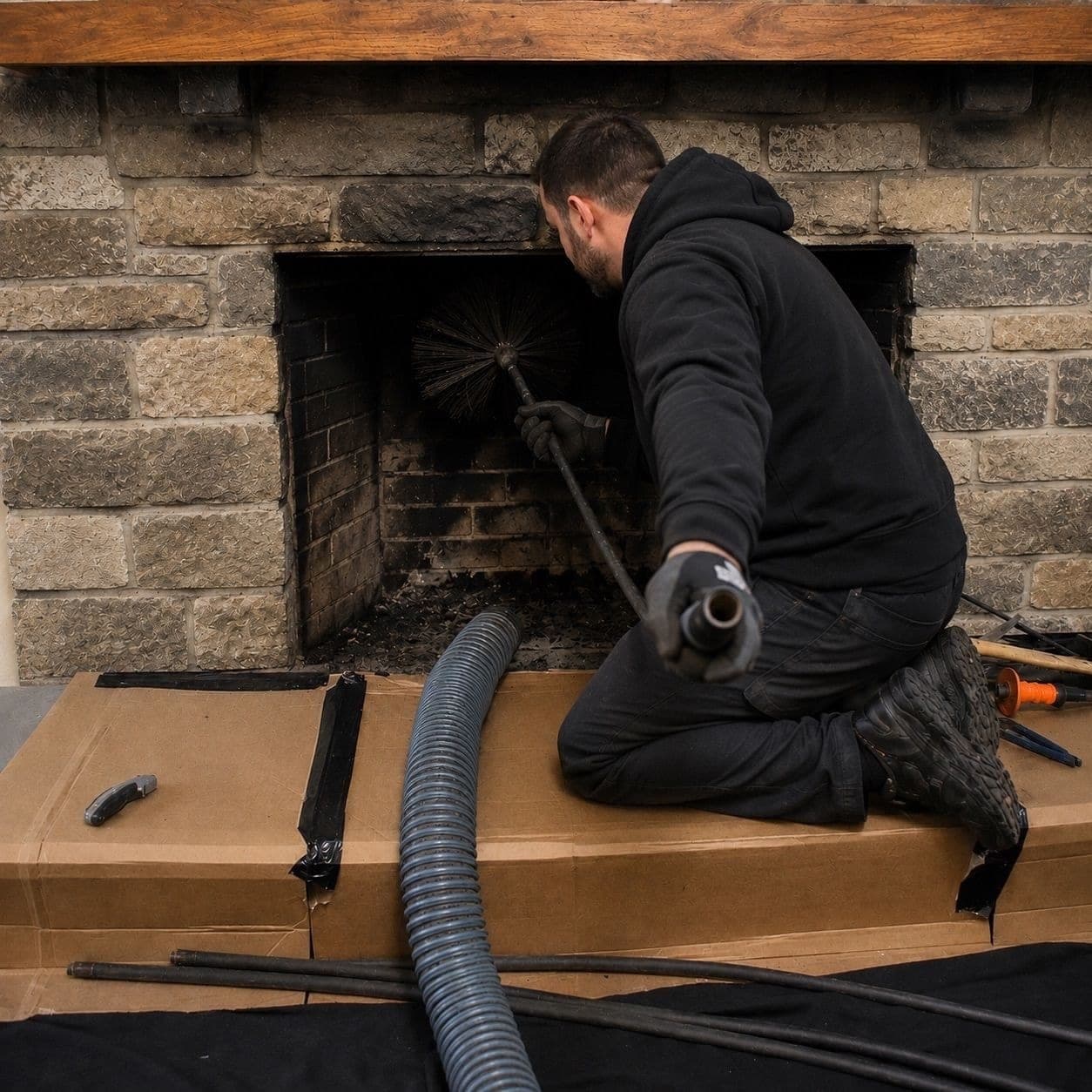
Chimney cleaning and chimney sweeping mean the same thing: clearing the flue system from the firebox to the top. The sweep focuses on the chimney itself. The hearth side, meaning ash, the grate area and the firebox walls, is handled in detail through fireplace cleaning. Many visits include both.
Signs your chimney needs a sweep
- Smoke drifts into the room instead of going up the chimney.
- Fires are hard to start or keep going, or burn poorly even with dry wood.
- Black, flaky or tar-like deposits are visible on the damper or the flue walls when you shine a flashlight up.
- A smoky, sour or campfire smell comes from the fireplace, especially on humid days or when the heat runs.
- Pieces of soot or crumbly black material fall into the firebox.
- Birds, squirrels or other animals have been heard in the chimney, or nesting material has dropped down.
- The fireplace or stove has been used regularly for a season and hasn't been swept since.
If what you're seeing is cracked brick, water stains, loose mortar or a damaged crown rather than soot and smoke trouble, the right next step is a chimney inspection or repair rather than a sweep.
Creosote buildup and why it matters
Creosote is the main reason chimneys need sweeping. It is a byproduct of burning wood. It starts as loose, sooty flakes, can harden into a crusty layer, and can eventually turn into a shiny, tar-like glaze. All three stages are flammable. A thick enough coating can ignite inside the flue and burn far hotter than a normal fire. That heat can crack flue tiles and damage the chimney structure, sometimes without the homeowner noticing right away.
Creosote danger
A loud roaring or rumbling from the chimney, dense smoke, or a strong hot smell during a fire can mean a chimney fire. If you hear roaring or see flames or sparks from the top of the chimney, get everyone out and call 911. Get everyone out, call the fire department, and don't use the fireplace again until the chimney has been checked. Our guide to creosote dangers and why chimney maintenance matters explains how buildup forms and how to slow it down.
A regular sweep or dedicated creosote buildup cleaning?
A standard sweep removes soot and the loose and crusty stages of creosote with brushes and a vacuum. Glazed creosote bonds to the flue and doesn't come off with brushing alone. When we find it, the flue needs creosote removal, which uses tools and treatments made to remove flammable creosote that a sweep can't.
What happens during the visit, step by step
A typical chimney sweep visit
Protect the room
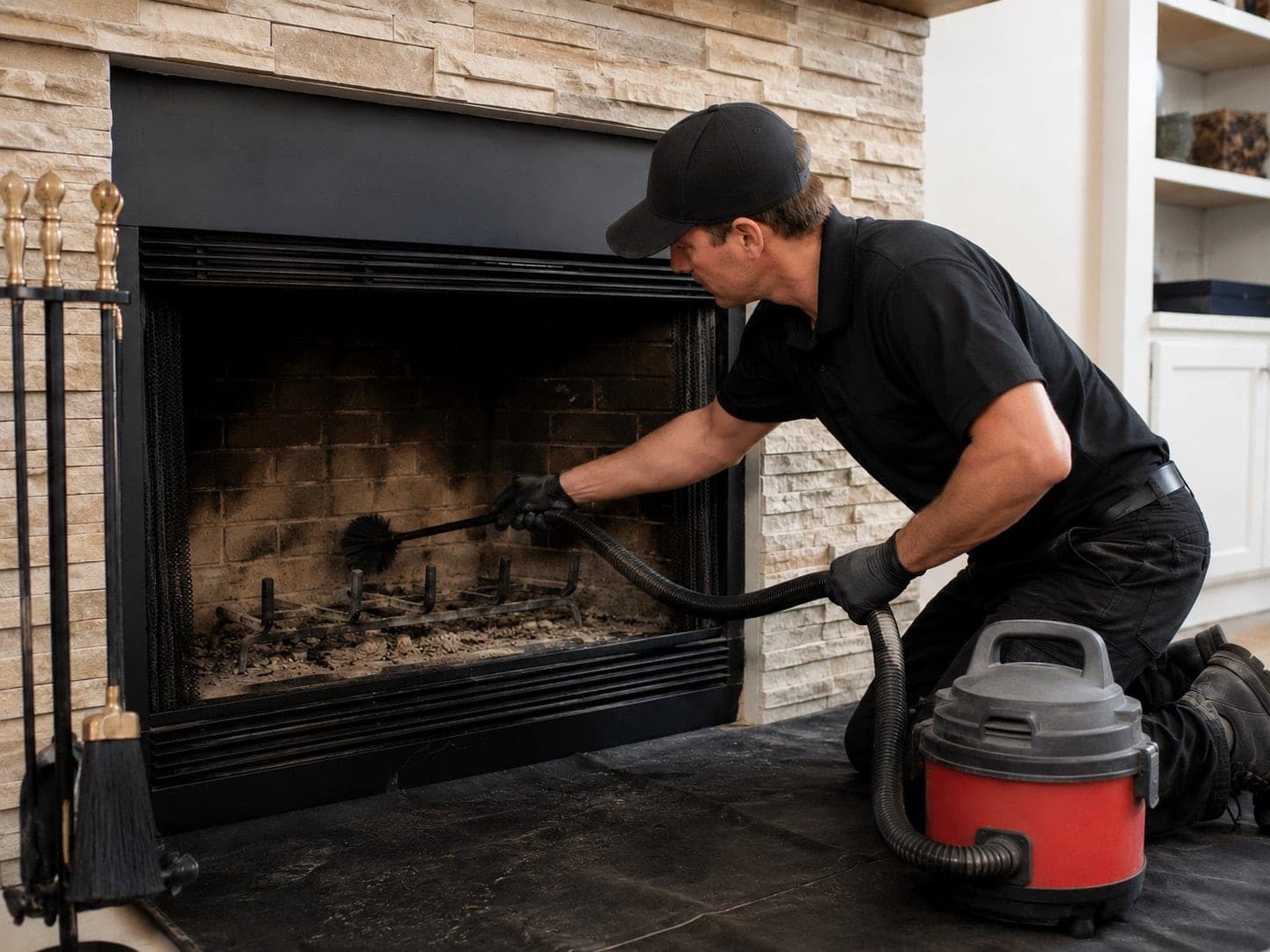
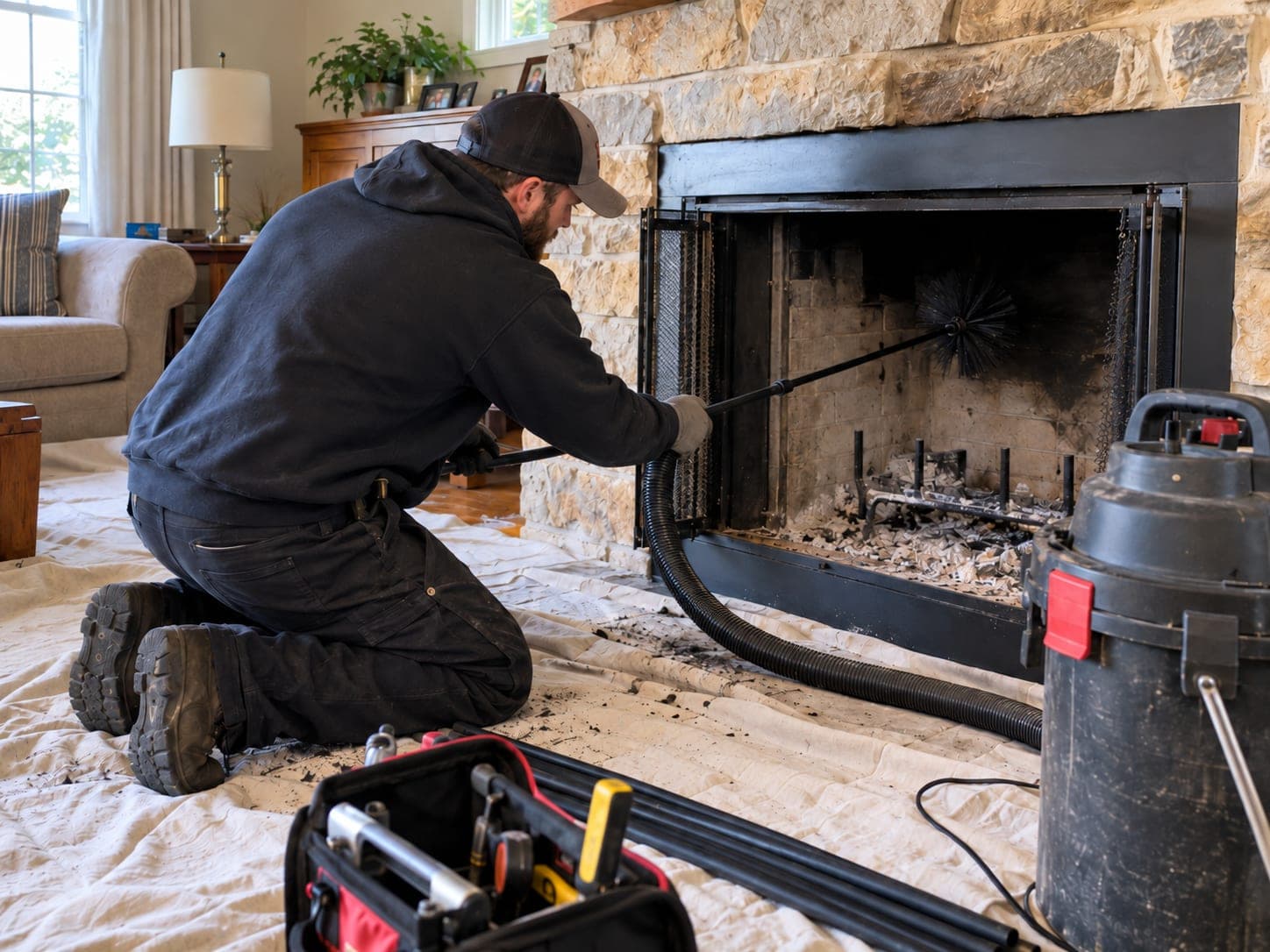
We lay drop cloths around the hearth and set up a vacuum so soot stays contained while we work.
Look before cleaning
We check the firebox, damper and flue with lights to see how much buildup there is, what type it is, and whether anything is blocking the flue.
Brush the flue
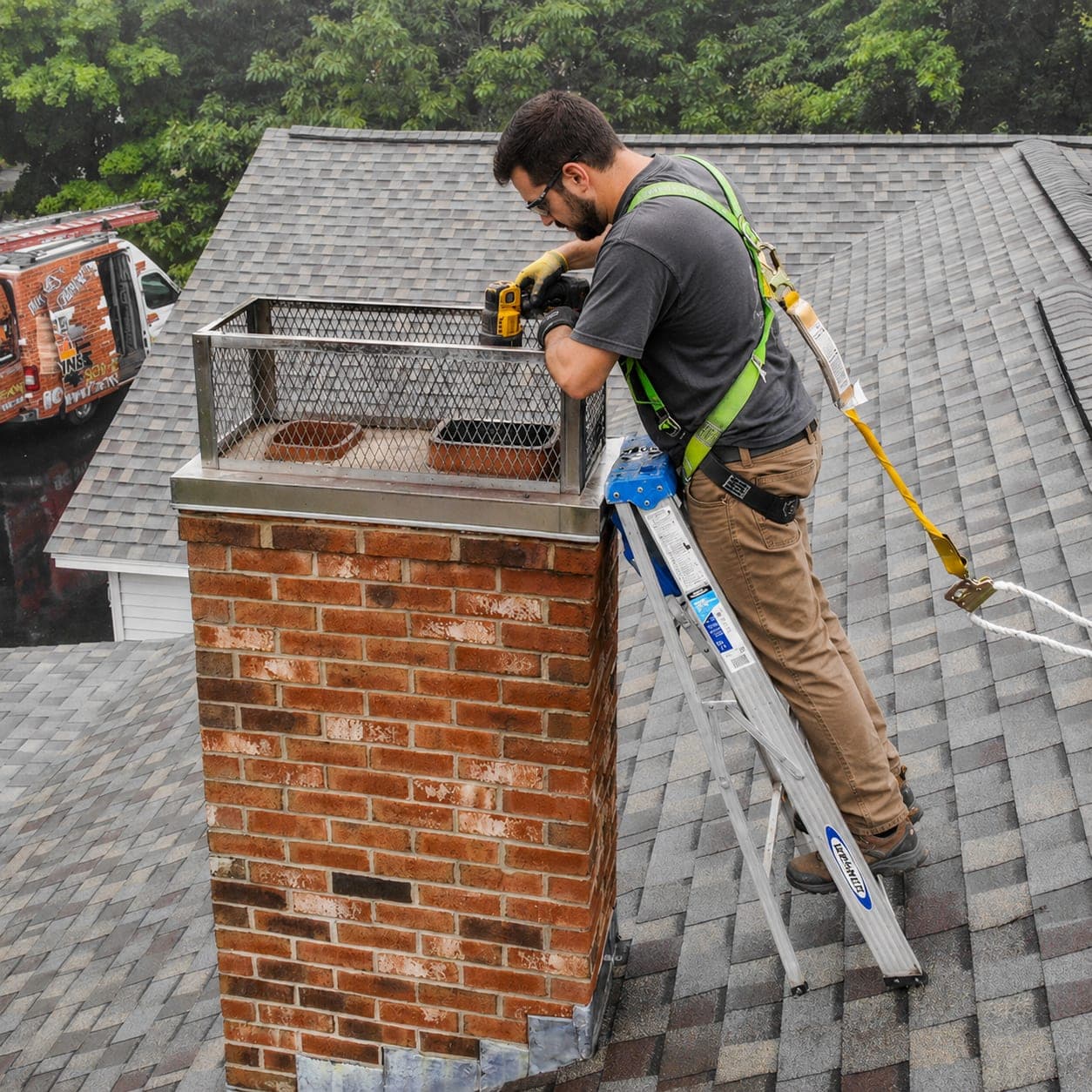
We run brushes sized for your flue through its full length, from below, from the roof, or both, depending on the chimney.
Clear the smoke chamber and damper
We clean the area just above the damper, where soot and creosote tend to collect, and the damper itself so it opens and seals properly.
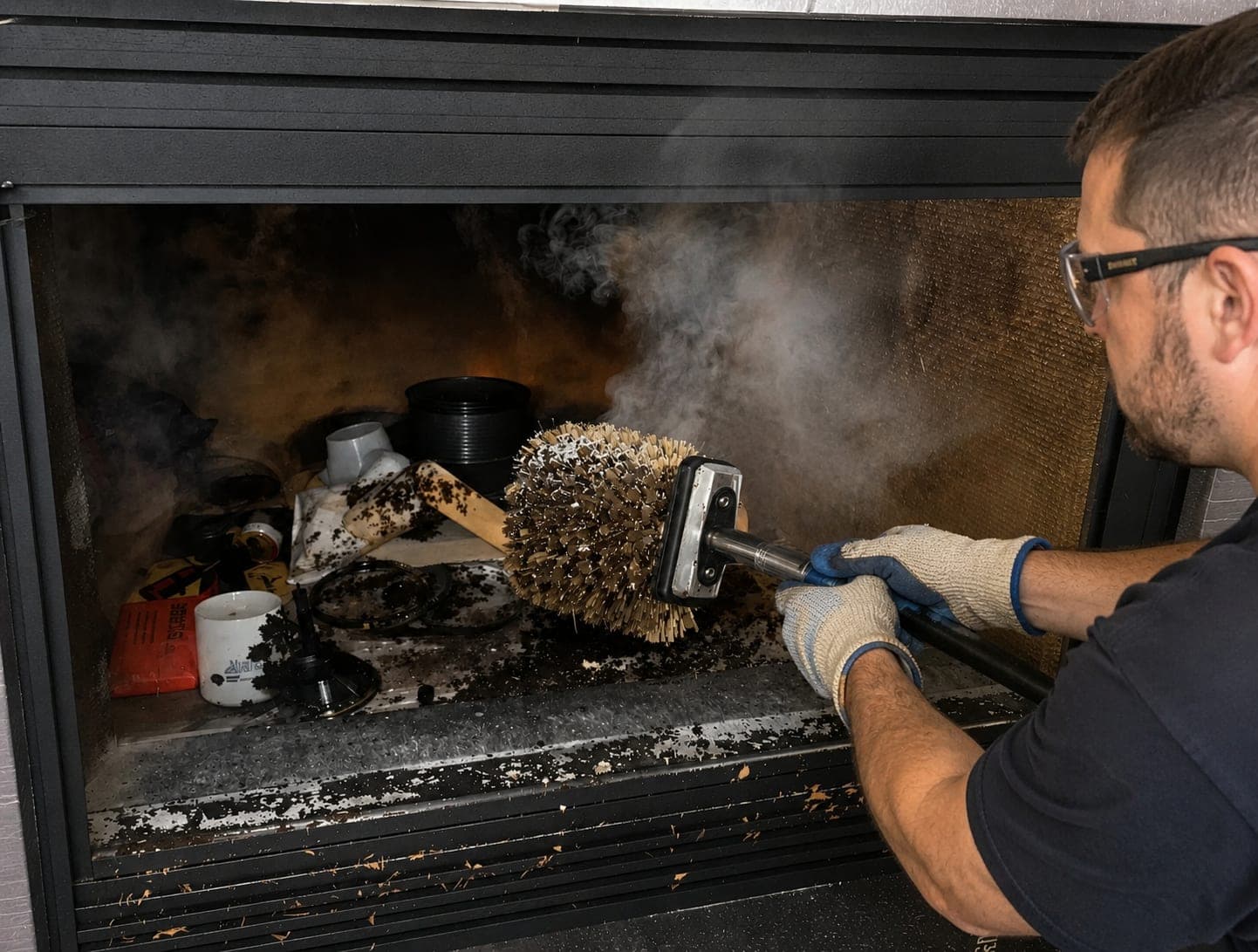
Clean the firebox
We remove fallen soot, debris and ash from the firebox.
Walk you through what we found
We tell you what came out, whether any glazed creosote, blockage or damage needs more work, and how the system looks for the next burning season.
Chimney flue cleaning
The flue is the channel inside the chimney that carries smoke and gases out. Flue cleaning is the core of every sweep. We clear the full length of the flue so the opening stays at its intended size and draft isn't choked off. Clay tile, metal and other liner types each need the right brush, because the wrong tool can scratch or damage a liner. Stove pipes and vent connectors are cleaned along with the flue they feed.
Sweep or replace the liner?
A sweep cleans a liner but doesn't fix one. If cleaning shows cracked tiles, gaps or a deteriorated metal liner, sweeping more often won't solve it. That calls for chimney liner repair, and the sweep should be done before the repair so the damage can be seen clearly.
Brick chimneys, prefab flues, stoves and gas units
Brick chimney cleaning
Masonry chimneys usually have clay tile liners and a smoke chamber built of brick and mortar. Rough mortar joints and the sloped walls of the smoke chamber catch soot and creosote, so they get extra attention during a brick chimney cleaning. Loose mortar or bits of brick that turn up in the firebox are worth mentioning to us, because they point to wear inside the chimney.
Prefab fireplaces and Wood stoves
Factory-built fireplaces use metal flues that need brushes matched to their size and material. Wood stoves are often run with the air turned down, which can build creosote quickly in the stove pipe and flue. Wood stove cleaning covers the stove, the connector pipe and the chimney. We work on all major brands of fireplaces and stoves.
Gas fireplaces
Gas fireplace and gas appliance work is offered. Gas burns cleaner than wood, but gas vents can still be blocked by nests, debris or deteriorating components, so they need occasional attention too.
Chimney odors
A strong smell from the fireplace usually comes from creosote reacting with moisture, or from debris or an animal in the flue. A thorough sweep often takes care of it. When the smell persists, chimney odor removal targets the source directly.
Safety and maintenance between sweeps
Habits that slow creosote buildup
- Burn dry, seasoned hardwood rather than green or wet wood.
- Don't burn trash, cardboard, wrapping paper or treated lumber in a fireplace or stove.
- Give fires enough air. Smoldering, low-oxygen fires leave more creosote behind.
- Keep a chimney cap in place to keep out rain, animals and debris.
- Close the damper when the fireplace isn't in use, and open it fully before lighting a fire. If the fireplace has gas logs, leave the damper as the installer set it — vented gas logs need it open.
- Keep working smoke and carbon monoxide alarms on every level of the home.
Booking a chimney sweep
Estimates are free. Same-day visits are available when the schedule allows. 24-hour service runs Sunday–Friday, and emergency calls are accepted. Commercial and property-manager work is offered, so landlords and managers with several units can book with us as well. For homes north of the city, we also offer chimney sweep for homes in Evanston.
Free estimates.
Call or request an estimate, and tell us what you're noticing: smoke, smells, sounds or simply that a season has passed since the last sweep.
Related work covered on this page
- Chimney Flue Cleaning