On this page
What a real estate chimney inspection covers
A real estate chimney inspection is a detailed look at the whole venting system when a property is sold or transferred. That means the outside of the chimney, the fireplace or stove, the damper and smoke chamber, and the full length of the flue, which is checked with a camera. The goal is to find damage, blockages and safety problems that a quick visual check can miss.
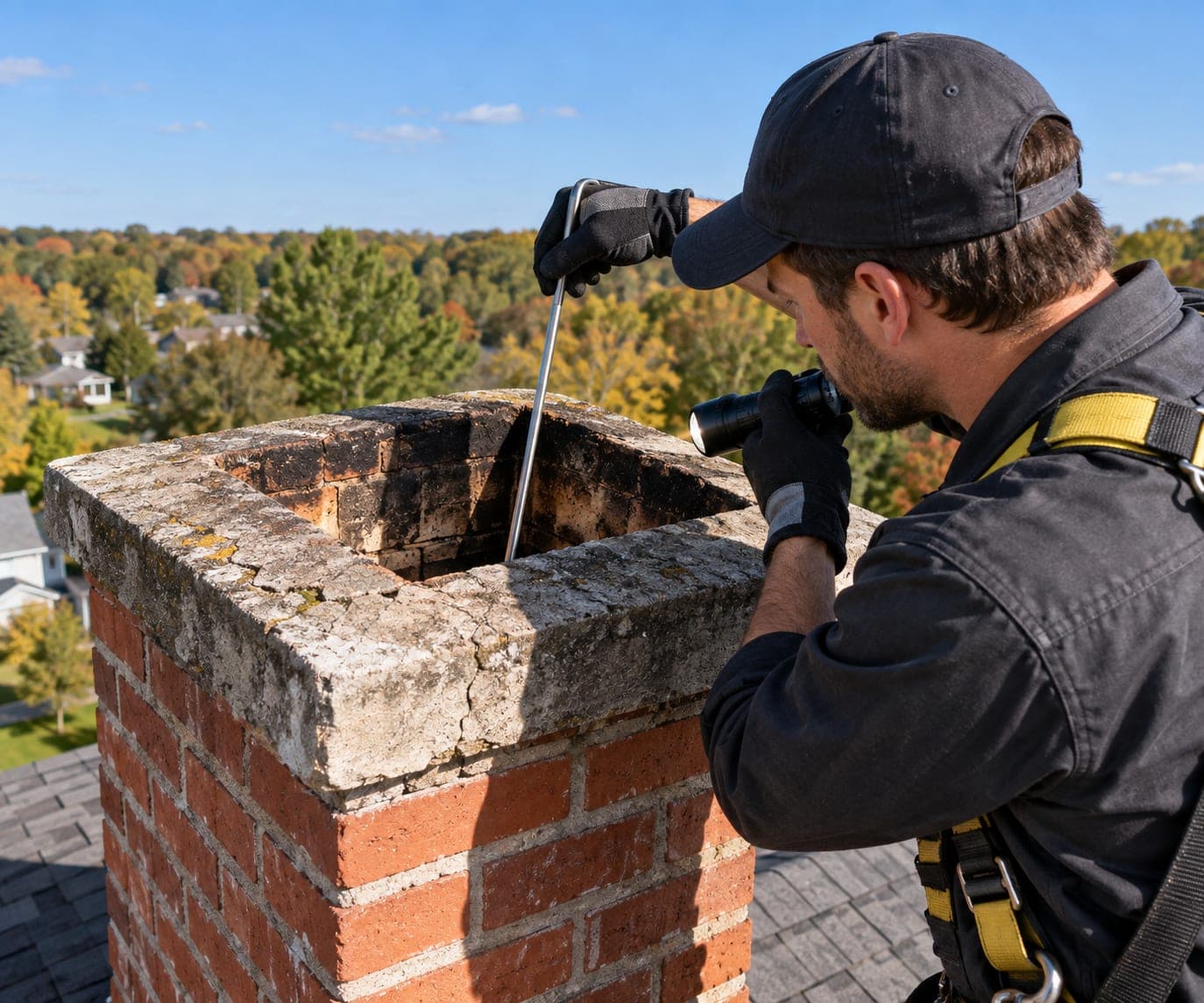
A general home inspection typically looks at the visible parts of a fireplace and chimney. A chimney-specific inspection goes further into areas that can't be seen without the right equipment. If you aren't involved in a sale and only want a routine check, our standard chimney inspection service may be the better fit.
When a level 2 chimney inspection applies to a home sale
What the CSIA standard of practice says
Under the CSIA (Chimney Safety Institute of America) standard of practice, a Level 2 inspection includes a video scan of the flue. The standard recommends it at a property sale or transfer, after a chimney fire, and after a weather or seismic event. It is an industry recommendation, not a building code or legal requirement.
A real estate chimney inspection follows that Level 2 approach. The same level of inspection applies after severe weather, which is why our storm damage chimney inspection uses a similar process.
Signs that a home needs one
The sale itself is the main reason to book this inspection. Several situations make it especially worthwhile:
- You're buying a home and don't know how often the previous owners used or maintained the fireplace.
- You're selling and want to know the chimney's condition before a buyer's inspection raises questions.
- The home has had a chimney fire, or you suspect one from warped metal, cracked flue tiles or puffy, honeycombed creosote.
- You can see cracked or missing mortar, a damaged crown, rust on the damper or water stains near the chimney.
- There's a smoky or musty smell from the fireplace, or debris and nesting material in the firebox.
- A gas fireplace, insert or other appliance vents into the chimney and nobody knows when it was last checked.
What the visit involves, step by step
How a real estate chimney inspection runs
Access and setup
We arrange a time that works for the seller, buyer or agent. We protect the area around the fireplace before any work starts.
Exterior check
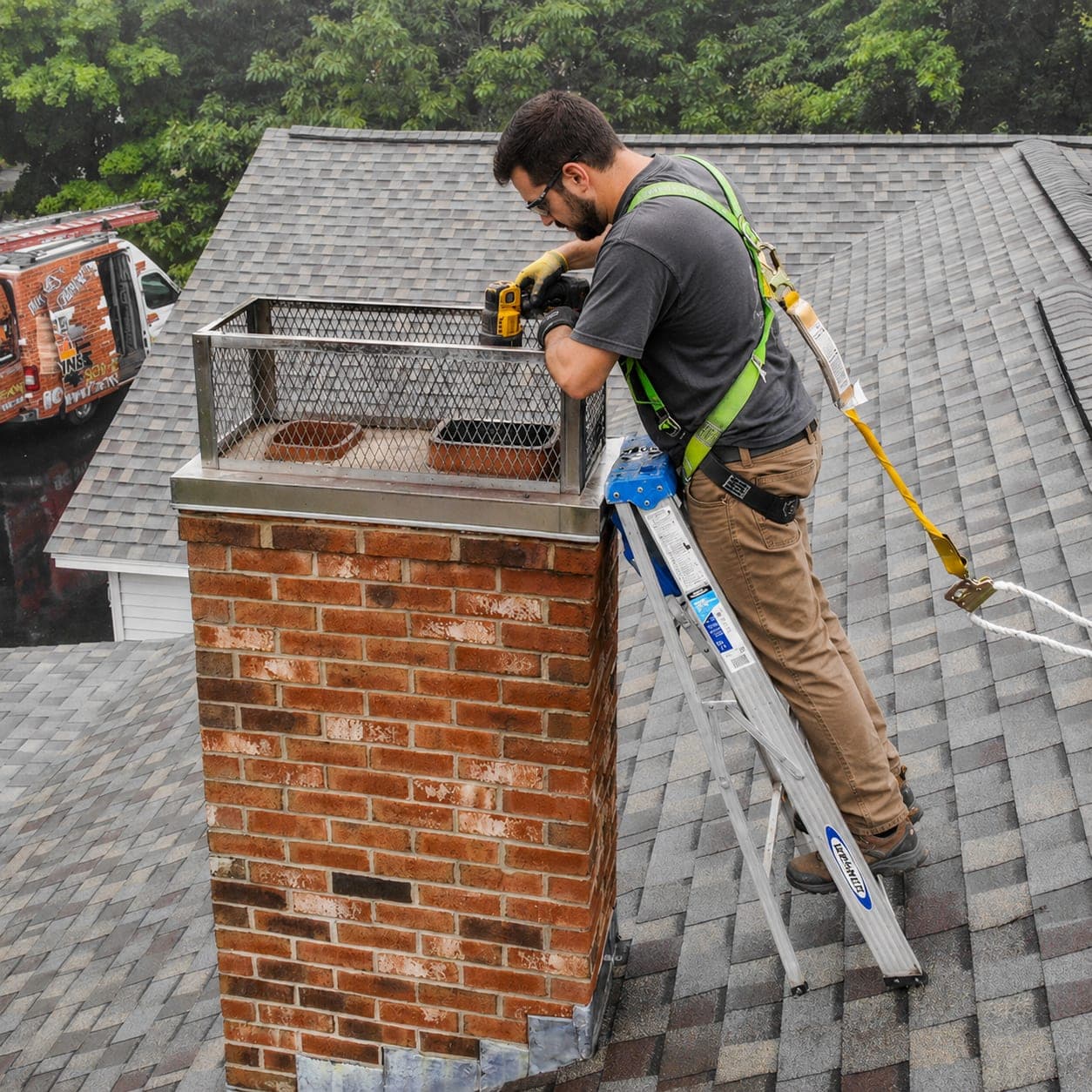
We look at the chimney cap, crown, masonry, mortar joints and flashing where the chimney meets the roof, checking for cracks, gaps and signs of water entry.
Fireplace and firebox
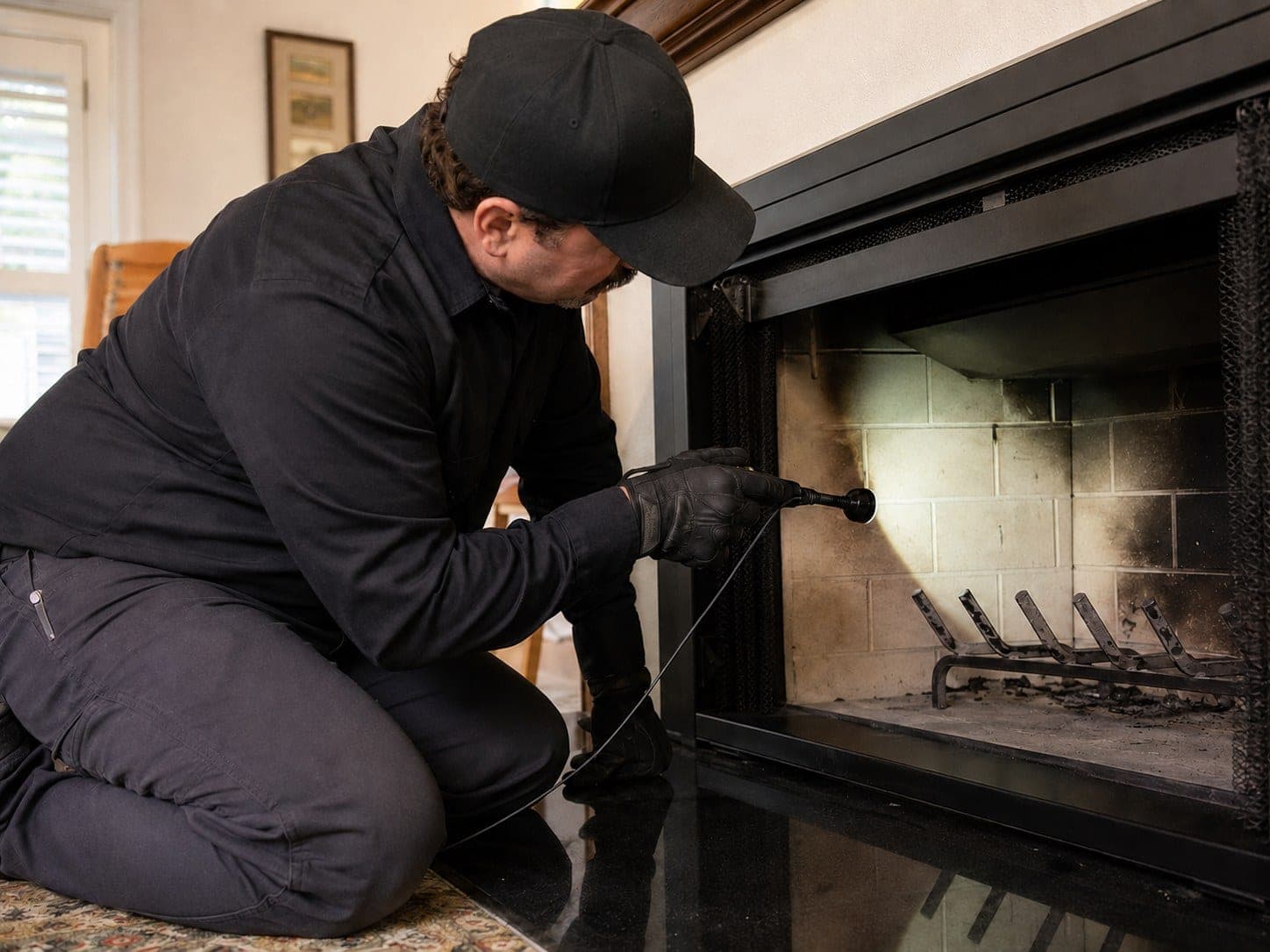
We check the firebox walls, damper, smoke chamber and any doors, insert or stove for cracks, rust, warping and wear.
Video scan of the flue
A camera runs up the flue to show the liner from the inside: cracked or missing tiles, gaps, creosote buildup, blockages and nests.
Accessible areas around the chimney
Where we can reach them, we check areas next to the chimney for staining, moisture or heat damage.
Findings explained
We go over what we found, what matters for safety, and what can wait. Any repair work comes with a free estimate.
Wood, gas and prefab systems
The inspection covers masonry chimneys with wood-burning fireplaces, fireplace inserts, wood stoves, and prefab (factory-built) fireplaces with metal flues and chases. Gas fireplace and gas appliance work is offered, so a gas unit venting through the chimney is included in the check rather than left out.
Safety and maintenance context
The main risks inside a chimney are hidden. A cracked liner can let heat reach nearby wood framing. Built-up creosote can catch fire. A blocked flue can push smoke and carbon monoxide back into the house. Our guide to creosote dangers and why chimney maintenance matters explains how buildup forms and why it matters.
Before the first fire in a new home
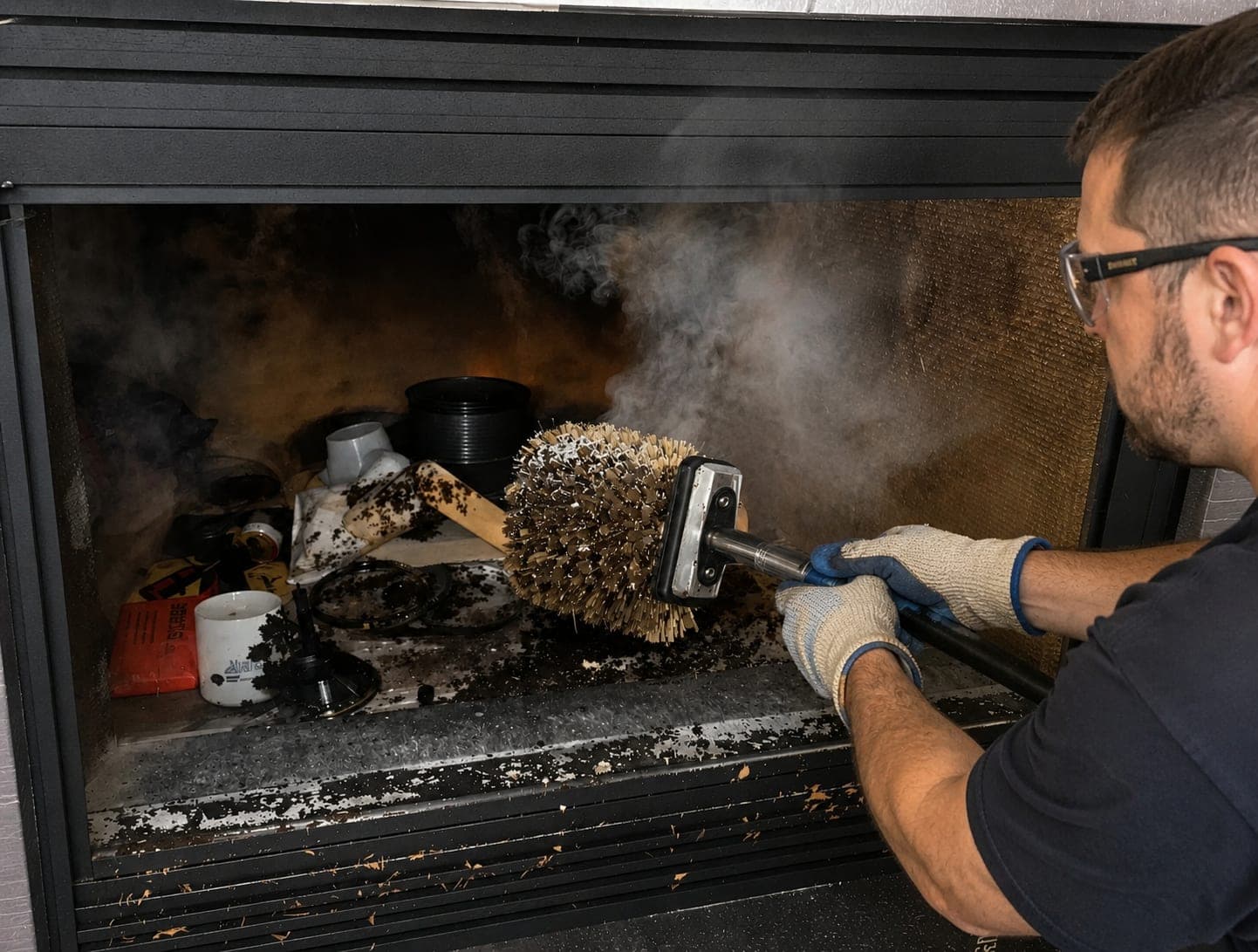
Until the chimney has been inspected, don't assume it's ready to use just because the previous owners used it. If the inspection finds heavy buildup, a chimney sweep is usually the next step before lighting a fire.
Booking an inspection before closing
Call or request an estimate and tell us where the property is and what your closing timeline looks like. Same-day visits are available where the schedule allows, so booking early gives you the most options. Commercial and property-manager work is offered, so agents and managers handling several properties can book through us as well.