When the chimney no longer looks straight
Most homeowners notice it from the yard or driveway. The chimney seems to tip slightly away from the house, a gap has opened where it meets the siding or roof, or pieces of brick and mortar keep turning up on the ground. A leaning or damaged chimney is heavy masonry that has started to move or break apart. It rarely fixes itself, and the movement usually gets worse over time.
The same movement can happen inside, where it is harder to see. A leaning fireplace flue can crack or separate at its joints. That affects how safely smoke and heat leave the house, even when the outside still looks acceptable.
Common signs of a leaning or damaged chimney
Look for these from the ground or indoors
- The chimney visibly tilts compared with the wall or roofline
- A gap between the chimney and the house that is new or getting wider
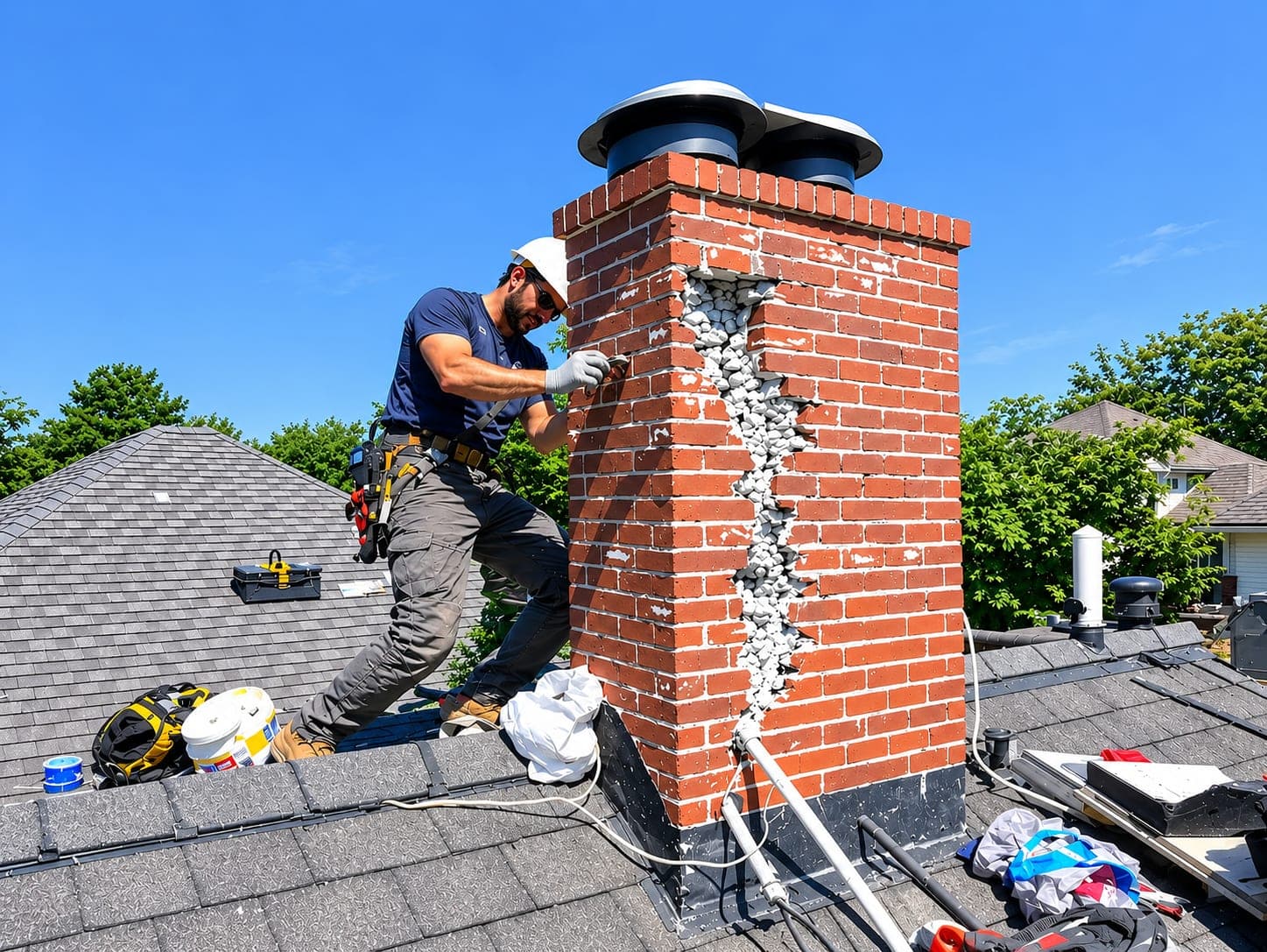
- Cracked, crumbling or missing mortar between bricks
- Bricks that are loose, spalling (flaking on the face) or falling
- A cracked or broken crown at the top of the chimney
- Water stains, leaks or damp walls near the chimney inside the house
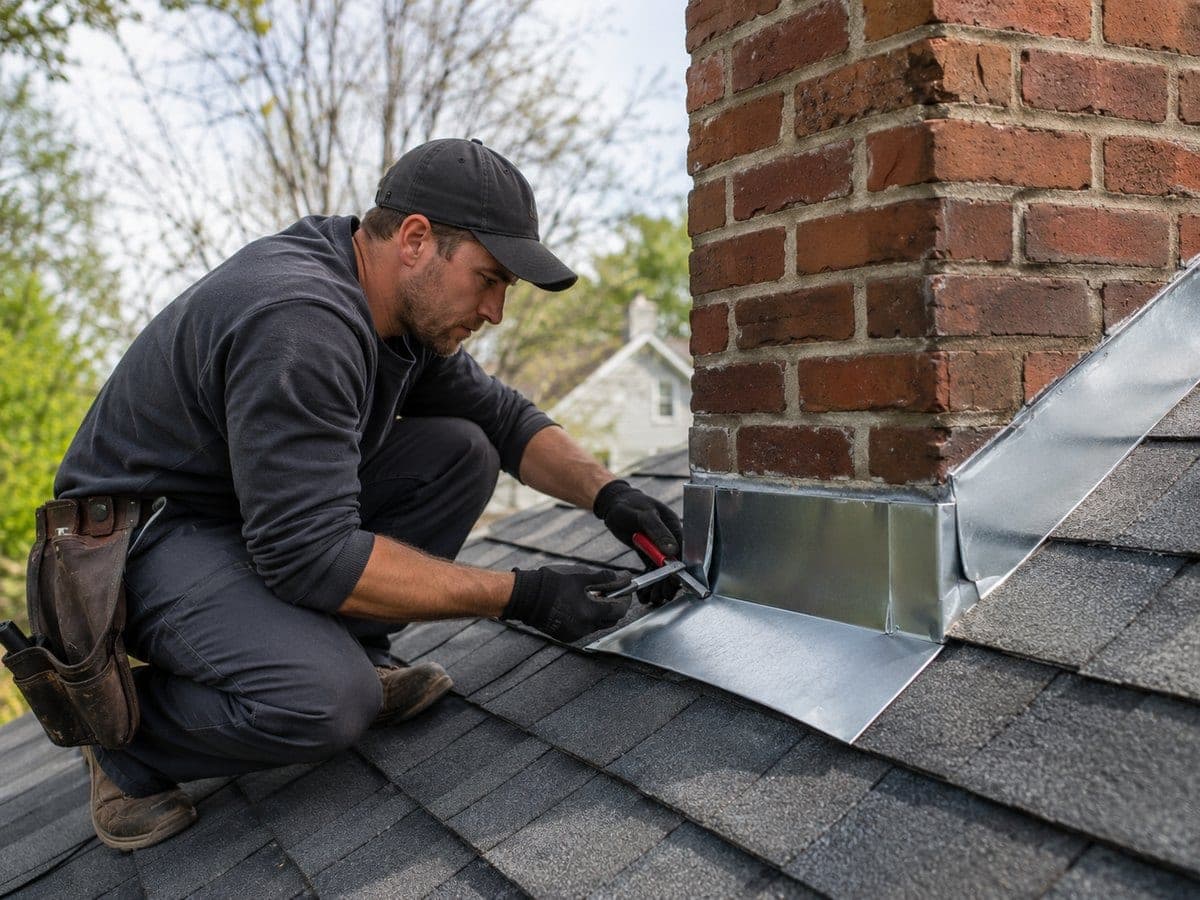
- Flashing that has pulled loose where the chimney meets the roof
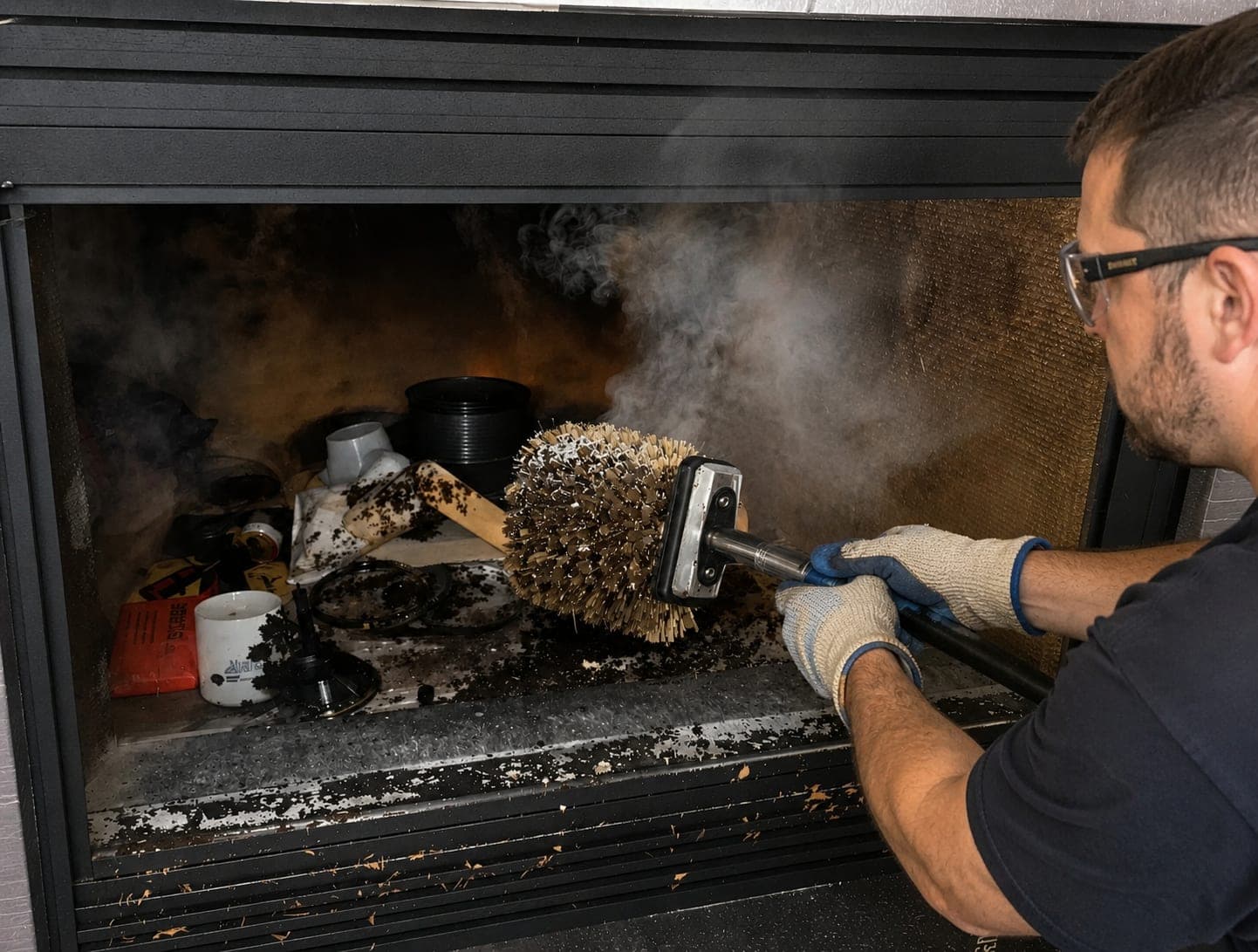
- Bits of tile, mortar or masonry falling into the firebox
- Smoke that drafts poorly or seeps into the room
Look from the ground, not the roof
A moving chimney can shift or drop bricks without warning. Check it from the yard or with binoculars, and keep people and pets away from the area directly below it.
Possible causes
Several problems can make a chimney lean or break down, and more than one is often involved. These are possibilities. Only an inspection can confirm which one applies to your chimney.
- Settling or a failing footing. A chimney sits on its own base. If that base sinks or cracks, the whole stack can tilt away from the house.
- Water getting into the masonry. Moisture that soaks into brick and mortar weakens it over time, and repeated freezing and thawing can push joints apart.
- Worn-out mortar. Mortar breaks down with age. Once the joints go, bricks can loosen and the upper section can shift.
- A damaged crown or missing cap. Without a sound top, water runs straight into the chimney structure.
- Storm or impact damage. High winds, falling limbs or lightning can crack or dislodge part of the stack.
- Original construction issues. An undersized footing or poor workmanship can show up as movement years later.
An inspection, often with a camera inside the flue, looks at the masonry, the crown, the flashing and the liner to sort out where the damage started and how far it goes.
How urgent is it, and when should you stop using the fireplace?
A visible lean, a growing gap or falling bricks should be treated as urgent. Stop using the fireplace or any appliance vented through that chimney until it has been inspected. Movement can crack the flue or liner, and a damaged flue may let heat, smoke or combustion gases reach parts of the house they should not.
| Feature | Stop using it and call now | Schedule an inspection soon |
|---|---|---|
| Structure | Clear lean, widening gap or bricks falling | Minor surface cracks with no movement |
| Mortar | Joints crumbling deeply and bricks loose | Shallow wear in a few joints |
| Inside | Masonry falling into the firebox or smoke entering the room | Occasional damp spots or a musty smell |
Structure
- Stop using it and call now
- Clear lean, widening gap or bricks falling
- Schedule an inspection soon
- Minor surface cracks with no movement
Mortar
- Stop using it and call now
- Joints crumbling deeply and bricks loose
- Schedule an inspection soon
- Shallow wear in a few joints
Inside
- Stop using it and call now
- Masonry falling into the firebox or smoke entering the room
- Schedule an inspection soon
- Occasional damp spots or a musty smell
Emergency calls are accepted, and 24-hour service runs Sunday–Friday. Same-day visits are available where the schedule allows.
What normally fixes it
The right fix depends on how much of the chimney is affected and why it moved. After the inspection, the work usually takes one of two paths: repair or rebuild.
From inspection to repair
Inspect and find the cause
The masonry, crown, flashing and flue are checked so the repair addresses the reason for the damage, not only the cracks you can see.
Repair localized damage
When the structure is still sound, targeted chimney repair work such as tuckpointing, masonry repair, crown repair or flashing repair can stop the deterioration.
Rebuild what has moved
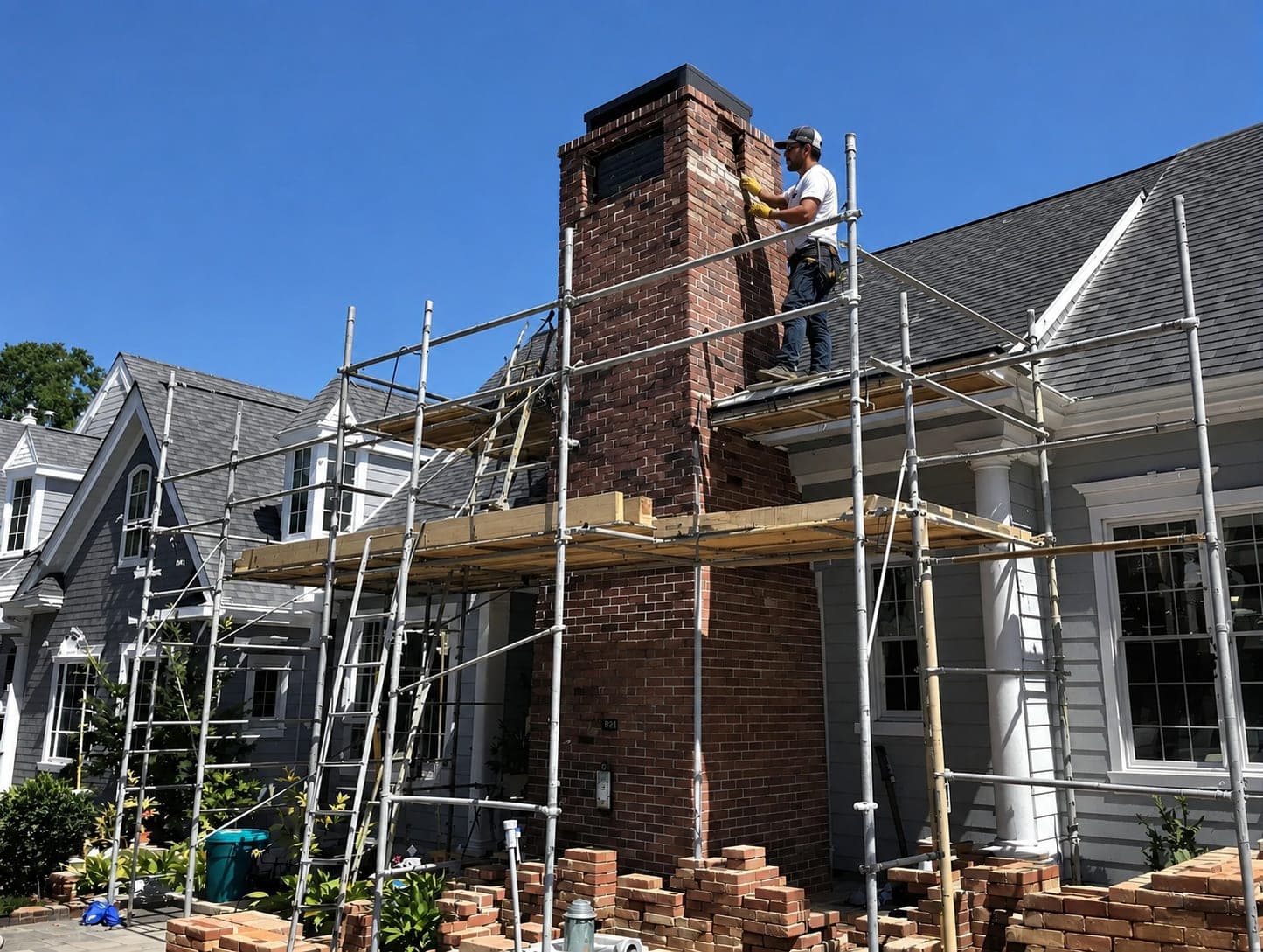
When the chimney leans or the masonry has broken down too far, the affected section is taken down and rebuilt. Our chimney rebuild service covers partial rebuilds above the roofline as well as larger rebuilds.
Protect the result
A new crown, a chimney cap, waterproofing and, where needed, liner repair or a new liner help keep water and heat damage from starting the cycle again.
If the inspection points to the footing as the reason the chimney moved, you will hear that plainly, because rebuilding masonry on a base that is still shifting does not hold.
What not to do
- Don't climb onto the roof to check or push on a leaning chimney.
- Don't fill a widening gap with caulk or foam and consider it solved; that hides the movement without stopping it.
- Don't keep burning fires in a chimney that is tilting or dropping masonry.
- Don't brace or strap the chimney yourself; a loose stack can come down during the attempt. If bricks are falling or it looks like it could come down, keep everyone away from the area below it and call 911.
Related problems and reading
Damaged masonry often lets water in, and a damp chimney is a common source of musty odors indoors. If you are noticing that too, read about what causes chimney smell. For background on why regular sweeping and inspection matter for the flue itself, our guide to creosote dangers and why chimney maintenance matters covers the basics.
Get the chimney looked at
Call or request an estimate to have a leaning or damaged chimney inspected and repaired.