When water shows up where the chimney is
A chimney sits through the roof, faces weather on every side, and joins the house at several seams. Water can get in at the top, through the brick or siding, or where the chimney meets the roof. From there it can run down inside the flue, soak into the masonry, or follow framing before it appears on a ceiling or wall. That is why a chimney leak is frustrating: the stain you see is often a few feet from where the water actually gets in.

The good news is that most leaks come from a short list of places, and each one has a known repair.
Common signs of a leaking chimney
Signs worth checking
- Brown or yellow stains on the ceiling or wall beside the chimney
- Peeling paint, bubbling drywall or loose wallpaper near the fireplace
- Water, drips or puddles in the firebox after rain or snowmelt
- A damp, musty or campfire-like smell that gets stronger in wet weather
- White, chalky deposits (efflorescence) on the outside brick or inside the firebox
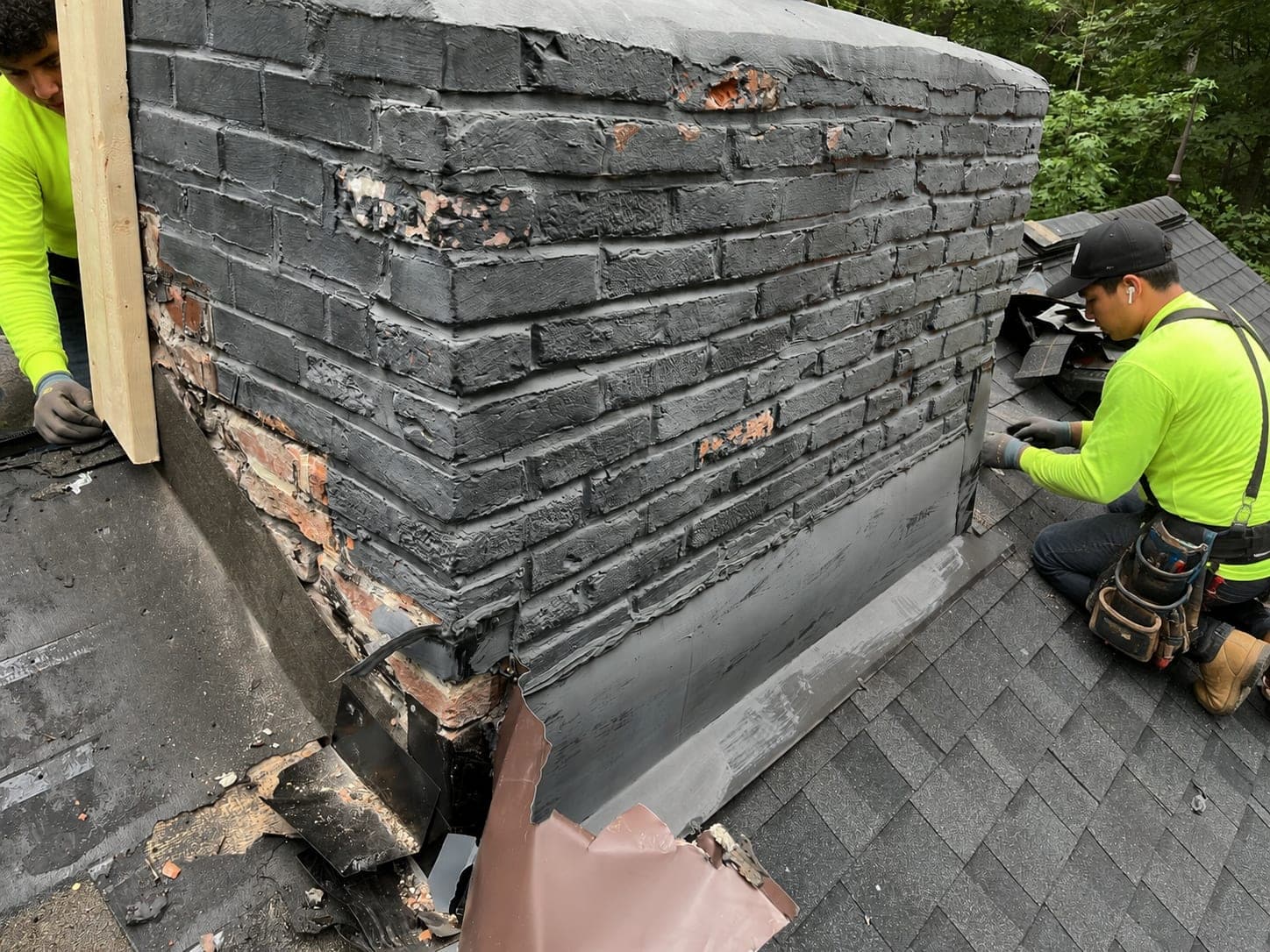
- Crumbling mortar joints or bricks with flaking faces
- Rust on the damper, firebox doors, a metal chase cover or the top of a prefab chimney
- Damp attic framing or insulation around where the chimney passes through
Possible causes of a chimney leak
Each of the causes below is a possibility, not a diagnosis. Several can happen at once, and only an inspection of the chimney top, the roof line and the flue confirms which one is letting water in.
Where water commonly gets in
01Failed or loose flashing
- What you may notice
- Stains on the ceiling or upper wall right where the chimney meets the roof; leaks that appear during wind-driven rain.
- How it’s confirmed
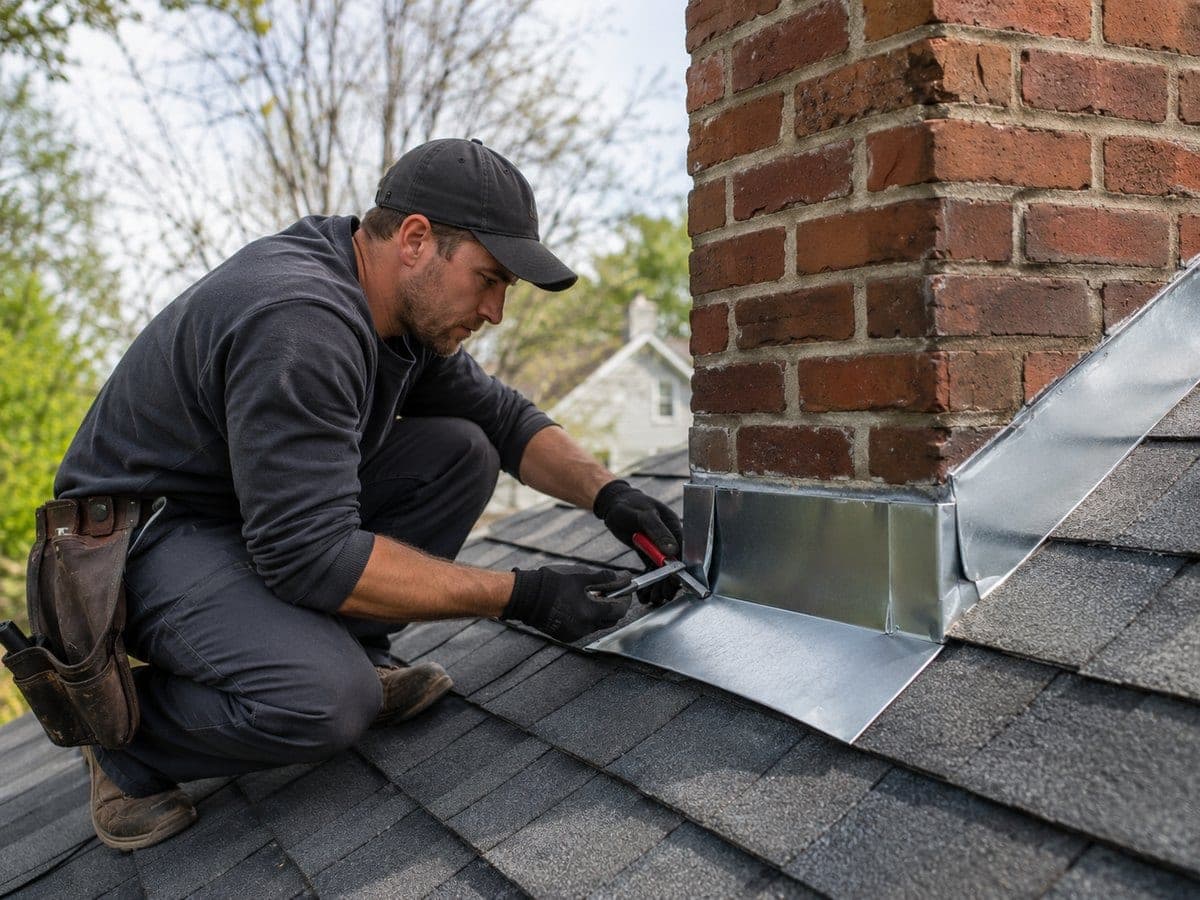
- The metal flashing and counter-flashing are checked for gaps, lifted edges, rust and old sealant that has cracked or pulled away.
02Cracked chimney crown
- What you may notice
- Water inside the flue or firebox; cracking or crumbling concrete visible on top of the chimney.
- How it’s confirmed
- The crown is examined for cracks, missing pieces and a slope that holds water instead of shedding it.
03Missing or damaged cap or chase cover
- What you may notice
- Rain falling straight into the flue; rust streaks down the chimney; a rusted, sagging metal top on a prefab chimney.
- How it’s confirmed
- The cap or chase cover is checked for rust-through, dents that pool water, loose fasteners and missing pieces.
04Porous brick and worn mortar
- What you may notice
- Efflorescence, flaking brick faces, soft or missing mortar, and dampness that spreads across a wide area.
- How it’s confirmed
- The masonry is checked for open joints, spalled brick and how readily the surface takes on water.
05Condensation inside the flue
- What you may notice
- Moisture or staining inside the fireplace with no rain involved, often in cold weather and sometimes with a strong odor.
- How it’s confirmed
- A camera inspection of the flue and liner looks for cracks, gaps and deposits that point to moisture forming inside.
Sometimes an inspection shows the water is coming from the roof near the chimney rather than from the chimney itself. Knowing that before any repair starts keeps you from paying to fix the wrong thing.
How urgent is a chimney leak?
A slow chimney leak is usually not a same-hour emergency, but it should be looked at soon, because every rain or snowmelt adds damage. Water that keeps getting into masonry can break down mortar and brick over time, rust metal parts like the damper and chase cover, and lead to mold or rot in nearby framing and drywall.
If water is pouring in, spreading quickly across a ceiling or reaching anything electrical, treat it as urgent. If water reaches wiring or a ceiling is sagging, keep clear of that area and switch off its power at the breaker if it's safe to do so. Emergency calls are accepted, and 24-hour service runs Sunday–Friday. Same-day visits are available where the schedule allows.
When to stop using the fireplace or stove
- Water is collecting in the firebox, on the smoke shelf or around the damper.
- Bricks or mortar are crumbling, flaking or falling into the firebox.
- The damper is rusted stuck, or pieces of the liner show up in the fireplace.
- A gas fireplace or insert has gotten wet, or its glass, burner or controls show moisture or rust.
- There is a strong odor you did not notice before the leak started.
In any of these cases, hold off on fires or running a gas unit until the chimney and appliance have been checked. Moisture can hide damage to the liner and firebox that affects how safely smoke and gases leave the house.
What to do when you first notice it
First steps
Catch the water
Set out a bucket or towels and move furniture, rugs and anything stored near the fireplace out of the way.
Note when it happens
Write down whether it leaks during every rain, only in wind-driven storms, after snow melts or in cold dry weather. That pattern helps narrow the source.
Take photos
Photograph stains, drips and anything you can see safely from the ground, such as rust streaks or loose metal on the chimney.
Stop using the fireplace if water reaches it
Skip fires and keep a gas unit off until it has been looked at.
Request an estimate
Get in touch to have the chimney inspected and the source confirmed. Estimates are free.
What usually fixes a leaking chimney
The repair depends on where the water is getting in, which is why the work starts with an inspection rather than a guess. Our chimney leak repair work covers tracing the leak and fixing the source, and the common repairs include:
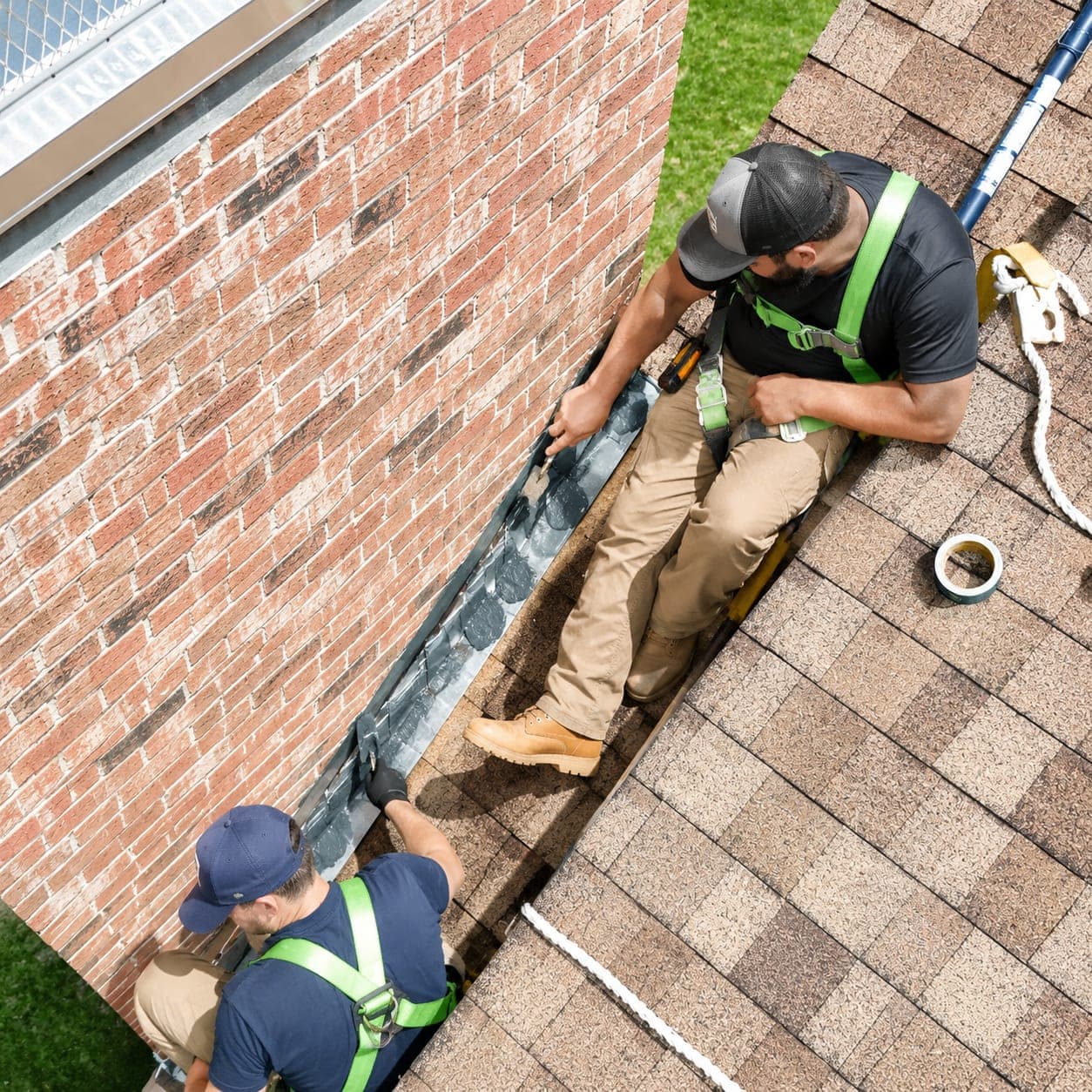
- Flashing repair or replacement where the chimney meets the roof. Gaps there are one of the most frequent sources, and chimney flashing repair reseals or replaces the metal properly instead of covering it with sealant.
- Crown repair to close cracks and restore a top surface that sheds water away from the flue.
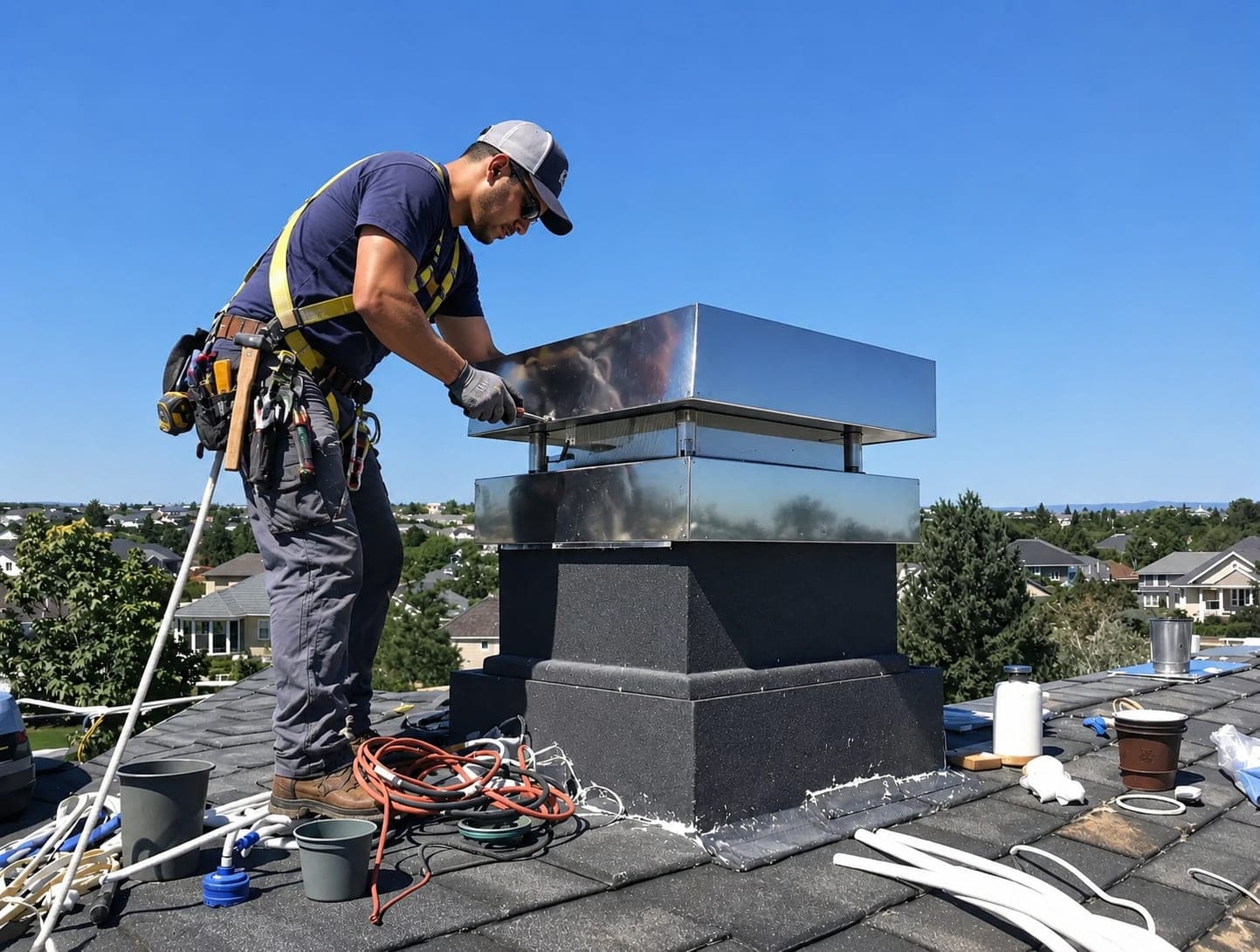
- Cap or chase cover replacement to keep rain out of the flue on masonry chimneys and off the top of prefab chimneys. For the difference between the two, read our guide to chimney cap vs chase cover.
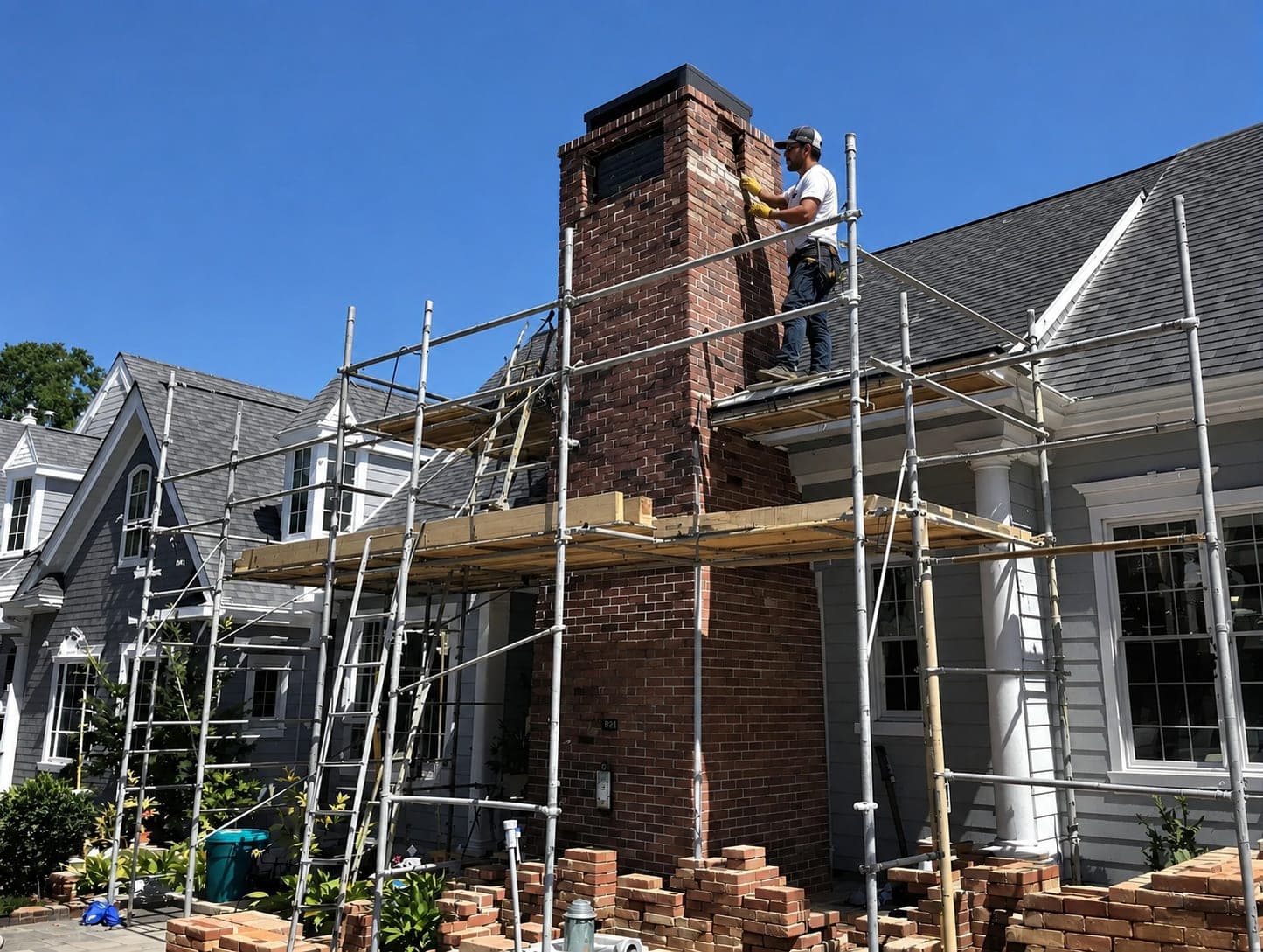
- Tuckpointing or masonry repair to replace worn mortar and damaged brick. When damage is extensive, the choice between repair and rebuilding is explained in chimney rebuilding vs tuckpointing.
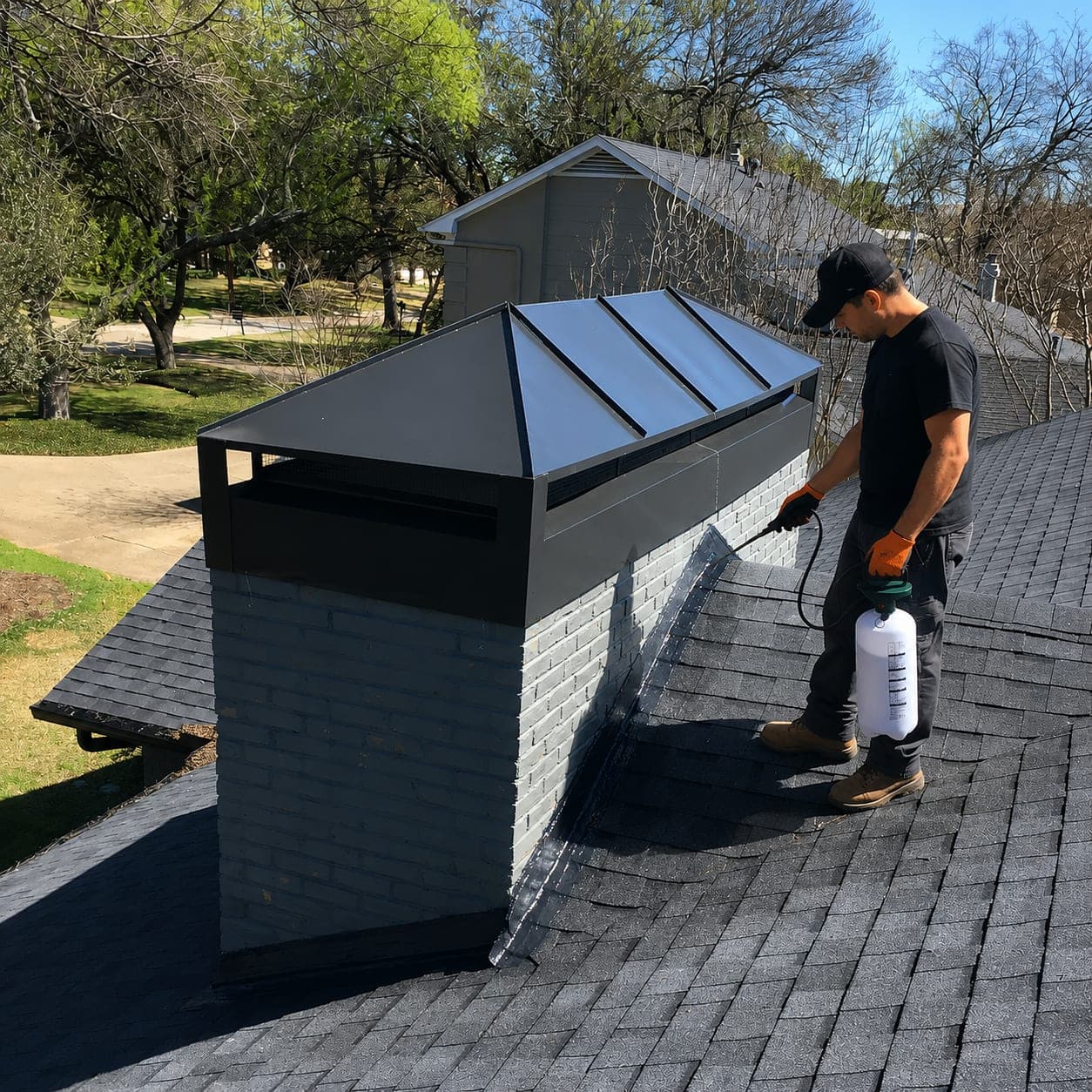
- Waterproofing with a breathable water repellent once the masonry is sound, so the brick stops soaking up rain while still letting moisture escape. Here is how chimney waterproofing works.
- Liner or damper repair if water has already damaged them, or if condensation inside the flue is part of the problem.
Get the source confirmed
An inspection shows where the water is coming from and what it has already damaged, so the repair targets the right spot.
What not to do
- Don't climb onto a wet, icy or steep roof to look for the leak yourself.
- Don't smear caulk or roofing tar over flashing gaps. It tends to crack, trap water and make the proper repair harder.
- Don't paint brick with a sealer that isn't breathable. Trapped moisture can make bricks flake and crumble faster.
- Don't keep using the fireplace while water is getting into the firebox or flue.
- Don't just repaint the ceiling stain. If the leak is still active, the stain comes back and the damage behind it grows.
Related services
Depending on what the inspection finds, a leak may also call for chimney crown repair, chimney tuckpointing, chimney masonry repair, chimney cap installation or replacement, chase cover replacement, chimney liner repair, chimney damper repair or a chimney camera inspection. After a storm, a storm damage chimney inspection can check for loosened flashing, a damaged cap or cracked masonry before leaks start. Commercial and property-manager work is offered as well.