On this page
What leaking chimney repair involves
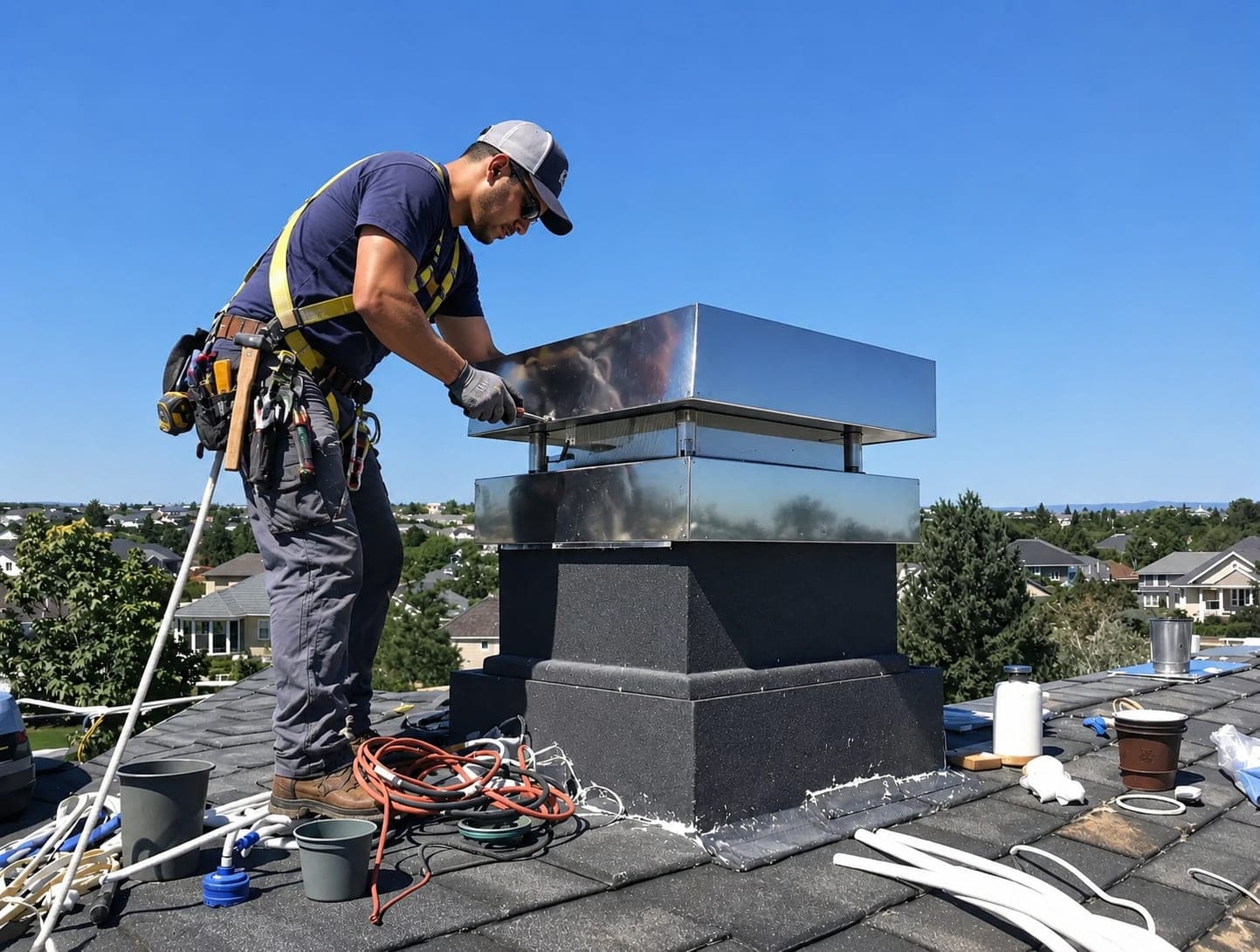
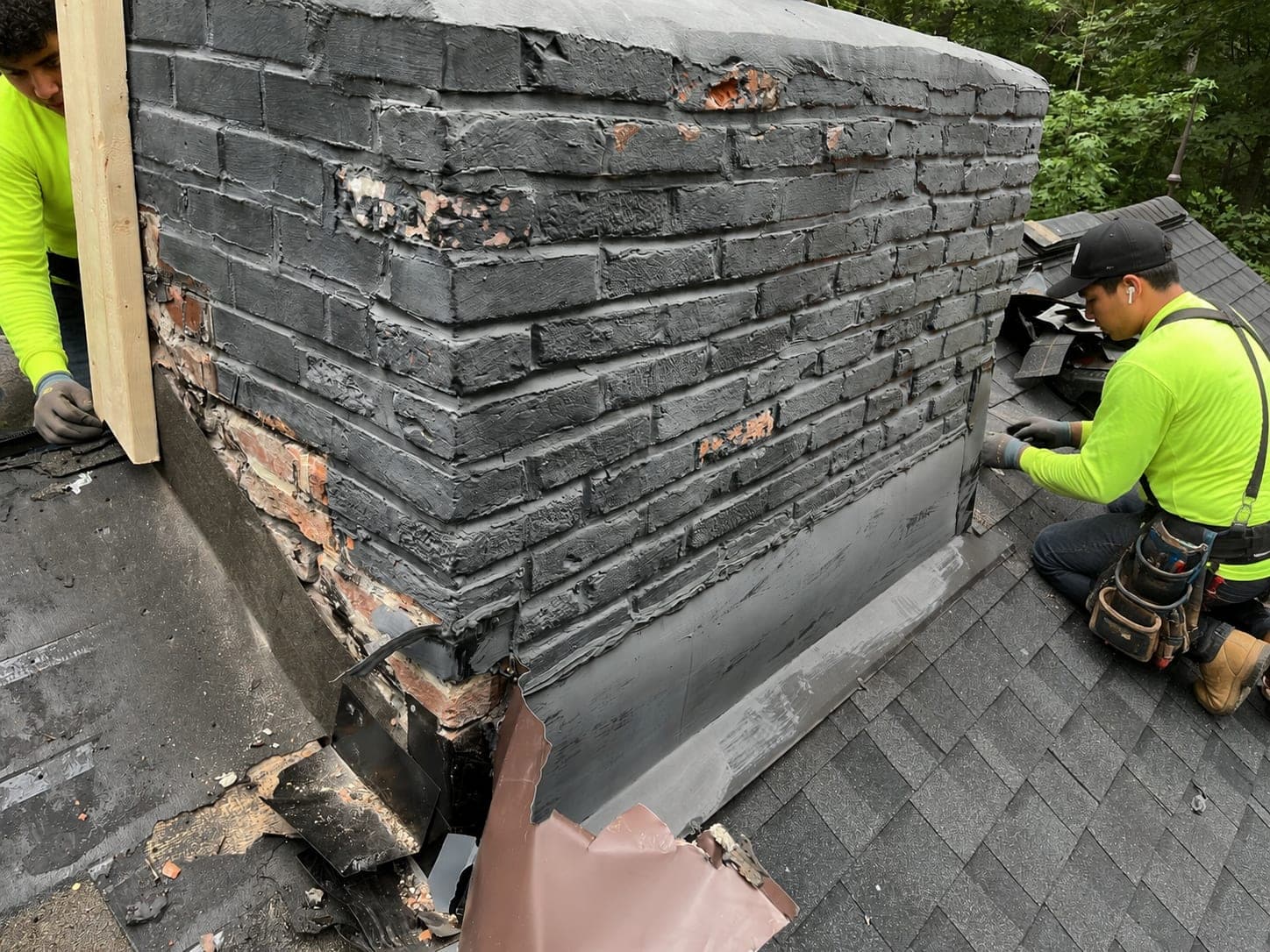
A chimney sits outside the roofline, so it takes rain and snowmelt on every side. When a leak shows up inside, the cause is usually one weak spot rather than the whole chimney. That spot might be flashing that has pulled away from the brick, a cracked crown, a missing or damaged cap, worn mortar joints, or a rusted chase cover on a prefab chimney.
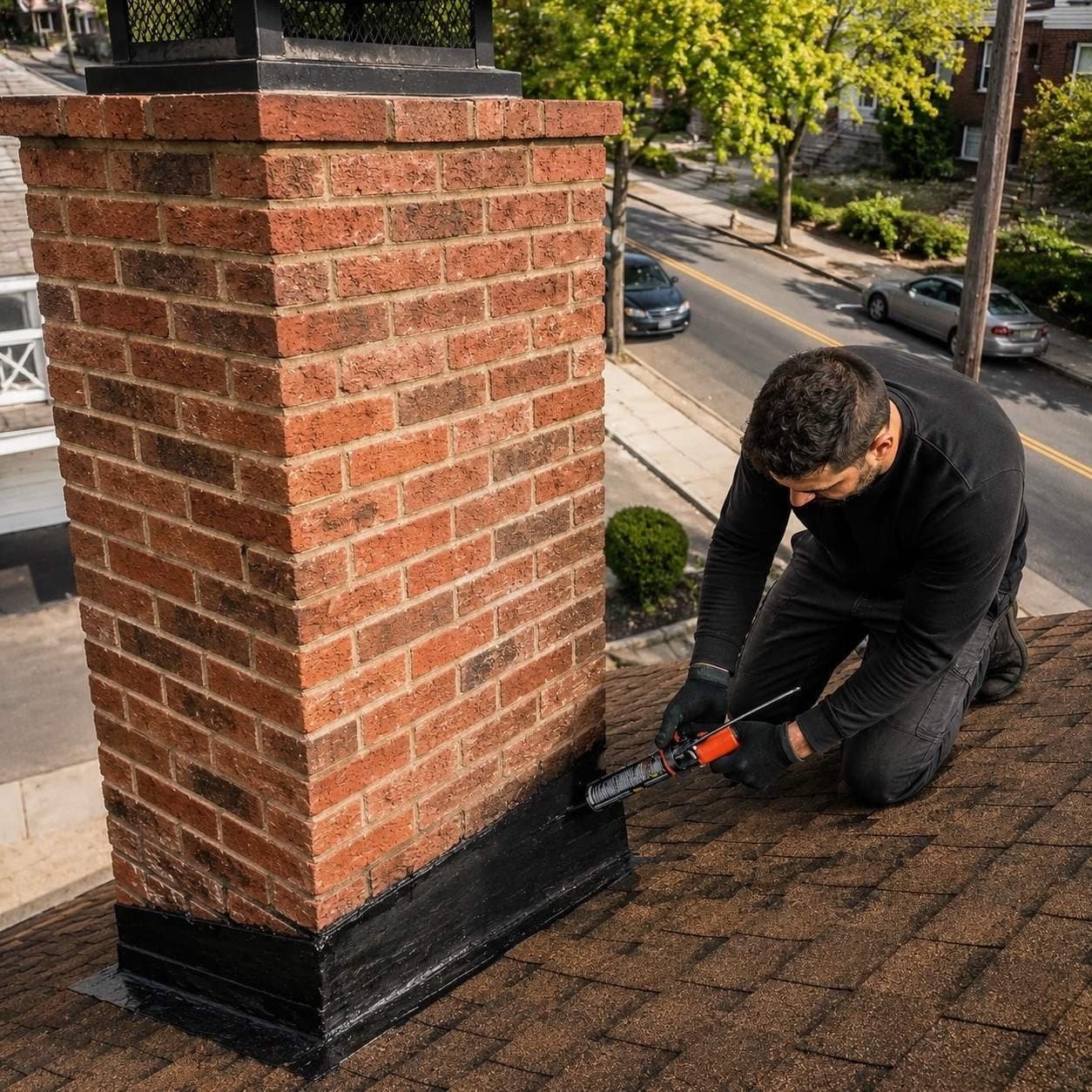
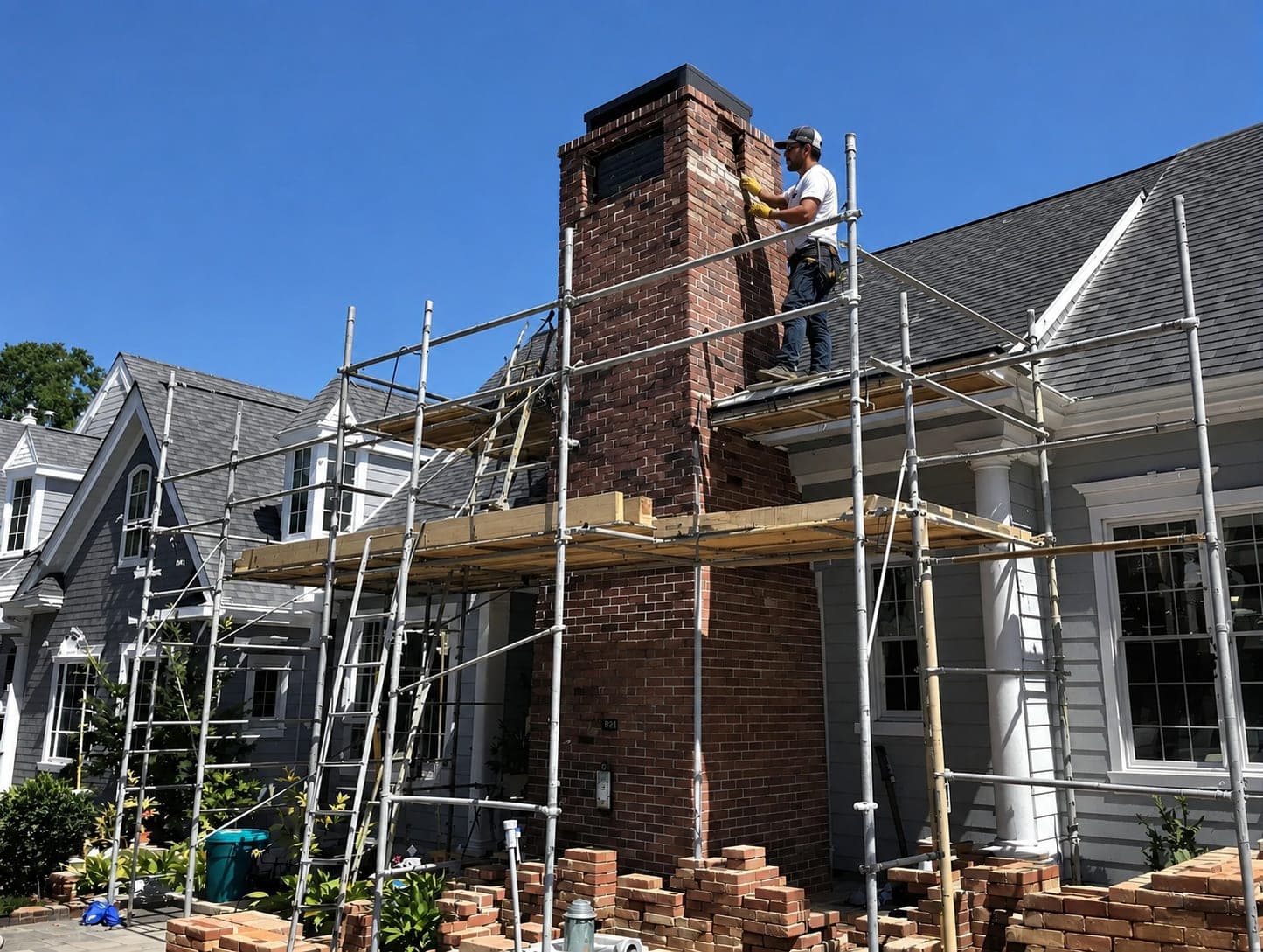
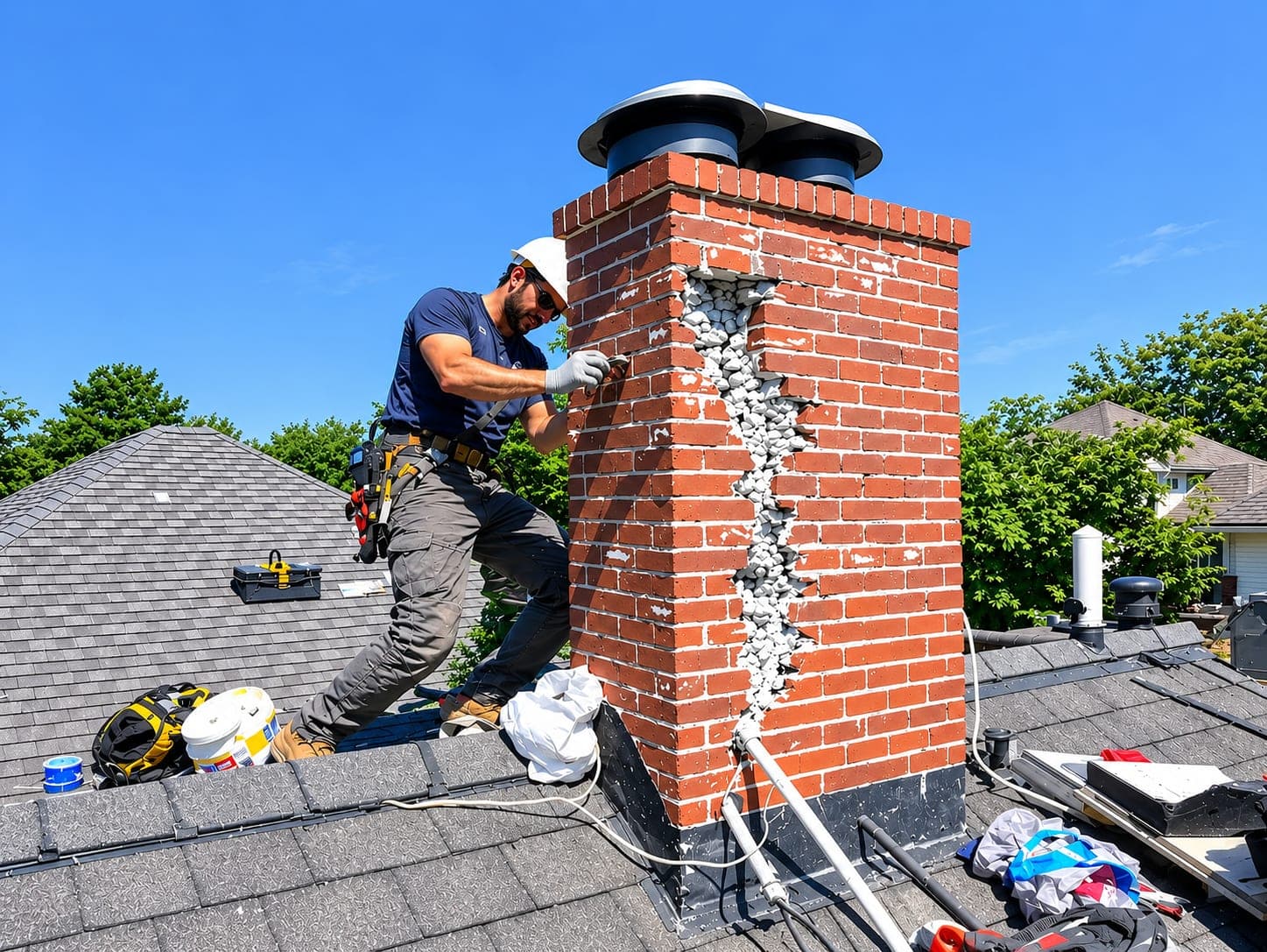
Some leaks need one targeted fix. Others need a combination, such as flashing repair along with waterproofing for porous brick. When the masonry itself is failing, the job may become part of a broader chimney repair service, and a badly deteriorated stack may need a chimney rebuild instead of patching.
When a chimney leak needs a repair visit
Water stains on the ceiling or wall beside the chimney, dripping or puddles in the firebox, white residue on the brick, rusted damper parts and a damp, musty smell from the fireplace are the usual signs, and the breakdown of what causes chimney leak problems explains how they develop. If any of these keep coming back after rain or snow, have the chimney repaired before the water reaches framing, drywall or the flue liner.
Water coming in right now?
In the meantime, stop using the fireplace, put a bucket or towels under any drip, and move furniture and rugs away from the wet area.
How a chimney leak repair visit goes
From first look to finished repair
Talk through what you've seen
Where the water appears, when it shows up and how long it has been happening all help narrow down the source.
Check inside
The fireplace, firebox, damper and the walls or ceiling around the chimney are looked over for water marks and damage.
Check the exterior
The flashing, crown, cap, mortar joints, brick or chase cover are inspected for gaps, cracks, rust and missing parts.
Explain the findings and give a free estimate
You hear where the water is getting in, what the repair involves and what it will take, before any work starts.
Make the repair
The failed part is repaired or replaced, whether that's resealing or replacing flashing, rebuilding a crown, adding a cap or repointing joints.
Review the finished work
You're shown what was done and what to keep an eye on during the next few storms.
Where water gets in and what fixes it
| Part of the chimney | What goes wrong | Repair |
|---|---|---|
| Flashing | Metal or sealant separates where the chimney meets the roof | Chimney flashing repair or replacement |
| Crown | Cracks in the concrete top let water into the masonry below | Chimney crown repair |
| Cap | A missing or damaged cap lets rain fall straight into the flue | Cap installation or replacement |
| Mortar and brick | Eroded joints and porous brick soak up water | Tuckpointing, masonry repair and waterproofing |
| Chase cover (prefab chimneys) | Rusted or sagging metal holds water and lets it drip inside | Chase cover repair or replacement |
If the cap is the weak point, our chimney cap installation work covers fitting a new one. Prefab chimneys are topped differently than masonry ones, and the article on chimney cap vs chase cover explains which one your chimney has. For mortar damage, our guide to chimney rebuilding vs tuckpointing covers when repointing is enough and when a rebuild makes more sense.
Keeping the chimney dry after the repair
Simple habits that help
- Keep a cap on the chimney so rain and debris stay out of the flue
- Look at the chimney from the ground after big storms for missing caps, loose flashing or fallen brick pieces
- Watch the ceiling and walls near the chimney for new stains
- Have the chimney inspected before the burning season so small cracks get fixed early
- Don't burn in a fireplace where water has been dripping until the firebox and liner have been checked
Booking a chimney leak repair
Call or request an estimate and describe where you're seeing water. Emergency calls are accepted, and commercial and property-manager work is offered for rental and business buildings as well as homes.