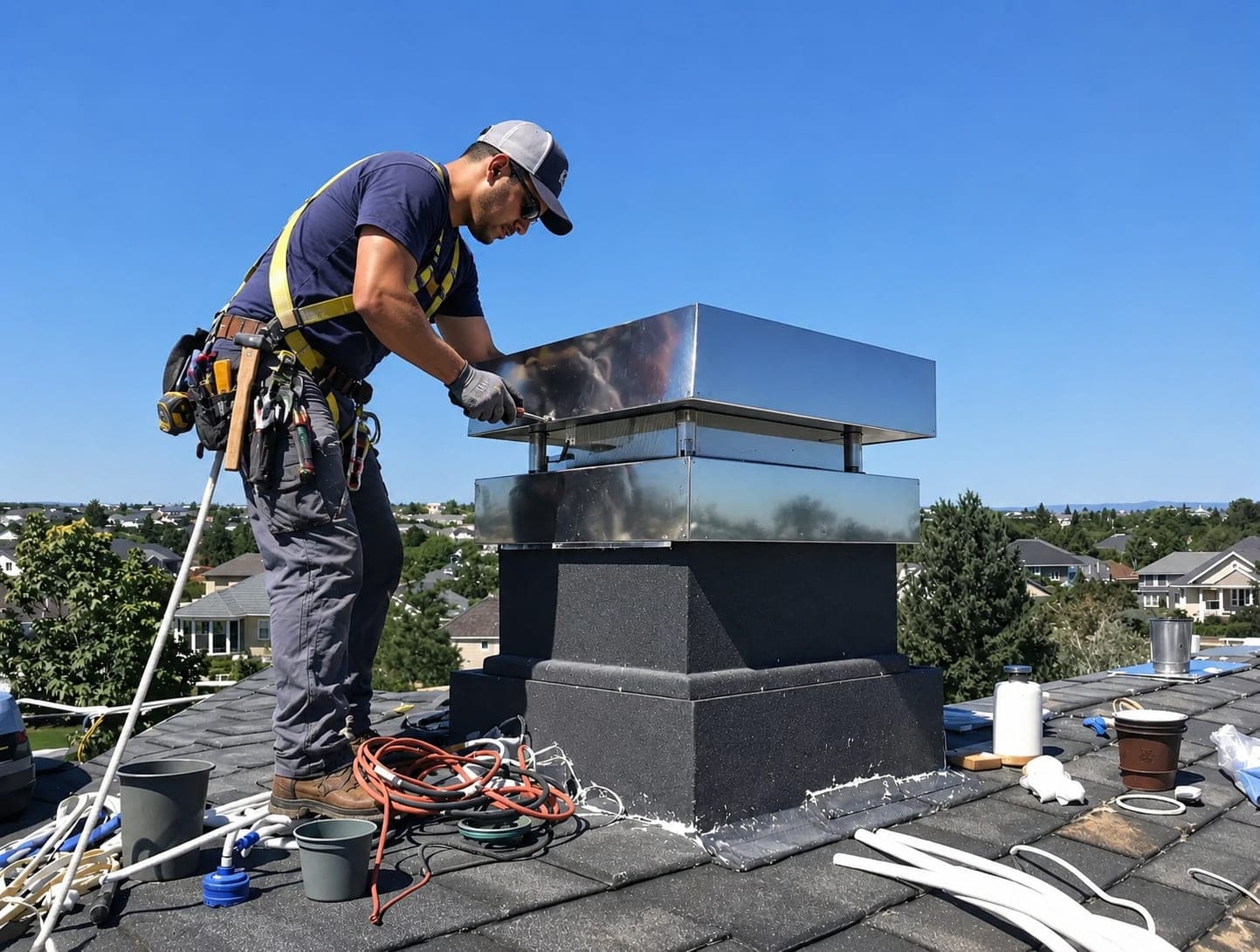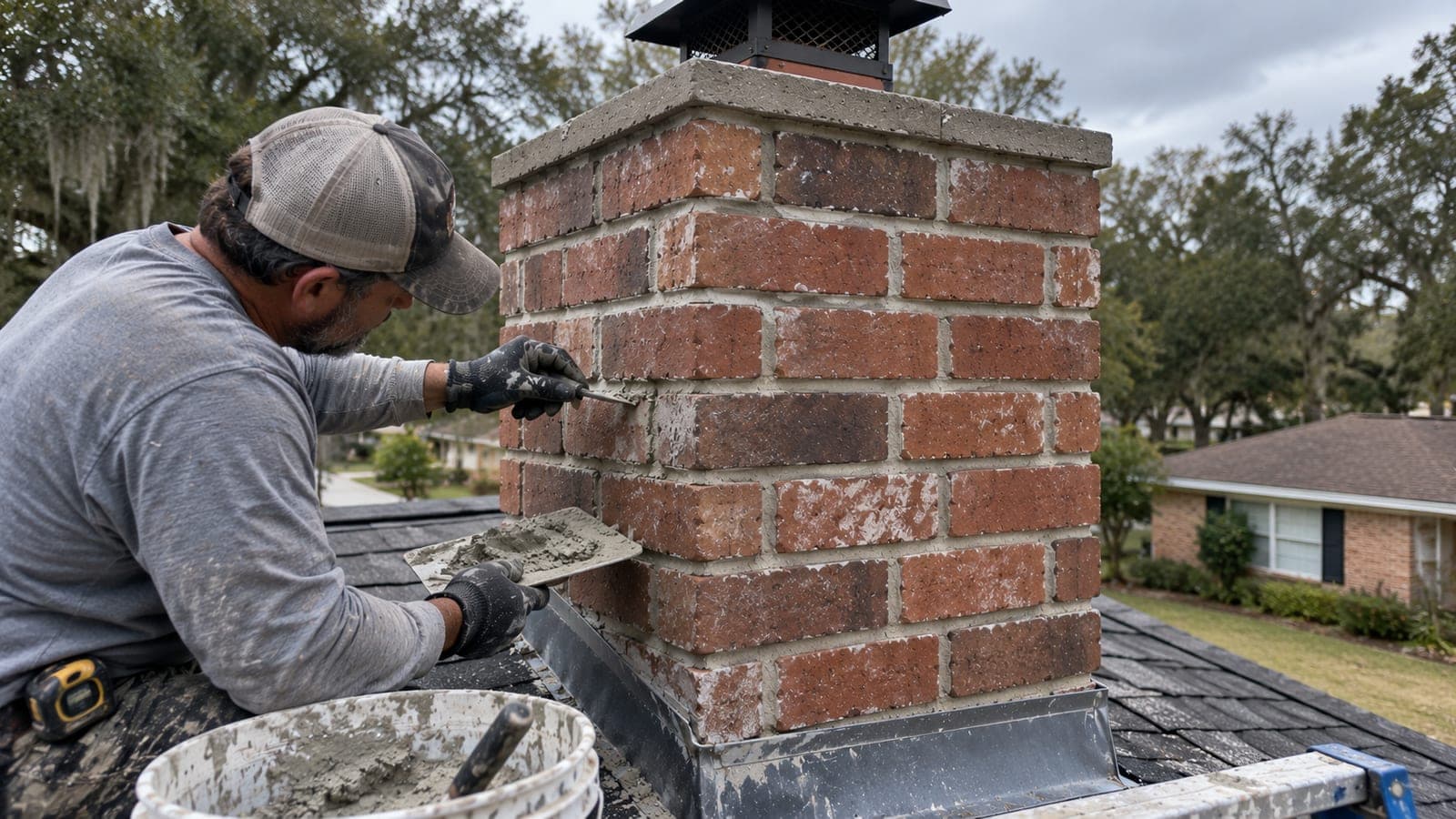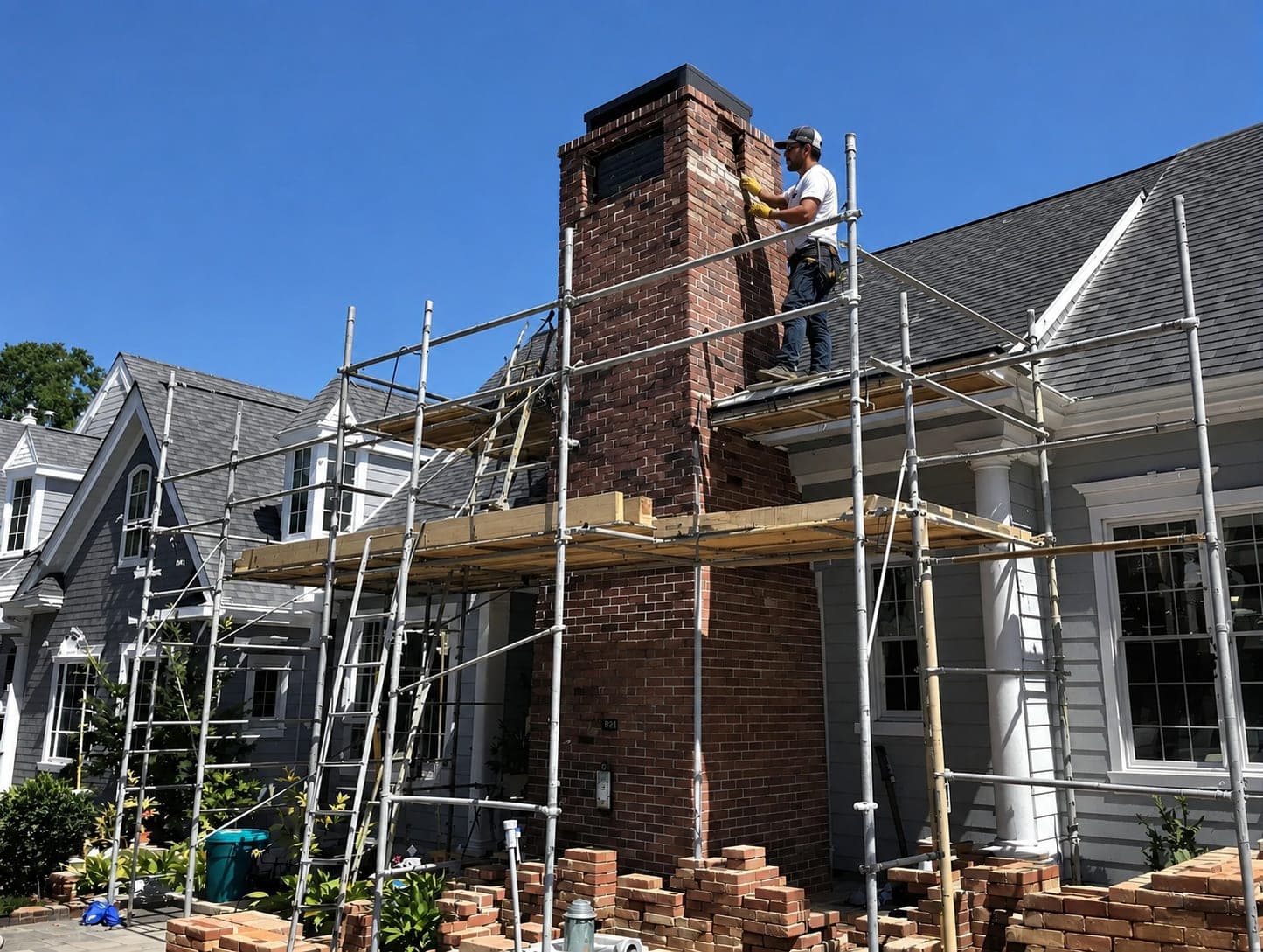
The short answer: mortar problem or brick problem?
If the bricks are solid and only the mortar joints are crumbling, recessed or cracked, tuckpointing is usually enough. If bricks are spalling (flaking or popping their faces), loose or cracked through, or the chimney is leaning or separating, mortar work alone won't hold it together, and some or all of the chimney needs to be rebuilt.
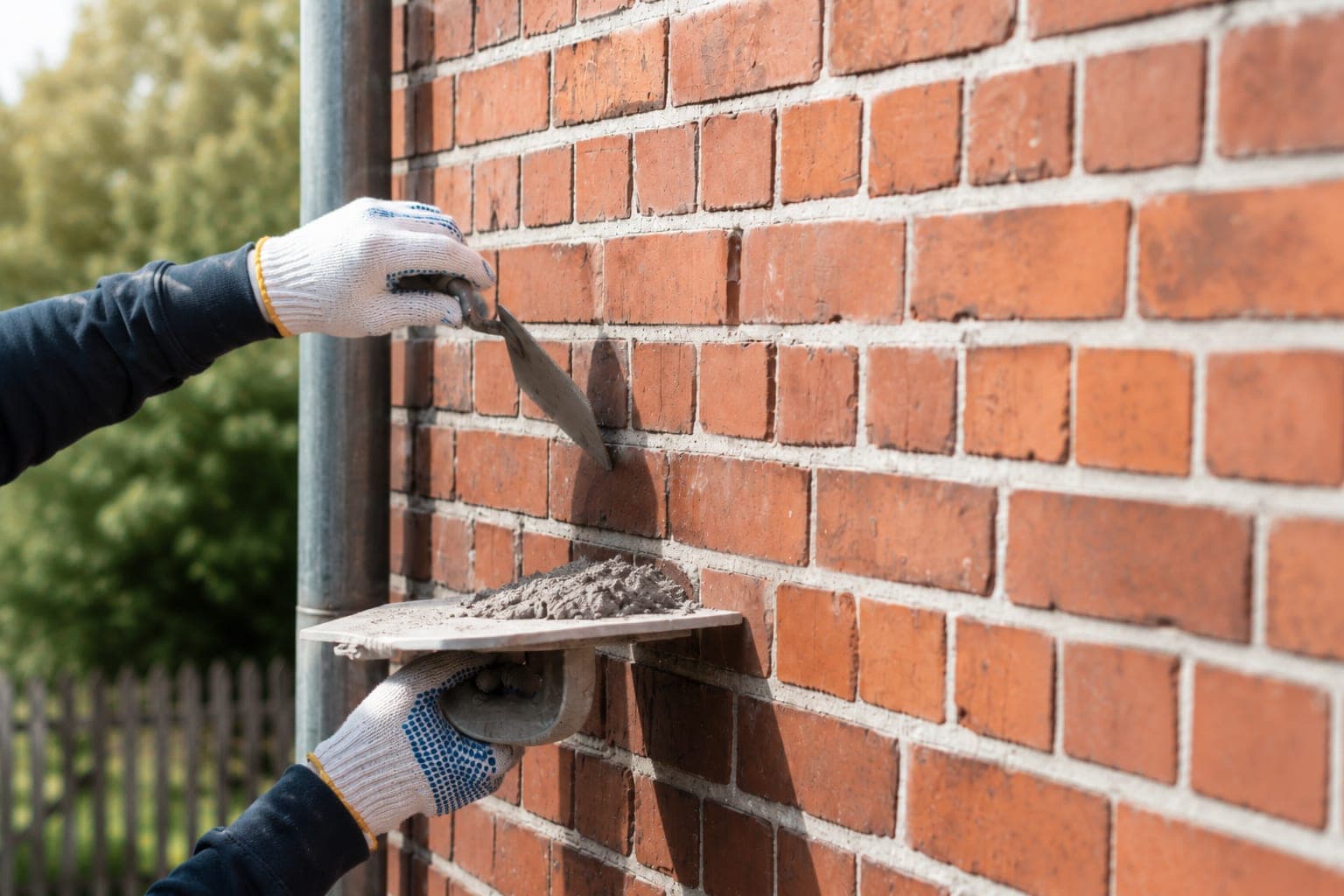
Many chimneys fall between the two. A common outcome is a partial rebuild of the top section, where weather hits hardest, with tuckpointing on the rest of the stack.
What each repair involves
Tuckpointing
Deteriorated mortar is ground or raked out of the joints to a consistent depth, and new mortar is packed in and tooled to shape. The bricks stay in place. When the bricks are in good shape, this restores the joints that keep water out and hold the masonry together. You can read more about how chimney tuckpointing works on the service page.
Rebuilding
Damaged courses of brick are taken down, either from the crown to a point where the masonry is sound (a partial rebuild) or down to the roofline or below (a full rebuild). The chimney is then re-laid with new or salvaged brick and fresh mortar, usually with a new crown on top. Details of the process are on our chimney rebuild service page.
| Feature | Tuckpointing | Rebuilding |
|---|---|---|
| What gets replaced | Mortar joints only | Brick, mortar and usually the crown |
| Condition of bricks | Sound, firmly set | Spalled, cracked, loose or missing |
| Structure | Straight and stable | Leaning, bulging or separating |
| Scope | Selected areas or the whole stack | Top section (partial) or entire chimney (full) |
| Disruption | Less invasive | More involved; brick is removed and re-laid |
What gets replaced
- Tuckpointing
- Mortar joints only
- Rebuilding
- Brick, mortar and usually the crown
Condition of bricks
- Tuckpointing
- Sound, firmly set
- Rebuilding
- Spalled, cracked, loose or missing
Structure
- Tuckpointing
- Straight and stable
- Rebuilding
- Leaning, bulging or separating
Scope
- Tuckpointing
- Selected areas or the whole stack
- Rebuilding
- Top section (partial) or entire chimney (full)
Disruption
- Tuckpointing
- Less invasive
- Rebuilding
- More involved; brick is removed and re-laid
Signs that point one way or the other
Matching symptoms to the likely repair
01Mortar is sandy, recessed or missing
- What you may notice
- Joints you can scratch out with a key; gaps between bricks; mortar dust at the base
- How it’s confirmed
- Close visual inspection of the joints and probing for soft mortar
02Bricks are flaking or crumbling
- What you may notice
- Brick faces popping off, chips on the roof or in gutters, crumbling edges
- How it’s confirmed
- Inspection of individual bricks for spalling and loose units
03The chimney leans or has wide cracks
- What you may notice
- Visible tilt, cracks running through bricks, gaps where the chimney meets the house
- How it’s confirmed
- Checking alignment and crack patterns through the stack
04Water is getting inside
- What you may notice
- Stains on the ceiling or wall near the chimney, damp firebox, rusted damper
- How it’s confirmed
- Inspection of masonry, crown, flashing and cap to find the entry point
Don't ignore a leaning chimney
A chimney that is visibly tilting or has bricks falling from it can be a hazard to the roof and anyone below. If bricks are falling or it looks like it could come down, keep everyone away from the area below it and call 911. Keep people away from the area beneath it and have it looked at before using the fireplace.
Why mortar fails before brick
Mortar is meant to be the softer, sacrificial part of a masonry wall. Water soaks into joints, and repeated freezing and thawing breaks it down over time. When mortar is repointed before it fails completely, the bricks around it are protected. When it's left too long, water moves into the bricks, they start to spall, and a job that could have been tuckpointing turns into a rebuild.
Water entry often starts above the masonry, too. A cracked crown, missing cap or failed flashing lets water into the stack, so it helps to understand what causes chimney leaks before deciding the brickwork alone is to blame.
What helps a homeowner decide
Questions to answer before choosing
- Are the bricks themselves sound, or is it only the mortar that is failing?
- Is the damage concentrated near the top of the chimney or spread down the whole stack?
- Is the chimney straight, or is there any lean, bulge or separation from the house?
- Is the crown cracked, and is there a cap or cover keeping water out?
- Is the flashing where the chimney meets the roof tight and intact?
- Are there signs of water inside the house or in the firebox?
An in-person inspection answers these far better than photos from the ground. Sometimes the fix is neither a rebuild nor full tuckpointing but a targeted chimney repair, such as resealing a crown or replacing flashing. If the top of your chimney needs protection once the masonry is fixed, our guide to chimney cap vs chase cover explains the difference.
We handle tuckpointing, partial and full rebuilds, and crown and masonry repair, and estimates are free.