The short answer: different parts, different jobs
A chimney cap is a small hood that sits directly over the flue, the passage the smoke travels up. It keeps rain, leaves and animals out of the flue, and most caps have a mesh screen that also stops sparks. A chase cover is a flat or slightly sloped metal pan that covers the entire top of a chimney chase. A chase is the wood-framed, sided box built around the metal flue pipe of a factory-built (prefab) fireplace. The chase cover keeps water out of that box. A hole in the cover lets the flue pipe pass through, and a cap then sits on top of the pipe.
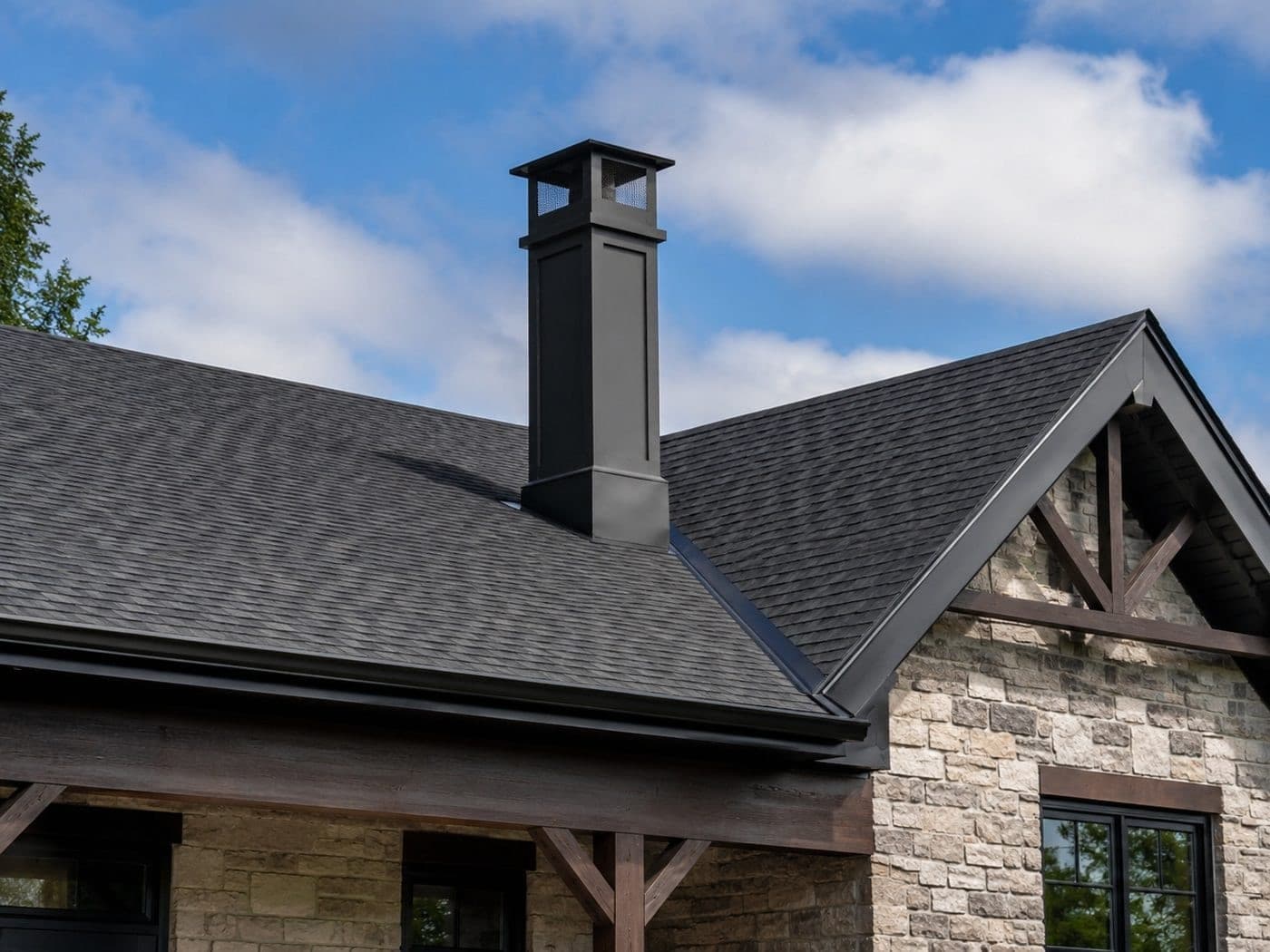
So the question is usually not which one to choose. It's which one your chimney uses and which one has failed. A brick or stone chimney normally has a cap but no chase cover, because its masonry crown seals the top. A framed chase chimney normally has both.
| Feature | Chimney cap | Chase cover |
|---|---|---|
| What it covers | The opening of one flue (or several, with a multi-flue cap) | The entire top of a framed chimney chase |
| Found on | Masonry and factory-built chimneys | Factory-built (prefab) chimneys in a framed chase |
| Main job | Keeps rain, debris and animals out of the flue; screens sparks | Keeps water out of the wooden chase structure |
| On a masonry chimney | Still needed over each flue | Not used; the masonry crown does this job |
| Typical failure | Bent or clogged mesh, loose mounting, missing after a storm | Rust, holes, pooling water, failed seams |
| Common symptom when it fails | Water dripping into the firebox, animals or nests in the flue | Rust streaks on siding, water stains on walls or ceiling near the fireplace |
What it covers
- Chimney cap
- The opening of one flue (or several, with a multi-flue cap)
- Chase cover
- The entire top of a framed chimney chase
Found on
- Chimney cap
- Masonry and factory-built chimneys
- Chase cover
- Factory-built (prefab) chimneys in a framed chase
Main job
- Chimney cap
- Keeps rain, debris and animals out of the flue; screens sparks
- Chase cover
- Keeps water out of the wooden chase structure
On a masonry chimney
- Chimney cap
- Still needed over each flue
- Chase cover
- Not used; the masonry crown does this job
Typical failure
- Chimney cap
- Bent or clogged mesh, loose mounting, missing after a storm
- Chase cover
- Rust, holes, pooling water, failed seams
Common symptom when it fails
- Chimney cap
- Water dripping into the firebox, animals or nests in the flue
- Chase cover
- Rust streaks on siding, water stains on walls or ceiling near the fireplace
How to tell which one your chimney has
Look at the chimney from the ground
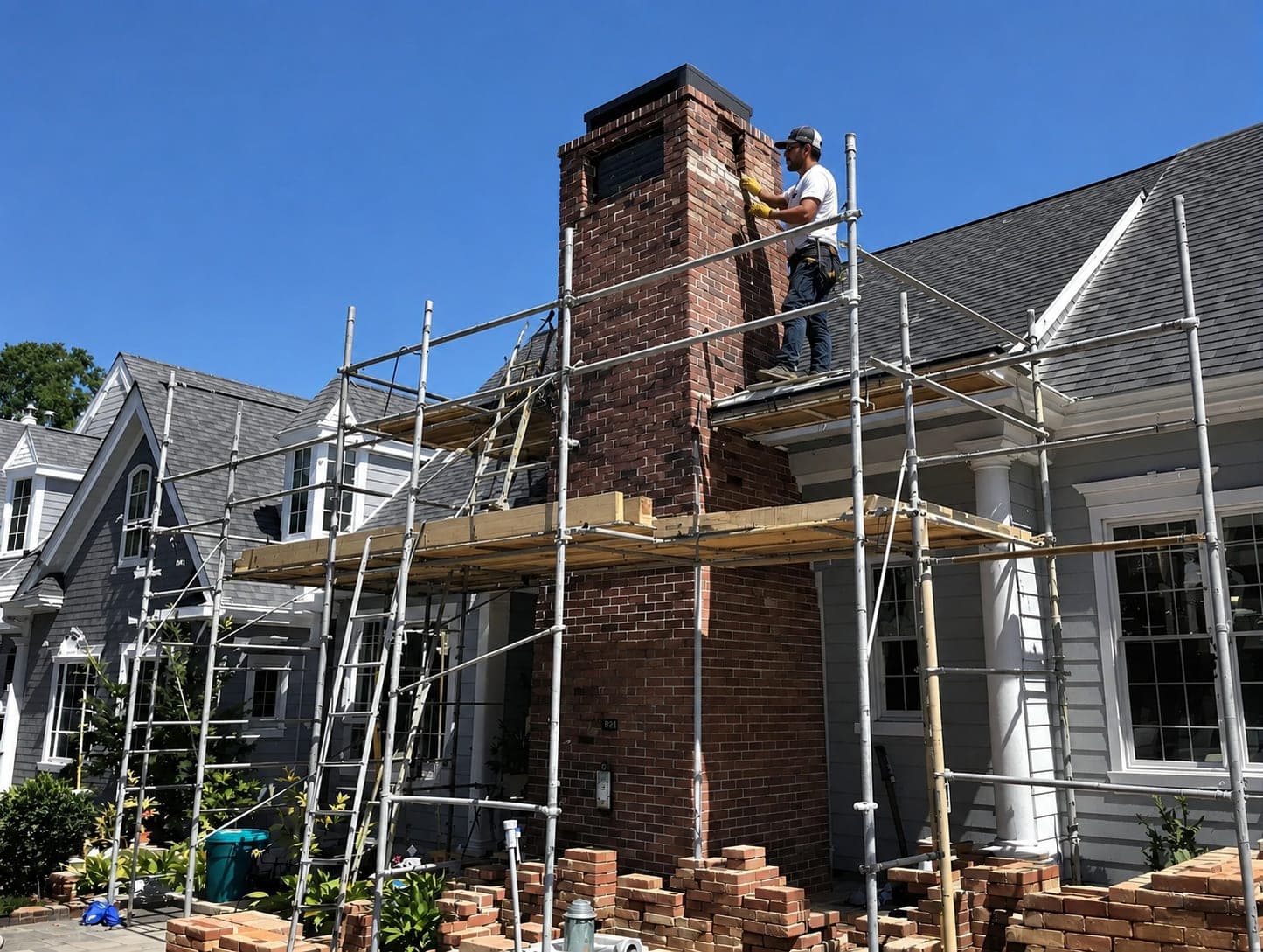
- Brick, block or stone all the way to the top: masonry chimney. Expect a cap on the flue and a concrete or mortar crown around it, with no chase cover.
- Siding, stucco or wood panels on the chimney, the same as the house: framed chase. Expect a metal chase cover on top and a cap on the round flue pipe that sticks up through it.
- A round metal pipe coming straight through the roof with no enclosure: no chase and no chase cover, just a cap or termination on the pipe.
- Rust running down the siding from the top of a framed chase: the chase cover is the first suspect.
Why each part matters
What a chimney cap prevents
Without a cap, rain falls straight down the flue. That can rust a damper and the metal parts of a fireplace, wet the smoke chamber and soak any creosote, which then smells. An open flue is also an easy home for birds, squirrels and raccoons, and a nest can block the flue. The screen on a cap stops hot embers from leaving the top of a wood-burning chimney. If your flue has no cap, or the one you have is damaged, this is how chimney cap installation works.
What a chase cover prevents
A chase is built from framing lumber, sheathing and siding, much like a wall of the house. It isn't built to get wet from the top. A chase cover that rusts through, cracks at a seam or holds standing water lets that water run down inside the chase. There it can rot framing, stain interior walls and ceilings, and rust the fireplace unit below. These leaks often show up well away from the chimney top, which is why they are easy to blame on the roof. If you're tracing water stains, it helps to read about what causes chimney leak problems before deciding on a fix.
Chase cover options: repair or replace
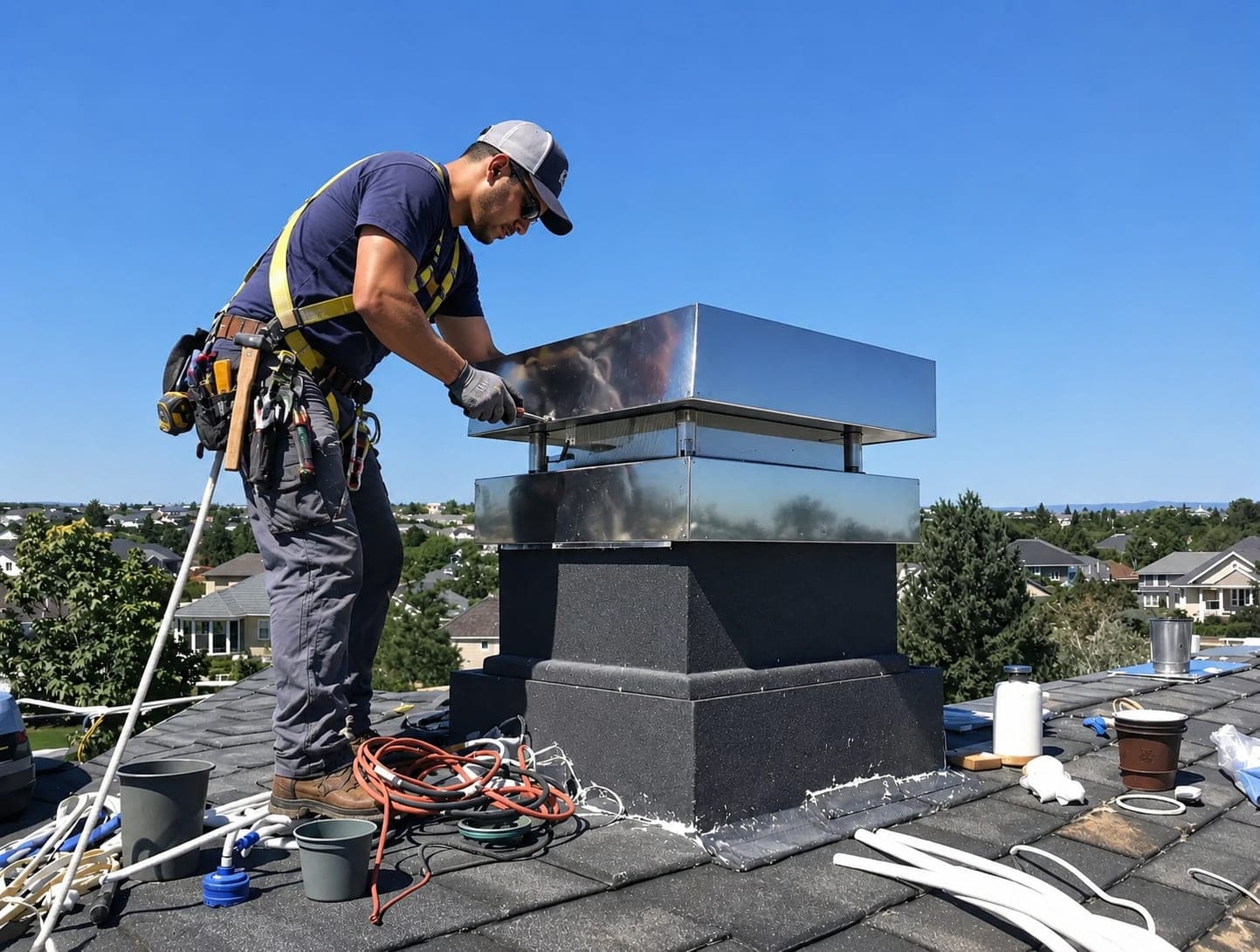
Many original chase covers are thin galvanized steel. Over the years they tend to rust, especially if they are flat and water sits on them. Replacement covers are commonly made in stainless steel, aluminum or copper. They are often formed with a cross-break or slope so water runs off, and with a drip edge that sheds water away from the siding.
| What you see | Usual approach |
|---|---|
| Surface rust, metal still solid, no leaks | Cleaning, rust treatment and sealing may be enough |
| A loose or failed seal around the flue pipe or fasteners | Resealing and refastening, a targeted repair |
| Rust holes, sagging or a dished center that holds water | Replacement with a cover that sheds water |
| Wrong size, or overhang too short to protect the siding | Replacement with a cover made to fit the chase |
| Water damage already inside the chase | Replace the cover and inspect the framing and fireplace below |
When the metal is still sound, chimney chase cover repair can extend its life. When it's rusted through or holds water, chase cover replacement is usually the lasting fix. Because the cap sits on the flue pipe above the cover, it's a good time to check or replace the cap as well.
What helps you decide
A practical order of questions
Identify the chimney type
Masonry or framed chase. This tells you whether a chase cover is even part of the picture.
Find where the water or the problem shows up
Water in the firebox points toward the cap or the flue. Stains on walls, ceilings or siding around a framed chase point toward the chase cover.
Check the condition of the metal
Rust you can see from the ground, sagging or a missing cap all deserve a closer look on the roof.
Look past the top
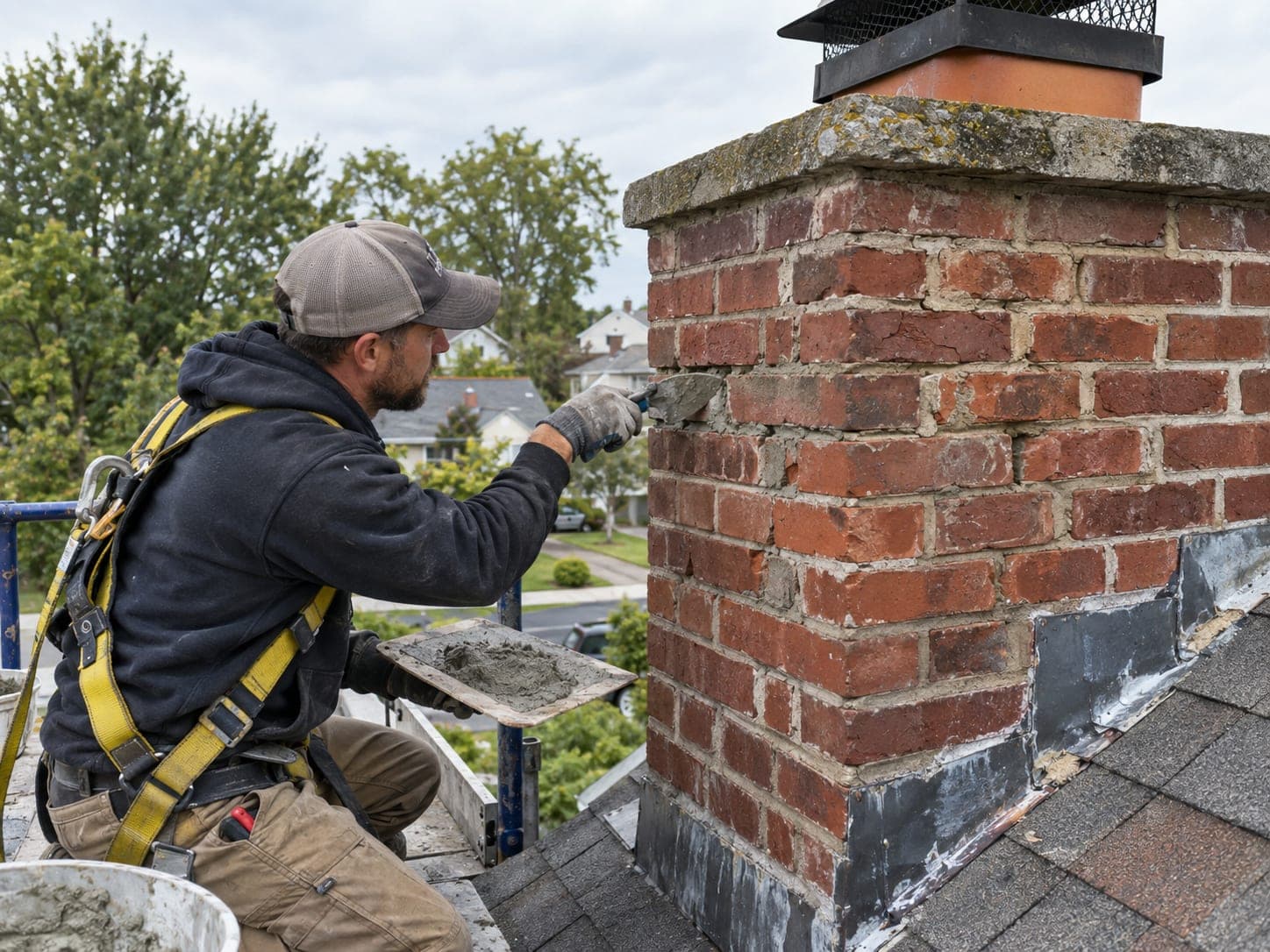
A failed chase cover can mean wet framing below. On masonry chimneys, crown and mortar problems can look like cap problems.
Leave the roof work to someone with the right gear
Chimney tops are high, steep and often slippery. Binoculars from the ground will tell you a lot without the risk.
If your chimney is masonry, the crown and mortar joints matter as much as the cap, and our guide to chimney rebuilding vs tuckpointing explains the difference. When you're ready, request an estimate (estimates are free) for chase cover repair or replacement, chimney cap installation or a leak inspection.