On this page
What chimney cap replacement involves
A chimney cap is the hood and screen that sits over the top of the flue. The hood keeps rain and snow from falling straight down the chimney. The mesh screen keeps out birds, squirrels and leaves, and it stops larger embers from leaving the flue. When a cap rusts through, loses its screen or gets knocked loose, it stops doing those jobs, even if it still looks mostly intact from the yard.
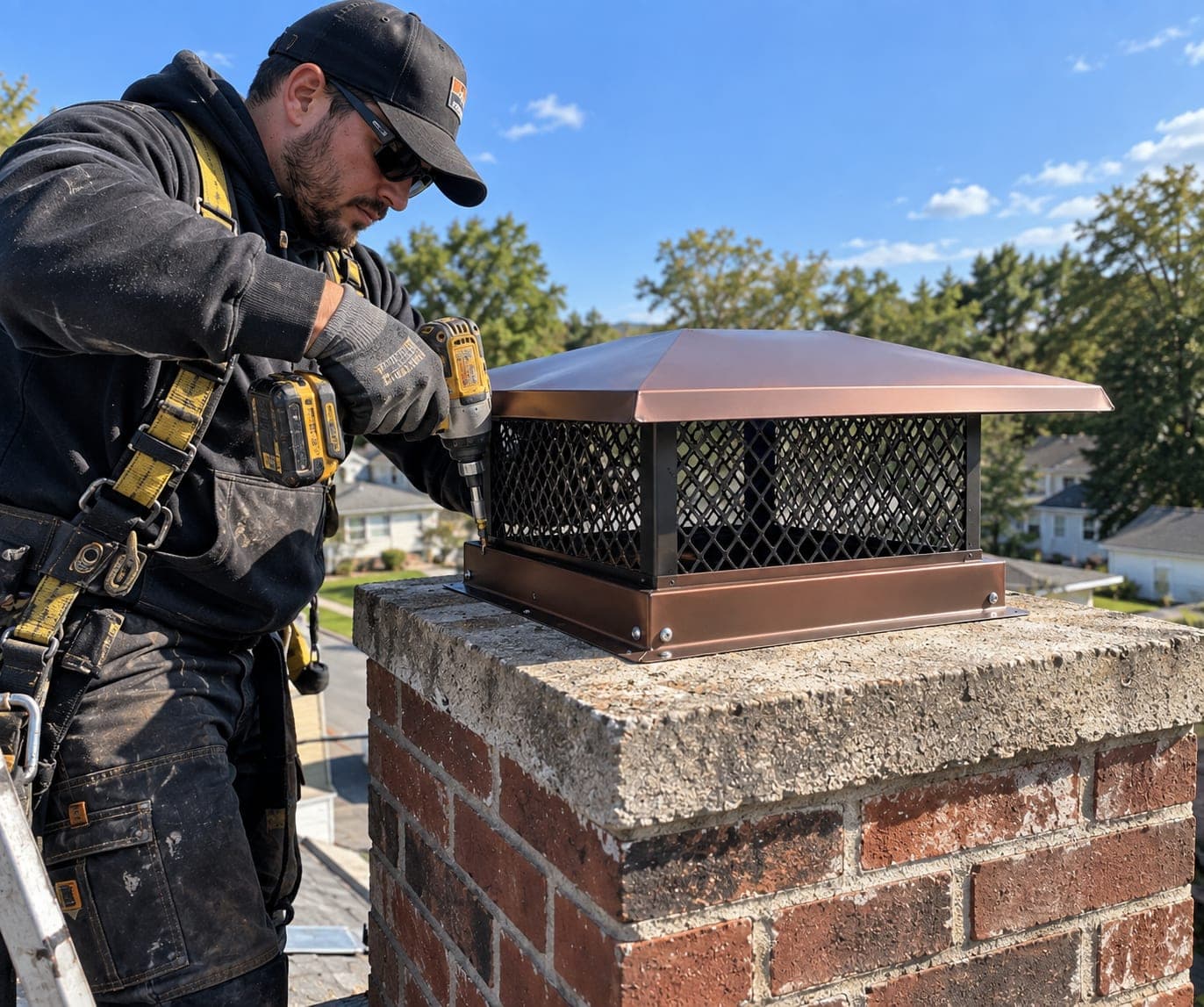
Replacement means taking the old cap off, checking what it was protecting, and fitting a new cap that matches the flue size and the way the chimney is built. If your chimney has never had a cap, the job is a new install instead. That job is covered under our chimney cap installation service.
Signs your chimney cap needs replacing
Common reasons homeowners call
- Rust streaks running down the chimney below the cap, or a cap that looks orange or flaking
- Mesh that is torn, sagging or rusted open
- A cap that leans, rattles in the wind or has come loose from the flue or crown
- A cap that blew off or was bent in a storm
- Birds, squirrels or raccoons getting into the flue
- Water dripping into the firebox or damper area after rain
- Leaves, twigs or nesting material building up at the top of the flue
Some of these signs can also come from problems below the cap. Water in the firebox, for example, can come from failed flashing or a cracked crown. In those cases, our chimney repair work may be needed alongside a new cap, or instead of one.
What the visit involves, step by step
How a cap replacement visit runs
Look at the old cap and the chimney top
We check how the current cap is attached, what has failed, and whether the flue tile and crown under it are sound.
Measure
We measure the flue or flues and the crown so the new cap fits properly and doesn't rattle or shift.
Remove the old cap
We take off the fasteners, clamps or adhesive and bring the old cap down from the roof.
Clear the top of the flue
We remove any nesting material, leaves or debris sitting at the top of the flue before the new cap goes on.
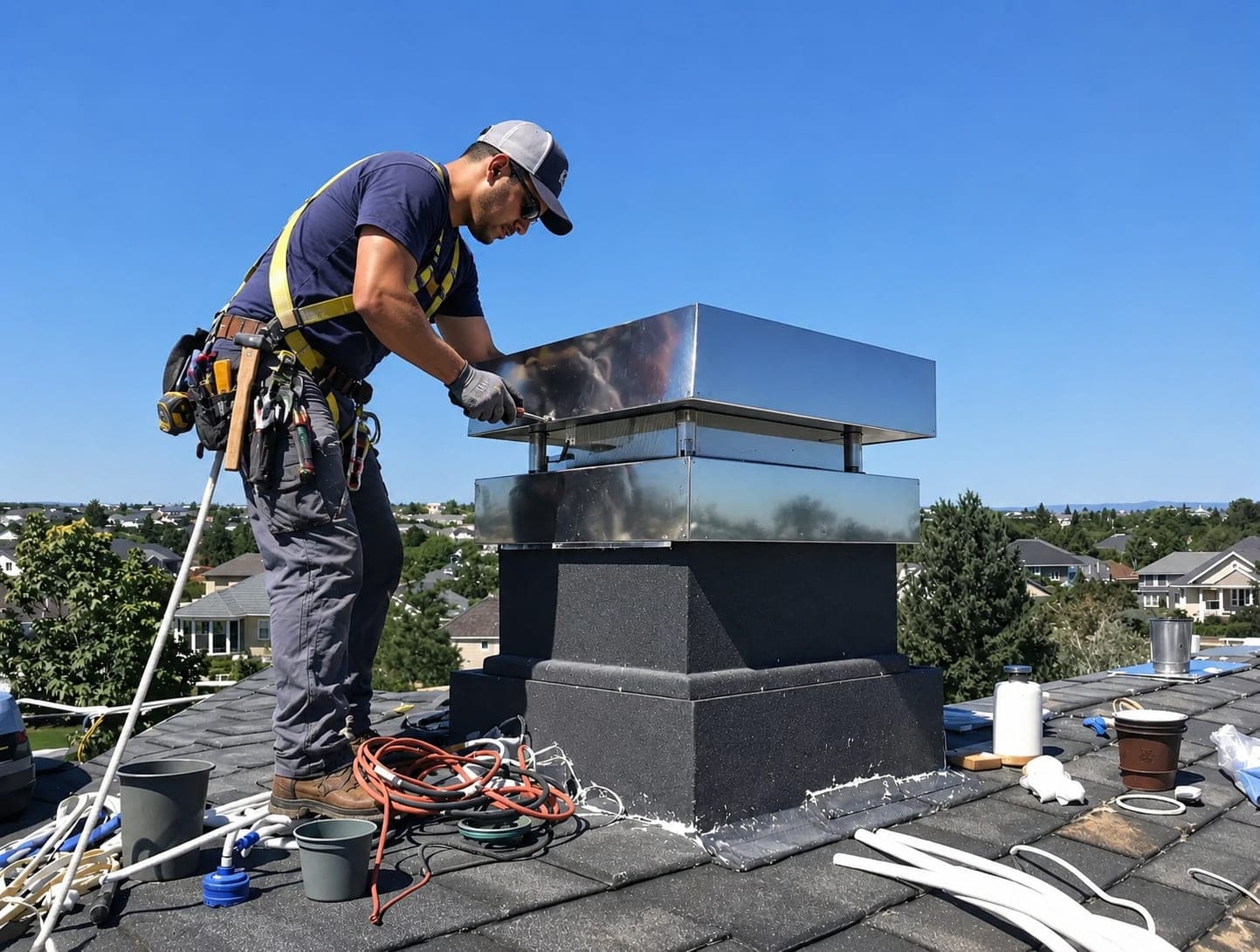
Fit and secure the new cap
We attach the new cap to the flue or crown and check for a firm fit with the screen fully closed.
Talk through what we found
If we saw crown cracks, loose flashing or flue damage, we explain it and give you a free estimate before any further work.
Cap styles and materials
Caps come in a few basic forms. Which one fits depends on how many flues the chimney has and how they sit on the crown.
| Feature | Single-flue cap | Multi-flue cap |
|---|---|---|
| How it attaches | Clamps or screws onto one flue tile | Sits over the crown and covers several flues at once |
| Best suited to | Chimneys with one flue, or flues spaced far apart | Chimneys with two or more flues close together |
| What to check first | The flue tile is intact and not cracked at the top | The crown is solid enough to anchor to |
How it attaches
- Single-flue cap
- Clamps or screws onto one flue tile
- Multi-flue cap
- Sits over the crown and covers several flues at once
Best suited to
- Single-flue cap
- Chimneys with one flue, or flues spaced far apart
- Multi-flue cap
- Chimneys with two or more flues close together
What to check first
- Single-flue cap
- The flue tile is intact and not cracked at the top
- Multi-flue cap
- The crown is solid enough to anchor to
- Stainless steel holds up well to weather and rust and is a common choice for replacements.
- Galvanized steel tends to rust sooner, which is often why an old cap failed.
- Copper is mostly chosen for its look and weathers to a darker color over time.
Factory-built chimneys with a framed chase are a different setup. Their top is usually a metal chase cover with a collar around the flue, not a masonry-style cap. If that's what you have, our guide to chimney cap vs chase cover explains the difference, and our chase cover replacement service handles worn or rusted chase tops.
The crown, damper and flashing
A cap only protects the opening of the flue. The concrete crown around it, the damper inside the chimney and the flashing where the chimney meets the roof each keep water out in their own way. When we replace a cap, we note what we can see of these parts. If the crown is cracked or crumbling, crown repair often makes sense at the same time, because a new cap anchored to a failing crown won't stay secure. Damper repair and flashing repair are separate jobs, and we give separate estimates if they're needed. For brickwork that's coming apart, chimney rebuilding vs tuckpointing covers how those two options compare.
Safety and upkeep
Stay off the roof
A cap that blew off or is hanging loose can tempt you to climb up and deal with it yourself. Roofs around a chimney are steep and often slick, and the cap itself may have sharp edges. Leave the job to someone with roof equipment.
- If the cap is missing, keep the damper closed when the fireplace isn't in use. Only close it once the fireplace is completely cold and no stove, furnace or water heater vents into that flue. This limits how much rain and how many animals come down the flue.
- If you hear scratching or chirping in the chimney, don't light a fire. Animals and nests in the flue are a fire and smoke risk.
- Look at the cap from the ground a couple of times a year, and after strong storms, for leaning, rust or missing mesh.
- Have the cap checked when the chimney is swept or inspected so small problems are caught early.
Booking a chimney cap replacement
Get in touch and describe what you're seeing, such as a missing cap, rust, animals or water. We'll arrange a visit to look at it. Emergency calls are accepted, and commercial and property-manager work is offered.
Request an estimate
Call or request an estimate to get your chimney cap replaced.