On this page
What chimney crown repair involves
The crown is the slab that caps a masonry chimney. It covers the top of the brick, surrounds the flue liner, and should slope outward so water runs off instead of pooling. A well-built crown also overhangs the brick slightly so runoff drips clear of the chimney face.
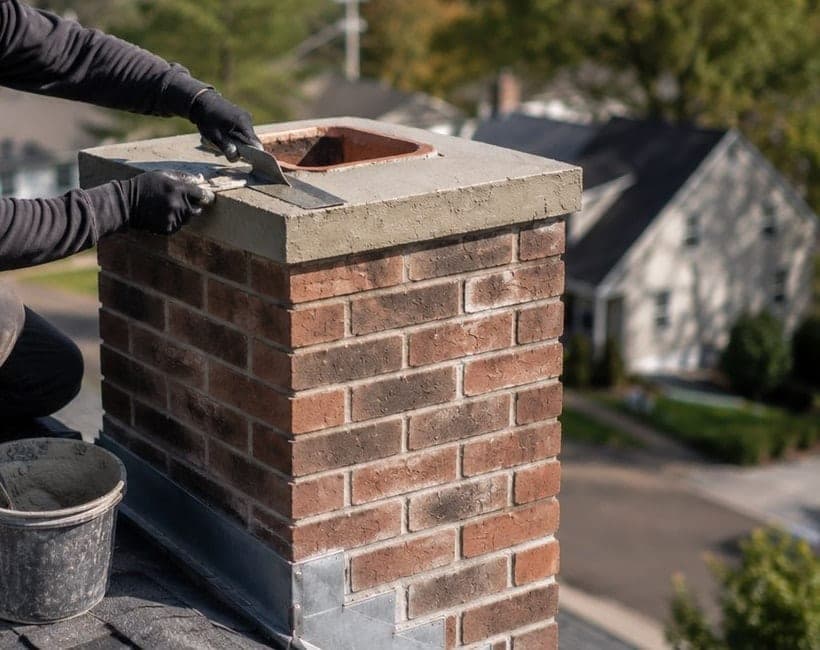
Repair means one of two things, depending on what we find. Minor damage, such as hairline cracks and surface wear, is cleaned and sealed with a flexible crown coating. Serious damage, such as deep cracks, broken pieces, a crown that was built flat, or mortar that is crumbling away, usually calls for removing the old crown and forming and pouring a new one. Crown work is one part of our broader chimney repair service, and we often handle it alongside other masonry fixes found during the same visit.
Signs of a cracked chimney crown
Most crown damage can't be seen from the ground, so problems usually show up first somewhere else. Watch for these:
Common warning signs
- Water stains on the ceiling or wall next to the fireplace
- Dripping or dampness inside the firebox after rain
- Pieces of concrete or mortar on the roof, in the gutters or in the fireplace
- White, chalky deposits (efflorescence) on the outside brick
- Spalling brick, meaning faces that flake or pop off near the top of the chimney
- Rust on the damper or firebox parts
- Visible cracks or gaps around the flue liner when the chimney top is checked
Cracks matter because water that gets into them can freeze and expand, which widens the gap each time. Moisture that gets past the crown can damage the brick, the mortar joints, the flue liner and the framing around the chimney.
Don't wait on a crumbling crown
If chunks of crown are falling off, or the crown is loose around the flue, stop using the fireplace until the chimney has been looked at. Debris can block the flue, and a loose crown can let water and animals in.
Repair or replace the crown?
| Feature | Seal and patch | Remove and rebuild |
|---|---|---|
| Typical condition | Hairline cracks, light surface wear, crown still solid | Deep or through cracks, broken sections, crumbling mortar |
| Crown shape | Already sloped and shedding water | Flat, too thin, or missing an overhang |
| What we do | Clean, fill cracks, apply a flexible crown sealant | Remove old crown, set forms, pour a new sloped crown, then seal |
| Brick below | Sound | May need masonry work at the same time |
Typical condition
- Seal and patch
- Hairline cracks, light surface wear, crown still solid
- Remove and rebuild
- Deep or through cracks, broken sections, crumbling mortar
Crown shape
- Seal and patch
- Already sloped and shedding water
- Remove and rebuild
- Flat, too thin, or missing an overhang
What we do
- Seal and patch
- Clean, fill cracks, apply a flexible crown sealant
- Remove and rebuild
- Remove old crown, set forms, pour a new sloped crown, then seal
Brick below
- Seal and patch
- Sound
- Remove and rebuild
- May need masonry work at the same time
When damage reaches well down into the brick, crown work alone won't fix it. In those cases we'll explain whether tuckpointing or a partial chimney rebuild makes more sense. For background, read our guide to chimney rebuilding vs tuckpointing.
What the visit involves, step by step
How a crown repair visit works
Inspect the chimney top
We check the crown, flue liner, cap, brick and flashing, and look inside for signs of water entry.
Explain the options
You get a plain explanation of what's wrong, whether sealing or rebuilding fits, and a free estimate before any work starts.
Prepare the surface
Loose material, debris and growth are removed so patching compound or new concrete can bond properly.
Repair or rebuild
Cracks are filled and sealed, or the old crown is taken off and a new one is formed with a proper slope and overhang, leaving room around the flue liner.
Seal and finish
Once the material has cured, a flexible crown coating is applied to help keep water out of hairline gaps.
Final check
We look over the cap and flashing and point out anything else that could let water in.
Crown coatings and the parts around the crown
Crown coatings are elastic sealants made for chimney tops. They flex as the masonry expands and contracts, and that flexibility helps keep small cracks from reopening. A coating works best on a crown that is still structurally sound. It won't hold a broken crown together.
A chimney cap sits above the crown and keeps rain, debris and animals out of the flue, which takes some load off the crown itself. If yours is missing or damaged, ask about our chimney cap installation service. Factory-built chimneys use a metal chase cover instead of a masonry crown, and the difference is explained in chimney cap vs chase cover.
Booking chimney crown repair
Call or request an estimate to set up a visit. We also handle commercial and property-manager work.