On this page
- What a chimney inspection covers
- Signs your chimney needs an inspection
- What happens during the visit, step by step
- Chimney flue inspection and chimney camera inspection
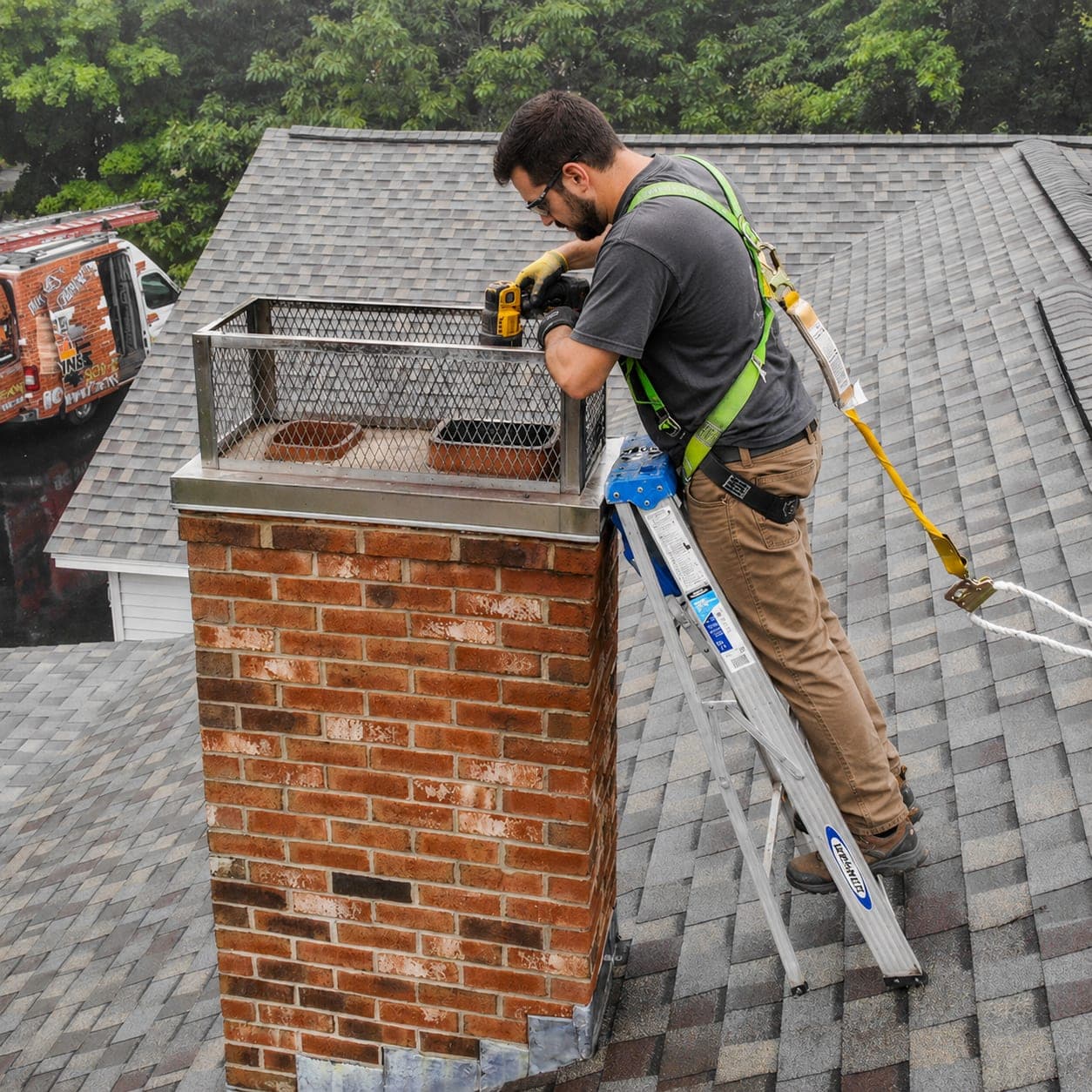
- Chimney cap inspection
- Components, materials and fuel types we check
- Safety and maintenance
- When should a chimney be rebuilt?
- When should you call a chimney pro instead of doing it yourself?
- Booking a chimney inspection
What a chimney inspection covers
A chimney inspection is a structured look at every part of the venting system. That includes the firebox and damper, the smoke chamber and the flue liner. Outside, it runs from the crown and cap down to the flashing at the roofline. The goal is to confirm that smoke and combustion gases leave the house the way they should, and that nothing is cracked, blocked, loose or letting water in.
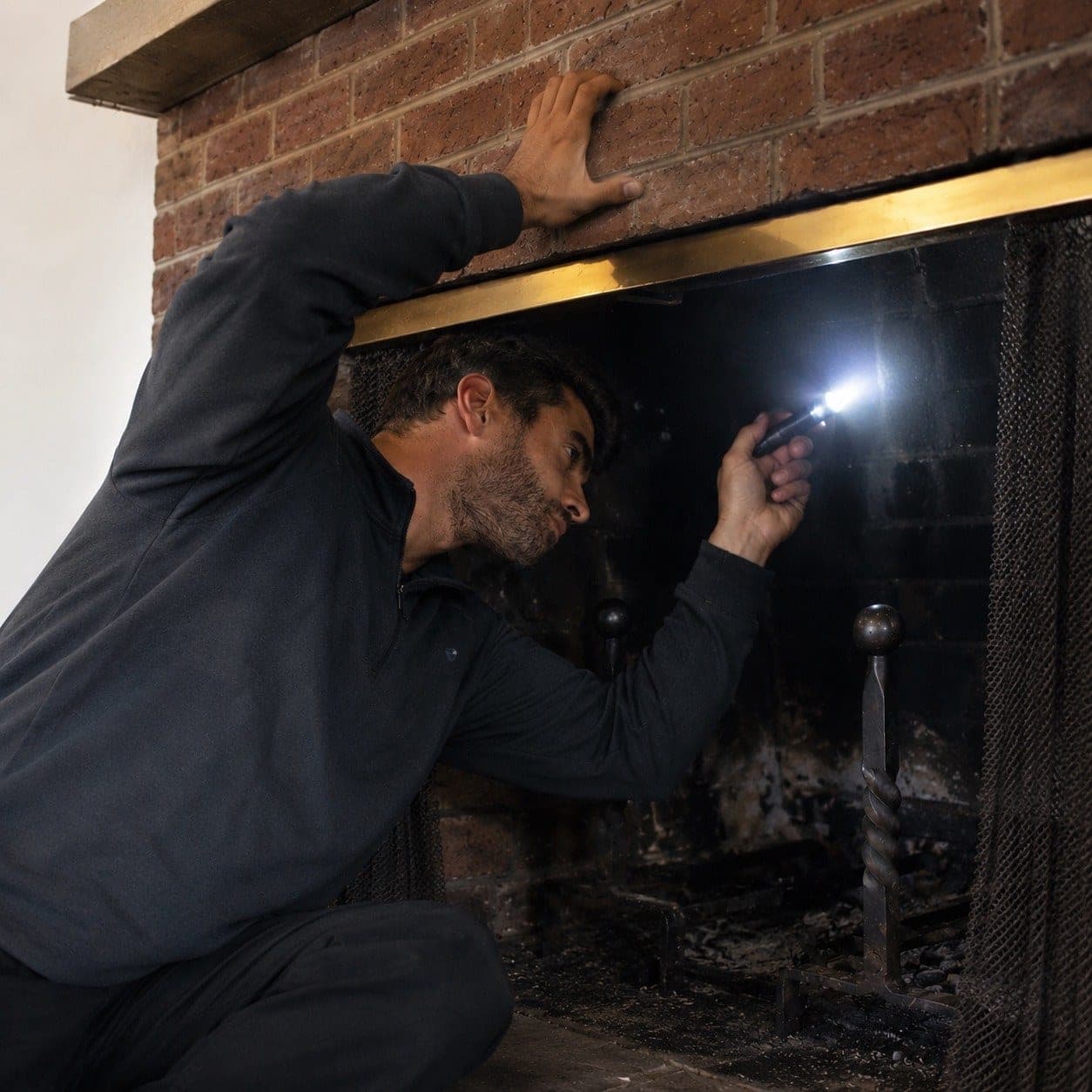
It is different from a cleaning. A sweep removes soot and creosote; an inspection judges the condition of the structure and the liner. The two are often done on the same visit, because a clean flue is much easier to examine.
Level 1, level 2 and level 3 inspections
The industry standard for chimneys (NFPA 211) describes three levels of inspection. The right level depends on what has changed with your chimney and how much of it can be seen without special tools or opening up the structure.
| Level | What it includes | When it fits |
|---|---|---|
| Level 1 | Readily accessible parts of the chimney, flue and appliance, checked for soundness, obstructions and combustible deposits | A system that is used regularly and hasn't changed, often alongside a routine cleaning |
| Level 2 | Everything in Level 1, plus accessible attic, crawlspace and roof areas and a video scan of the flue | A home being sold or bought, a change in fuel or appliance, a new liner, or after a chimney fire, storm or other event that could cause damage |
| Level 3 | Everything in Level 2, plus removal of parts of the structure or wall to reach concealed areas | Only when a serious hidden hazard is suspected and can't be confirmed any other way |
When a level 2 chimney inspection makes sense
Most homeowners who call about a problem end up needing a Level 2 inspection, because it adds a camera run through the full length of the flue. It is the right choice in these cases:
- You are switching from wood to gas or adding an insert.
- The chimney has had a fire or a hard hit from weather.
- The house is changing hands.
For a sale, our real estate chimney inspection service is built around that situation. After high winds, hail or a fallen limb, how storm damage chimney inspection works explains what we look for.
Signs your chimney needs an inspection
Some problems are obvious, but many can't be seen from inside the room. Book a chimney inspection if you notice any of these:
- Smoke rolling back into the room, or a fire that is hard to keep drawing
- A blocked chimney flue: debris, nesting material or soot falling into the firebox
- Cracked chimney brick, crumbling mortar joints, or spalling chimney brick with faces flaking off
- White, rust-colored or dark streaks on the outside of the chimney, or water stains on a ceiling or wall near it
- A strong smoky or musty chimney odor, especially in humid weather. Once the inspection finds the cause, chimney odor removal can deal with the smell.
- A missing, rusted or bent chimney cap, or a chimney cover on a prefab chase that holds water
- A cracked crown, loose flashing or a leaning stack
- Buying or selling a home, or not knowing when the chimney was last checked
What chimney stains can tell you
A chimney stain is often the first visible clue that water is getting where it shouldn't. The color and location usually point to the cause:
- White, chalky deposits on brick: this is efflorescence. Water is moving through the masonry and carrying salts out as it dries.
- Rust-colored streaks: these usually point to a corroding cap, chase cover or damper.
- Dark, tarry staining near the top of the stack or around the clean-out: creosote or condensation may be building up in the flue.
- Stains on an interior ceiling or wall next to the chimney: these usually trace back to the flashing, the crown or the cap.
During the inspection we follow the stain to its source rather than just noting it.
What happens during the visit, step by step
How a chimney inspection visit runs
Protect the room
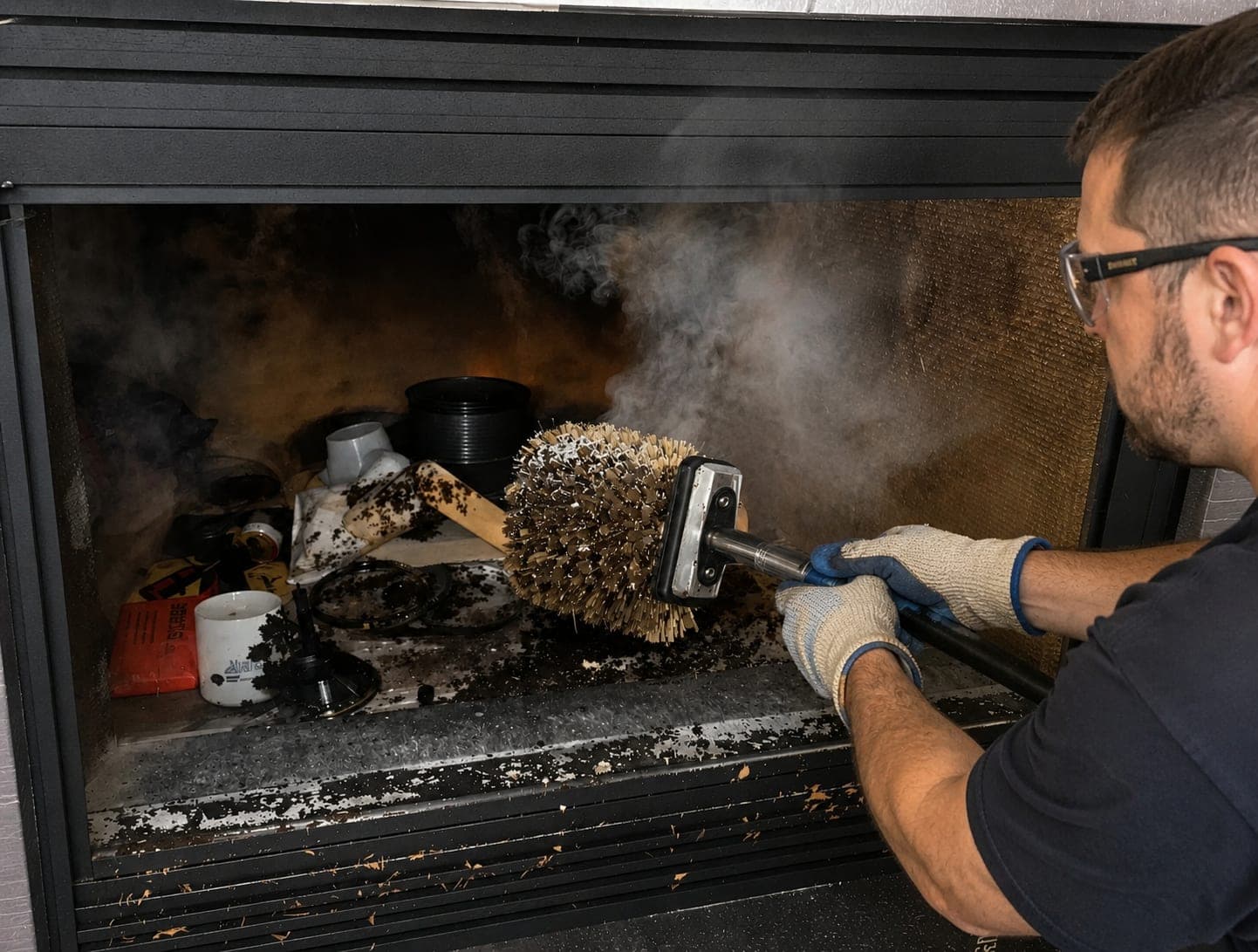
We lay down drop cloths around the hearth and keep the work area contained.
Ask about how you use it
We ask what fuel you burn, how often you use it, whether you've had smoke or odor problems, and whether anything has changed recently.
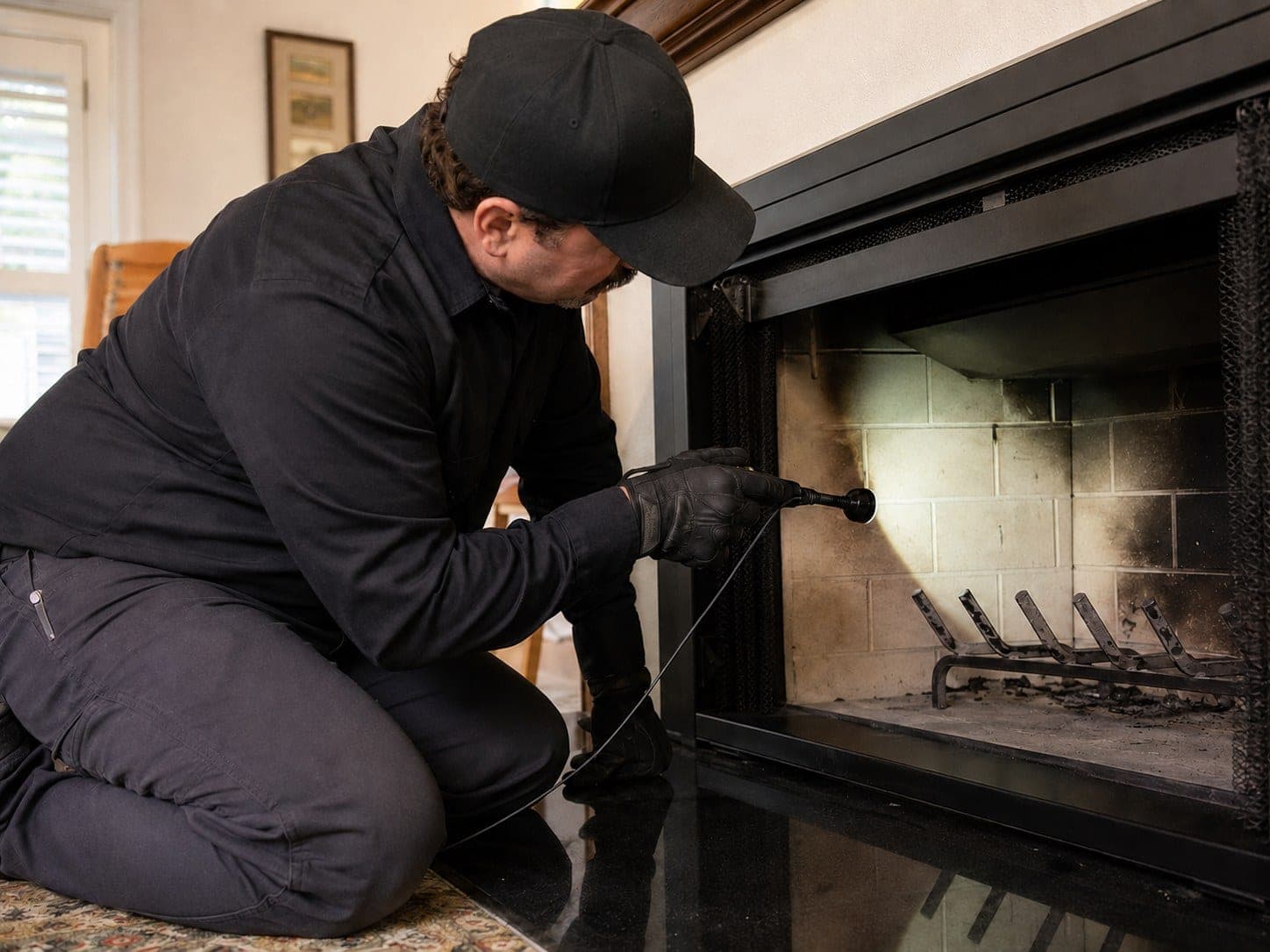
Check the firebox, damper and smoke chamber
We look for cracked firebrick or refractory panels, a damper that won't seal, and buildup or gaps in the smoke chamber.
Inspect the flue
We check the liner for cracks, gaps, blockages and creosote. When the flue can't be judged by eye, we use a chimney camera.
Inspect the exterior
From the roof we check the chimney cap, crown, brick and mortar, and flashing. On prefab systems we also check the chase and chase cover.
Check accessible attic and crawlspace areas
For a Level 2 inspection, we look at the chimney where it passes through the house.
Explain what we found
We walk you through each part: what is fine, what needs watching and what needs work. Any repairs come with a free estimate.
Chimney flue inspection and chimney camera inspection
The flue is the part of the chimney that matters most for safety, and the part you can see least. A cracked clay tile, a separated joint or a gap in a metal liner can let heat reach nearby framing. It can also let combustion gases seep into the walls. None of this is visible from the fireplace opening.
A chimney camera inspection solves that. We run a camera up the flue to record the liner's full length. The footage shows cracks, missing mortar between tiles, glazed creosote, nesting material and other blockages. A camera scan is part of every Level 2 inspection. It also helps whenever a flashlight check raises a question it can't answer.
Is your chimney flue in good shape?
It may be, but you can't confirm it from the hearth. A flue in good shape has these signs:
- A continuous liner with no cracks
- No gaps at the joints
- Light creosote or none
- Nothing blocking the draft
A fire that draws well and no smoke smell are good signs, but they don't settle the question. Cracks and gaps rarely cause symptoms until damage has started. A camera run through the flue is the only reliable way to know.
Chimney cap inspection
The cap keeps rain, animals and debris out of the flue. If it has a spark arrestor screen, it also keeps embers from escaping. During a chimney cap inspection we check four things:
- It is secured to the crown or flue tile.
- The mesh is intact and not clogged with soot.
- The metal isn't rusting through.
- It is the right size for the flue.
A missing or damaged cap is one of the most common reasons for water damage and nests in the flue.
Components, materials and fuel types we check
| Feature | Masonry (brick) chimney | Prefab (factory-built) chimney |
|---|---|---|
| Structure | Brick and mortar stack on its own foundation | Metal flue inside a framed chase, usually sided |
| Top | Concrete or mortar crown with a chimney cap | Metal chase cover (chimney cover) with a cap |
| Liner | Clay tile, cast-in-place or stainless steel | Factory metal flue sections |
| Common problems | Cracked or spalling brick, failed mortar joints, cracked crown, leaking flashing | Rusted or pooling chase cover, water in the chase, separated flue sections |
Structure
- Masonry (brick) chimney
- Brick and mortar stack on its own foundation
- Prefab (factory-built) chimney
- Metal flue inside a framed chase, usually sided
Top
- Masonry (brick) chimney
- Concrete or mortar crown with a chimney cap
- Prefab (factory-built) chimney
- Metal chase cover (chimney cover) with a cap
Liner
- Masonry (brick) chimney
- Clay tile, cast-in-place or stainless steel
- Prefab (factory-built) chimney
- Factory metal flue sections
Common problems
- Masonry (brick) chimney
- Cracked or spalling brick, failed mortar joints, cracked crown, leaking flashing
- Prefab (factory-built) chimney
- Rusted or pooling chase cover, water in the chase, separated flue sections
Inside, we check the firebox, damper and smoke chamber, plus any glass doors, insert or stove connected to the chimney. Fuel type matters too:
- Wood: fires leave creosote in the flue.
- Gas: appliances leave little soot, but they can still have blocked vents, corroded liners or poor draft.
We inspect wood-burning fireplaces, fireplace inserts, wood stoves and gas fireplaces, and we work on all major brands.
Safety and maintenance
Two hazards drive most chimney safety advice:
- Fire: creosote is flammable. A thick layer in the flue can ignite and burn hot enough to crack a liner. Our guide to creosote dangers and why chimney maintenance matters covers how it forms and what it looks like at each stage.
- Carbon monoxide: a blocked or damaged flue can push combustion gases back into the house instead of venting them. This applies to gas appliances as much as wood ones.
Stop using the fireplace if you see these
Keep the fireplace out of use until it has been inspected if you notice any of these: smoke filling the room, a roaring or rumbling sound from the flue, flakes of burnt creosote falling into the firebox, or a carbon monoxide alarm. If you hear roaring or see flames or sparks from the top of the chimney, get everyone out and call 911. If you think a chimney fire is burning, leave the house and call emergency services.
Simple maintenance habits that help
- Burn only dry, seasoned wood, never trash, cardboard or treated lumber
- Keep the damper fully open while a fire is burning
- Have the chimney inspected once a year and cleaned when buildup calls for it
- Look at the cap, crown and brick from the ground each spring and fall
- Keep working smoke and carbon monoxide alarms on every level of the home
When should a chimney be rebuilt?
A chimney should be rebuilt when the damage goes deeper than repointing, brick replacement or crown repair can fix. These are the usual signs:
- The stack leans or has pulled away from the house.
- Spalling and loose brick run through much of its height.
- The mortar has failed so badly that bricks move by hand.
- A storm or chimney fire has caused structural damage.
Often only the section above the roofline needs rebuilding. An inspection tells you whether targeted masonry repair or tuckpointing will hold, or whether a partial or full rebuild is the safer choice.
When should you call a chimney pro instead of doing it yourself?
Call a chimney pro whenever the job involves the roof, the inside of the flue or anything structural. Homeowners can safely handle a few tasks themselves:
- Watch for warning signs
- Clear ash from the firebox
- Check the cap from the ground
- Keep smoke and CO alarms working
Other jobs need the right tools, a camera and safe roof access. These include judging a liner's condition, finding the source of a leak, removing a blockage or glazed creosote, and assessing cracked brick. Missing something in the flue can lead to a fire or carbon monoxide in the house.
Booking a chimney inspection
Call or request an estimate to set up a chimney inspection for your Chicago home. Estimates are free. Same-day visits are available where the schedule allows. 24-hour service runs Sunday–Friday, and emergency calls are accepted.
We also handle commercial and property-manager work, and gas fireplace and gas appliance work. If the inspection turns up cleaning or repairs, we can take care of those too.
Ready to have your chimney checked?
Get in touch to schedule an inspection.
Related work covered on this page
- Chimney Camera Inspection
- Fireplace Inspection