On this page
What a storm damage chimney inspection covers
A storm puts a chimney under stress that everyday use never does. Wind pushes against the tallest part of the roofline. Hail strikes the cap and crown. Lightning can travel down the masonry or flue. Rain driven sideways gets into gaps that normally stay dry. A storm damage chimney inspection looks at each place where that stress shows up, outside on the roof and inside the flue, so you know whether the chimney is still safe to use and what needs repair.
It is narrower than a routine chimney inspection service, which checks the general condition and maintenance needs of the system. The storm check starts from the event: what hit the chimney, where it hit, and what that kind of force usually breaks.
Signs your chimney needs a check after a storm
Some storm damage is obvious. More often the signs are small, or they appear days later as a leak or a smell. Call for an inspection if you notice any of these after severe weather:
After-storm warning signs
- Brick pieces, mortar or chunks of the crown on the roof, in the gutters or on the ground
- A chimney that looks like it is leaning or pulling away from the house
- A missing, dented or tilted chimney cap
- Flashing that is bent, lifted or torn where the chimney meets the roof
- New water stains on the ceiling or wall near the chimney, or water in the firebox
- A damp, musty smell from the fireplace that wasn't there before
- Leaves, branches or masonry debris that has fallen into the firebox
- A lightning strike on or near the house, even if nothing looks wrong
- A tree or large limb that fell against the roof near the chimney
- Smoke backing into the room, or a gas appliance that won't vent or stay lit
Lightning damage often hides inside
A lightning strike can crack a flue liner or loosen masonry inside the chimney while the outside looks untouched. If lightning hit the house or the chimney, have the flue checked before you use the fireplace or any appliance that vents through it.
What the visit involves, step by step
How a storm damage chimney inspection goes
Talk through what happened
We ask about the storm: wind, hail, lightning or a fallen limb, and anything you've noticed since, such as leaks, smells, debris or drafting problems. That tells us where to look first.
Check the exterior from the ground and the roof
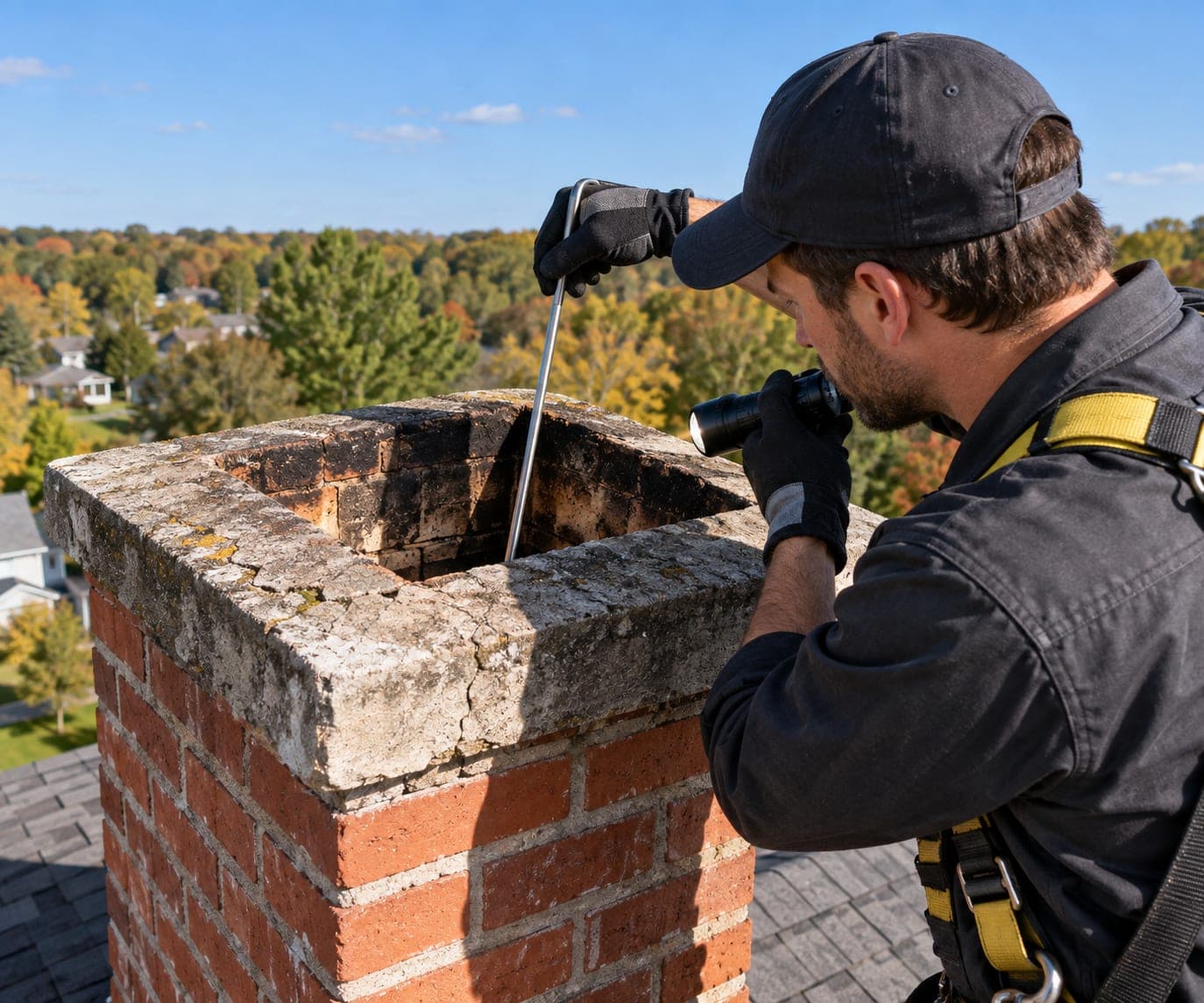
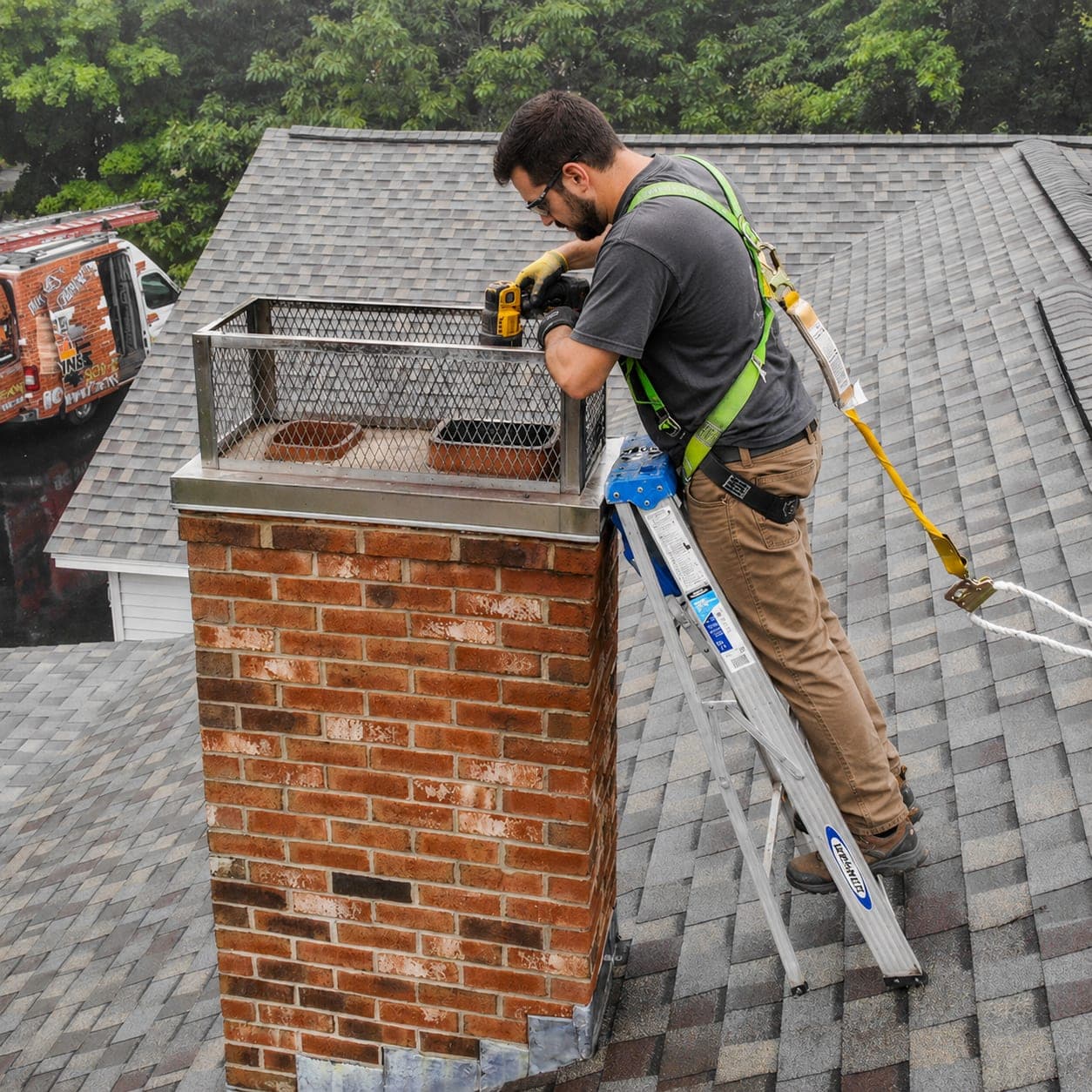
We look at how the chimney sits on the roofline, then check the cap, crown, bricks, mortar joints and flashing up close for cracks, displacement, impact marks and gaps where water can now get in.
Look inside the firebox, smoke chamber and flue
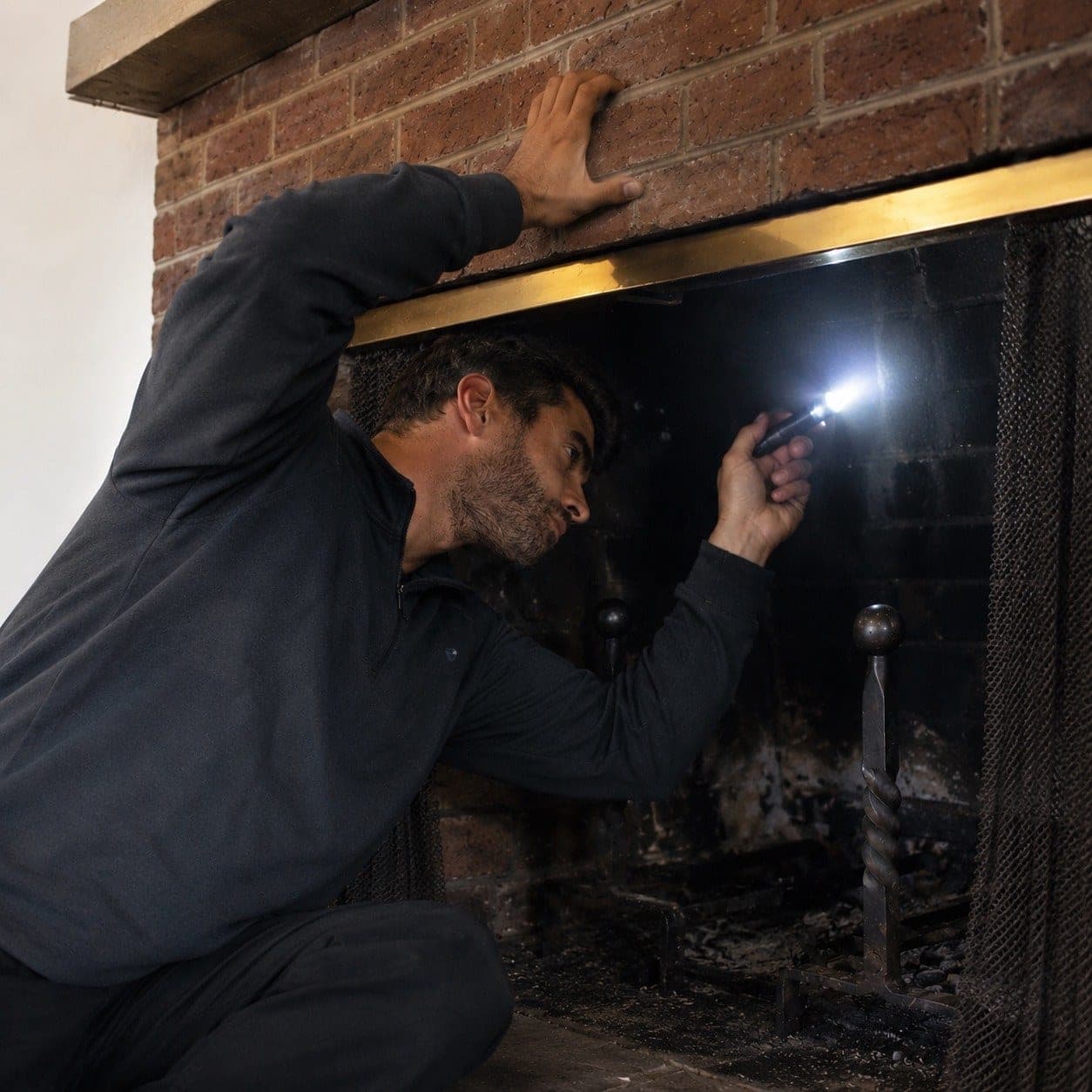
From inside the house we check for fallen debris, water entry and visible cracking. Where damage may be hidden higher up, a camera inspection of the flue shows the liner and the inner walls.
Check the damper and any connected appliances
We make sure the damper still opens and closes properly. If a gas fireplace or other gas appliance vents through the chimney, we confirm the flue path is clear.
Explain what we found and what it means
You get a plain explanation of the damage, whether the chimney is safe to use now, and what repairs it needs. Estimates are free, so you can decide on next steps without paying for a quote.
Parts of the chimney storms damage most
| Component | What storms do to it | Why it matters |
|---|---|---|
| Chimney cap | Bent, dented or blown off by wind and hail | Without it, rain, debris and animals can get into the flue |
| Crown | Cracked or chipped by hail and impacts | Cracks let water into the masonry below |
| Bricks and mortar | Loosened or knocked out by wind, falling limbs or lightning | Loose masonry can fall and weakens the structure. If bricks are falling or it looks like it could come down, keep everyone away from the area below it and call 911. |
| Flashing | Lifted or torn at the roof joint | The most common path for leaks into ceilings and walls |
| Flue liner | Cracked by lightning or heavy impact | A cracked liner can let heat and combustion gases reach the house framing |
| Prefab chase and chase cover | Siding damaged, cover dented or loosened | Water can run straight down into the chase |
Safety before, during and after the inspection
Until the chimney has been checked, don't light a fire or run a gas appliance that vents through it. A flue that is partly blocked by debris or broken masonry can push smoke and carbon monoxide back into the house. A cracked liner can expose nearby wood framing to heat.
- Stay off the roof. Storm-damaged masonry and flashing can shift under weight, and wet roofs are slippery.
- Keep people and pets away from the area below the chimney if bricks or crown pieces have already fallen.
- If water is coming in, protect the floor and furniture near the fireplace and keep the damper closed. If the fireplace has gas logs, leave the damper as the installer set it — vented gas logs need it open.
- Make sure your carbon monoxide detectors are working, especially if a furnace or water heater shares the chimney.
Storm damage can also show up later as faster wear. Water that gets in through a cracked crown or loose flashing breaks down mortar over time, and moisture mixed with soot and creosote produces strong odors. If the chimney is due for cleaning, a chimney sweep can be done once repairs are sorted. For background on why regular upkeep matters, read about creosote dangers and why chimney maintenance matters.
Buying or selling after a storm?
If a home changes hands soon after severe weather, a real estate chimney inspection documents the chimney's condition as part of the sale.
Booking your inspection
Call or request an estimate and tell us what the storm did and what you've noticed since. We also handle commercial and property-manager work when storms affect several buildings.