On this page
What a chimney rebuild involves
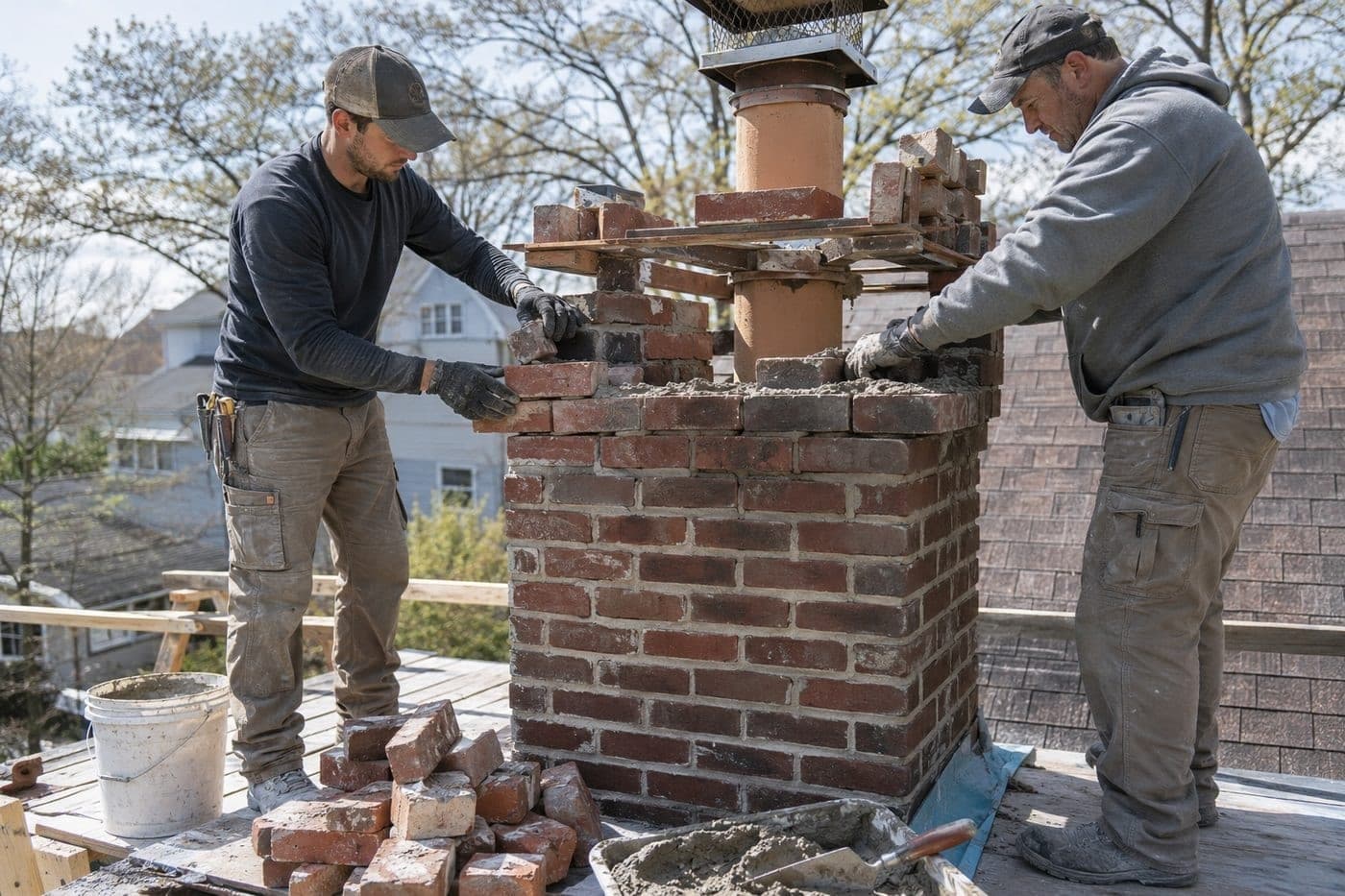
A chimney rebuild means removing damaged brick and mortar and laying new masonry in its place. Most rebuilds are partial: the section above the roofline, which takes the most weather, comes down to the point where the brickwork is solid again and is then rebuilt. A full rebuild, down to the roof deck or lower, is needed only when damage runs that deep or the chimney has shifted out of plumb.

Rebuilding differs from repair work that keeps the original brick. Tuckpointing replaces worn mortar joints, and spot repairs fix isolated cracks or a few spalled bricks. If you're not sure which one your chimney needs, our guide to chimney rebuilding vs tuckpointing explains where one ends and the other begins. For smaller problems, our chimney repair service is usually the better fit.
Signs your chimney may need rebuilding
Some of these signs can be seen from the ground or from inside the house. Others only show up during a close inspection of the masonry and flue.
Common signs that point toward a rebuild
- The chimney leans, bows or has pulled away from the house
- Bricks are loose, missing or crumbling, or you find brick pieces on the roof or ground
- Mortar joints are recessed or empty across a large area, not just in a few spots
- Brick faces are flaking or popping off (spalling) on many bricks
- Wide or stepped cracks run through the brickwork
- The crown is broken up badly enough that water reaches the bricks below
- Water stains, damp walls or ceilings near the chimney keep coming back after repairs
A leaning or damaged chimney is the most urgent of these, because a shifting stack can drop bricks or separate from the roof. Avoid using the fireplace until it has been checked.
Don't wait on a leaning chimney
If the chimney is visibly leaning or bricks are falling, keep people and cars away from the area below it and stop using the fireplace. Emergency calls are accepted.
The chimney rebuild process, step by step
How a rebuild usually goes
Inspection
We look at the masonry, crown, flashing and flue to see how far the damage goes and whether a rebuild is really needed or repairs will do.
Free estimate
You get a clear explanation of the work: a partial or full rebuild, how far down we need to go, and what else needs attention, such as the crown or cap.
Protecting the home
Before teardown, we protect the roof, landscaping and the area around the fireplace from debris and dust.
Taking down damaged masonry
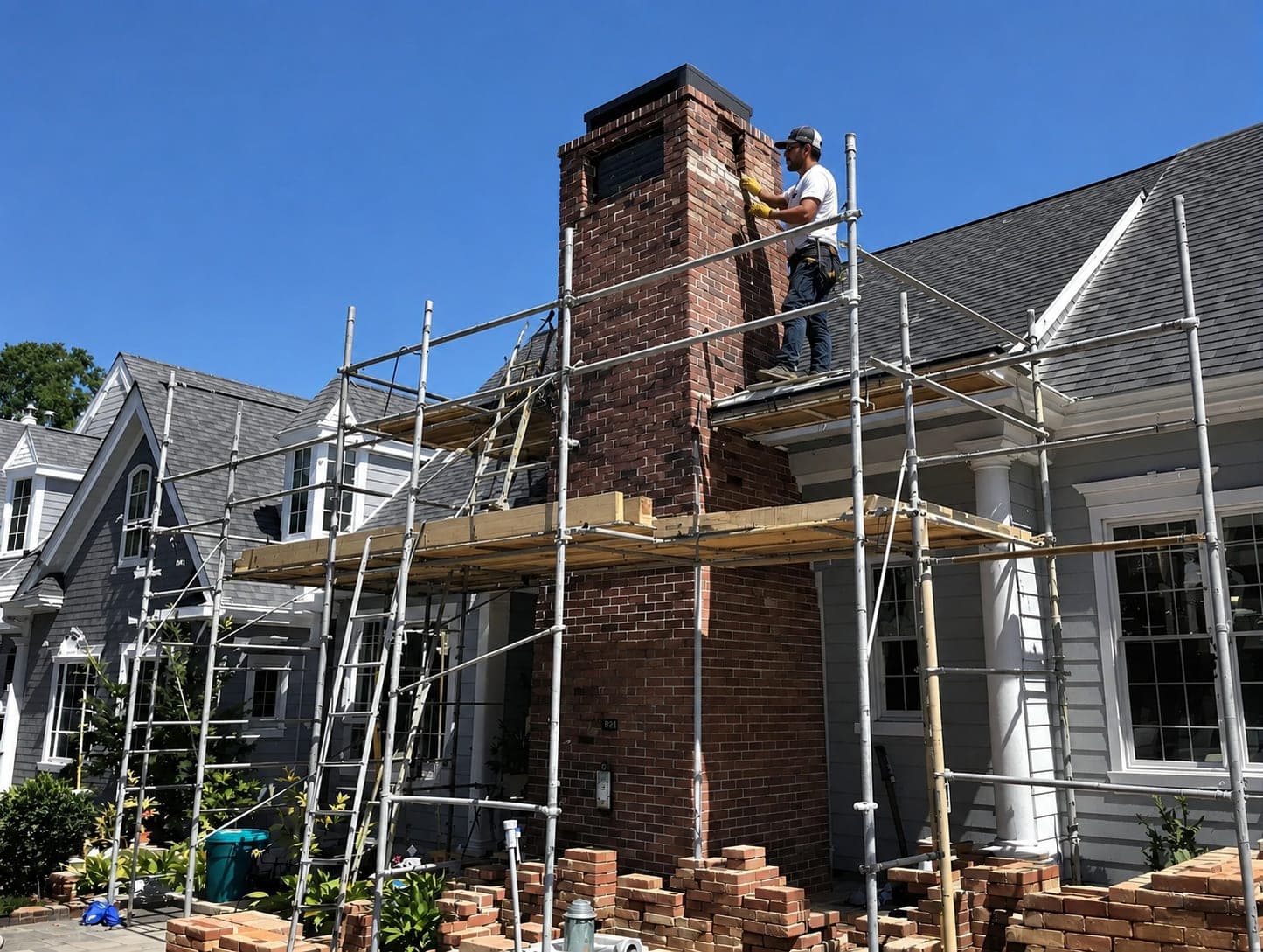
Brick is removed course by course until we reach sound, solid masonry that can support new work.
Rebuilding the stack
New brick is laid in fresh mortar, keeping the chimney plumb and matching the original look as closely as the available materials allow.
Crown, flashing and cap
The top is finished with a new crown, flashing is reset where the chimney meets the roof, and a cap can be added to keep rain and animals out.
Cleanup and walkthrough
Debris is hauled away and we go over the finished work with you.
Chimney crown rebuilding
The crown is the concrete or mortar slab on top of the chimney that sheds water away from the bricks and the flue. A crown that is cracked through, crumbling, or built too flat lets water into the top of the chimney, and that is often where rebuild-level damage starts.
Chimney crown rebuilding means breaking off the old crown and forming a new one, sloped so water runs off and extended past the brick face so water drips clear of the masonry. It is part of almost every chimney rebuild, and it can also be done alone when the brickwork below is still in good shape.
Materials and parts involved in rebuilding
- Brick: new brick is chosen to match the existing chimney in size and color as closely as possible.
- Mortar: a mix suited to the brick, since mortar that is too hard can damage softer older brick.
- Flue liner: the flue is checked during the rebuild, and a damaged liner should be addressed while the chimney is open.
- Crown: a new sloped crown with an overhang to protect the top of the masonry.
- Flashing: metal flashing sealed where the chimney meets the roof to keep water out of the house.
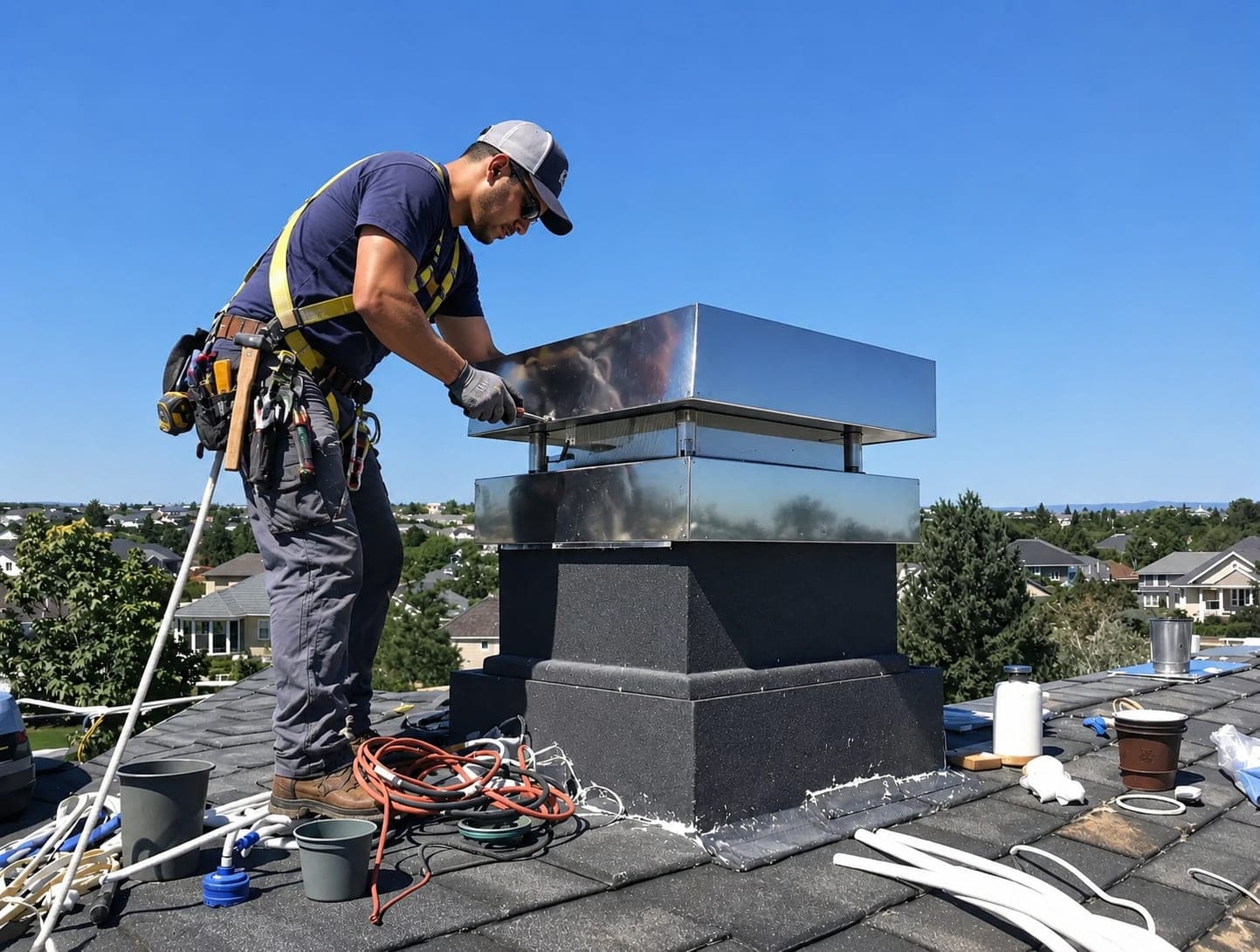
- Cap: a cap with screening keeps rain, debris and animals out of the flue. Our chimney cap installation service can be added to the job.
Keeping rebuilt masonry in good shape
Water is the main enemy of brick chimneys, so most upkeep after a rebuild comes down to keeping water out. A sound crown, intact flashing and a working cap do most of that. A vapor-permeable water repellent is another layer of protection; our chimney waterproofing service is often scheduled after the new mortar has cured. Regular inspections catch small cracks before they turn into another rebuild.
We also handle chimney rebuild for homes in Wilmette.
Booking a chimney rebuild
Get in touch to set up an inspection and estimate. We also take on commercial and property-manager work.