Chimney rebuild in brief
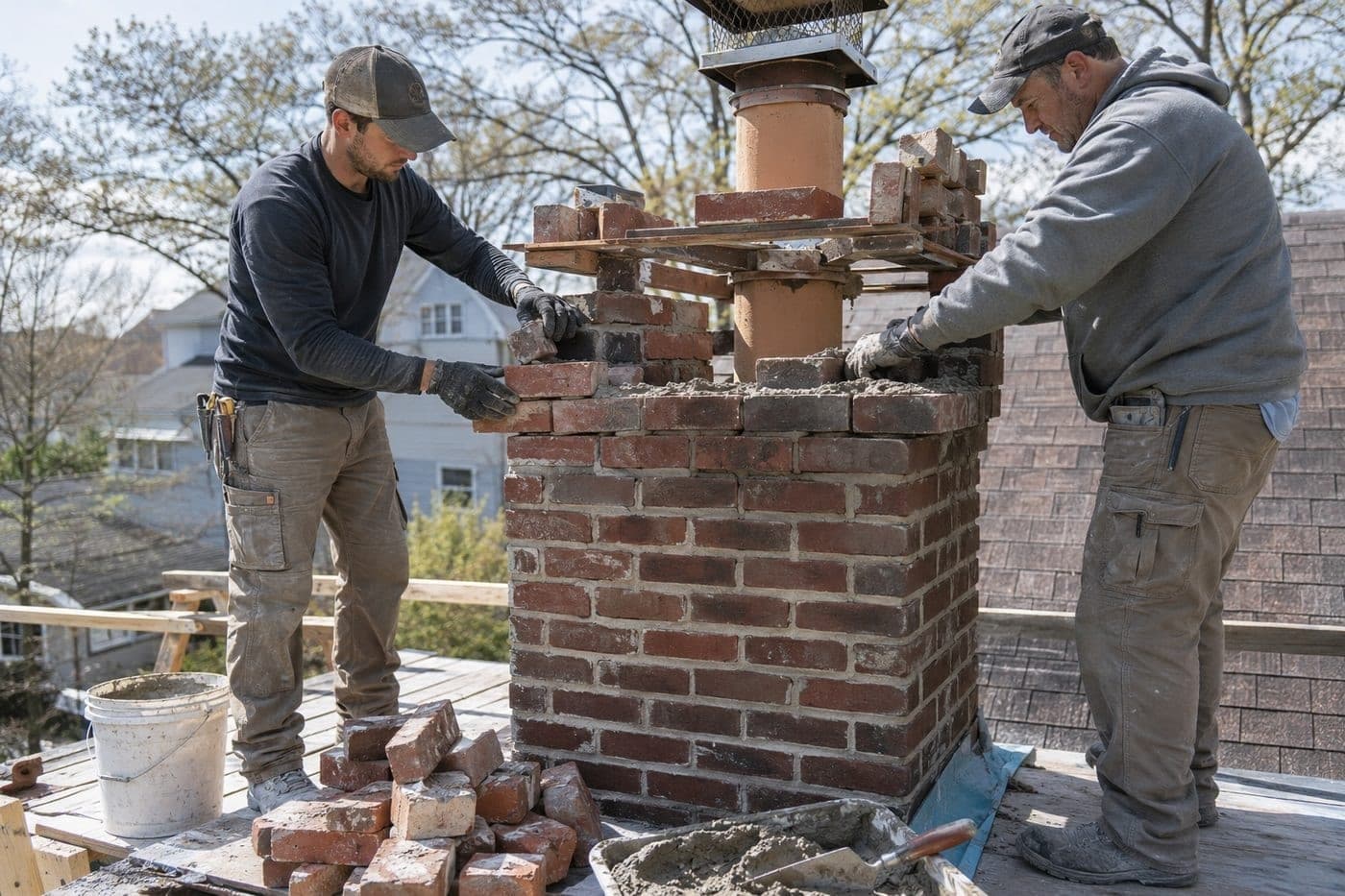
A rebuild starts with removing the damaged section of the chimney, usually from the top down, until only solid, firmly set masonry is left. That section is then relaid with new or reclaimed brick and fresh mortar. The job usually ends with chimney crown rebuilding, so the top sheds water instead of soaking it up. How far down the work goes depends on what the masonry looks like once the damaged courses come off. The full scope, from teardown to the finished crown, is laid out under how chimney rebuilding works.
What Wilmette's records mean for a chimney rebuild
Housing age
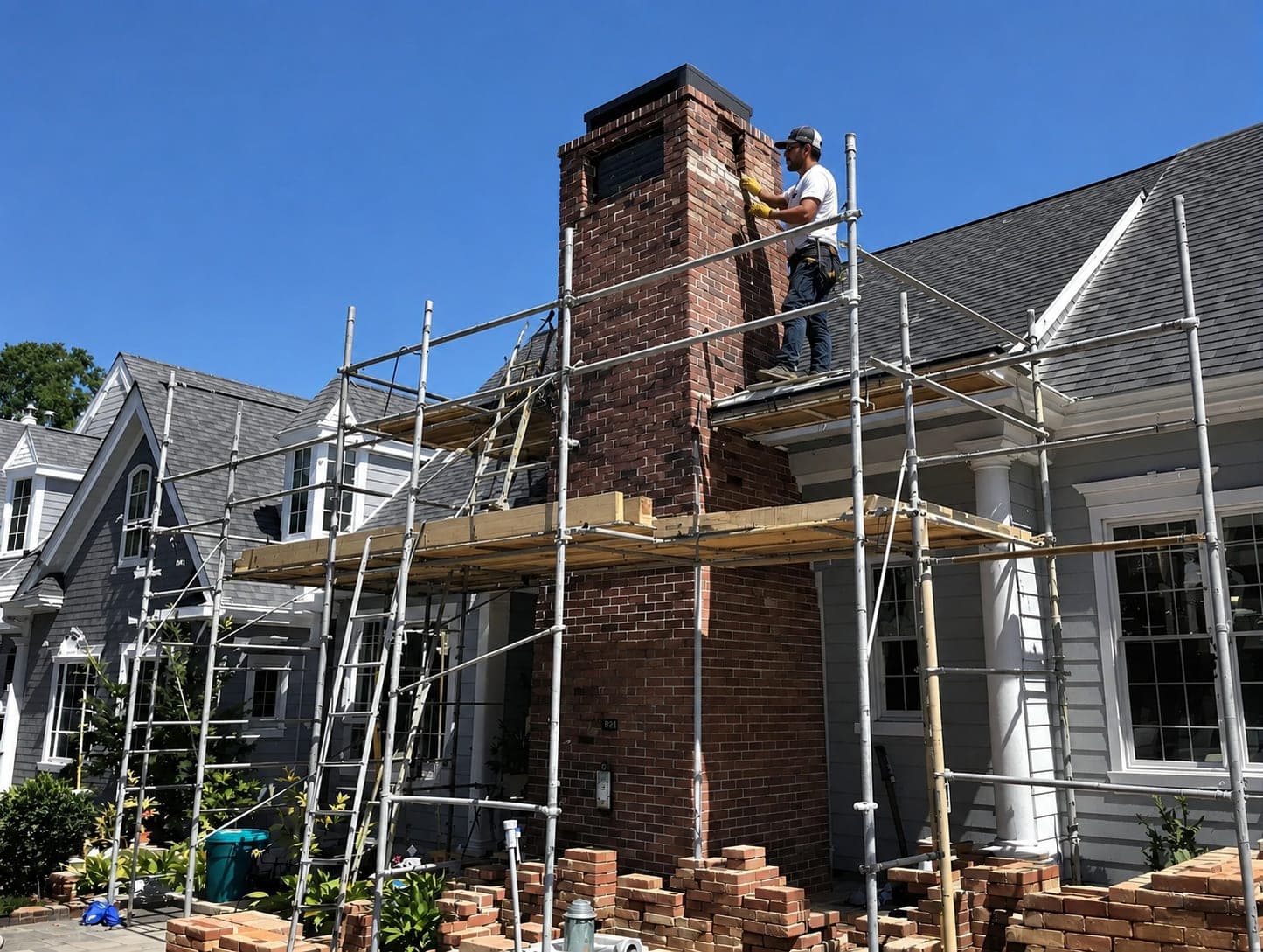
According to the CMAP Community Data Snapshot for Wilmette, which uses American Community Survey 2020-2024 five-year estimates, 28.6% of housing units in Wilmette were built before 1940 and 45.2% between 1940 and 1969. The median year built is 1957. For a homeowner, this means many chimneys in the village have been exposed to weather for many decades. In general, brick and mortar that old can wear unevenly. A careful assessment of which courses are still sound decides whether a partial or full rebuild makes sense.
Local landmarks and National Register listings
According to the Village of Wilmette's Local Landmarks & National Register Properties listing, Wilmette has 38 Local Landmarks protected by its Historic Preservation Ordinance. It also has 3 National Register Historic Districts (Village Center, Oak Circle, Ouilmette North) and 9 individual National Register properties. The Village notes that National Register listing is honorific and does not protect properties from alterations. The difference matters for a rebuild. A chimney is a visible exterior feature, and the protections described here belong to Local Landmark status, not National Register listing.
Before work starts on a Local Landmark
According to the Village of Wilmette's guidance on applying for a Certificate of Appropriateness, a Certificate of Appropriateness from the Historic Preservation Commission is required before beginning exterior work on a Wilmette Local Landmark, even when no building permit is required. There is no fee for it.
Building codes in force
According to the Village Codes page, Wilmette has adopted the 2018 International Residential Code, the 2018 International Mechanical Code, and the 2018 International Fuel Gas Code, each as amended. The relaid part of a chimney should be built to the code the Village has adopted. If the flue serves a gas appliance, the fuel gas code applies as well. Ask the Village which permits apply to your project before work begins.
Planning a rebuild on an older Wilmette home
- Find out whether your house is a Wilmette Local Landmark. If it is, get the Certificate of Appropriateness before any exterior chimney work starts.
- Don't assume a National Register listing on its own sets the rules. The Village describes that listing as honorific.
- Check with the Village which permits your rebuild needs under the codes it has adopted.
- Note whether the chimney serves a wood fireplace, a gas appliance or both. This affects what the rebuilt flue has to meet.
When a rebuild fits, and when something smaller will do
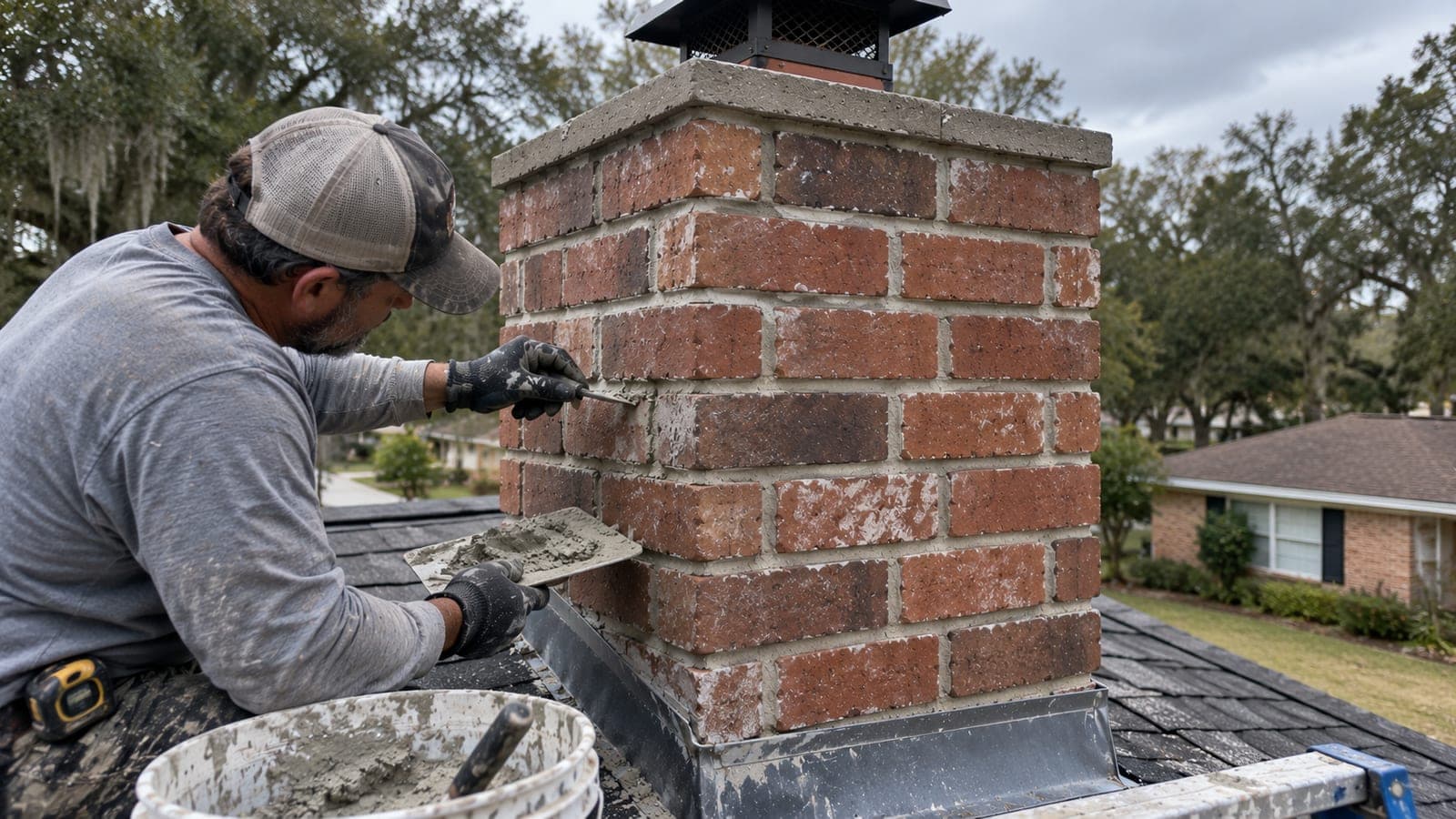
A rebuild is the right call when the masonry itself has failed. Common signs are a chimney that tilts, bricks that are loose or falling out, or a top section that moves when touched. If those signs sound familiar, start by reading what causes a leaning or damaged chimney. Not every worn chimney needs to come down, though. When the bricks are sound but the joints are eroded, refilling the mortar joints is often enough. When only the crown is cracked, a crown repair may solve the problem. We do both of those jobs too, and the estimate visit is where we sort out which one your chimney actually needs.
If you are replacing the fireplace along with the chimney work, there is a separate page on fireplace installation for homes in Wilmette. For the rest of the chimney, fireplace and dryer vent work we handle in the village, start at the Wilmette service area overview.
Sources (3)
The sources of the Wilmette facts on this page.
- 1CMAP Community Data Snapshot | Wilmette
- 2Local Landmarks & National Register Properties | Wilmette, IL
- 3Village Codes | Wilmette, IL; Applying for a Certificate of Appropriateness (Village of Wilmette, What is a Certificate of Appropriateness PDF)