On this page
If you smell gas
Leave the building right away. Don't flip light switches, use phones or light anything inside. Once you are outside, call your gas utility or 911.
What gas fireplace service involves
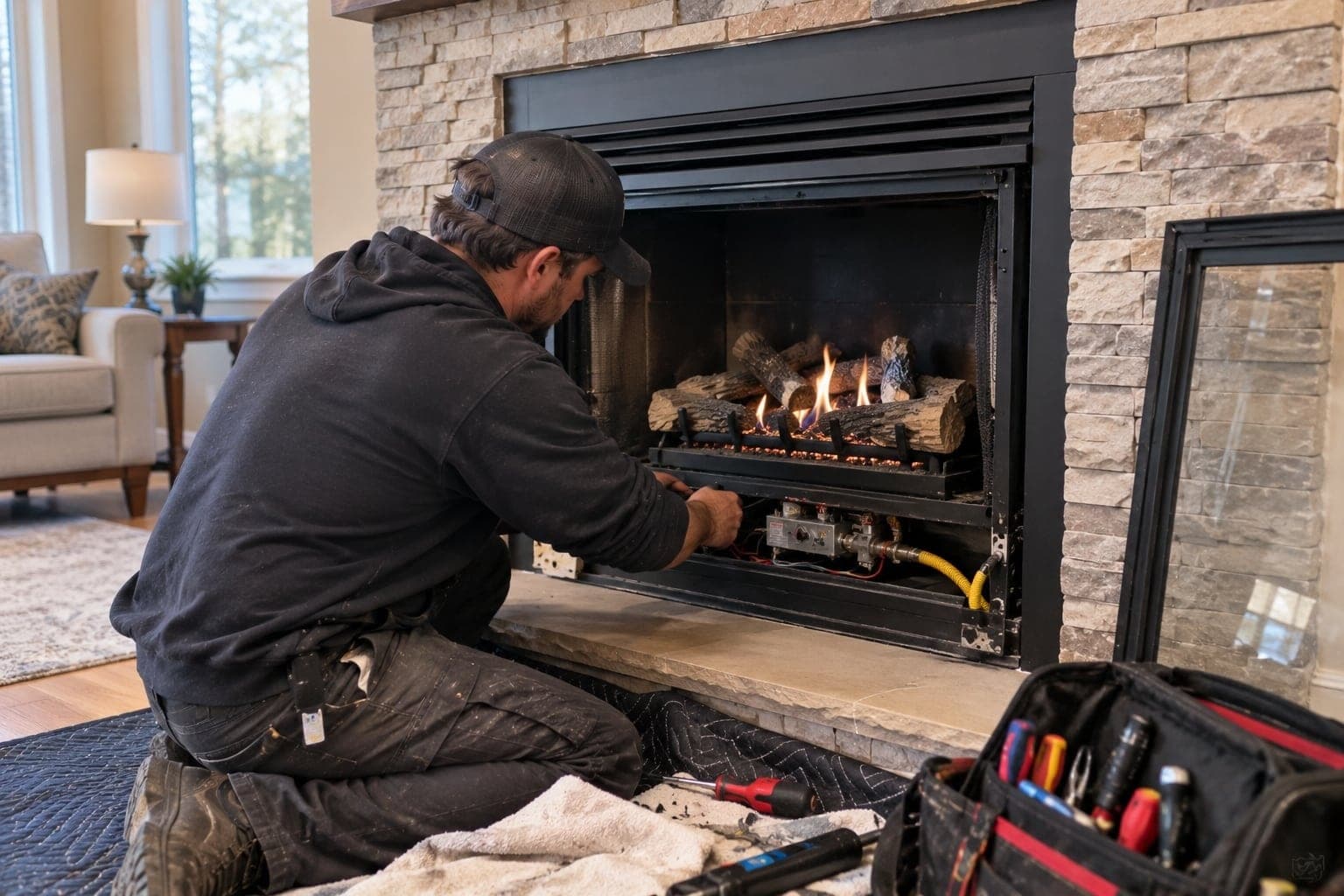
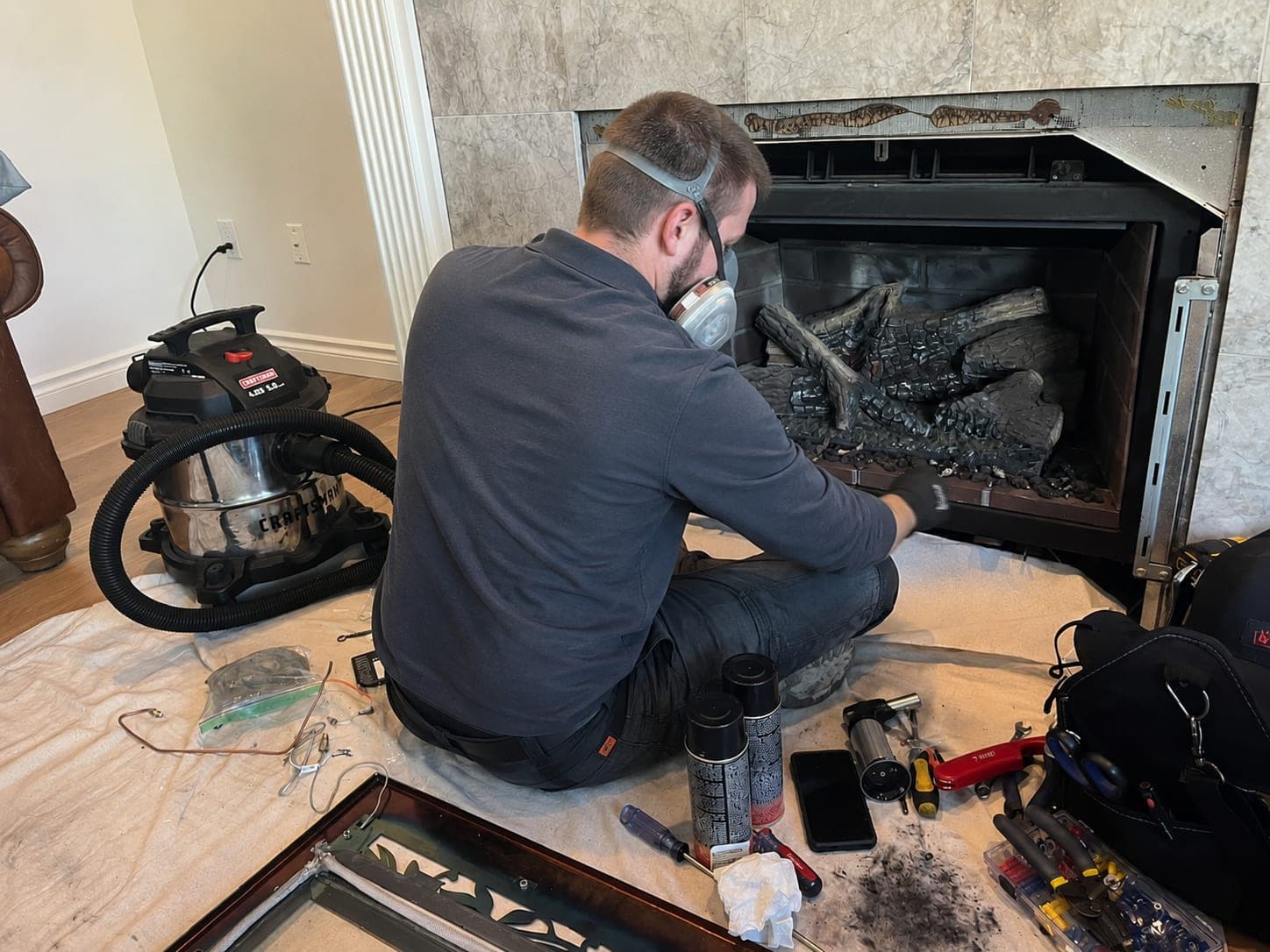
Gas fireplace service is a hands-on cleaning and check of the parts that make the fire start, burn cleanly and vent safely. A technician cleans the pilot assembly and burner, cleans the glass, sets the logs or media back in their correct positions, tests the safety controls and inspects the vent and cap. Service is upkeep for a unit that works. When a part has already failed, the job becomes gas fireplace repair. Both are often handled in the same visit.
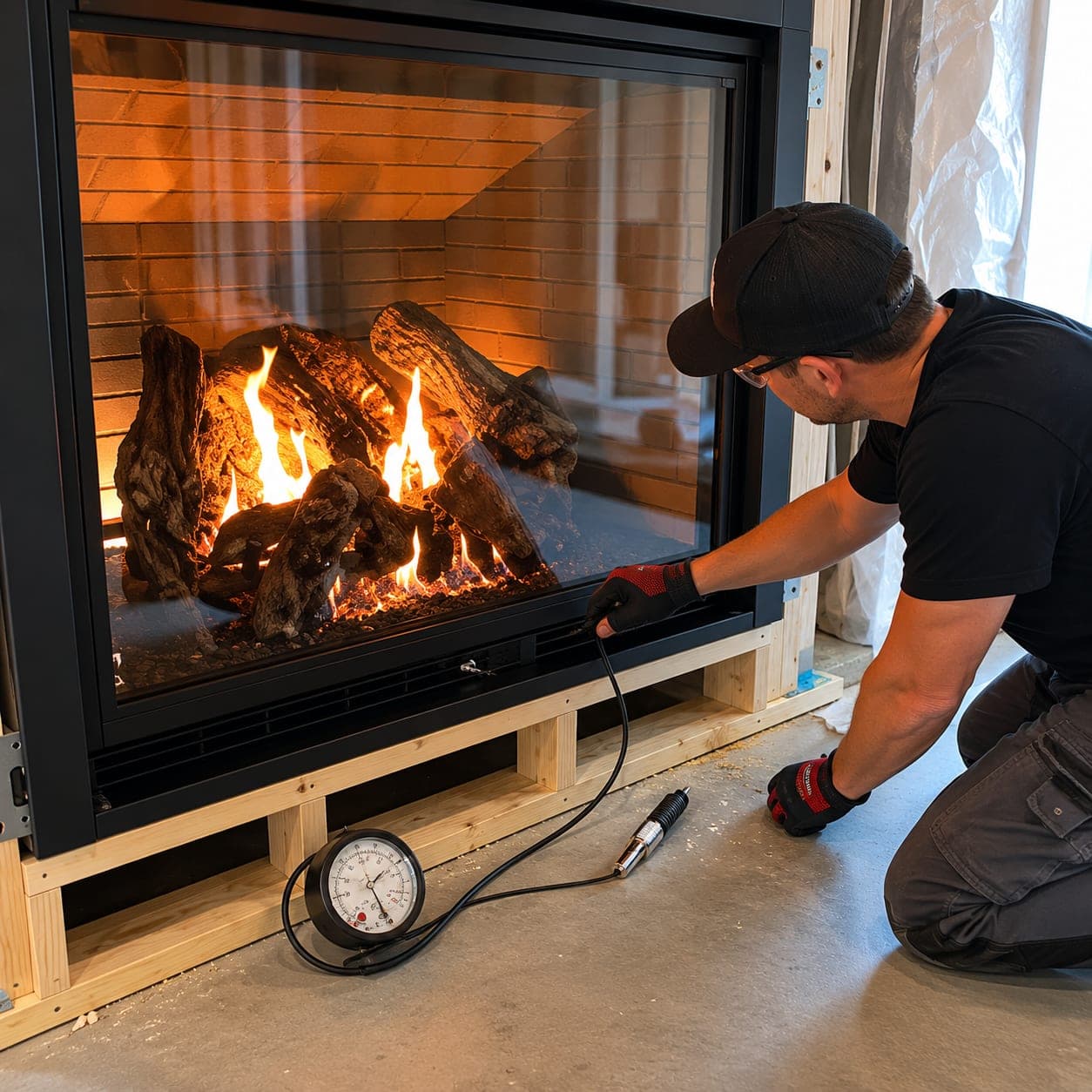
We do gas fireplace and gas appliance work and service all major brands, so an older built-in unit and a newer insert are both covered.
Signs your gas fireplace needs service
Some problems are obvious, like a fire that won't light. Others build slowly. Watch for these:
Common signs
- The pilot won't stay lit, or it goes out after the burner turns on
- Ignition takes several tries, or you hear clicking with no flame
- Black soot on the glass, logs or the wall above the opening
- A smoky fireplace, or flames that are tall, lazy and yellow instead of steady
- A fireplace odor that lingers beyond the first few minutes of the season
- A fan or blower that is loud, rattles or doesn't come on
- Cracked glass, a loose glass frame or a fireplace door that won't seat
- No service in the past year
A short, dusty burning smell the first time you light it each season is common. A smelly fireplace that stays that way is worth having checked. Any smell of gas is different: get everyone outside first and call the gas utility or 911 from there.
What happens during the visit
Gas fireplace service, step by step
Shut down and cool off
Gas to the unit is turned off at the valve and the fireplace is allowed to cool before anything is opened.
Remove and inspect the glass
The glass front comes off. It is checked for cracks, the gasket is checked for gaps, and the glass is cleaned of film and soot.
Clean the pilot and burner
Dust, lint and debris are cleared from the pilot assembly, burner ports and the area around the controls.
Test the safety and ignition parts
The thermocouple or thermopile, igniter and valve are tested so the fire lights reliably and shuts off when it should.
Check connections for leaks
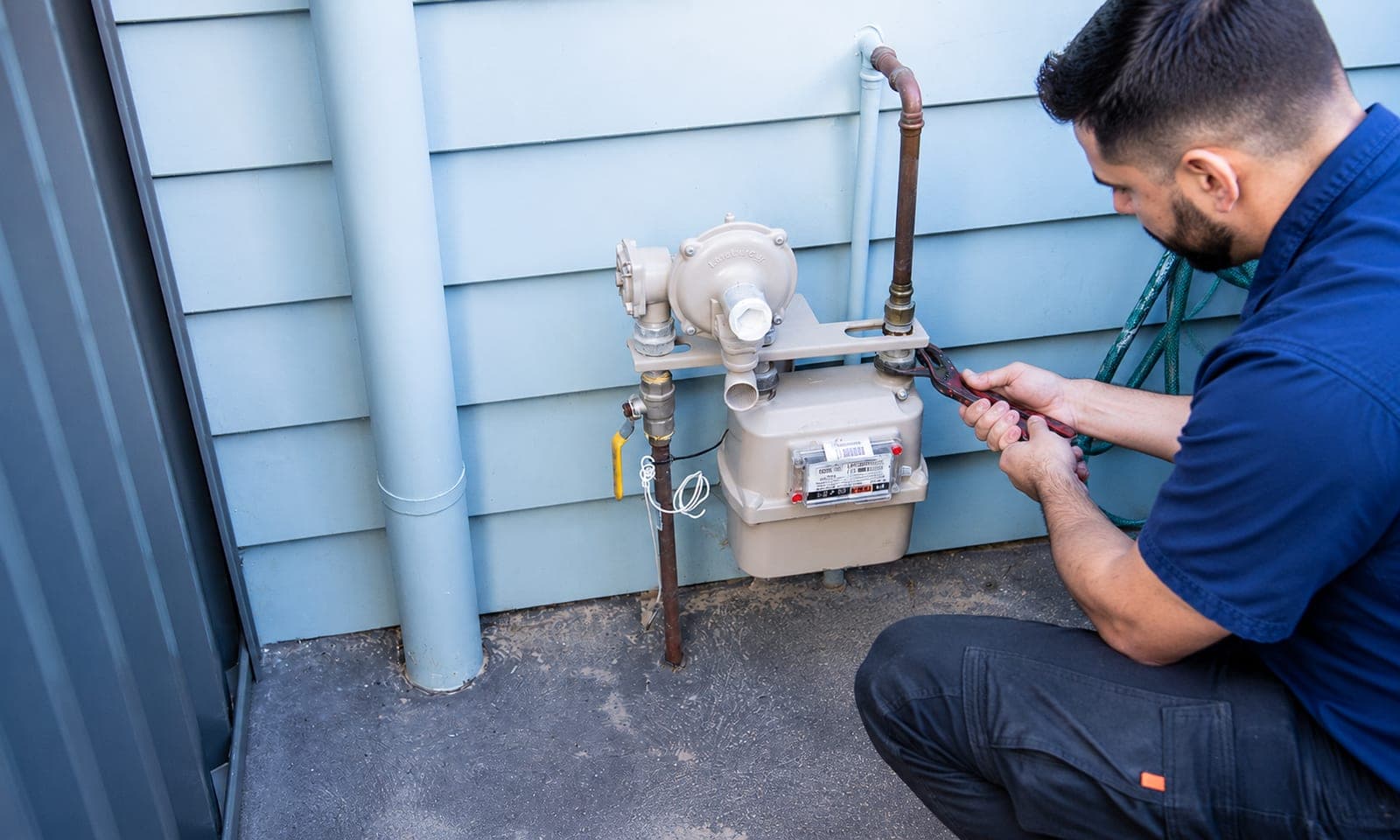
Gas connections at the unit are checked for leaks with proper equipment.
Reset logs or media
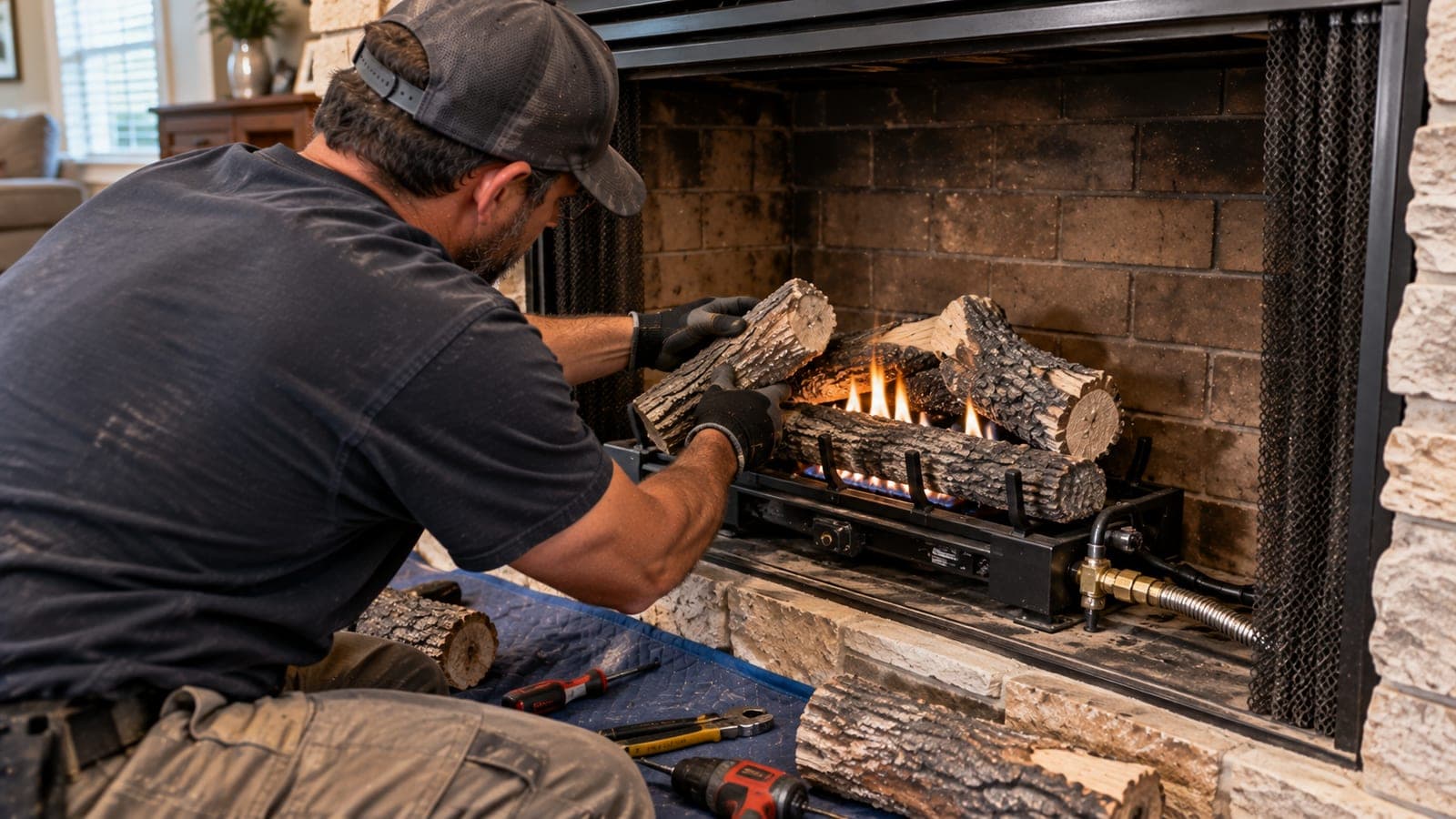
Logs, glass media or stones go back in the positions the manual specifies, because misplaced logs are a common cause of soot.
Inspect the vent and cap
The vent run and the termination or cap are checked for blockages, nests, damage and loose sections.
Run it and review
The fireplace is lit and the flame is watched. You get a plain explanation of what was found and a free estimate for any repair before work goes further.
Components and fuel types
A gas fireplace has more working parts than a wood-burning one, and each can wear out on its own schedule.
| Part | What it does | Common trouble |
|---|---|---|
| Pilot assembly | Keeps a small flame ready to light the burner | Dirt or a weak flame that won't hold |
| Thermocouple / thermopile | Senses the pilot and powers or opens the valve | Low output that shuts the fire off |
| Gas valve and controls | Regulates gas to the pilot and burner | Sticking, or no response to the switch or remote |
| Burner and logs or media | Produces and shapes the flame | Clogged ports, soot from misplaced logs |
| Glass front and gasket | Seals the firebox on sealed units | Cracks, film, worn gasket |
| Fireplace fan or blower | Moves heat into the room | Noise, dust buildup, motor failure |
| Vent and cap | Carries exhaust outside and keeps out weather and animals | Blockage, corrosion, loose joints |
Natural gas or propane
Fireplaces run on either natural gas or propane, and the burner orifice and valve settings are specific to the fuel. A unit set up for one fuel shouldn't be run on the other without a proper conversion. If you are weighing a switch away from burning wood, the tradeoffs of gas vs wood fireplace conversion are worth reading first.
How the unit vents
A direct vent gas fireplace pulls combustion air from outside and sends exhaust back out through a sealed pipe. A B-vent unit uses room air and vents up a flue. A ventless unit has no vent at all and relies on an oxygen depletion sensor. Service differs a little for each type, and our guide to direct vent vs ventless gas fireplaces lays out the differences.
Gas inserts
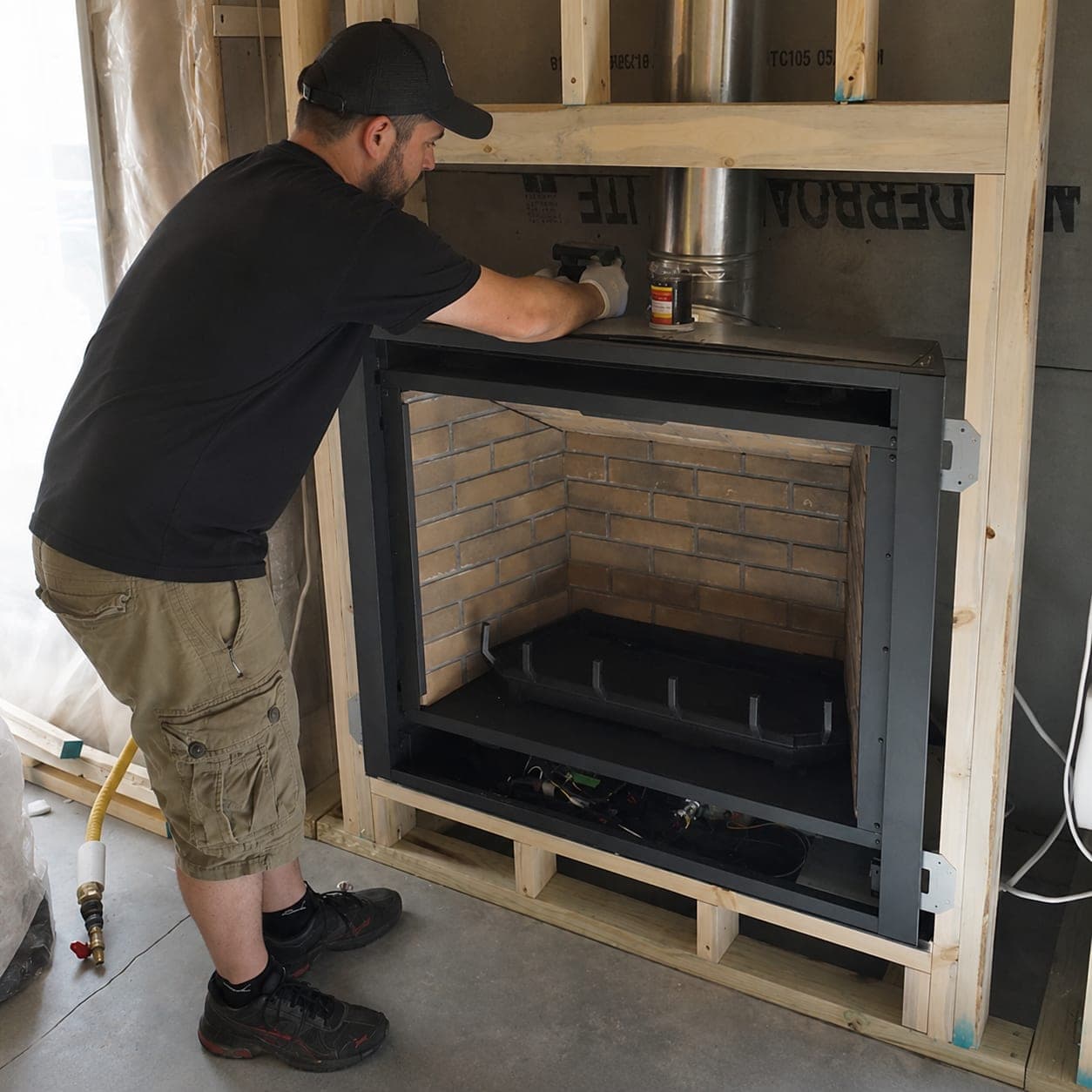
Gas inserts turn an existing brick fireplace or masonry firebox into a sealed gas unit. The insert sits inside the old opening and vents through liner pipes run up the chimney. On top of the normal burner and glass work, insert service includes checking the liner connections at the top and bottom, the surround panel that covers the gap around the insert, and the blower, which on many inserts does most of the heating. If you are still choosing a unit, how gas fireplace installation works explains fitting an insert or a new built-in unit.
Safety and maintenance
- Have the fireplace serviced once a year, ideally before you start using it for the season.
- Keep a working carbon monoxide alarm on every level of the home, including near bedrooms.
- Don't use the fireplace with cracked or missing glass on a sealed unit.
- Keep remotes, decorations and anything flammable off the hearth and away from the glass.
- Glass gets hot enough to burn; a safety screen helps where children or pets are around.
- Don't rearrange logs yourself after cleaning. Their placement affects how the flame burns.
- If soot keeps returning, have the cause found rather than just wiping the glass.
Worn or mismatched logs can be swapped for a proper set. Our gas fireplace logs service covers matching logs to the burner they were designed for.
Booking gas fireplace service
Call or request an estimate, and tell us the make of the fireplace if you know it, whether it is an insert or a built-in unit, and what you have noticed. We also take on commercial and property-manager work for buildings with several gas fireplaces.
Related work covered on this page
- Gas Fireplace Service & Maintenance