On this page
If you smell gas
Leave the building right away. Don't flip light switches, use phones or light any flame inside. Once you're outside, call your gas utility or 911.
What gas log installation involves
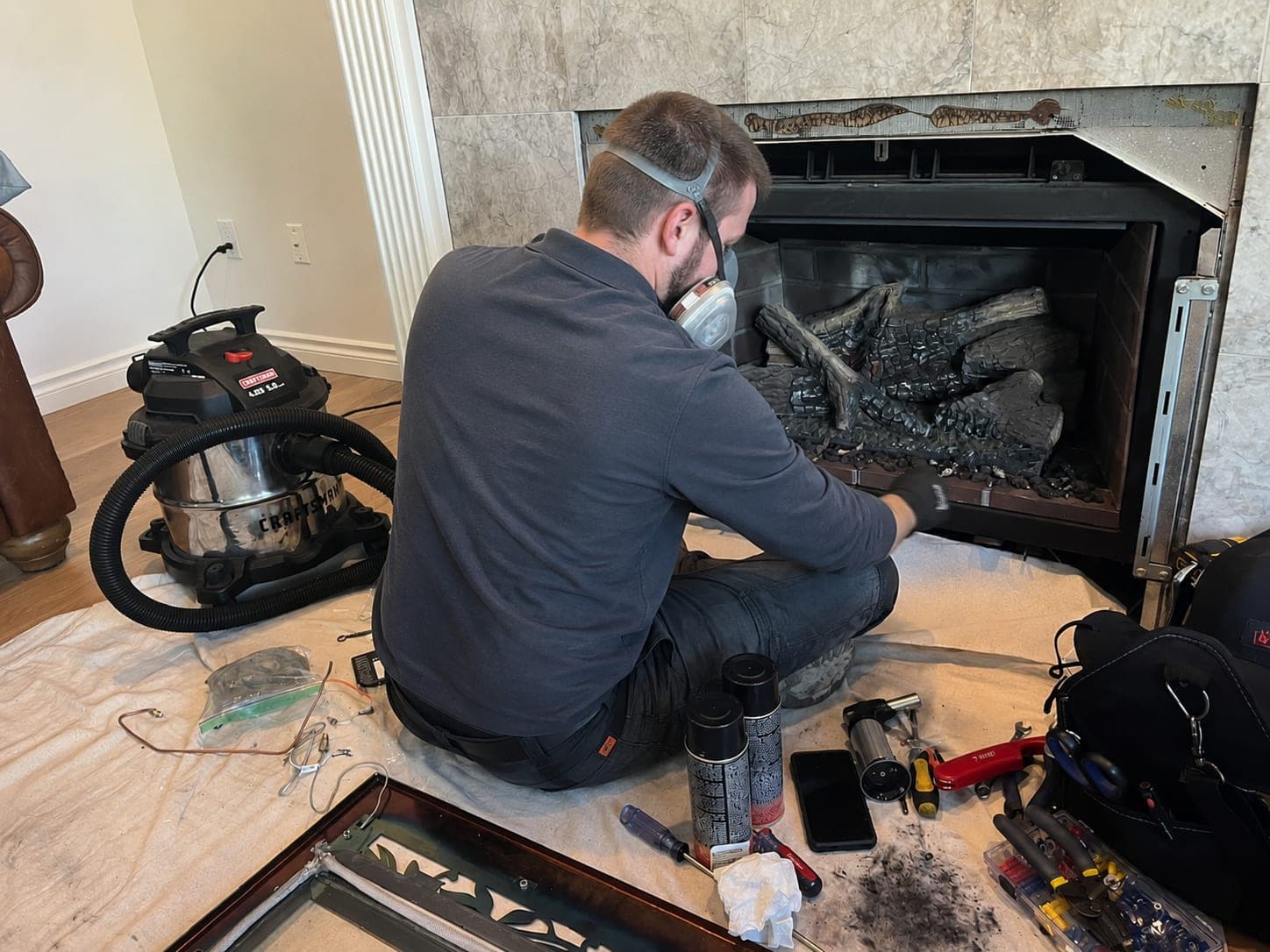
Gas log installation puts a gas burner and a set of realistic logs inside a fireplace that already has a working firebox and chimney. It is different from a sealed insert or a factory-built unit. The burner sits in the firebox and connects to a gas line, and the logs rest on or around it to give the look of a wood fire. If you want a sealed, glass-front unit instead, our gas fireplace installation service covers that work.

The job has four parts: confirming the fireplace and chimney can safely take gas, getting gas to the firebox, fitting a burner and log set sized to the opening, and testing the connection, flame and draft.
Signs a gas log set is the right fit
- You have a wood-burning fireplace you rarely use because of the wood, smoke and cleanup.
- An older gas log set has cracked, crumbling or heavily sooted logs.
- The burner pan is rusted or corroded, or the flame pattern has become patchy.
- You want a fire you can start and shut off quickly, without tending it.
- You're weighing a full conversion and want the simplest gas option first. Our guide to gas vs wood fireplace conversion walks through the trade-offs.
Not every problem calls for new logs. A pilot that won't stay lit, a valve that sticks or an ignition fault on a working set is often a repair job instead. In those cases our gas fireplace repair service may be the better place to start.
Components and fuel types
Vented and ventless log sets
Vented log sets burn with an open damper, so combustion gases go up the chimney. They produce a taller, more natural-looking flame. Ventless sets are designed to burn without a chimney flue. They put more heat into the room, but they come with stricter rules on room size and use, and they are not an option in every home. The same vented-versus-ventless thinking applies to full units, which is explained in direct vent vs ventless gas fireplaces.
Gas fireplace logs and what they're made of
Most fireplace logs in these sets are made from ceramic fiber or refractory cement. Ceramic fiber logs are lighter and heat up quickly. Refractory cement logs are heavier, more durable and often more detailed. Either way, the logs are matched to a specific burner and placed in a set layout. Moving them around changes the flame and can cause sooting.
| Part | What it does |
|---|---|
| Burner pan | Spreads gas evenly under the logs |
| Log set | Gives the look of a wood fire and shapes the flame |
| Embers, sand or granules | Cover the burner and add glow |
| Gas valve and control | Turns the gas on and off and sets the flame height |
| Ignition | Match-lit, standing pilot or electronic, sometimes with a remote |
| Gas supply line | Brings natural gas or propane to the firebox |
| Damper clamp (vented sets) | Holds the damper partly open so gases can escape |
Natural gas or propane
Burners and valves are set up for one fuel. A set configured for natural gas shouldn't run on propane without the correct conversion parts, and a propane set shouldn't run on natural gas either. If the fireplace has no gas line yet, running one is part of the job, and we handle gas line installation.
The visit, step by step
How a gas log installation goes
Check the fireplace and chimney
We look at the firebox, damper and flue to confirm they're sound and clear enough to burn gas safely.
Confirm the gas supply
We check whether a line already reaches the fireplace and which fuel you have, or plan a new line if needed.
Choose the set
We match a vented or ventless burner and log set to the size and shape of your firebox and to how you want to use it.
Install and connect
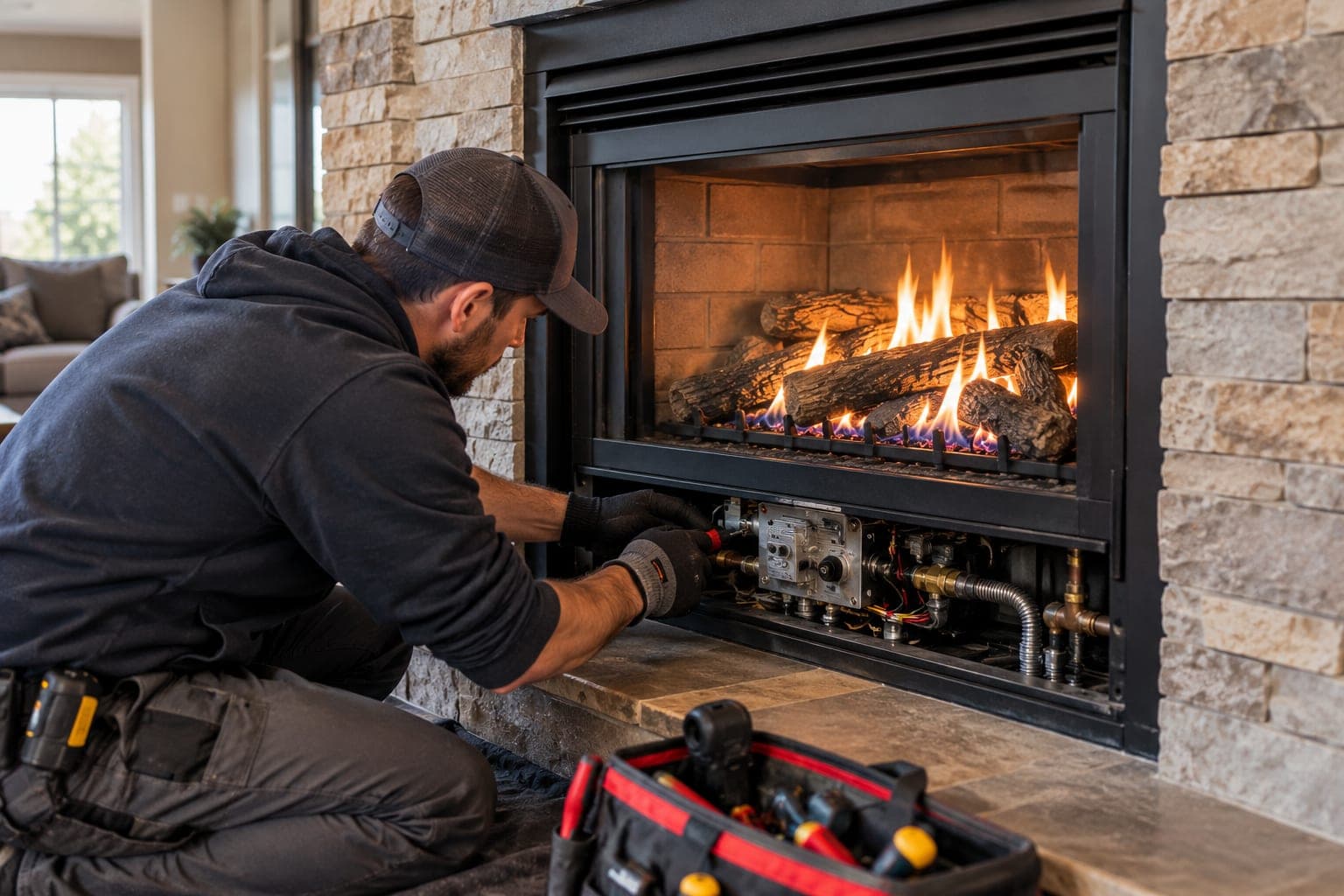
We fit the burner and valve, connect the gas line and leak-test every joint.
Place the logs
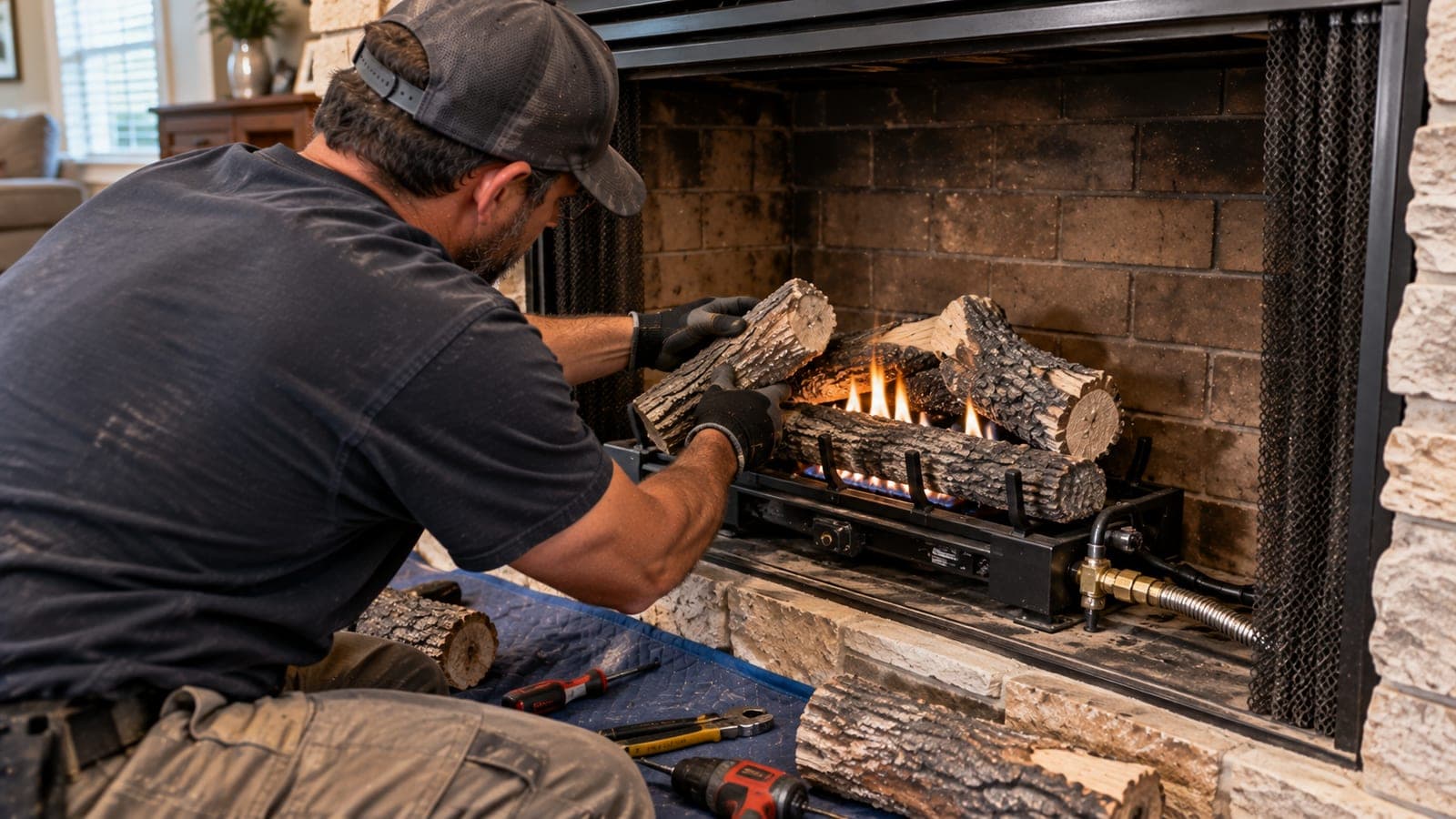
We set the logs and embers in the layout the burner is designed for.
Light and test
We light the set, check the flame and draft, and secure the damper for vented sets.
Walk you through it
We show you how to light it, shut it off and recognize when something isn't right.
Safety and upkeep
Keeping a gas log set safe
- Keep the damper clamp in place on vented sets, and never close the damper fully while the set is in use. If the fireplace has gas logs, leave the damper as the installer set it — vented gas logs need it open.
- Leave the logs in their original layout; moved logs can cause soot and uneven flames.
- Watch for heavy yellow, smoky flames or soot on the face of the fireplace.
- Keep a working carbon monoxide alarm in the home.
- Have the burner, logs and chimney checked periodically, since a gas fireplace still needs a clear flue.
Once the logs are in, routine checks fall under our gas fireplace service, which covers cleaning, adjustment and inspection of gas fireplaces and appliances.
Booking a gas log installation
Free estimates. Call or request an estimate, and we'll look at your fireplace and gas setup before recommending a set. We work on all major brands, and we also take on commercial and property-manager work.