On this page
If you smell gas, leave first
Get everyone out of the building right away. Don't flip light switches, use phones or light anything while you're inside. Once you're outside and at a safe distance, call your gas utility or 911. Don't go back in until they tell you it's safe.
What gas fireplace repair involves
A gas fireplace is a small appliance with a handful of parts that wear out. The gas valve controls fuel flow. The pilot and igniter light the burner. A thermocouple or thermopile senses the pilot flame and tells the valve it's safe to stay open. The venting system carries combustion gases out of the house. When any one of these drifts out of spec, the whole unit can stop working or start working badly.
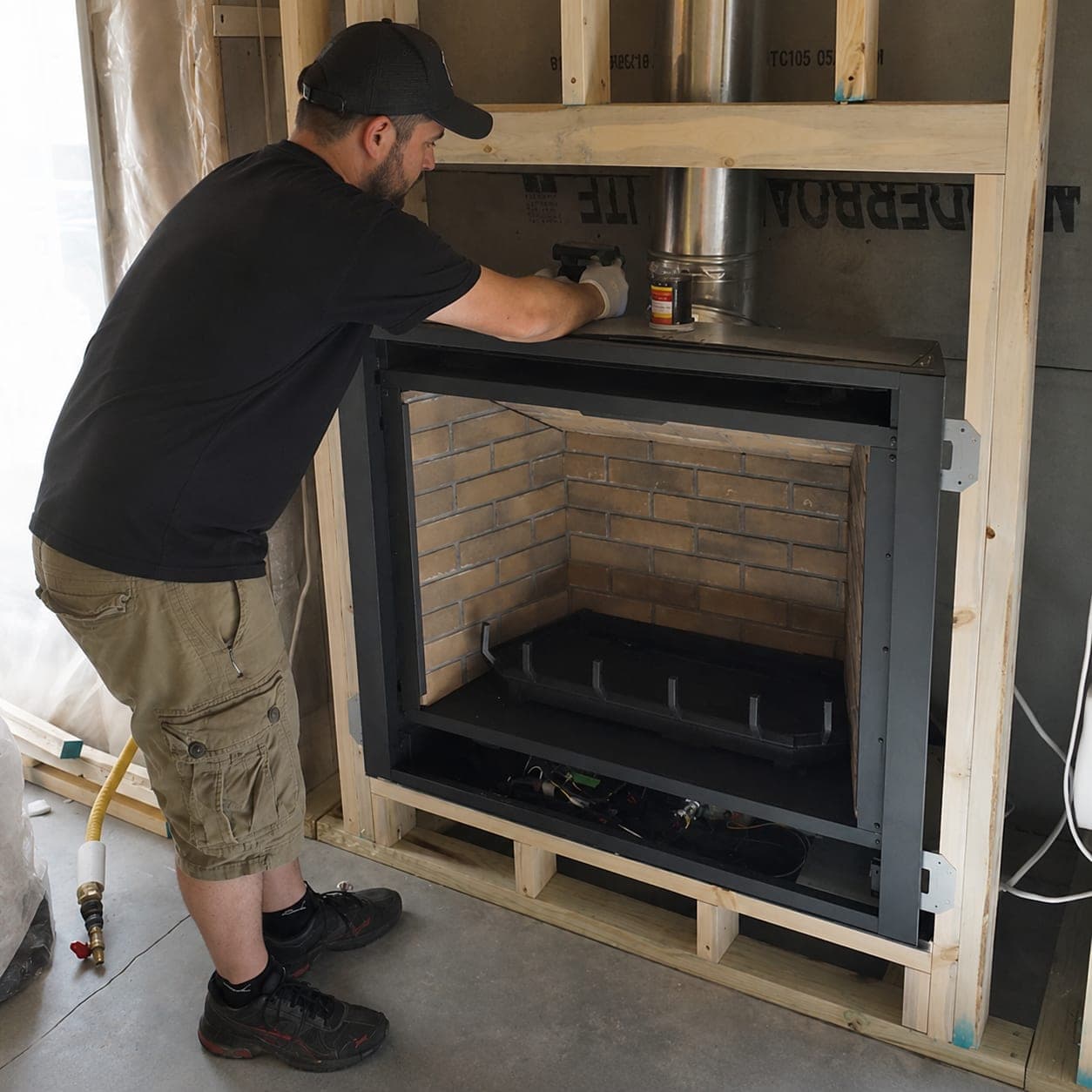
Repair means tracing the symptom to its cause, then cleaning, adjusting or replacing the part responsible. It also means confirming the fireplace is safe to use afterward. That includes a steady flame, a sealed firebox and clear venting. If the unit itself has reached the end of its life, gas fireplace installation may make more sense than another round of parts. We'll tell you plainly which way we'd go and why.
Signs your gas fireplace needs repair
- The pilot won't light or won't stay lit. This is often a dirty pilot assembly or a weak thermocouple or thermopile.
- The igniter clicks but nothing catches. The igniter, its wiring or the gas supply to the pilot is a common culprit.
- The burner lights, then shuts off after a few minutes. That usually points to a flame-sensing or valve problem.
- Flames are tall, lazy, orange or uneven. The burner, log placement or air mix may be off.
- Soot builds up on the glass, logs or surround. This is a sign of incomplete combustion that needs attention.
- The glass fogs, cracks or the door won't seal. A cracked glass panel or failed gasket shouldn't be ignored on a sealed unit.
- The remote, wall switch or thermostat has stopped responding. Batteries, receivers and wiring are easy to check first.
- You notice unusual odors. If a carbon monoxide alarm sounds, get everyone outside and call 911. Turn the unit off and leave it off until it has been checked.
Some of these problems trace back to the logs rather than the controls. Cracked or poorly placed logs can cause soot and odd flames. If the set is worn out, our gas fireplace logs service covers replacement.
What the visit looks like, step by step
A typical gas fireplace repair visit
Talk through the symptoms
We'll ask what the fireplace is doing, when it started and anything that's changed. Details like a smell, a sound or soot on the glass help narrow it down.
Shut off gas and inspect the unit
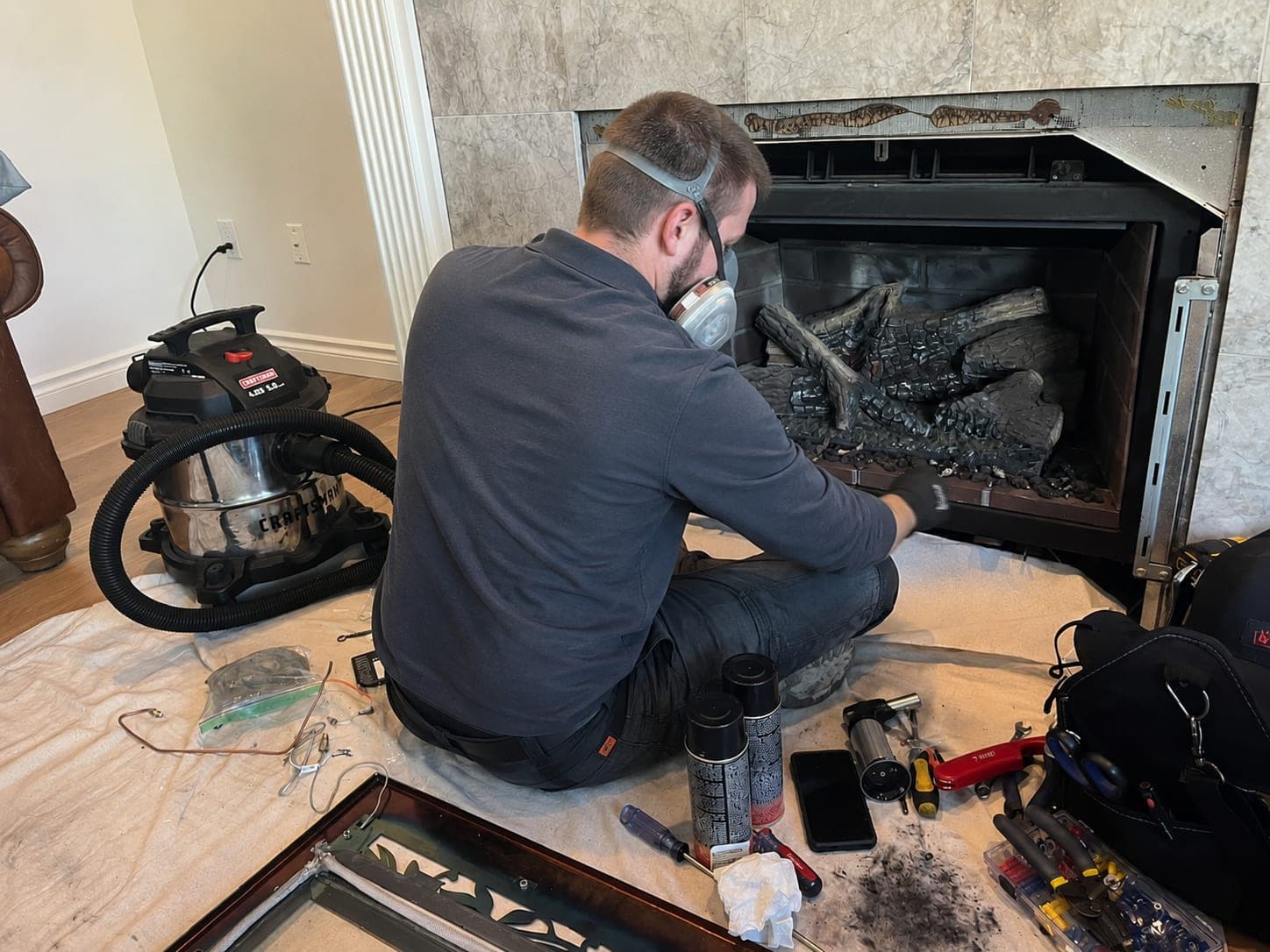
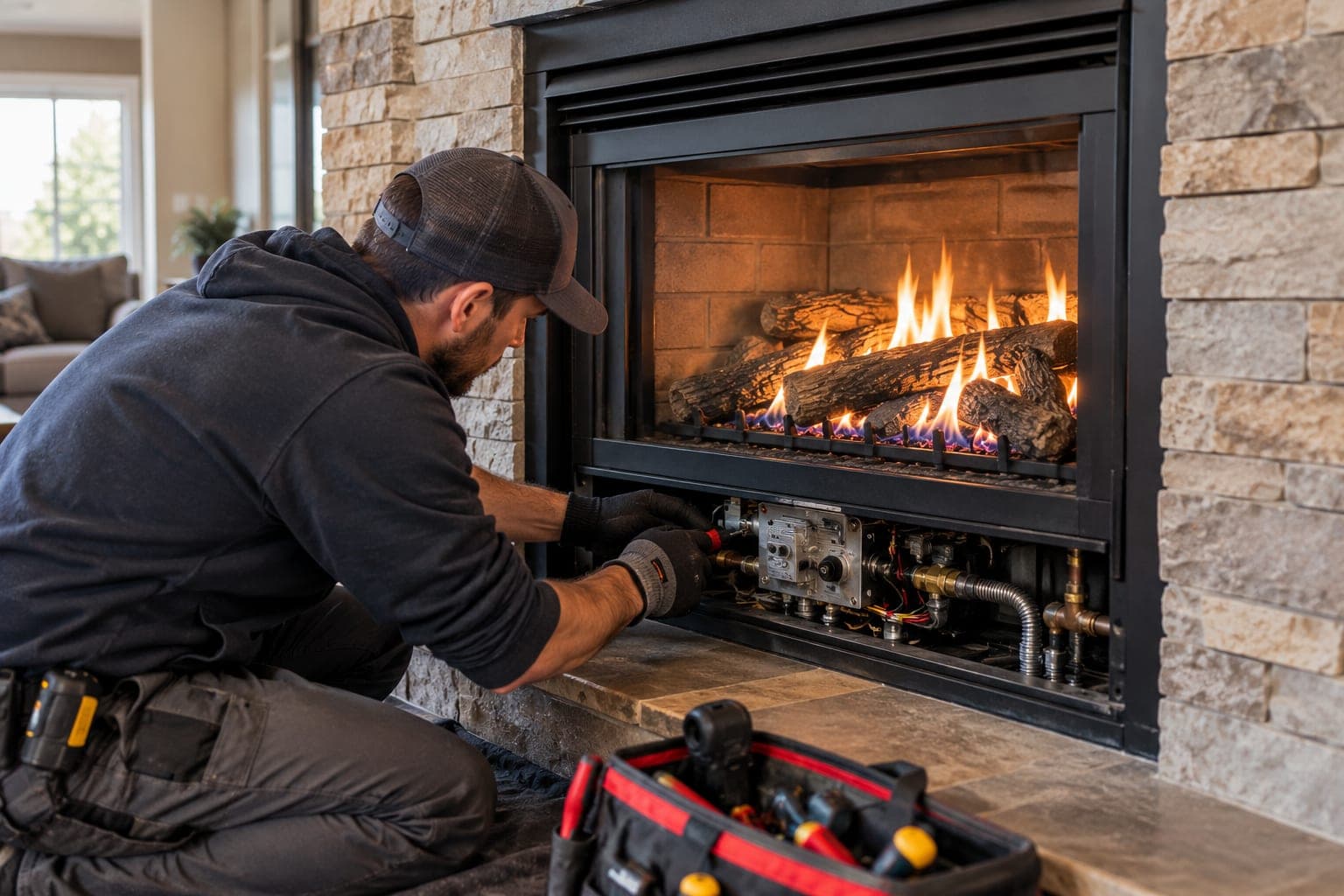
With the fireplace off and cool, we open it up. We look at the pilot assembly, burner, igniter, valve, flame sensor, glass, gaskets and logs.
Test the controls and safety parts
We check that the ignition sequence, the flame-sensing parts and the valve respond the way they're designed to.
Check the venting
Blocked, disconnected or damaged vent pipe can cause soot, odors and shutdowns. We confirm the path to the outside is clear and intact.
Explain the fix and give a free estimate
You'll hear what we found, what we recommend and what's optional before any work goes ahead.
Repair, relight and confirm
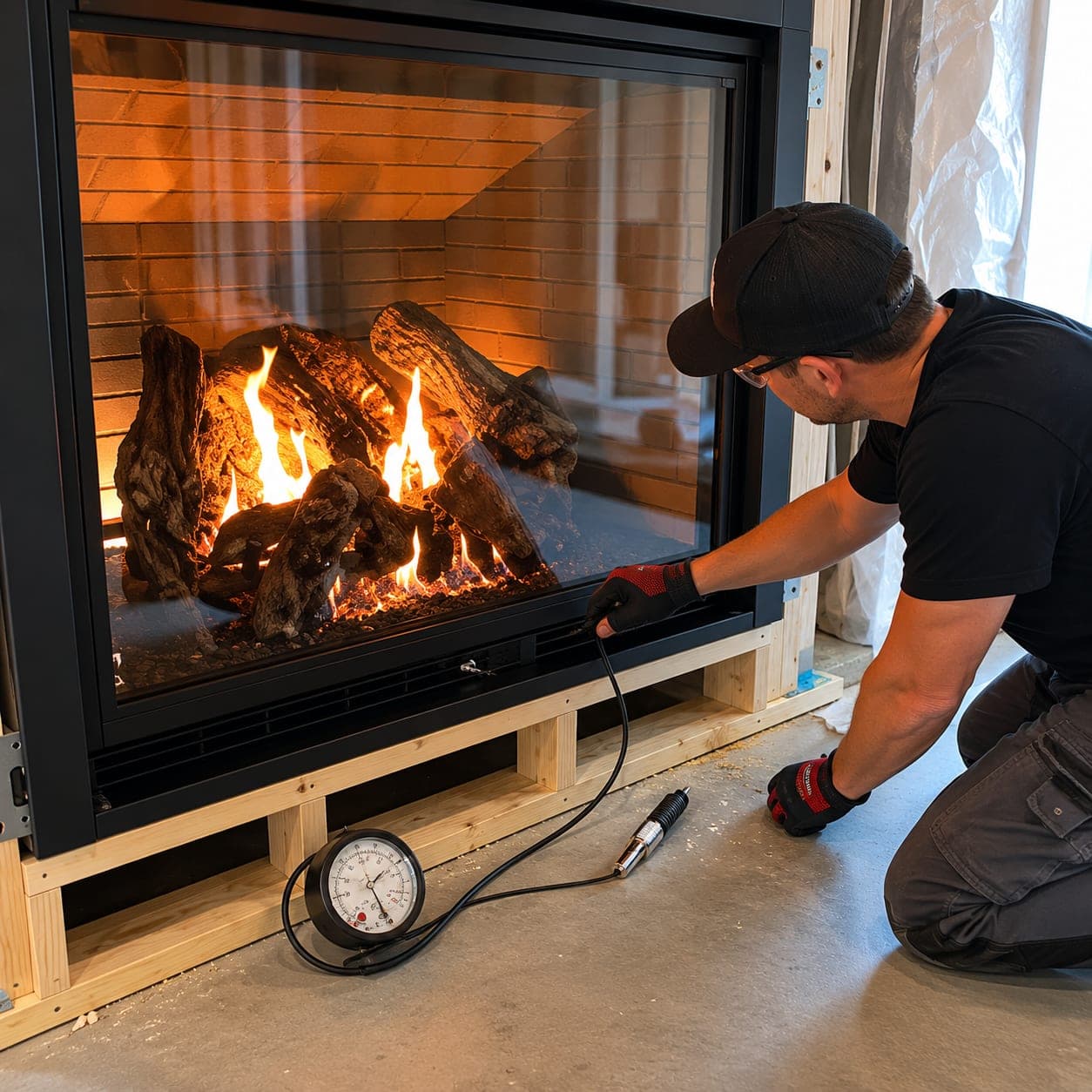
After the repair, we relight the unit, watch the flame and run it long enough to confirm it lights, stays lit and burns cleanly.
Parts and fireplace types we work on
Repairs most often involve pilot assemblies, thermocouples and thermopiles, igniters, gas valves, burners, log sets, glass panels and door gaskets, and the remote or wall controls. We work on all major brands of gas fireplaces, inserts and log sets.
How the unit vents affects how we diagnose it. A sealed direct-vent unit and a ventless unit fail in different ways. If you're not sure which one you have, our guide to direct vent vs ventless gas fireplaces explains the difference. For a broader look at how these appliances work and what we do with them, there's our gas fireplace service.
Safety and maintenance between repairs
Gas fireplaces need less upkeep than wood-burning ones, but they still need some. Dust and debris collect around the pilot and burner. Gaskets dry out, and vent terminations can get blocked. A yearly service visit catches most of this before it turns into a no-heat call.
Habits that keep a gas fireplace safe
- Keep working carbon monoxide alarms in the home, including near sleeping areas.
- Don't use the fireplace if the glass is cracked or the door is off.
- Keep the outside vent clear of snow, leaves, plants and stored items.
- Don't move or add logs, rocks or decorative media inside the firebox.
- Turn the unit off and call for service if you see heavy soot or a change in the flame.
- Have the fireplace serviced before the first heavy use of the season.
Thinking about switching fuels?
Some homeowners call about a repair and end up weighing a different setup. If you're deciding whether to stay with gas, our guide to gas vs wood fireplace conversion lays out the tradeoffs.
Booking a gas fireplace repair
Get in touch and tell us what the fireplace is doing. We also take commercial and property-manager work, so multi-unit buildings and rentals are welcome.