On this page
What chimney tuckpointing is
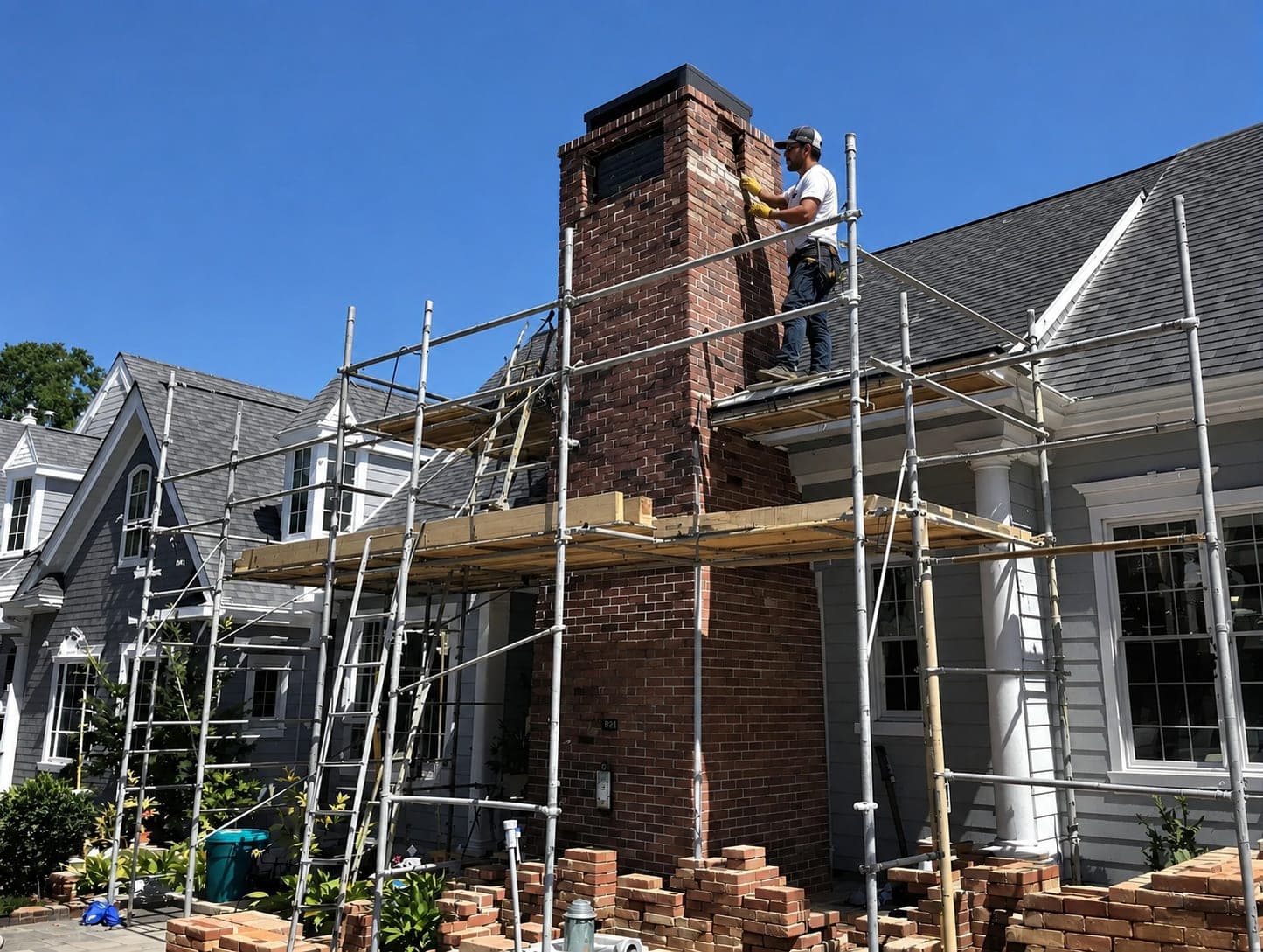
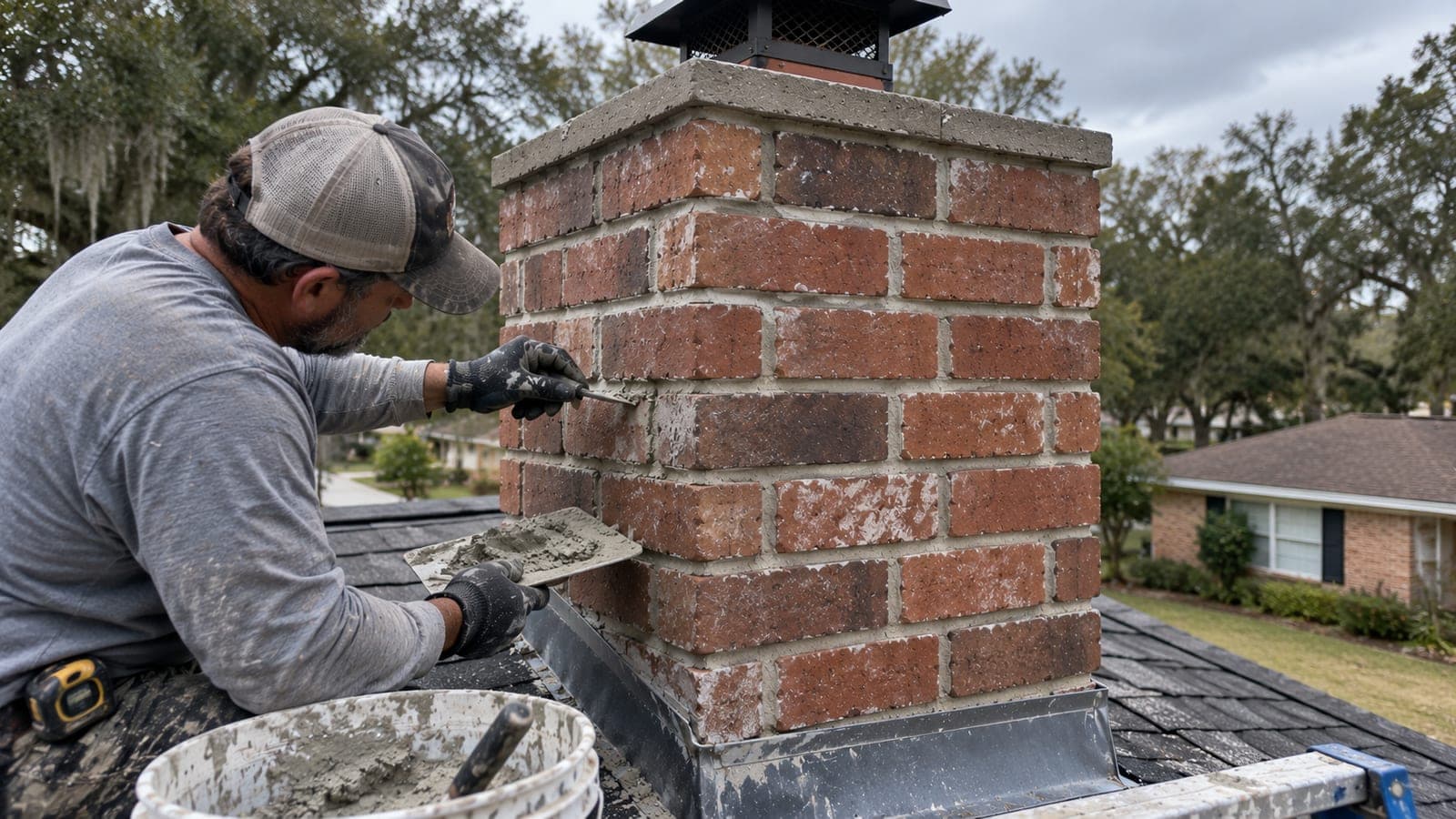
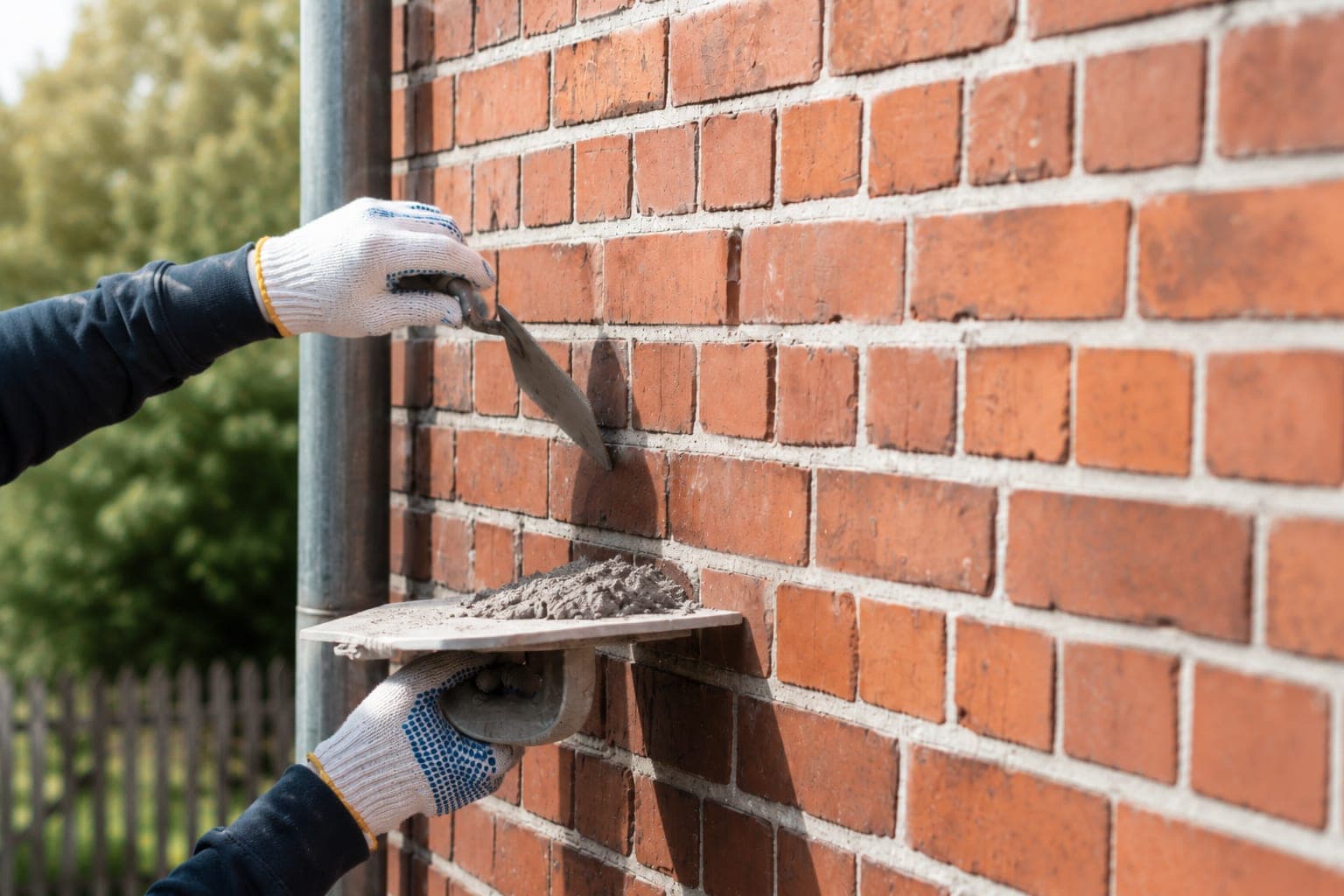
Tuckpointing is the repair of mortar joints, the lines of mortar between bricks. The bricks are usually more durable than the mortar holding them together, so joints tend to wear first. Tuckpointing removes the deteriorated mortar to a sound depth and replaces it with new mortar, packed in and finished to match the surrounding joints.

It is a repair to the joints, not the bricks. If bricks themselves are cracked, spalling or loose, that work falls under broader chimney repair, and some chimneys need both.
Signs your chimney needs tuckpointing
What to look for from the ground or the roof
- Mortar that is recessed behind the brick face instead of flush with it
- Joints that crumble or turn to sand when scratched with a key
- Hairline or open cracks running along the mortar lines
- Gaps where mortar is missing entirely
- White, chalky staining on the brick face
- Damp patches, stains or peeling paint on walls or ceilings near the chimney
- Bits of mortar or sand collecting on the roof, in gutters or at the base of the chimney
Not every one of these points to the mortar. Interior stains can come from failed flashing or a cracked crown, and white staining can come from water entering at the top of the chimney. Part of the estimate is working out where the water is actually getting in.
Loose bricks change the job
If bricks shift when pressed, the chimney leans, or sections have separated, tuckpointing alone is not the right repair. Keep people and vehicles clear of the area below and get the chimney looked at before using the fireplace.
Tuckpointing and chimney masonry
Masonry tuckpointing works when the brick structure is sound and the problem is limited to the joints. Mortar sheds water, and once it erodes, water can sit in the joints and soak the masonry behind them. In cold weather, water trapped in masonry freezes and expands, which speeds up the damage. Catching worn joints early keeps the repair limited to the joints.
| Feature | Tuckpointing | Rebuild |
|---|---|---|
| Brick condition | Bricks are sound and tight | Bricks are loose, broken or badly spalled |
| Structure | Chimney is straight and stable | Leaning, separating or shifting |
| Scope | Mortar joints replaced in place | Damaged courses taken down and relaid |
Brick condition
- Tuckpointing
- Bricks are sound and tight
- Rebuild
- Bricks are loose, broken or badly spalled
Structure
- Tuckpointing
- Chimney is straight and stable
- Rebuild
- Leaning, separating or shifting
Scope
- Tuckpointing
- Mortar joints replaced in place
- Rebuild
- Damaged courses taken down and relaid
When the answer isn't obvious, our guide to chimney rebuilding vs tuckpointing walks through how the decision gets made, and you can read how chimney rebuild works if the masonry is past repointing.
What the visit involves, step by step
How a tuckpointing job runs
Inspect the masonry
We check the joints, bricks, crown, cap and flashing to confirm the mortar is the problem and to find any other water entry points.
Protect the surroundings
The roof, nearby surfaces and anything below the work area are covered against dust and debris.
Remove the worn mortar
Deteriorated mortar is ground or raked out to a consistent depth, down to sound material, without damaging the brick edges.
Clean the joints
Dust and loose material are cleared so the new mortar bonds to the old.
Pack in new mortar
Mortar suited to the existing brick is pressed into the joints, in layers where the joints are deep.
Tool and finish
Joints are shaped to match the existing profile and to shed water, and excess mortar is cleaned off the brick face.
Review and clean up
We go over the finished work with you and point out anything else we found, such as crown cracks or a missing cap.
Materials and keeping water out afterward
The new mortar should be compatible with the existing brick. Mortar that is harder than the brick can push damage into the bricks instead of letting the joints take the wear, which matters most on older, softer brick.
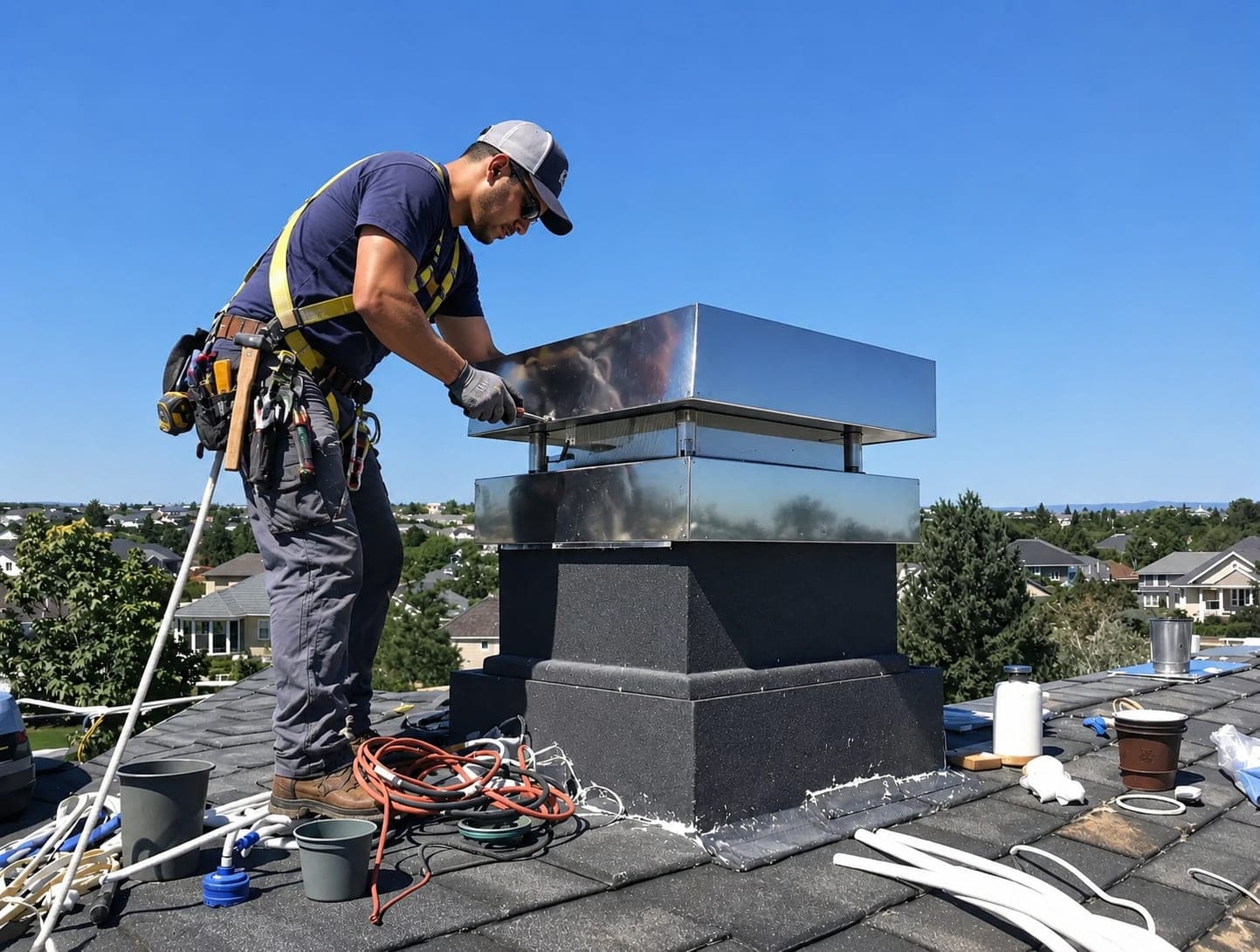
New joints last longer when less water reaches them. A cap keeps rain out of the flue and off the crown, so if your chimney has none, ask about chimney cap installation. Prefab chimneys with a metal chase work differently, and our guide to chimney cap vs chase cover explains the difference. Waterproofing the masonry after the mortar has cured is another option we can discuss.
Booking chimney tuckpointing
Emergency calls are accepted, and 24-hour service runs Sunday–Friday. Commercial and property-manager work is offered, so landlords and building managers can book tuckpointing too. Call or request an estimate, and tell us what you're seeing: recessed joints, stains or a leak.