On this page
What chimney masonry repair involves
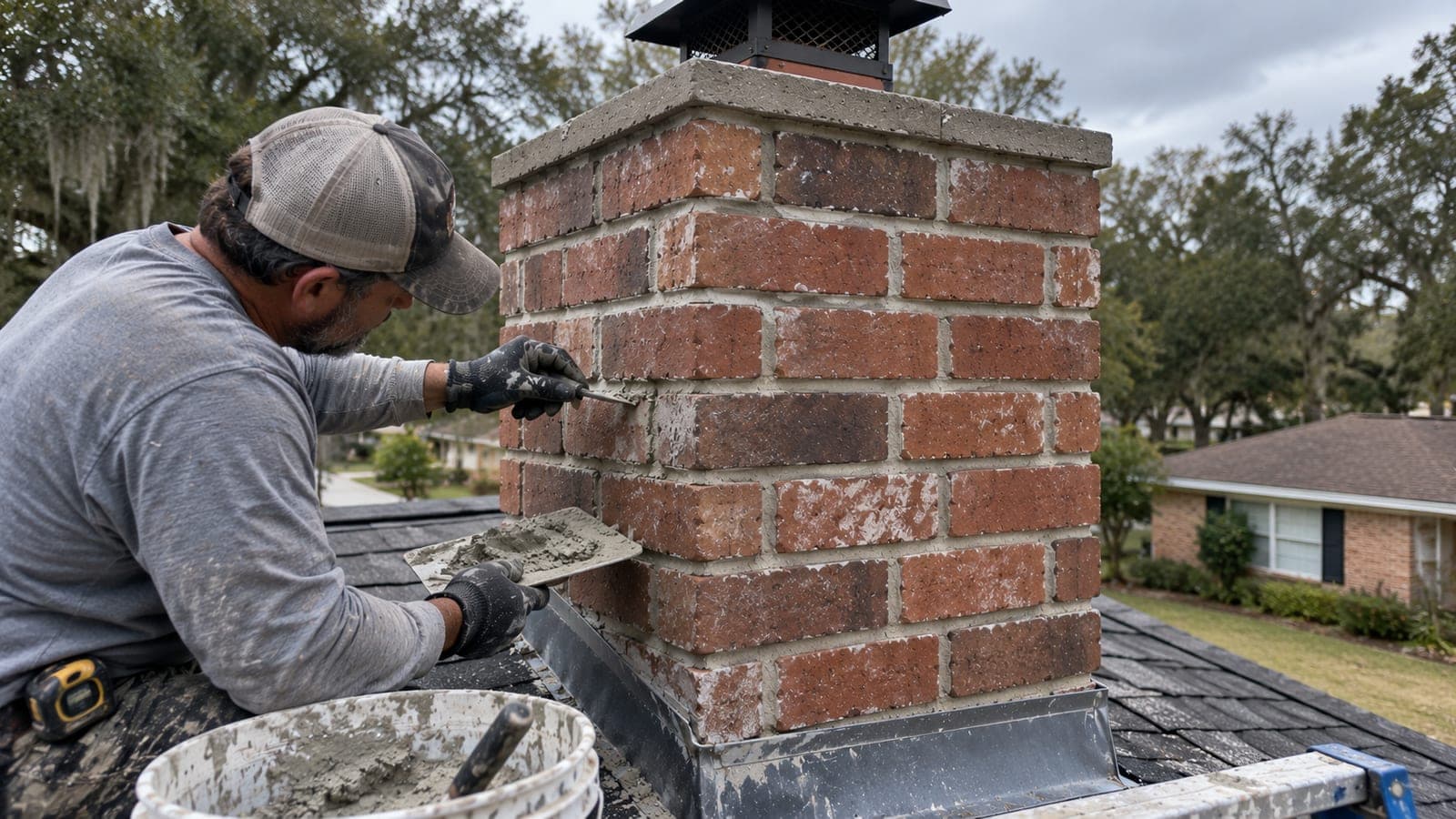
Chimney masonry repair is work on the structure of a brick or block chimney: the bricks, the mortar that holds them together and the crown that seals the top. The jobs range from repointing a few eroded joints to replacing broken bricks and rebuilding a cracked crown. It is one part of our broader chimney repair service, and it deals with the masonry itself rather than the liner, damper or fireplace.

The goal is to keep water out of the masonry and keep the stack sound. A chimney stands above the roofline with every side exposed, so it takes more weather than almost any other part of the house. When water soaks into brick and mortar and then freezes, it expands and pushes the material apart. Each cycle widens the cracks a little more.
Signs of chimney damage that call for masonry repair
Most chimney damage shows from the ground or from inside the house before it becomes structural. Look for these:
Common signs of chimney damage
- Mortar joints that are recessed, sandy or missing between bricks
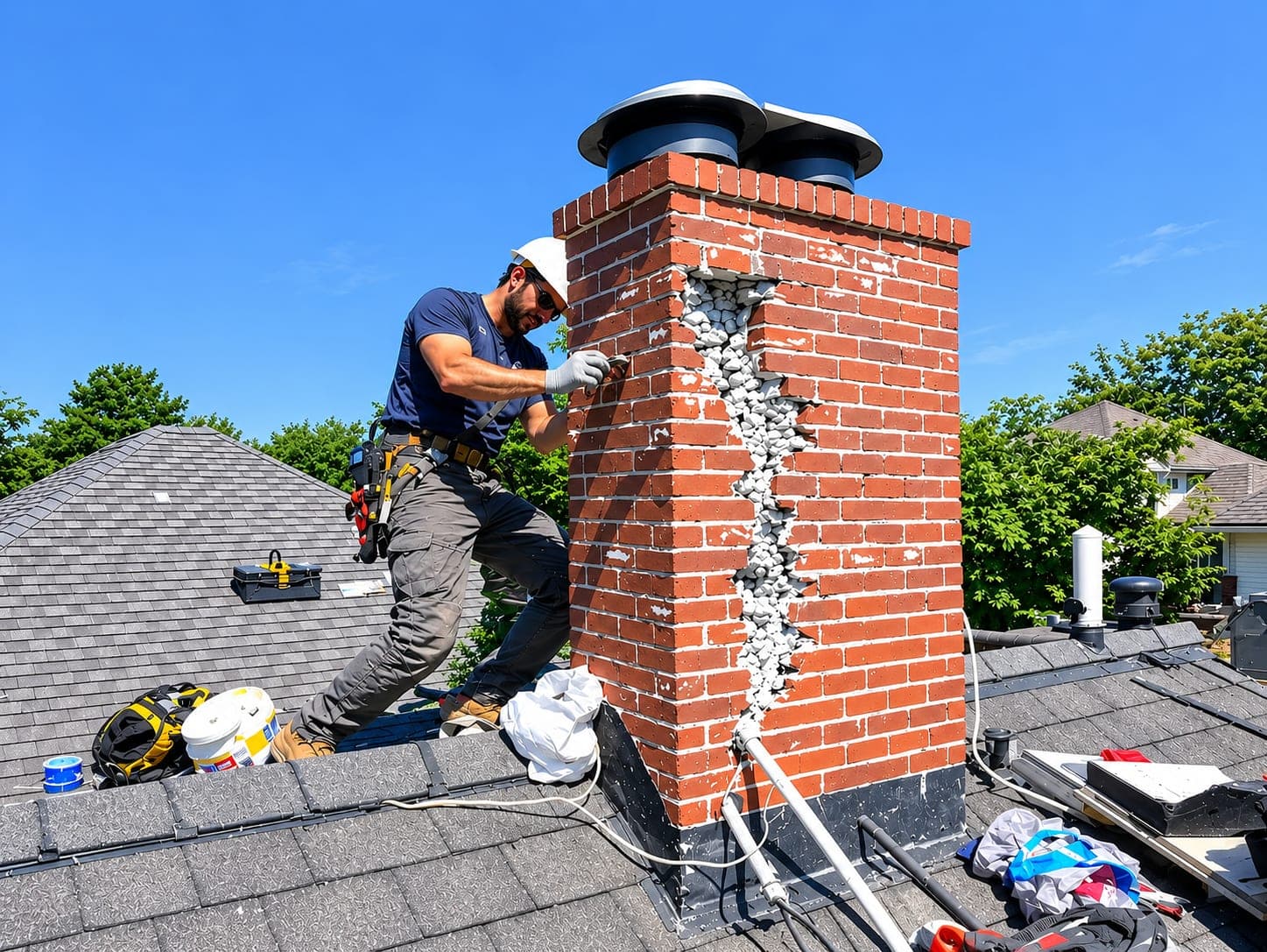
- Cracks in the chimney brick, especially a stair-step pattern running through the joints
- Brick faces that are flaking, popping off or crumbling (called spalling)
- Pieces of brick, mortar or crown on the roof, in the gutter or on the ground
- White, powdery staining on the brick, which usually means water is moving through it
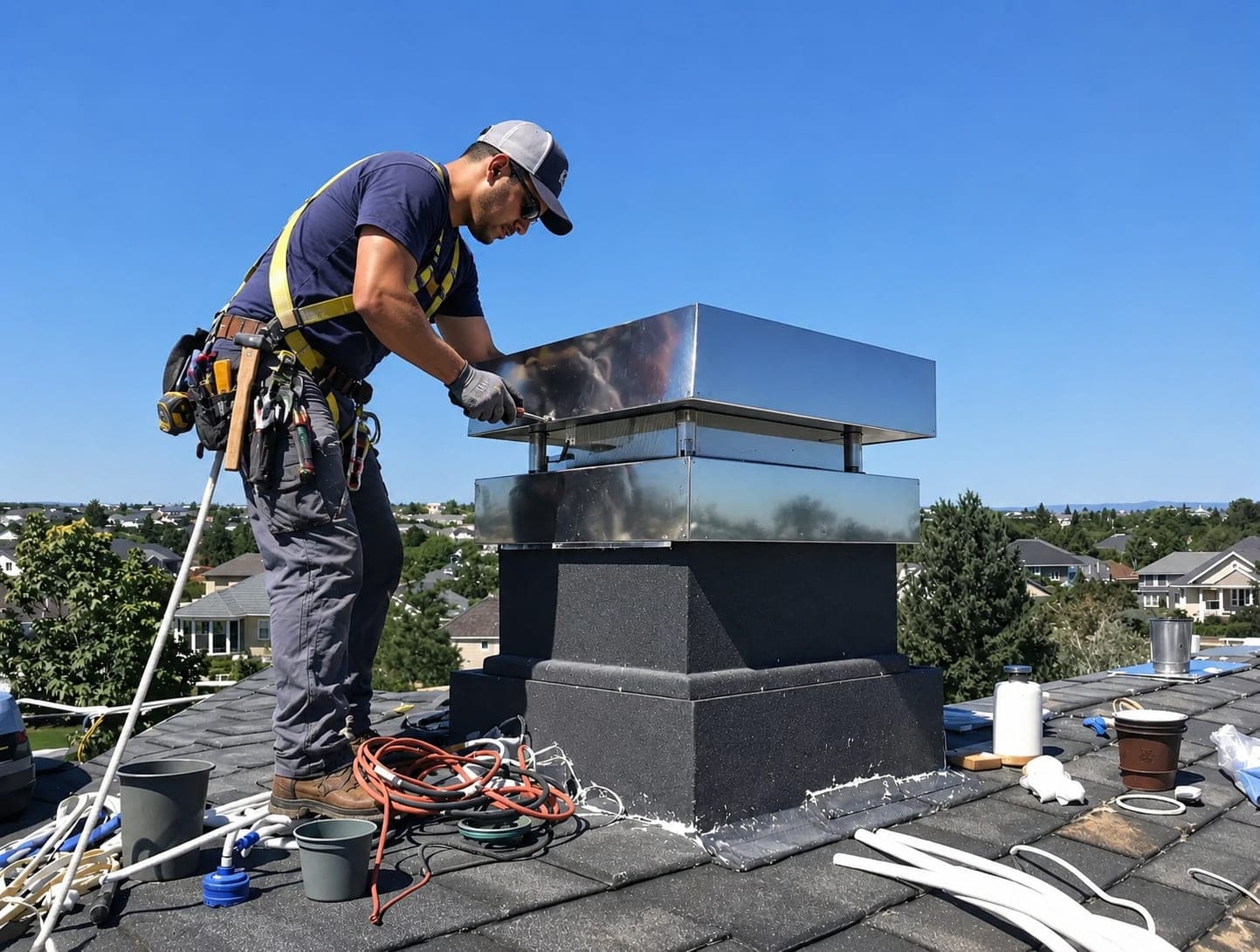
- A cracked or broken crown, or a damaged chimney cap sitting loose on top
- Water stains on the ceiling or wall near the chimney, or water in the firebox
- A chimney that looks like it is leaning or pulling away from the house
A leaning chimney is not a wait-and-see problem
If the stack is visibly leaning, bricks are falling, or large sections of mortar are gone, stop using the fireplace and keep people away from the area below the chimney until it has been looked at.
Cracks in the chimney brick
Hairline cracks in mortar are common and are often handled with repointing. Have any firebox crack checked before you keep burning. Cracks that run through the bricks themselves, or wide cracks that keep growing, point to more movement or water damage. Badly spalled bricks usually need to be cut out and replaced, because patching over a crumbling face does not hold.
Chimney crown crack repair
The crown is the cement or mortar slab at the top of the chimney that sheds water away from the brick and the flue. A damaged chimney crown lets water run straight down into the masonry. Small surface cracks can often be sealed. A crown that is broken through, crumbling or built too thin generally needs to be rebuilt so it overhangs the brick and sheds water properly.
What the visit involves, step by step
How a masonry repair visit works
Look over the chimney from outside
We check the brick, mortar joints, crown, chimney cap and flashing, from the ground and from the roof where it is safe to get up there.
Check inside the flue
We look inside the chimney as well, as described below, so the repair plan covers the whole structure.
Explain what we found
You get a plain explanation of the damage, what is causing it and which repairs make sense, with a free estimate before any work starts.
Do the repair
Depending on the damage, that can mean grinding out and repointing joints, replacing broken or spalled bricks, sealing or rebuilding the crown, and replacing a damaged chimney cap.
Clean up and walk you through it
We clear the debris and show you what was done, along with anything worth keeping an eye on.
Inspect the chimney for cracks and creosote
Before repairing the outside, we inspect the chimney for cracks and creosote on the inside. Cracks in the masonry often continue into the flue, and a cracked flue can let heat and gases reach the house framing. Heavy creosote matters too: it is flammable, and it should be removed before the fireplace is used again. Where the flue cannot be seen clearly, we use a camera inspection to check it section by section.
The parts of a masonry chimney stack
Masonry chimney stacks are built from several parts that work together. Damage to one usually spreads to the others, which is why we look at the whole chimney rather than only the spot you noticed.
| Component | What it does | Common damage |
|---|---|---|
| Brick | Forms the body of the chimney | Spalling, cracking, loose units |
| Mortar joints | Bond the bricks and keep water out | Erosion, cracking, missing mortar |
| Crown | Seals the top and sheds water away from the brick | Cracks, crumbling, poor overhang |
| Chimney cap | Covers the flue opening against rain, debris and animals | Rust, loose mounting, missing screen |
| Flashing | Seals the joint between chimney and roof | Lifted or rusted metal, failed sealant |
| Flue liner | Carries smoke and gases up and out | Cracks, gaps, creosote buildup |
Repair materials matter as much as the repair itself. Mortar used for repointing should be compatible with the existing brick; mortar much harder than the surrounding brick can make the brick crack instead of the joint. If your cap is part of the problem, here is how chimney cap installation works, and the difference between a masonry crown and a metal cover is explained in our guide to chimney cap vs chase cover.
Tuckpointing, repair or rebuild
| Feature | Tuckpointing and masonry repair | Rebuild |
|---|---|---|
| Typical condition | Eroded or cracked joints, a few damaged bricks, a cracked crown | Leaning stack, widespread loose brick, extensive spalling |
| What is done | Old mortar ground out and replaced, bricks swapped, crown sealed or rebuilt | Chimney taken down to sound masonry and relaid |
| When it makes sense | The structure is sound and damage is limited | Repairs would not keep the chimney stable or dry |
Typical condition
- Tuckpointing and masonry repair
- Eroded or cracked joints, a few damaged bricks, a cracked crown
- Rebuild
- Leaning stack, widespread loose brick, extensive spalling
What is done
- Tuckpointing and masonry repair
- Old mortar ground out and replaced, bricks swapped, crown sealed or rebuilt
- Rebuild
- Chimney taken down to sound masonry and relaid
When it makes sense
- Tuckpointing and masonry repair
- The structure is sound and damage is limited
- Rebuild
- Repairs would not keep the chimney stable or dry
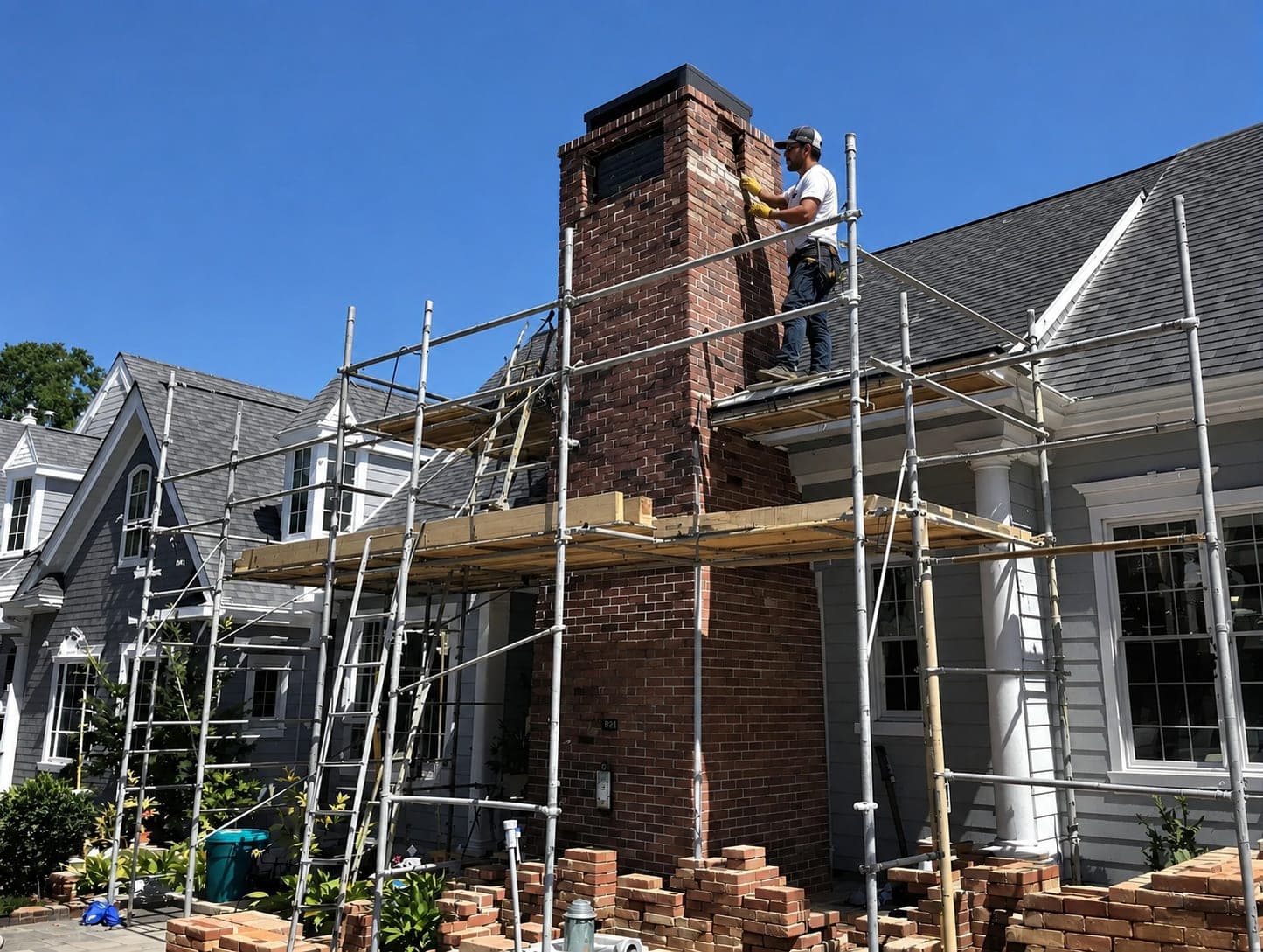
Catching mortar erosion early is what keeps a chimney in the tuckpointing column. For a fuller breakdown, read about chimney rebuilding vs tuckpointing. When the damage goes past repair, our chimney rebuild work takes the stack down to sound masonry and relays it.
Keeping masonry repairs from coming back
- Have the chimney looked at once a year, and after any storm that drops debris on the roof
- Keep the crown and cap in good shape, since they are the first defense against water
- Fix flashing problems promptly so water does not run behind the brick
- Consider waterproofing after repairs to slow water absorption into the brick
- Have the flue swept when creosote builds up, so a crack and a chimney fire never meet
Booking chimney masonry repair
Get in touch to describe what you are seeing, or request an estimate. Commercial and property-manager work is offered as well.
Free estimates.
Call or request an estimate, and we will look at the brick, mortar and crown and tell you what the chimney needs.