On this page
What chimney damper repair involves
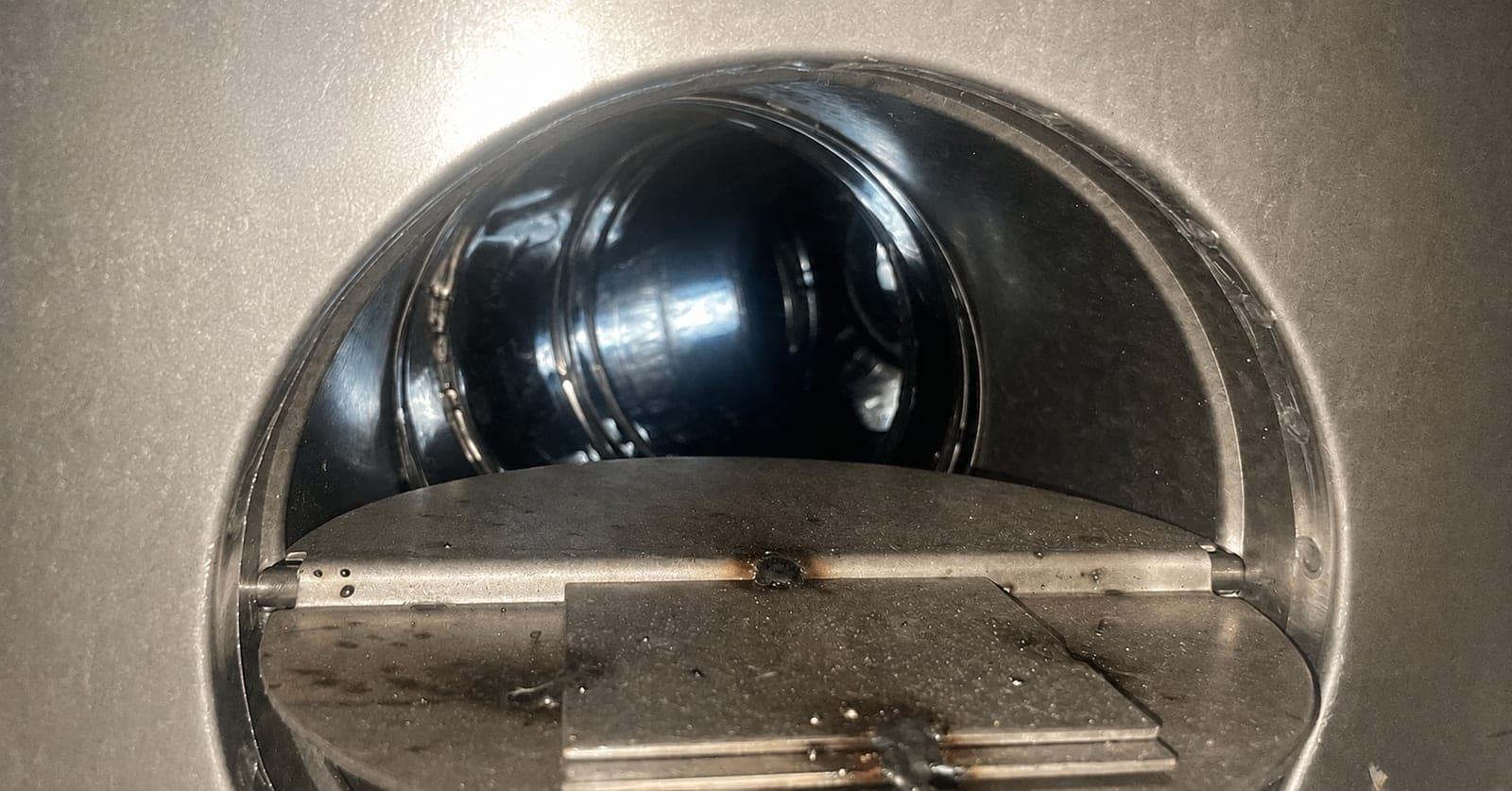
The damper is the movable plate that opens and closes the chimney. When it's open, smoke and combustion gases rise up the flue. When it's closed, heated air stays in the house and outside air, rain, and debris stay out. Chimney damper repair means getting that plate working properly again. Sometimes that's a small fix, such as freeing a seized pivot or replacing a broken handle. Sometimes the whole damper has to be replaced.
Most homes have one of two types:
- Throat damper: a metal plate in a cast frame just above the firebox, worked by a handle, lever, or pull chain. It's the most common type and the one that most often rusts, warps, or seizes.
- Top-sealing damper: a hinged lid with a gasket at the top of the flue, opened and closed by a cable that runs down into the firebox. It is often installed when a throat damper is too damaged to repair.
The damper problem may be part of wider wear, such as cracked firebox brick, a deteriorating smoke chamber, or damage higher up the stack. If it is, we tell you that too. Repairs beyond the damper fall under our chimney repair service.
Signs your damper needs attention
Common reasons homeowners call
- The handle or chain won't move, or it moves but the plate doesn't
- The damper won't stay open and drops shut while a fire is going
- You feel cold air at the fireplace even with the damper closed
- Smoke rolls into the room soon after you light a fire
- Rust flakes, debris, or water show up in the firebox
- Rattling or banging from the throat on windy days
- The plate looks warped or cracked, or sits crooked in its frame
- A top-sealing damper's cable is frayed or its gasket is torn
Fireplace draft: when the damper is letting air in
A damper that doesn't seal leaves an open hole in the house. Warm air rises out of the flue and cold air takes its place. You may feel a constant fireplace draft across the floor or notice that the room near the hearth stays cooler. You may also smell soot when the wind picks up. The usual causes are a plate warped by heat, a frame corroded at the edges, a hinge so worn the plate no longer seats, or a top-sealing damper with a hardened or split gasket.
The repair usually brings back a tight close. That can mean straightening or replacing the plate, cleaning rust from the seat, or swapping in a new damper. When a throat damper can no longer seal well, a top-sealing damper is often the better fix for the draft, because it closes against a gasket at the top of the flue.
Chimney smoke problems tied to the damper
When smoke comes into the room instead of going up the chimney, the damper is one of the first things we check. A damper can create fireplace smoke in several ways:
- It doesn't open all the way.
- It slips partly closed during a fire.
- It's stuck shut without anyone noticing.
- Debris on the smoke shelf is choking the opening.
The damper isn't always the only cause. Creosote buildup, a blocked flue, an animal nest, or a missing cap can produce the same chimney smoke problem. That's why the visit checks the full path smoke takes rather than assuming the damper is at fault. If wind-driven debris or animals keep getting into the flue, chimney cap installation is often part of the long-term fireplace smoke solution.
Smoke in the room? Stop using the fireplace
Let the fire burn down, keep the damper as open as it will go, and air out the room. Don't light another fire until the cause has been found. Smoke spilling indoors carries carbon monoxide as well as soot.
What the visit involves, step by step
How a damper repair visit works
Talk through the symptoms
Tell us what you've noticed, such as drafts, smoke, noise, or a handle that won't budge. That points us to the likely failure.
Inspect the damper and throat
We work the damper by hand and check the plate, frame, pivots, handle or cable, and seal. We also look at the smoke shelf for debris and rust.
Check the rest of the smoke path
We look at the firebox and smoke chamber, and at the flue as needed, so a separate blockage or defect isn't mistaken for a damper problem.
Explain your options
We tell you whether the damper can be repaired or should be replaced, and what else we found. The estimate is free.
Repair or replace
We free and adjust the existing damper, replace broken parts, or install a new throat or top-sealing damper.
Test it
We open and close the damper several times to confirm it moves freely, stays open, and seals when closed. If the fireplace has gas logs, leave the damper as the installer set it — vented gas logs need it open.
Gas fireplaces and dampers
Some fireplaces with gas logs still have a working damper. These need a different setup than a wood-burning fireplace, because gas logs still produce exhaust that has to vent. We work on gas fireplaces and gas appliances, so we can check how the damper is set for your gas setup and correct it if needed. We work on all major fireplace brands.
Keeping a repaired damper working
- Open the damper fully before every fire, and don't close it until the ashes are completely cold.
- Move the damper a few times during the off-season so the pivots don't seize.
- Watch for rust or water in the firebox. Moisture coming down the flue is what usually corrodes a throat damper, and the source is often higher up the chimney.
- Have the chimney swept on a regular schedule so creosote and debris don't build up on the smoke shelf and around the damper.
If water damage has spread beyond the damper into the masonry, our guide to chimney rebuilding vs tuckpointing explains how the two repairs differ. When a stack is too far gone to patch, a chimney rebuild may be the next step to discuss.
Booking damper repair
Call or request an estimate and tell us what the damper is doing. We also take commercial and property-manager work.