On this page
What fireplace draft repair involves
A fireplace draws because warm combustion gases rise through the flue and pull fresh air in through the firebox opening behind them. Anything that slows that flow lets smoke spill into the room. That includes an obstruction, a damper that won't open fully or a flue that's too small for the opening. Fireplace draft repair means finding which part of that system is failing and correcting it, rather than telling you to crack a window.

The fix depends on the cause. It might mean clearing the flue, repairing the damper, smoothing a rough smoke chamber, adding a chimney cap, relining the flue or reducing the size of the firebox opening. Some draft complaints turn out to be part of a broader firebox or masonry problem, which falls under our fireplace repair service.
Signs your fireplace has a draft problem
Common reasons homeowners call
- Smoke drifts out of the front of the fireplace, especially when the fire is first lit or dying down
- Fires are hard to start, smolder or go out unless you tend them constantly
- A smoky or sooty smell comes from the hearth when the fireplace isn't in use
- Cold air pours down the chimney even with the damper closed
- Soot stains build up on the face of the fireplace above the opening
- Smoke problems get worse when kitchen or bath exhaust fans are running
The most common of these is a fireplace smoking into the room. Several different faults can cause it, so the symptom alone doesn't tell you which repair you need.
Likely causes and how we check them
01Blocked flue
- What you may notice
- Smoke spills right away, even with a strong fire. You may hear debris or nesting sounds in the chimney.
- How it’s confirmed
- Visual and camera inspection of the flue from top and bottom
02Damper not opening fully
- What you may notice
- The handle feels stuck or loose. Smoke escapes even though the damper seems open.
- How it’s confirmed
- Operating the damper and checking the plate, frame and hinge from inside the firebox
03Heavy creosote buildup
- What you may notice
- The draft has weakened over time. There is a strong smoky smell and flaky black deposits.
- How it’s confirmed
- Inspecting the flue walls and smoke chamber for buildup that narrows the passage
04Firebox opening too large for the flue
- What you may notice
- Smoking has happened since the fireplace was built or changed. It gets worse with large fires.
- How it’s confirmed
- Measuring the fireplace opening against the flue size
What the visit involves, step by step
From first call to a working draft
Tell us what you're seeing
Describe when the smoke happens: at startup, during a long burn, on windy days or when fans run. Those details narrow down the cause quickly.
Inspection of the fireplace and chimney
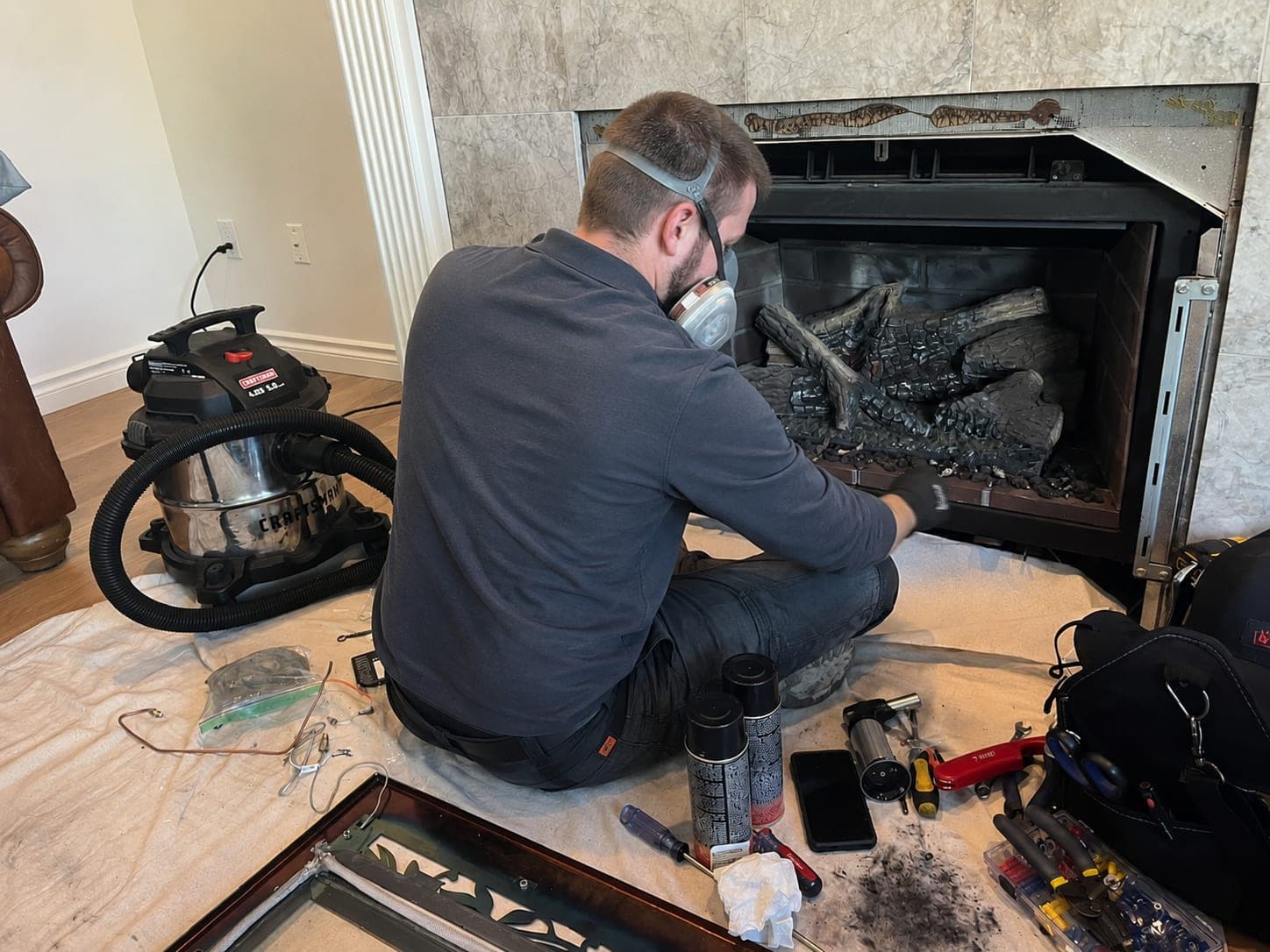
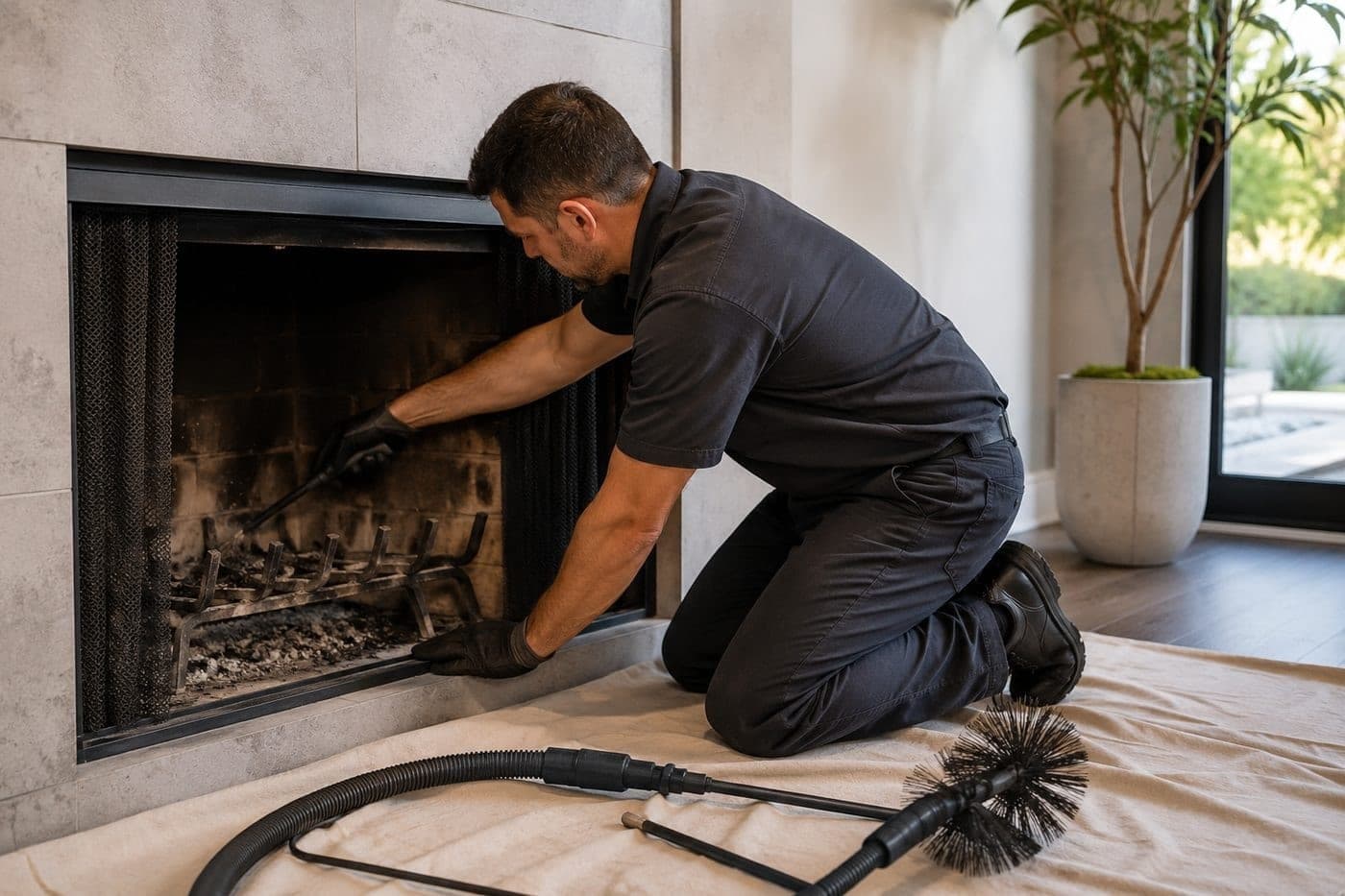
We check the damper, firebox, smoke chamber and flue. Where the inside of the flue needs a closer look, we use a chimney camera.
Finding the cause
We compare the opening to the flue, look for blockages and buildup, and check the chimney top for a missing or damaged cap.
Free estimate
Before any work starts, you get a clear explanation of what's wrong and what we recommend fixing.
Repair and test
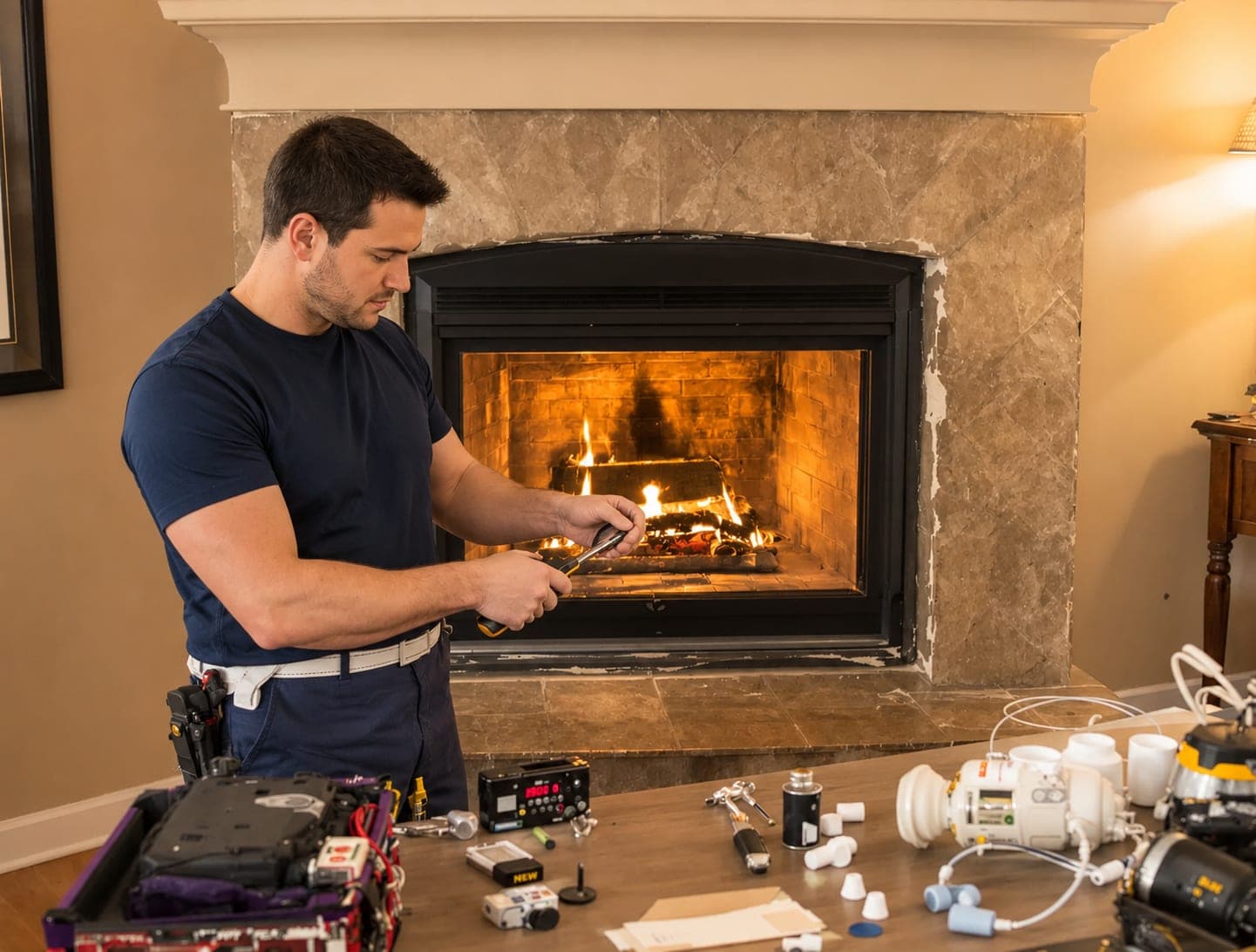
Once you approve the work, we make the repair and check that the fireplace draws properly.
Repairs that commonly fix a poor draft
| Cause | Repair |
|---|---|
| Debris, nests or obstructions | Chimney blockage removal and animal or nest removal |
| Creosote narrowing the flue | Creosote removal and flue cleaning |
| Stuck, warped or broken damper | Chimney damper repair |
| Rough or damaged smoke chamber | Smoke chamber repair |
| Wind or downdraft at the chimney top | Chimney cap installation or replacement |
| Damaged or undersized flue liner | Chimney liner repair or installation |
| Opening too large for the flue | Firebox repair or fireplace door installation |
If the existing fireplace can't be made to draw well, replacing it may be the better option. Our fireplace installation service covers new units and inserts. Our guide to gas vs wood fireplace conversion walks through the tradeoffs of switching fuel types.
Safety while you wait for the repair
Don't keep burning through a smoke problem
Smoke spilling into the room carries combustion gases into your living space, including carbon monoxide. Until the draft is fixed, it's safer to stop using the fireplace. Keep working carbon monoxide detectors on each level of the home, and never close the damper while embers are still glowing. If the fireplace has gas logs, leave the damper as the installer set it — vented gas logs need it open.
Electric fireplaces don't use a chimney, so they don't have draft problems. If an electric unit smells hot or stops heating, it needs electric fireplace repair instead.
Booking a draft repair
Call or request an estimate and tell us how the fireplace is behaving. We also handle commercial and property-manager work, as well as gas fireplace and gas appliance work, and we work on all major brands.