On this page
What fireplace installation involves
Fireplace installation means fitting a complete heating appliance, not just setting a unit into a wall. Depending on the type, the job can include the firebox or factory-built unit, the chimney or vent system, a properly sized liner, a damper, the hearth, clearances to nearby wood framing and trim, and the fuel connection. An electric fireplace skips most of that. A wood-burning fireplace needs all of it.
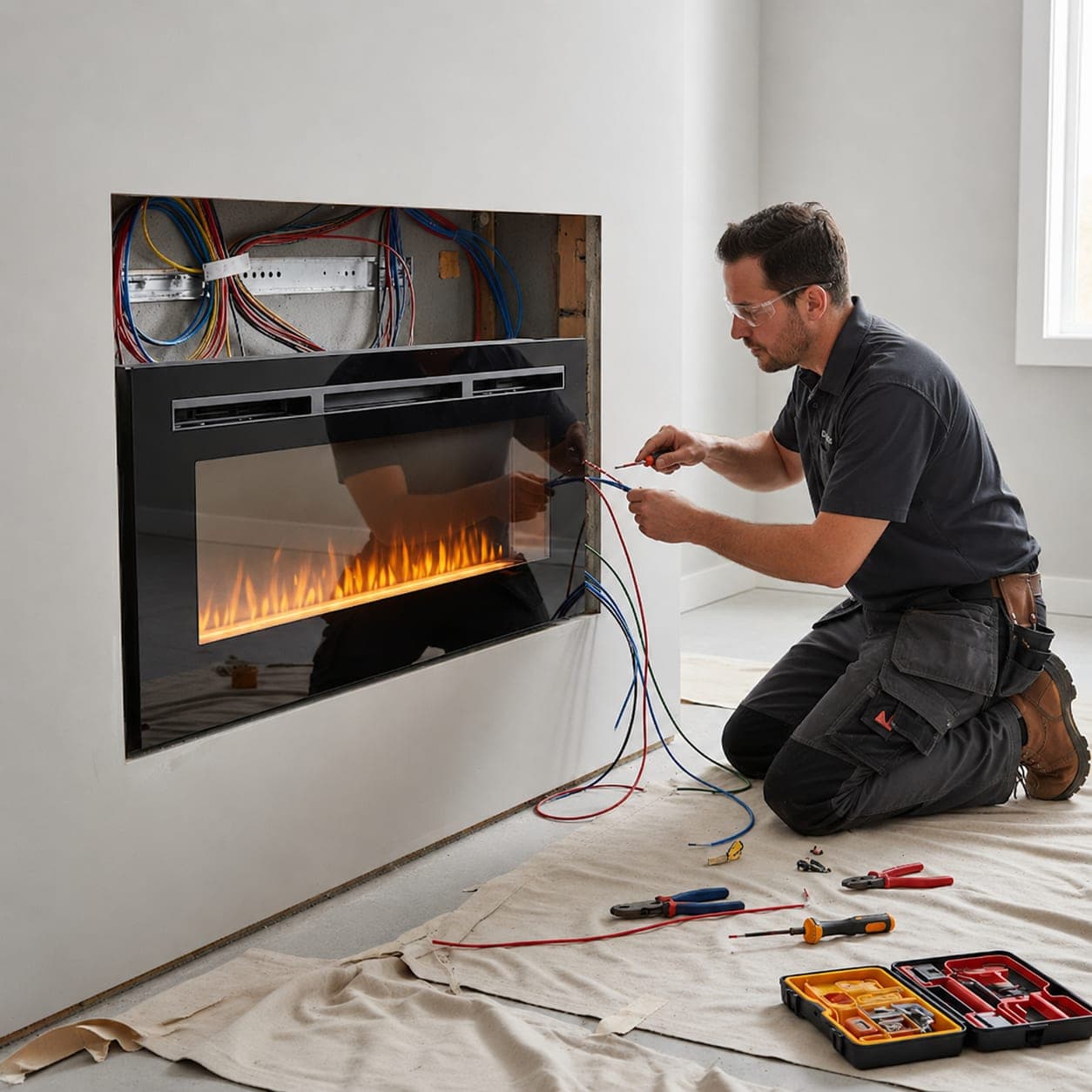
Every one of those parts affects how safely the fireplace burns and how well it draws smoke up and out. That is why we look at the whole system, from the hearth to the top of the chimney, before recommending a unit.
When a new fireplace is the right call
Installation makes the most sense in these situations:
- You want a fireplace in a room that has never had one.
- A factory-built (prefab) fireplace has worn out, and replacing it makes more sense than another round of repairs.
- You want to change fuel types, such as moving from wood to gas. Reading up on gas vs wood fireplace conversion helps with the trade-offs.
- An existing fireplace is damaged badly enough that it can't be used safely, and you're remodeling the room anyway.
- You want heat without hauling firewood or keeping up with creosote.
A new fireplace isn't always the answer. If an existing masonry fireplace works but loses most of its heat up the chimney, fireplace insert installation is often the simpler route. If smoke rolls into the room when you light a fire, the problem may be airflow rather than the fireplace itself, and fireplace draft repair may be what the home needs.
Wood, gas and electric: what each type needs
| Feature | Wood | Gas |
|---|---|---|
| Venting | A masonry chimney or a listed factory-built chimney | A vent or flue matched to the unit's listing |
| Fuel supply | Firewood, stored and carried in | A gas line run to the unit |
| Flame | Real wood fire | Real flame on burners or gas logs |
| Ongoing upkeep | Regular sweeping and inspection | Periodic service and inspection |
Venting
- Wood
- A masonry chimney or a listed factory-built chimney
- Gas
- A vent or flue matched to the unit's listing
Fuel supply
- Wood
- Firewood, stored and carried in
- Gas
- A gas line run to the unit
Flame
- Wood
- Real wood fire
- Gas
- Real flame on burners or gas logs
Ongoing upkeep
- Wood
- Regular sweeping and inspection
- Gas
- Periodic service and inspection
Wood fireplace installation
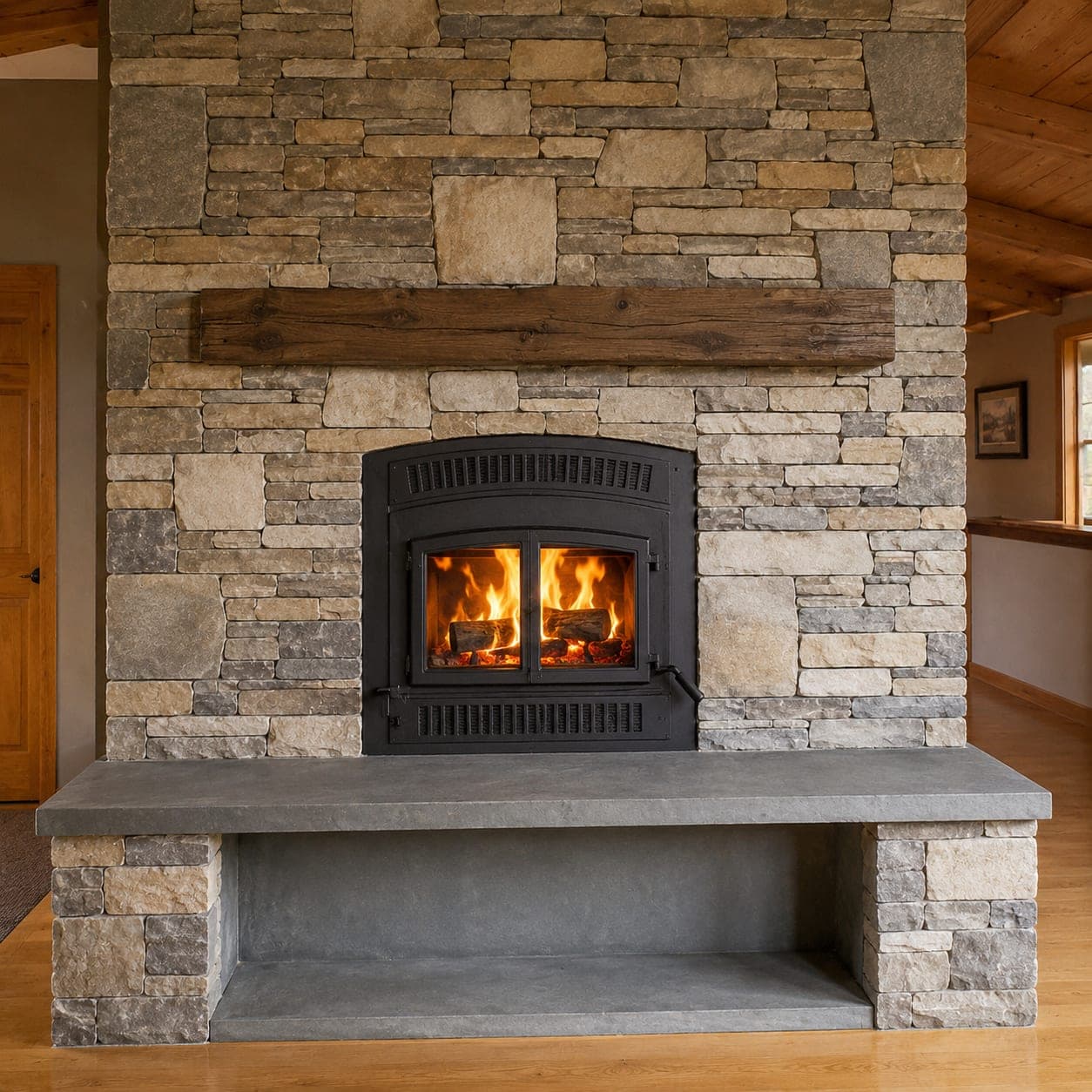
A wood-burning fireplace is the most involved install. It can be a traditional masonry firebox or a factory-built unit with its own listed chimney pipe. Either way, it needs a flue sized to the firebox, a damper, a noncombustible hearth that extends in front of the opening, and proper clearance from framing and trim. At the top, the chimney needs a sound crown, tight flashing where it meets the roof, and a cap to keep out rain and animals.
Electric fireplace installation
Electric fireplaces need no chimney, flue or gas line, which makes them the easiest choice for rooms where venting isn't practical. They can be wall-mounted or built into a surround. The main planning point is power: the unit has to be matched to an outlet and circuit that meet the manufacturer's requirements, and those need to be in place before the unit goes in.
Gas units
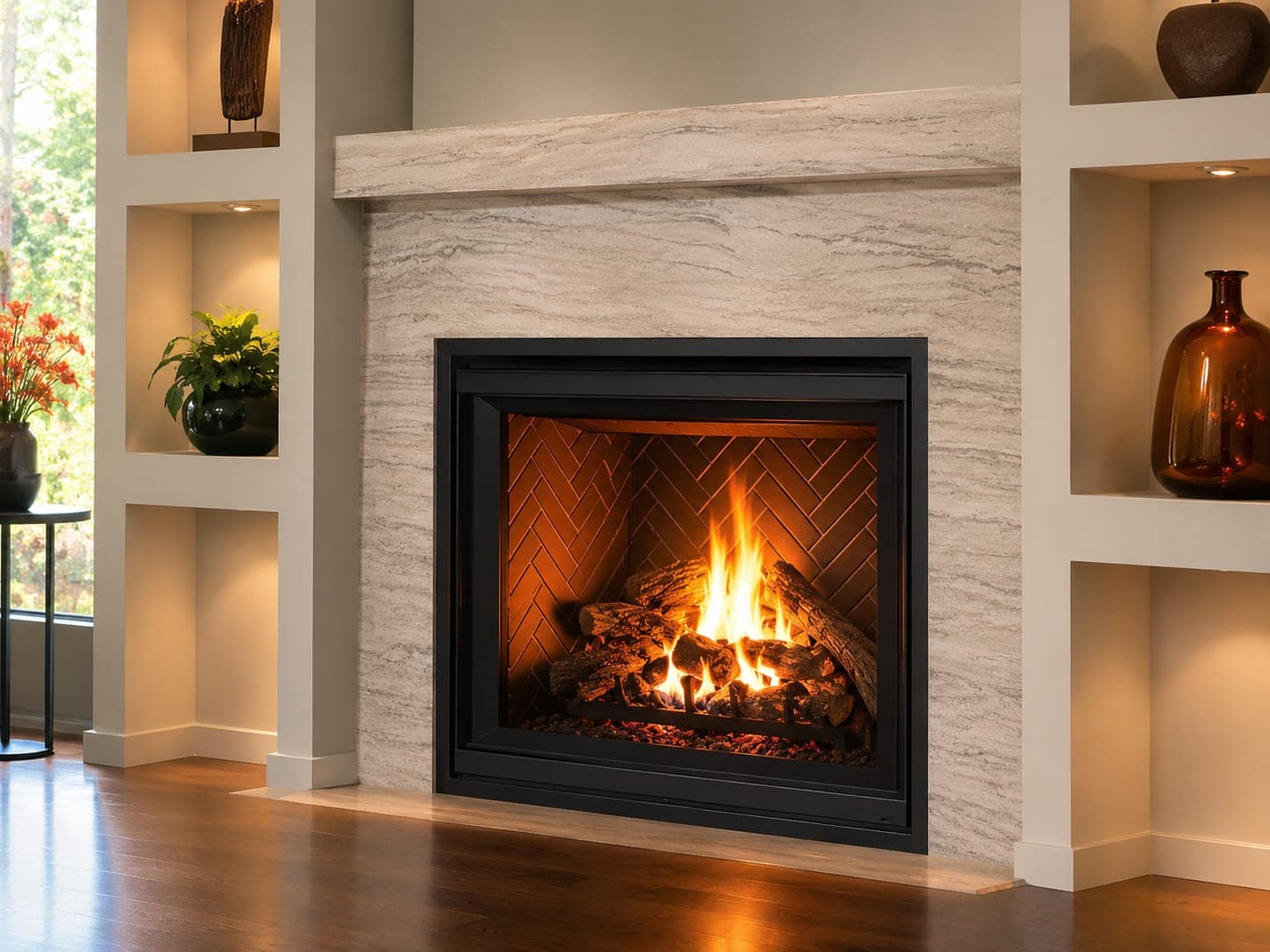
Gas fireplace and gas appliance work is offered, including gas line installation and gas logs. Gas fireplace installation is its own service, and the venting has to follow the unit's listing exactly, whether it vents through an existing flue or a dedicated vent pipe.
Liners, dampers and the parts that keep a fireplace safe
Fireplace liner installation
The liner is the protective passage inside the chimney that carries smoke and gases out. It has to be the right size and material for the appliance it serves. A flue that's too large or too small can lead to poor draft, smoke spillage and faster creosote buildup. When a new fireplace goes into an existing chimney, we check the liner and replace or install one if the old flue doesn't fit the new unit. Factory-built fireplaces use the chimney pipe listed for that model.
Fireplace damper installation
A damper closes off the chimney when the fireplace isn't in use, keeping out cold air and drafts. A throat damper sits just above the firebox. A top-sealing damper mounts at the top of the chimney and closes off the whole flue. Either one has to be fully open whenever there's a fire. Gas units have their own damper requirements, which we set up according to the appliance instructions.
What we check or fit during an install
- Firebox or factory-built unit set level and secured
- Clearances to framing, mantel and trim
- Hearth extension in front of the opening
- Liner or listed chimney pipe sized to the unit
- Working damper
- Chimney crown, flashing and cap in sound condition
- Gas line or electrical supply matched to the unit
Finishing details can go in at the same time. Glass doors are a common addition, and our fireplace door installation service can be planned alongside the new unit so the doors fit the opening.
What the installation looks like, step by step
From estimate to first fire
Free estimate visit
We look at the room, any existing chimney or flue, and the fuel options that work for the space, and talk through what you want from the fireplace.
Choosing the unit and the plan
We settle on the fireplace type, the venting route, and any liner, damper or chimney work the install depends on.
Preparing the chimney and space
If there's an existing chimney, it's inspected and cleaned, and any needed liner, crown or flashing work is done before the new unit goes in.
Installing the fireplace
The unit is set and secured, and the venting, damper and hearth go in, followed by the gas or electrical connection where the unit uses one.
Testing and walk-through
We check the draft and operation, then show you how to use the damper and controls and what upkeep the fireplace will need.
Burn only what the unit is built for
Never burn wood in a gas-only fireplace, and never use a wood-burning fireplace with the damper closed. A new fireplace is only as safe as the fuel and habits it's used with.
Keeping a new fireplace in good shape
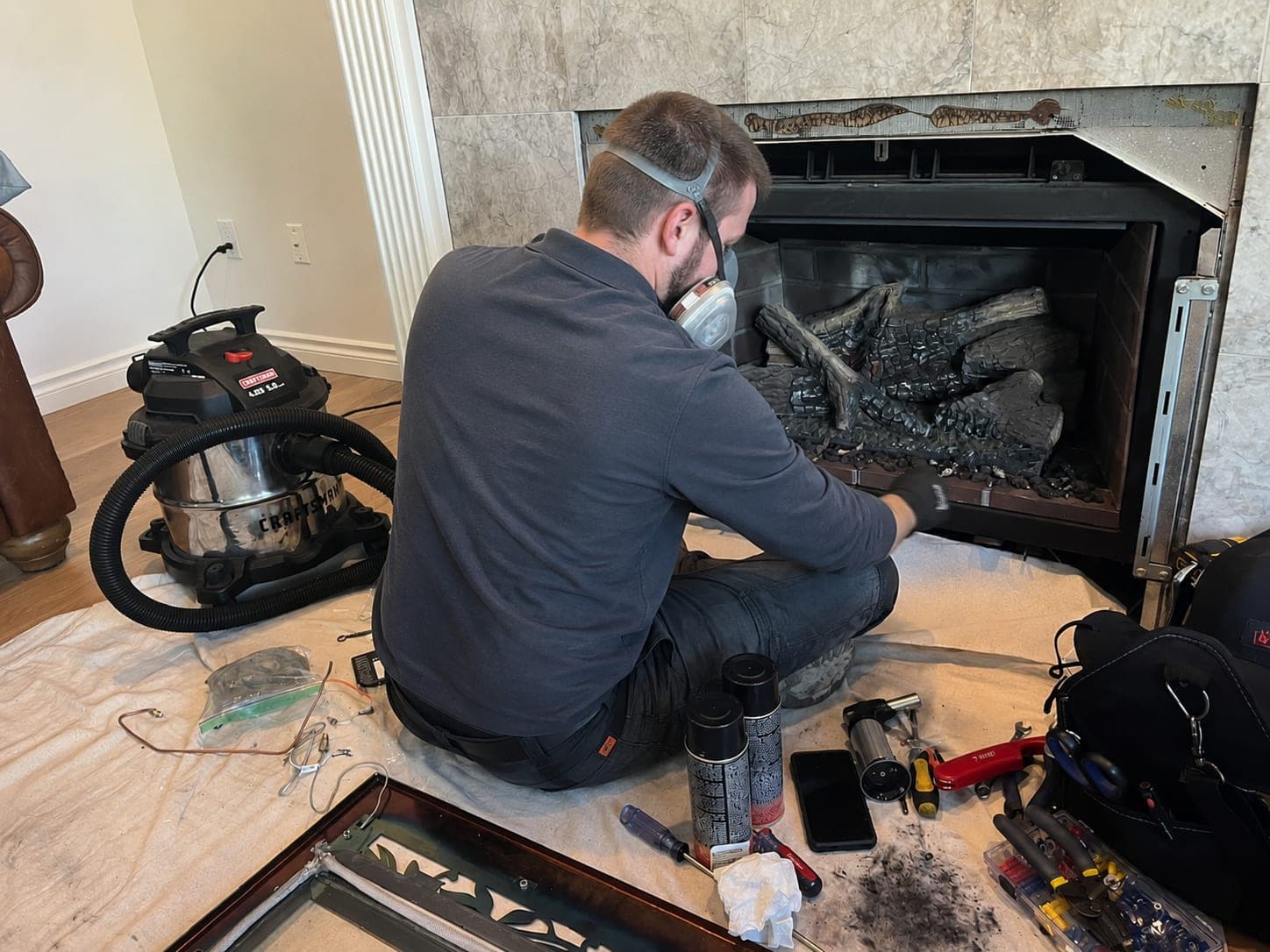
Wood-burning fireplaces need regular sweeping to clear creosote, and every type benefits from periodic inspection. We handle chimney sweeping, fireplace cleaning, gas fireplace service and chimney and fireplace inspections, so we can keep the fireplace we installed running safely.
Request a free estimate
Get in touch to set up a visit. Estimates are free. Commercial and property-manager work is offered too.