On this page
What a new chimney liner does
A chimney liner is the inner channel that carries smoke, heat and combustion gases from a fireplace, stove or furnace up and out of the house. In many masonry chimneys the original liner is a stack of clay tiles. Some chimneys have no liner at all, and in others the tiles have cracked, shifted or fallen apart. Chimney liner installation, often called relining, means fitting a new, continuous flue liner down the inside of the existing chimney and connecting it to the appliance it serves.
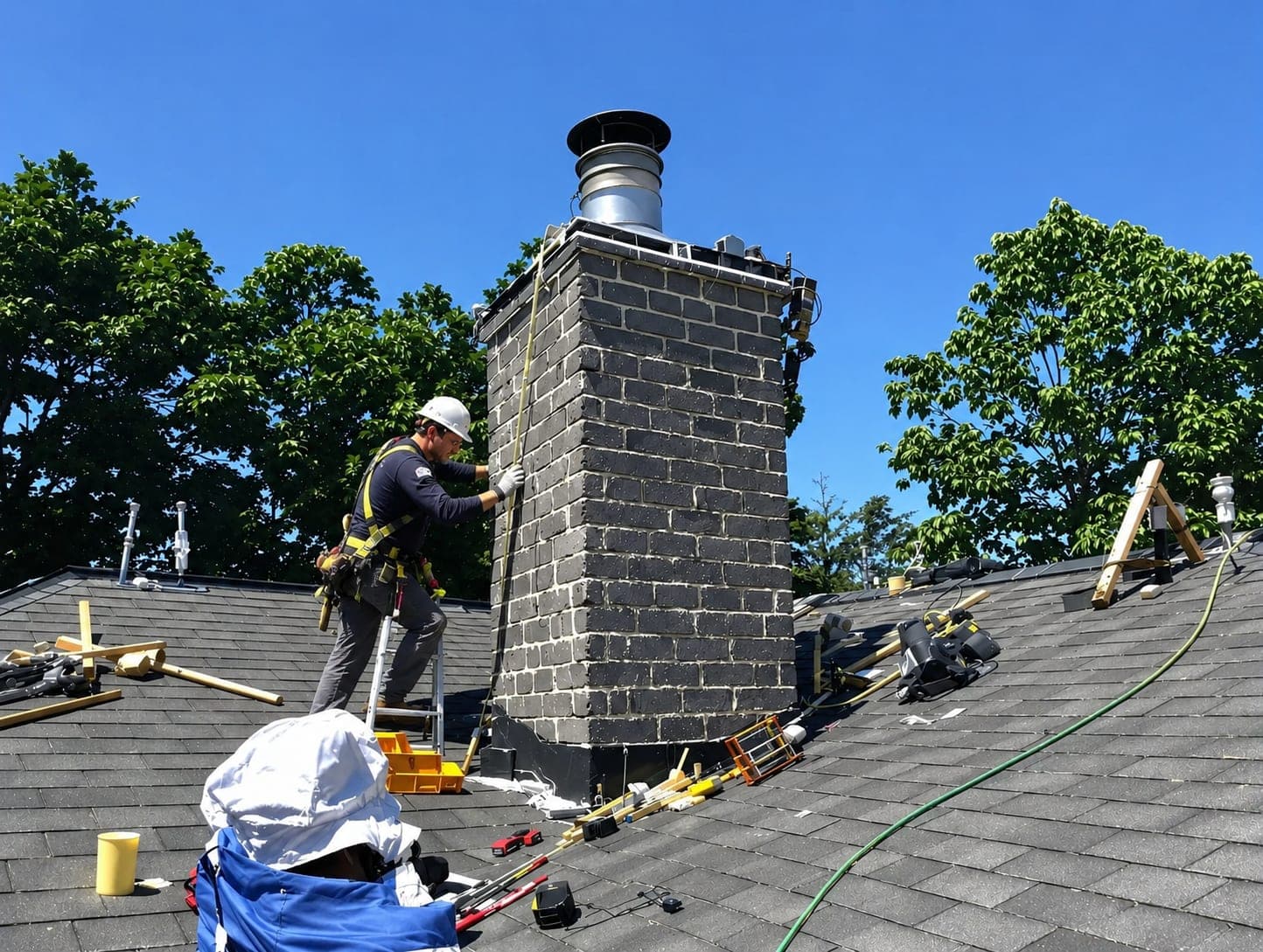
A properly sized liner does three jobs. It keeps heat away from the wood framing around the chimney. It keeps combustion gases inside the flue instead of letting them seep through mortar joints. It also gives the appliance the draft it needs to burn cleanly.
Signs a chimney needs a new liner
Common reasons homeowners end up relining
- An inspection finds cracked, missing or offset clay tiles in the flue
- The chimney has no liner, only bare brick or block on the inside
- Pieces of tile or crumbling mortar turn up in the firebox or on the smoke shelf
- Smoke spills into the room, or the draft stays weak after a cleaning
- Stains, white residue or flaking appear on walls next to the chimney inside the home
- A new stove, insert or gas appliance doesn't match the size of the existing flue
- The chimney has had a chimney fire, which often cracks tile liners
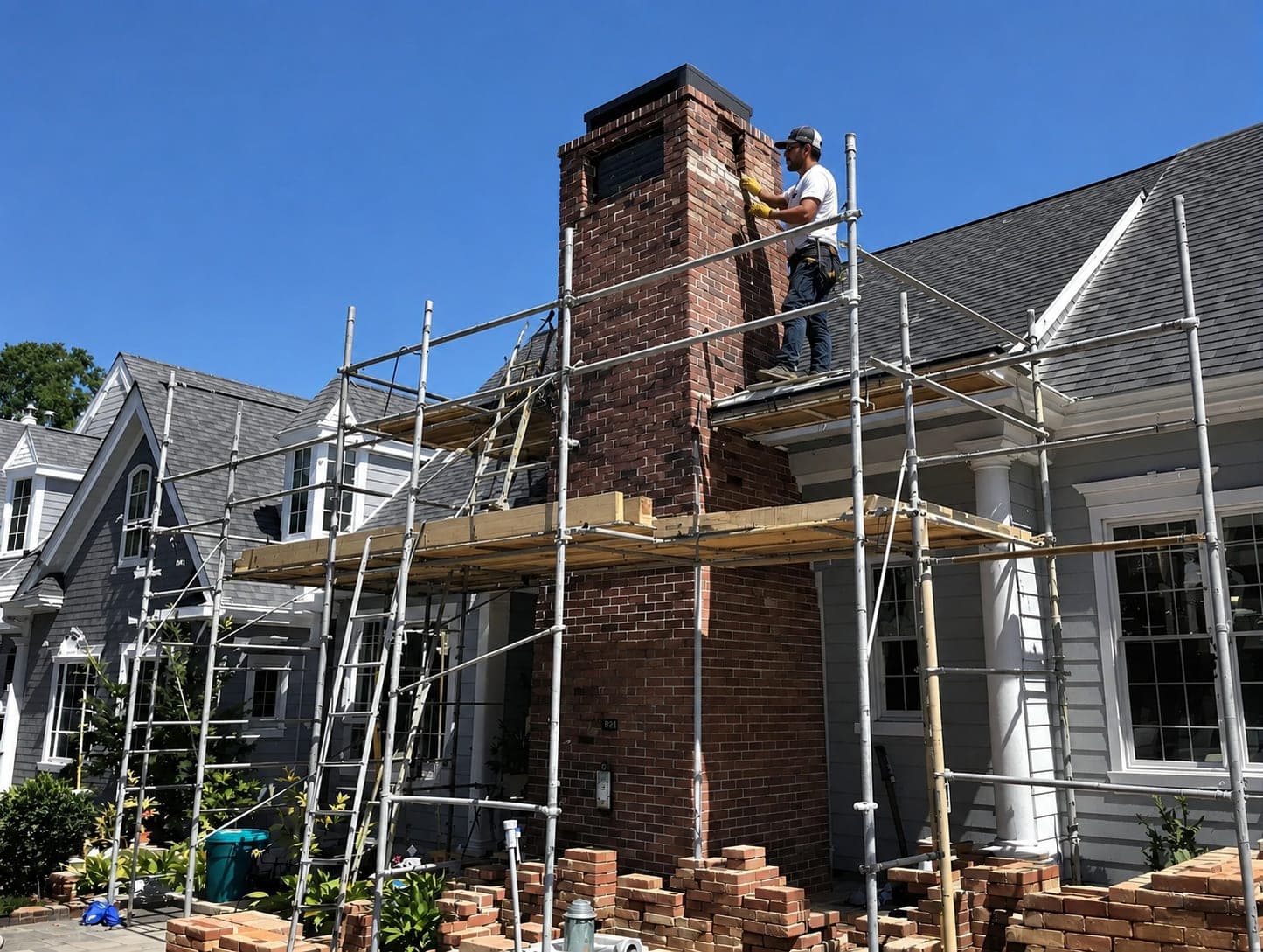
If you already have a stainless liner that is sound overall but has one damaged section, a loose connection or a worn top plate, chimney liner repair is usually the better job. A liner also can't fix failing brick on the outside of the chimney. When the masonry is breaking down too, the choice between chimney rebuilding vs tuckpointing matters as much as the liner.
How a chimney liner installation visit goes
From inspection to the first fire
Inspect and measure
We inspect the flue from top to bottom, often with a camera. We also measure its height and shape and check what the appliance needs for venting.
Clean the flue
We remove creosote, soot and debris first, so the new liner goes into a clean chimney.
Clear the path
Where needed, we remove broken tile, an old liner or obstructions so the new liner can run the full height of the chimney.
Fit the liner
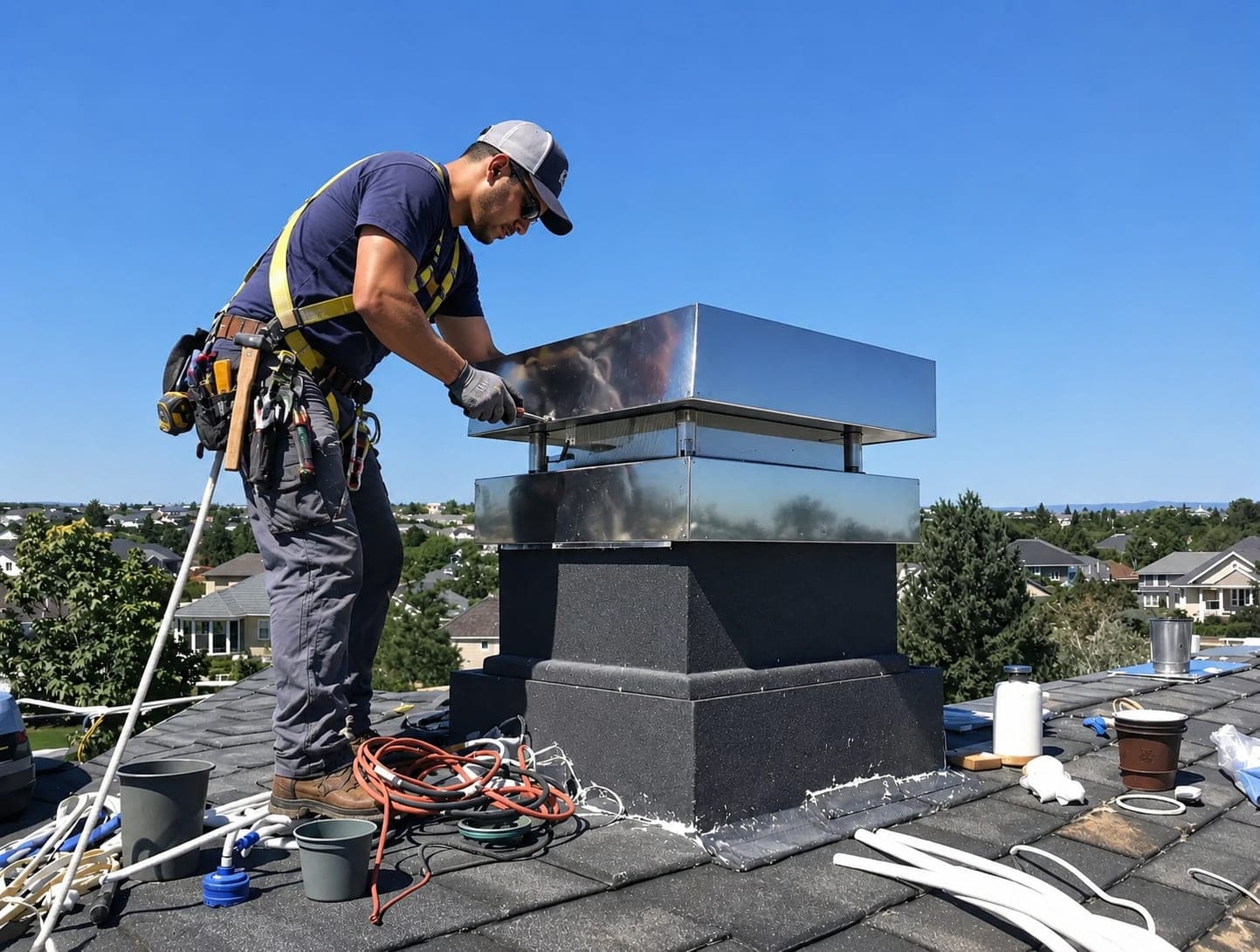
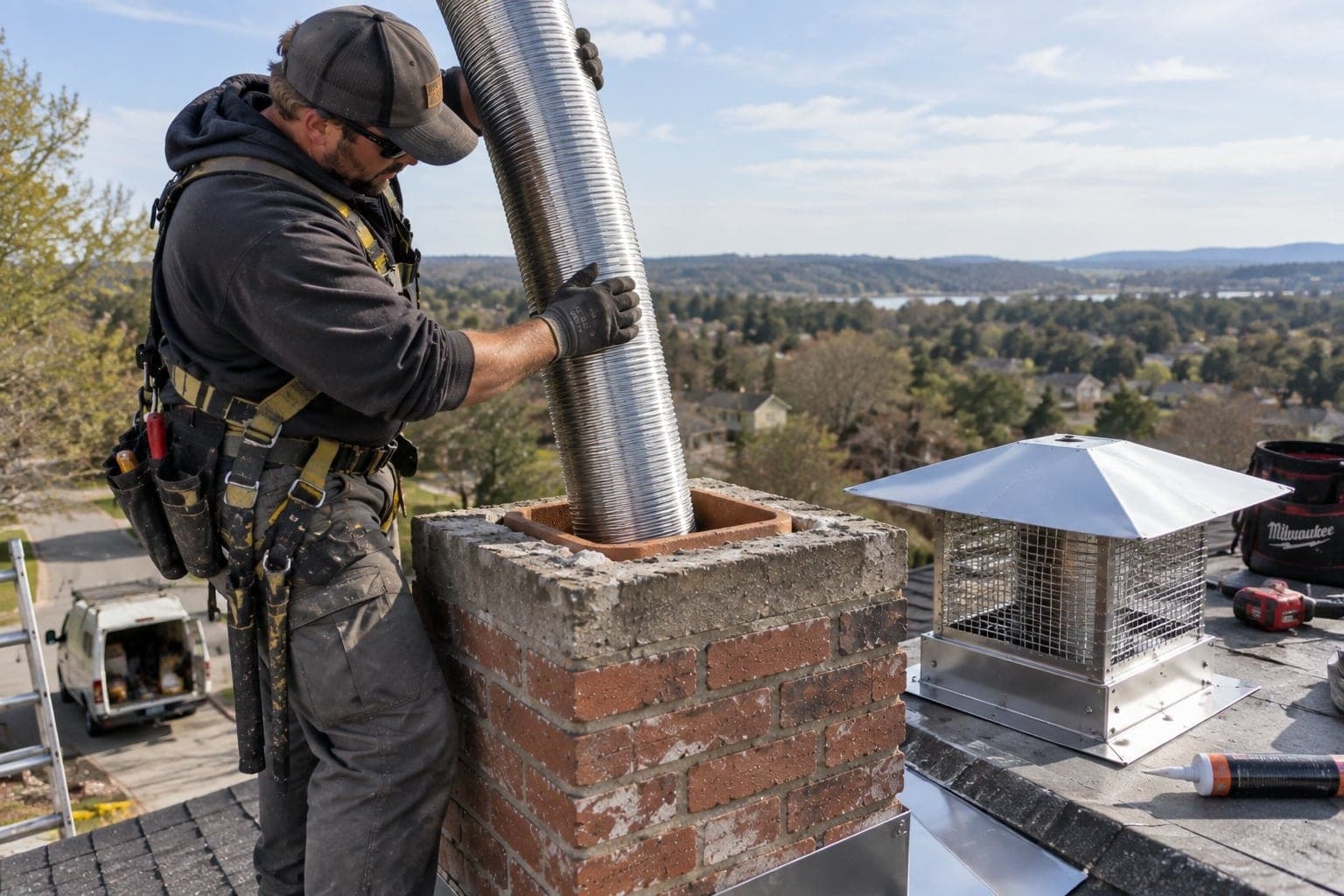
We lower the liner from the top and insulate it where the job calls for that. At the bottom, we connect it to the fireplace, stove, insert or appliance connector.
Seal the top
A top plate closes the chimney opening around the liner, and a cap keeps out rain, debris and animals.
Check the draft
We check that the system drafts properly, then walk you through what was done and how to care for it.
A masonry chimney with a new liner is normally finished with a cap. Prefab chimneys use a metal top over the chase instead, and chimney cap vs chase cover explains the difference. If your liner is fine and only the top of the chimney needs attention, our chimney cap installation work handles that on its own.
Liner materials and the fuels they handle
Stainless steel chimney liners are the most common choice for relining. They handle both wood and gas, come in sizes to match the appliance, and in flexible form can follow a chimney that isn't perfectly straight. Rigid stainless sections suit straight runs. The right liner depends on what burns at the bottom of the chimney.
| Appliance | What the liner must handle | What we look at |
|---|---|---|
| Open wood-burning fireplace | High heat and creosote | Liner size matched to the fireplace opening |
| Wood stove or fireplace insert | High heat, creosote and a direct appliance connection | A continuous run from the appliance to the top, and whether insulation is needed |
| Gas fireplace, furnace or water heater | Cooler exhaust carrying water vapor that can condense and turn acidic | Liner size matched to the appliance's venting needs |
Gas furnaces and water heaters that vent into a masonry chimney need a properly sized furnace flue liner too, and relining often comes up when one of those appliances is replaced. Gas fireplace and gas appliance work is offered, and we work on all major brands of stoves, inserts and gas appliances. If you're adding a new fireplace or insert rather than relining for an existing one, we plan the liner as part of our fireplace installation service.
Safety and keeping a liner in good shape
A new liner lowers the risk from heat and flue gases, but it still needs care. These habits help it last:
- Have the chimney inspected once a year, which is the widely recommended standard, and swept when it needs it.
- Burn only dry, seasoned wood. Wet wood produces more creosote, and creosote builds up in a stainless liner just as it does in tile.
- Keep the cap and top plate in place so rain and debris stay out of the flue.
- Don't connect a second appliance to a liner sized for one.
- Keep working carbon monoxide alarms near sleeping areas and on each level of the home.
If you suspect a chimney fire or carbon monoxide
A roaring sound in the chimney, dense smoke, or a carbon monoxide alarm going off means you should get everyone out of the house and call emergency services. If you hear roaring or see flames or sparks from the top of the chimney, get everyone out and call 911. Have the chimney inspected before you use it again.
Booking a chimney liner installation
24-hour service runs Sunday–Friday, and emergency calls are accepted. Commercial and property-manager work is offered as well. Call or request an estimate, and tell us what the chimney serves and any signs you've noticed, so we can plan the inspection and liner sizing for your home.