When the dryer stops drying
A dryer pushes hot, moist air through a duct and out of the house. When lint, debris or a damaged section narrows that path, the air has nowhere to go. Clothes stay damp, the cycle runs longer and heat builds up inside the machine and the duct. Most homeowners first notice it as an annoyance: towels that are still wet after a full cycle. Take it seriously, because the same blockage that slows drying also traps heat next to dry, flammable lint.
Common signs of a clogged dryer vent
Signs worth checking
- Clothes need more than one cycle to dry, or come out hot but still damp
- The top of the dryer or the laundry room feels much hotter than usual
- A burning or scorched smell while the dryer runs
- The flap on the outside vent hood barely opens, or doesn't open at all, when the dryer is running
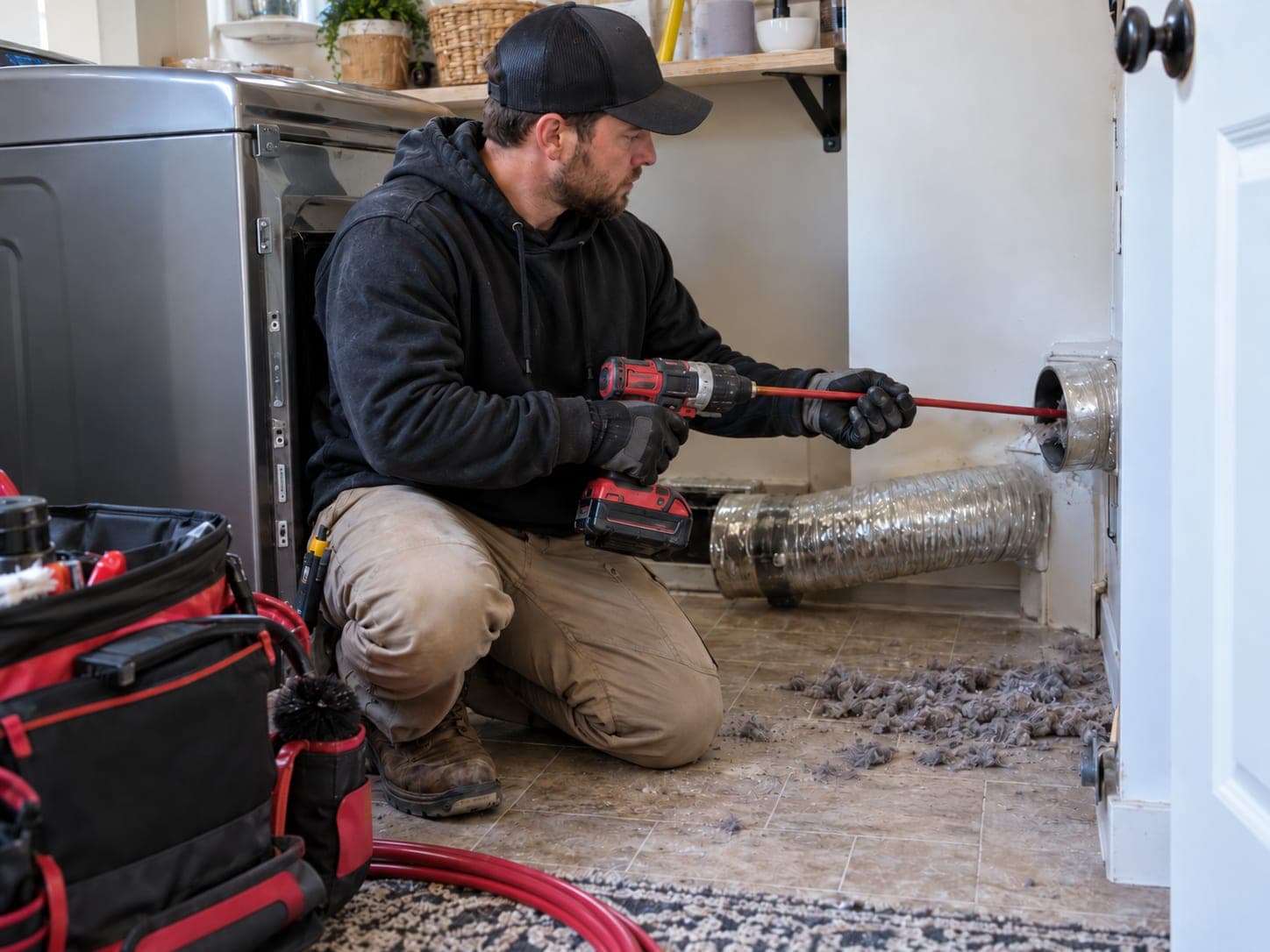
- Lint collecting around the outside hood, behind the dryer or on the floor near it
- Extra humidity or condensation in the laundry room
- The dryer shuts itself off partway through a cycle
One sign alone doesn't confirm a clog. If you notice several, especially heat or a burning smell, check the vent first.
Possible causes
A clogged dryer vent can have more than one cause, and you can't always see the cause from the laundry room. An inspection of the full run, from the back of the dryer to where it exits the house, confirms it. Common possibilities include:
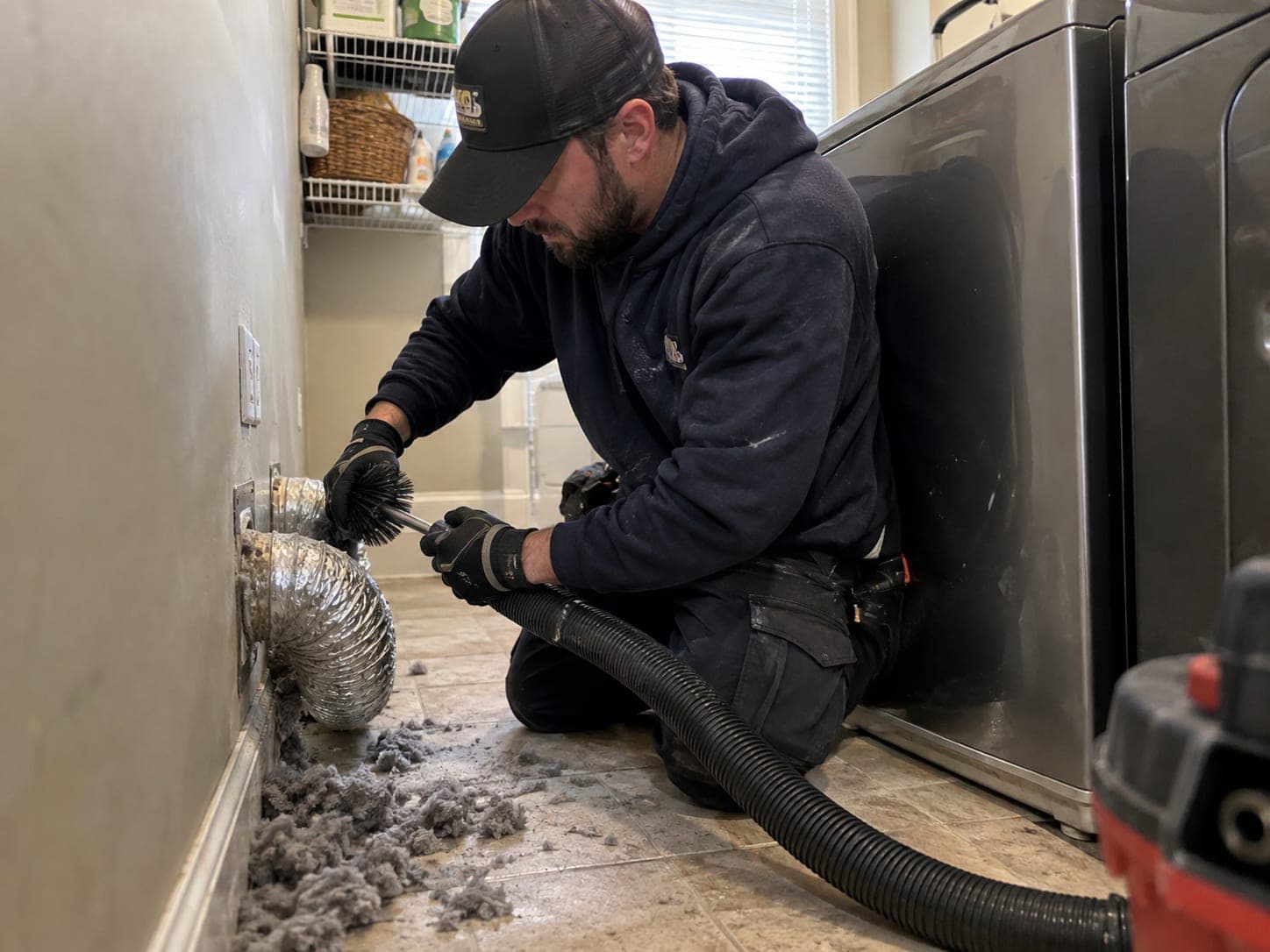
- Lint buildup over time. The lint screen catches most lint but not all of it. What gets past the screen settles along the duct walls, at bends and at joints.
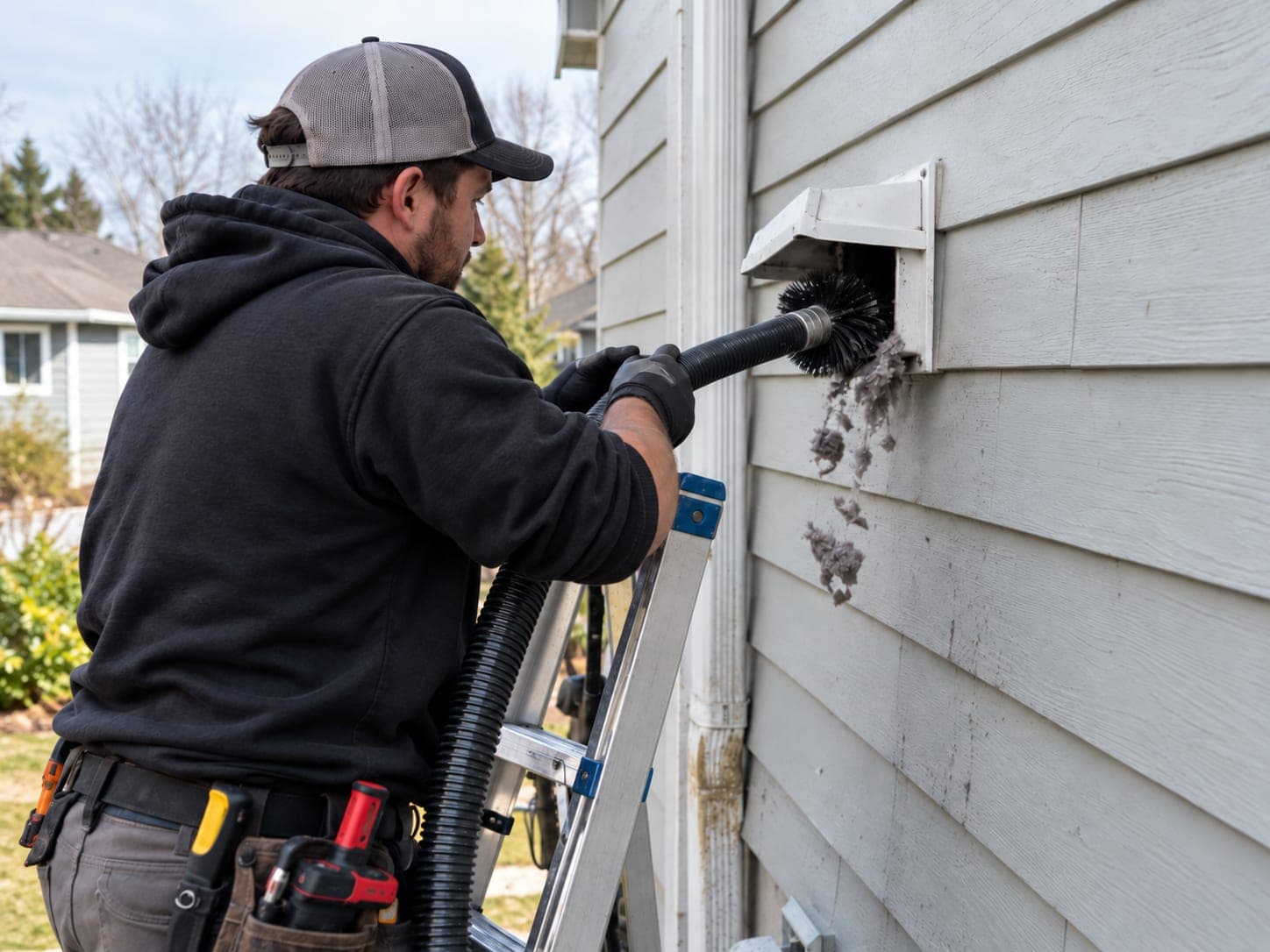
- A blocked exterior hood. A flap that sticks, a hood with a screen that traps lint, or a bird or animal nest can block the outlet.
- A crushed or kinked transition duct. The short flexible section behind the dryer often gets flattened when the dryer is pushed back against the wall.
- A long run or many bends. Every turn slows the airflow and gives lint another place to collect, so long runs tend to clog faster.
- A disconnected or damaged section. A joint that has pulled apart can leak lint and damp air into a wall, ceiling or crawlspace instead of sending it outside.
- A clogged roof vent. Vents that exit through the roof are harder to reach and can collect lint and debris at the top.
How urgent is it?
Slow drying with no other signs is not an emergency, but don't let it go for months. A restricted vent makes the dryer work harder on every load, and lint keeps building up inside the duct. With a gas dryer, a blocked vent can also keep combustion exhaust from leaving the house properly. That is another reason not to put it off.
Stop using the dryer if you notice any of these
A burning smell, smoke, a dryer that is too hot to touch, or a dryer that keeps shutting itself off. Turn it off and don't run it again until the vent has been checked. If you see smoke or flames, get everyone out of the house and call the fire department.
What normally fixes a clogged dryer vent
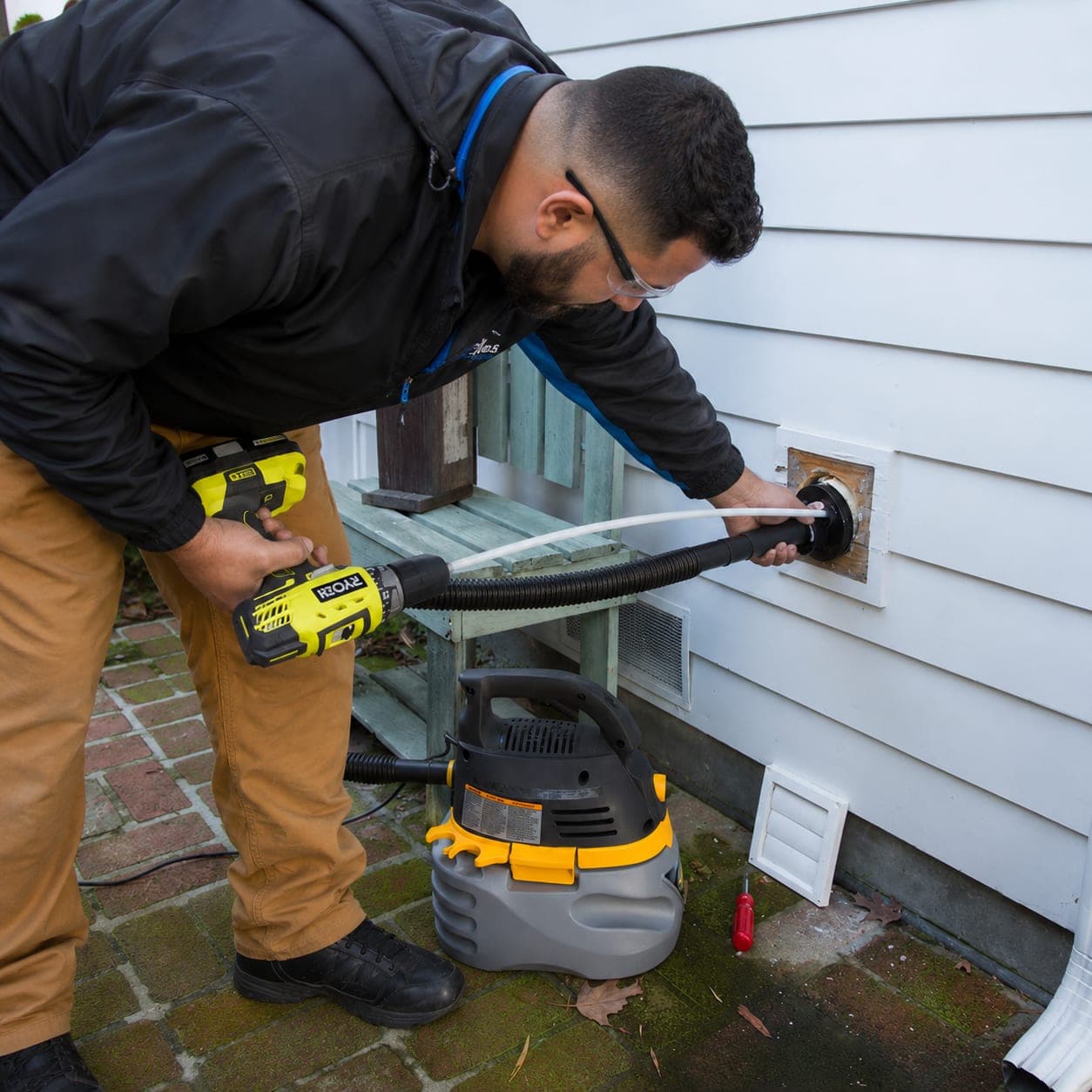
Most clogs are cleared by cleaning the full length of the duct, not just the part you can see behind the machine. Our dryer vent cleaning service covers the run from the dryer connection to the exterior hood, including roof vents. It removes the lint and blockages along the way.
What a typical visit involves
Inspect the run
We trace the duct from the dryer to the outside and look for buildup, nests, crushed sections and loose joints.
Clear the blockage
We remove lint and debris from the full length of the duct and clear the exterior hood or roof vent.
Check the airflow
With the duct reconnected, we check that air moves freely through the run and out of the hood.
Explain what we found
If something besides lint caused the clog, such as a damaged duct or a hood that keeps trapping lint, we show you and explain your options.
For more detail on each step, read how dryer vent cleaning works. Cleaning alone won't fix a duct that is crushed, disconnected or routed in a way that keeps it clogging. In those cases you may need dryer vent repair. That can mean replacing damaged sections, replacing the exterior vent cover or rerouting the run so it is shorter and has fewer bends.
| Feature | Cleaning | Repair |
|---|---|---|
| Usually the fix when | Lint or debris has built up in a duct that is otherwise in good shape | The duct is crushed, torn, disconnected or badly routed |
| What it involves | Removing lint and blockages along the full run and clearing the hood | Replacing damaged sections or the vent cover, or rerouting the duct |
| How it's decided | The inspection shows the duct is sound | The inspection shows damage or a layout that keeps clogging |
Usually the fix when
- Cleaning
- Lint or debris has built up in a duct that is otherwise in good shape
- Repair
- The duct is crushed, torn, disconnected or badly routed
What it involves
- Cleaning
- Removing lint and blockages along the full run and clearing the hood
- Repair
- Replacing damaged sections or the vent cover, or rerouting the duct
How it's decided
- Cleaning
- The inspection shows the duct is sound
- Repair
- The inspection shows damage or a layout that keeps clogging
What not to do
- Don't keep running the dryer with a burning smell or overheating and hope it clears itself.
- Don't push a stick or rod into the duct. It can pack the lint tighter or pull a joint apart inside the wall.
- Don't leave the dryer running while you're out of the house or asleep if you suspect a clog.
- Don't climb onto the roof to reach a roof vent yourself.
- Don't close a gap or tear in the duct with tape and keep using it. A damaged section needs proper repair or replacement.
If the cleaning reveals a damaged or badly routed duct, you can read up on how dryer vent repair works before you decide on the next step.