On this page
If you smell gas
Leave the building right away. Don't flip light switches, use phones or light any flame inside. Once you're outside, call your gas utility or 911.
What gas line installation involves
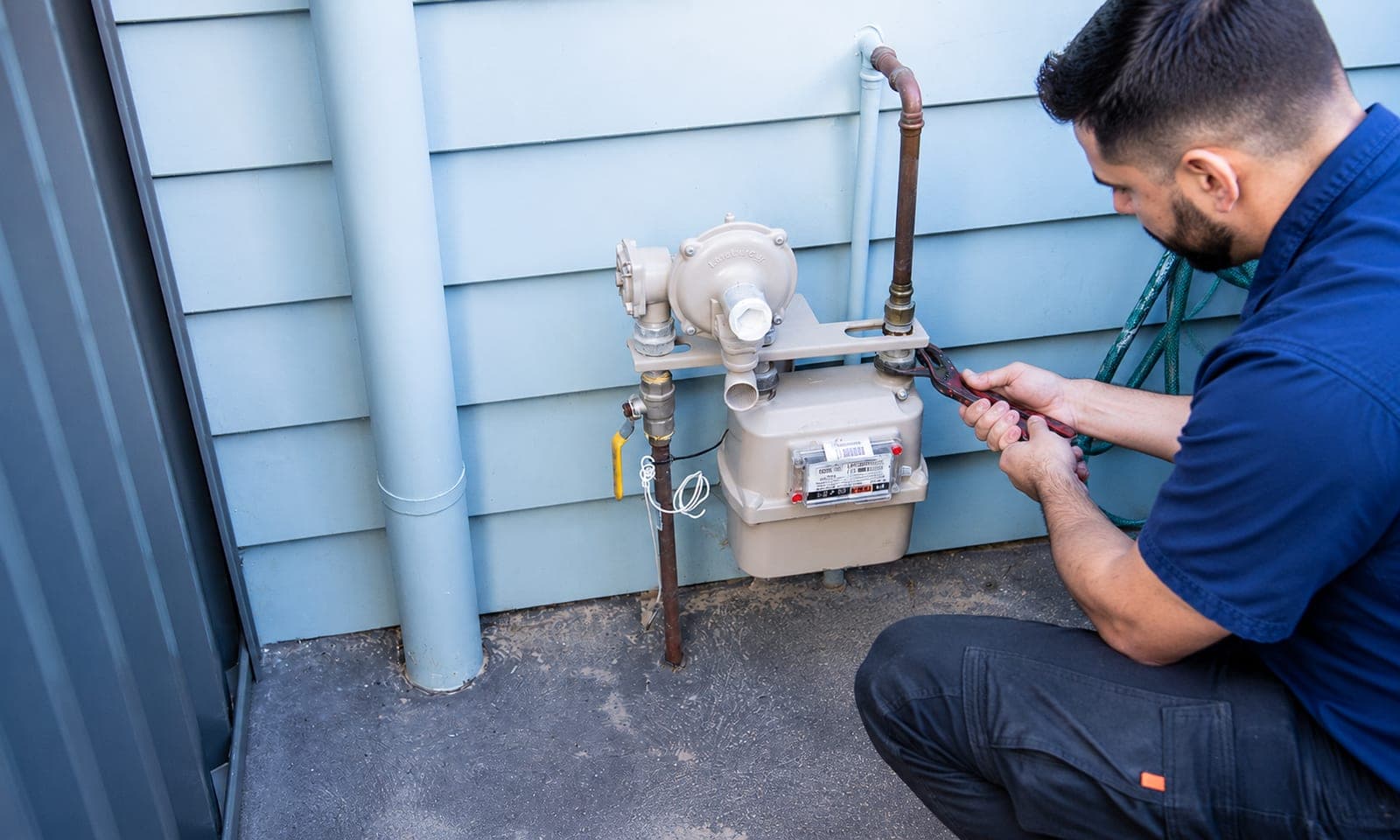
Gas line installation means running a new branch of gas piping from your home's existing supply to an appliance that needs it, most often a gas fireplace, insert or log set. The job covers planning the route, sizing the pipe for the appliance, installing a shutoff valve where the appliance connects, and testing the new line for leaks before the appliance is put into service.
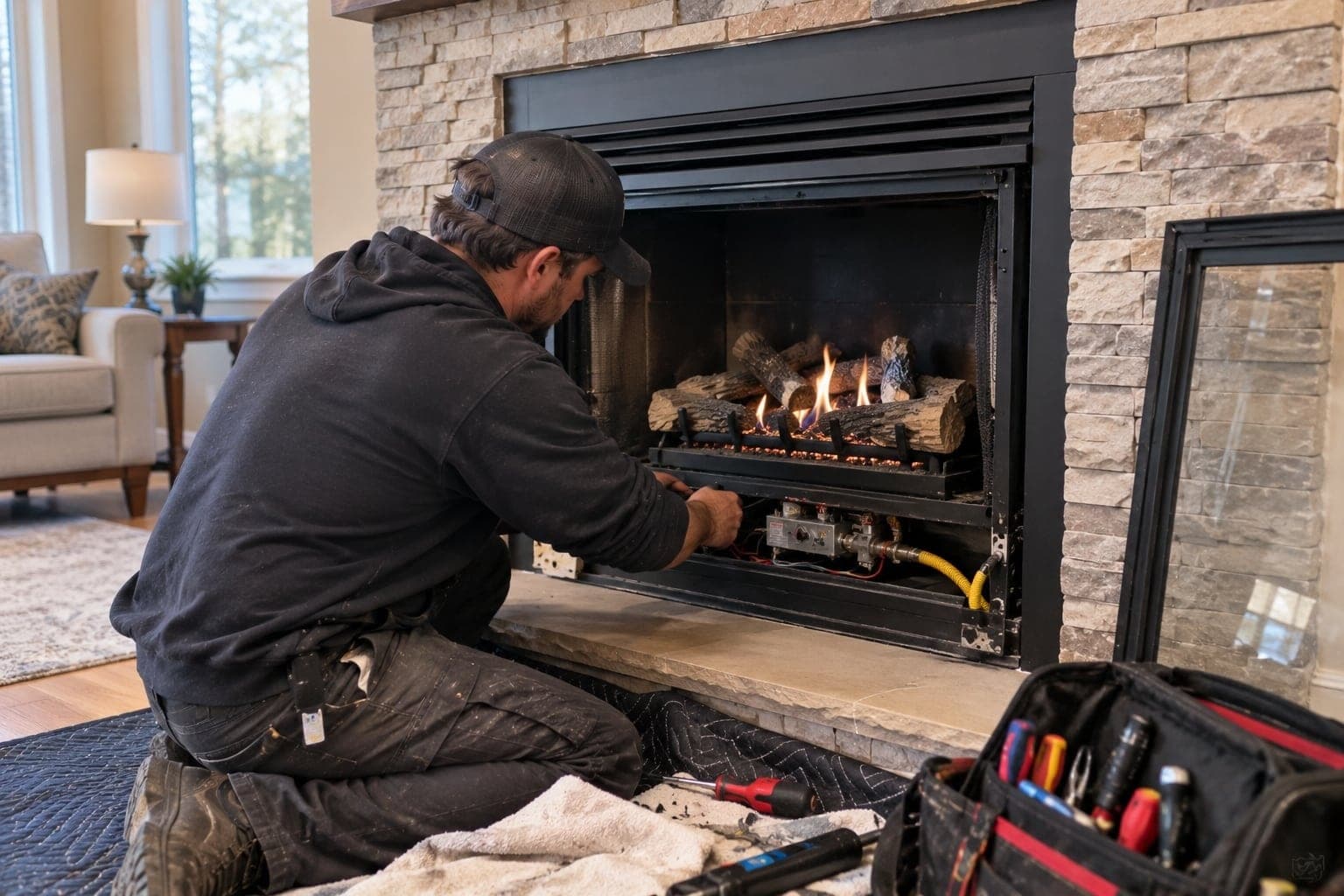
The line is usually one part of a bigger project. If you're adding a new unit, it pairs with gas fireplace installation. If you're putting a burner and logs into an existing masonry fireplace, it supports our gas log installation service.
When a home needs a new gas line
- You're converting a wood-burning fireplace to gas and there's no gas supply at the hearth. If you're still deciding, our guide to gas vs wood fireplace conversion covers the tradeoffs.
- You're installing a gas fireplace or insert in a spot that has never had gas.
- You're moving a gas appliance to a new location and the existing line no longer reaches it.
- You're adding gas logs to a fireplace that has a gas key or stub that isn't usable for the new burner.
Which fireplace you choose affects where the line goes and what it connects to, so it helps to settle that first. Reading up on direct vent vs ventless gas fireplaces is a good starting point.
What the visit involves
From estimate to a tested line
Look at the appliance and the supply
We confirm what the line will feed and where your home's existing gas supply is, then work out a practical route between them.
Plan the route and pipe size
The pipe has to carry enough gas for the appliance over the full length of the run, so length and appliance demand guide the sizing.
Shut off gas and install the line
Gas to the affected section is shut off while the new piping is run and connected, with a shutoff valve placed near the appliance.
Test for leaks
The new line is tested before gas is restored to it. Nothing is lit until it passes.
Connect and check the appliance
Once the line is sound, the fireplace, insert or log set is connected and checked for proper operation.
Components you may see
- Rigid steel gas pipe or flexible corrugated gas tubing, depending on the route
- A manual shutoff valve close to the appliance, so gas to it can be turned off on its own
- A sediment trap to catch debris before it reaches the appliance's controls
- A flexible appliance connector between the valve and the unit, where suited
Safety and upkeep after installation
A new line that has passed its leak test generally needs little attention, but the appliance it feeds still benefits from regular care. Burners, pilot assemblies, glass and venting should be checked periodically, which is what our gas fireplace service is for.
Good habits around a gas line
- Know where the shutoff valve for the fireplace is
- Keep the valve and exposed piping reachable and unobstructed
- Don't hang items from or put weight on gas piping
- Call a professional if you notice anything unusual around the appliance rather than adjusting fittings yourself
Booking gas line installation
Request an estimate and tell us which appliance the line will feed and where it's going. Gas fireplace and gas appliance work is offered, and we work on all major brands. Commercial and property-manager work is offered as well.