The short answer: creosote burns, and it builds up quietly
Every wood fire sends smoke up the flue. As that smoke cools, some of it condenses on the chimney walls as creosote. A thin layer is normal. A thick layer is a problem for three reasons: it is highly flammable, it is mildly acidic and can wear down the liner over time, and it narrows the flue so smoke drafts poorly. Regular maintenance keeps that layer from reaching a dangerous level, and it catches damage before it spreads.

You can't see most of the flue from the hearth. That is why maintenance is built around looking inside on a schedule, not waiting for a symptom. A chimney inspection shows how much buildup there is and what condition the liner is in. A cleaning then removes what is there.
How creosote forms
Wood smoke carries water vapor, tar, unburned gases and fine particles. When the smoke stays hot, most of it leaves the top of the chimney. When it cools on the way up, those compounds condense on the flue walls and stick. The cooler and slower the smoke, the more creosote you get.
Conditions that speed up creosote buildup
- Burning wet or unseasoned wood, which makes cooler, smokier fires
- Smoldering fires with the air supply turned down for long, slow burns
- A flue that is too large for the fireplace or stove, so smoke cools before it exits
- An exterior chimney that stays cold, especially at the start of a fire
- Poor draft from a partial blockage, a damaged cap or a damper that doesn't open fully
- Burning trash, cardboard or painted and treated wood
The three stages of buildup
| Stage | What it looks like | What it usually takes to remove |
|---|---|---|
| First stage | Dry, flaky, sooty powder | Usually comes off with a standard brush sweep |
| Second stage | Crunchy, tar-like flakes or a shiny black crust | Stiffer brushes or rotary tools; more time in the flue |
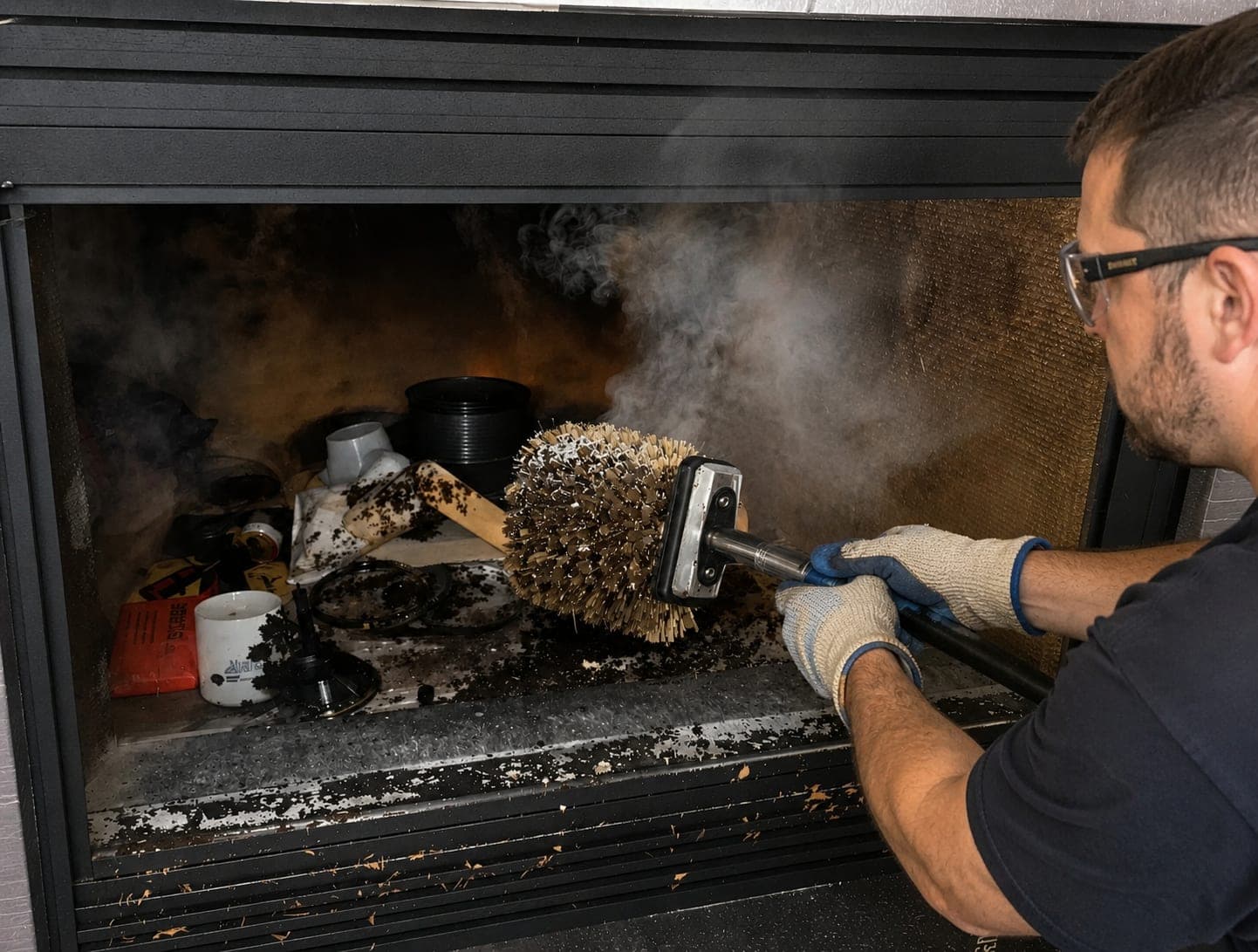
| Third stage | Thick, glazed coating that looks like dripped tar | Specialized removal; it is the hardest to clean and the most dangerous to burn against |
Third-stage glaze is why a heavy buildup can't always be handled with a normal sweep. Our creosote removal process is meant for buildup that has gone past the flaky stage.
Why creosote is dangerous
Chimney fires
Creosote can ignite when a hot fire or a stray ember reaches it. A chimney fire can burn very hot, crack flue tiles, damage the liner and spread heat to nearby framing. Some are loud and obvious. Others burn slowly and go unnoticed until an inspection finds cracked tiles or puffy, honeycombed creosote.
Smoke, odor and draft problems
A thick creosote coating narrows the flue. Less room means weaker draft, so smoke can roll back into the room when you light a fire. Creosote also has a sharp, tar-like or campfire smell that gets stronger in humid weather or when the house pulls air down the chimney. If a smoky odor shows up even when you aren't burning, learn what causes a lingering chimney smell before assuming it is just a dirty flue.
Damage to the liner and masonry
Creosote holds moisture and is mildly acidic. Over time that combination works on mortar joints, clay tiles and metal liners. Repeated chimney fires add heat damage on top of it. Cracks in the liner let heat and gases reach parts of the chimney that were never meant to handle them.
If you think a chimney fire is burning
Get everyone out of the house and call 911. Don't try to fight it from inside the chimney. Signs can include a loud roaring or popping sound, dense smoke, a strong hot smell, or flames or sparks coming out of the top of the chimney. After the fire is out, don't use the fireplace or stove again until the chimney has been inspected, because a fire can crack the liner even when nothing looks wrong from the hearth. We accept emergency calls, and 24-hour service runs Sunday–Friday.
How creosote shortens a chimney liner's life
The liner is what keeps heat, smoke and gases inside the flue. Creosote works against it in three ways. Its acidity and trapped moisture slowly eat at mortar and metal. Its flammability means any chimney fire puts extreme heat right against the liner, which can crack clay tiles or warp metal. And a heavy coating hides early damage, so small cracks grow before anyone sees them. Keeping buildup thin and having the flue looked at regularly is the most practical way to protect a liner.
Warning signs of excessive buildup
Signs it is time to have the chimney checked
- Fires are harder to start or keep going
- Smoke spills into the room instead of drafting up
- A strong tar or campfire smell near the fireplace, especially on humid days
- Black flakes or crumbly deposits falling into the firebox
- Shiny, tar-like streaks visible on the damper or the first few feet of the flue
- Sounds of popping or roaring during a fire, which can point to a chimney fire in progress. If you hear roaring or see flames or sparks from the top of the chimney, get everyone out and call 911.
- Visible cracks, gaps or shifting in the chimney masonry
Cracked or shifting masonry outside can be a separate problem from creosote, but it matters for the same reason: it affects how safely the chimney contains heat. If you notice that, read about what causes a leaning or damaged chimney.
What chimney maintenance actually involves
A practical maintenance routine
Burn dry, seasoned wood
Dry wood burns hotter and cleaner, which means less condensation in the flue. Avoid trash, cardboard and treated lumber.
Give fires enough air
Long, smoldering fires with the air turned down are one of the biggest creosote makers. Hotter, shorter fires leave less behind.
Have the chimney inspected regularly
An annual inspection is the common recommendation for chimneys in use. It checks buildup, the liner, the damper, the cap and the masonry.
Have it cleaned when buildup calls for it
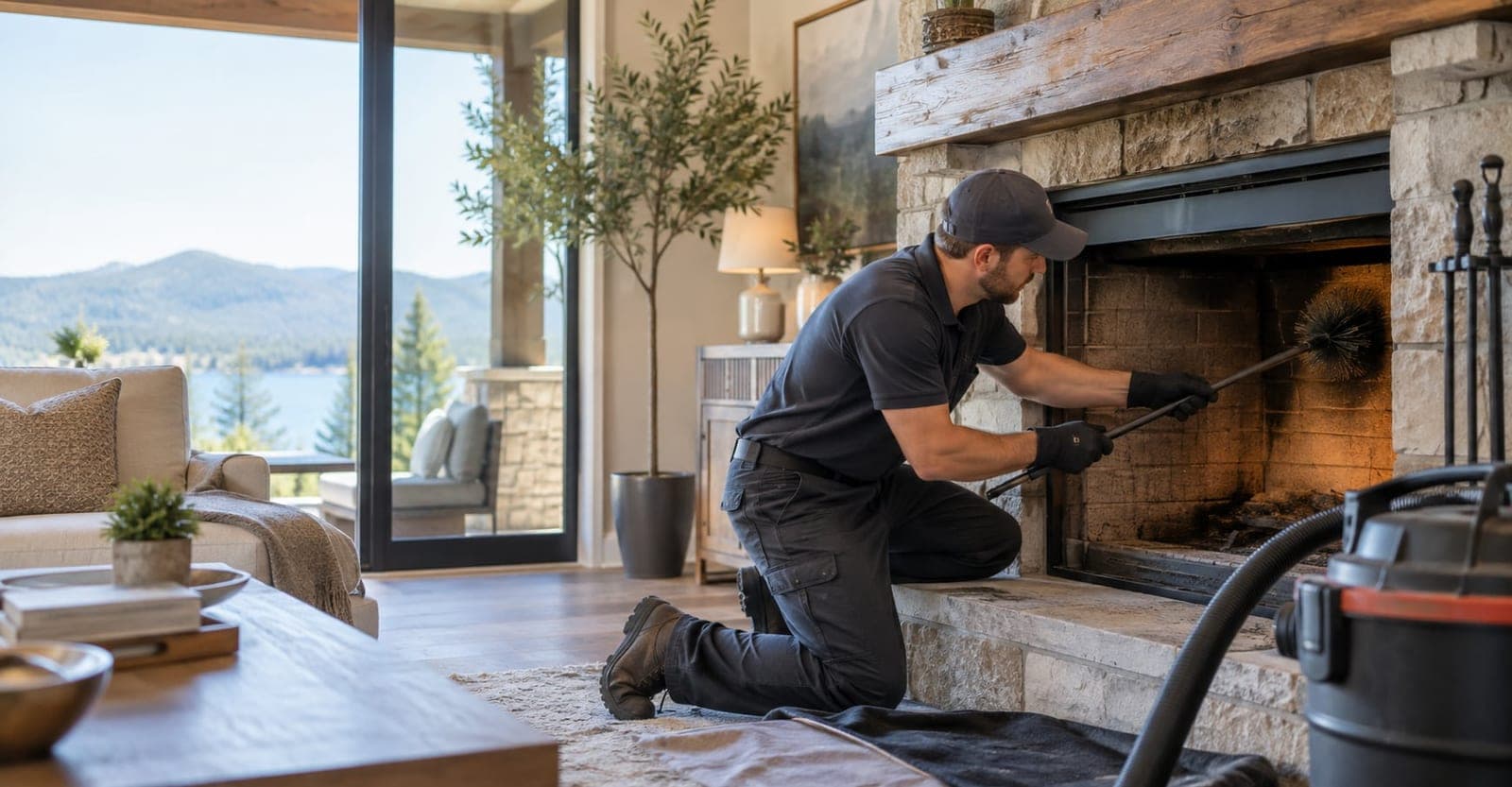
A professional chimney sweep removes creosote and soot before it reaches a dangerous level. Heavy or glazed buildup needs more than a standard sweep.
Fix what the inspection finds
Cracked liners, failed caps or damaged mortar let in water and debris and make future buildup worse.
Deciding what to do next
| Feature | Schedule an inspection | Schedule a cleaning |
|---|---|---|
| Best when | You haven't had the chimney looked at in a while, just bought the home, or had a possible chimney fire | You burn regularly and the last inspection showed normal buildup |
| What you learn | How much creosote there is and whether the liner or masonry is damaged | The flue is cleared; the technician can still point out visible problems |
| Good to know | Recommended before using the fireplace again after any chimney fire | Glazed, third-stage creosote may need specialized removal rather than a standard sweep |
Best when
- Schedule an inspection
- You haven't had the chimney looked at in a while, just bought the home, or had a possible chimney fire
- Schedule a cleaning
- You burn regularly and the last inspection showed normal buildup
What you learn
- Schedule an inspection
- How much creosote there is and whether the liner or masonry is damaged
- Schedule a cleaning
- The flue is cleared; the technician can still point out visible problems
Good to know
- Schedule an inspection
- Recommended before using the fireplace again after any chimney fire
- Schedule a cleaning
- Glazed, third-stage creosote may need specialized removal rather than a standard sweep
Estimates are free, and same-day visits are available where the schedule allows. If you want help, we handle chimney inspection, sweeping, creosote removal and liner repair.