On this page
What fireplace cleaning covers
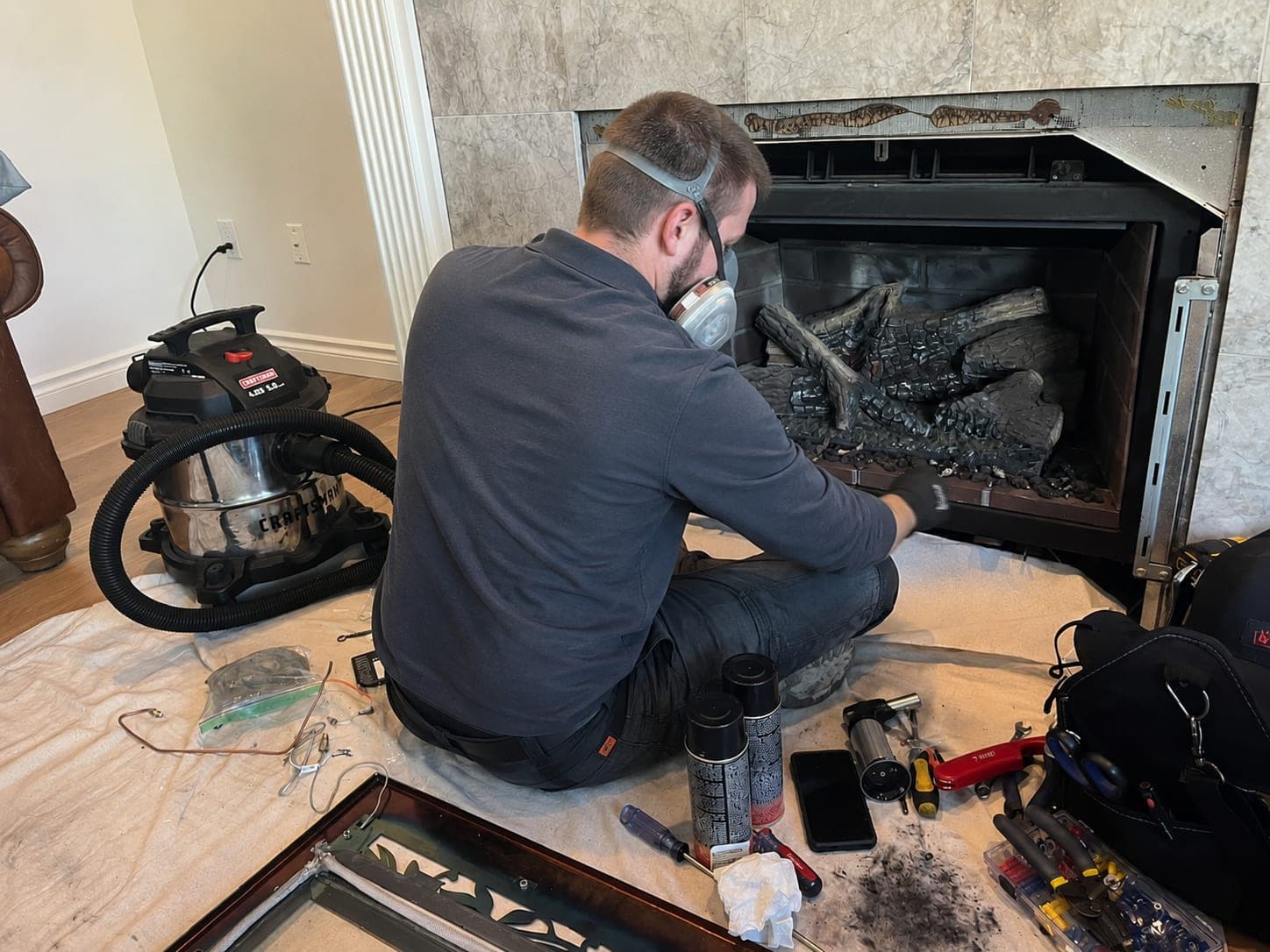
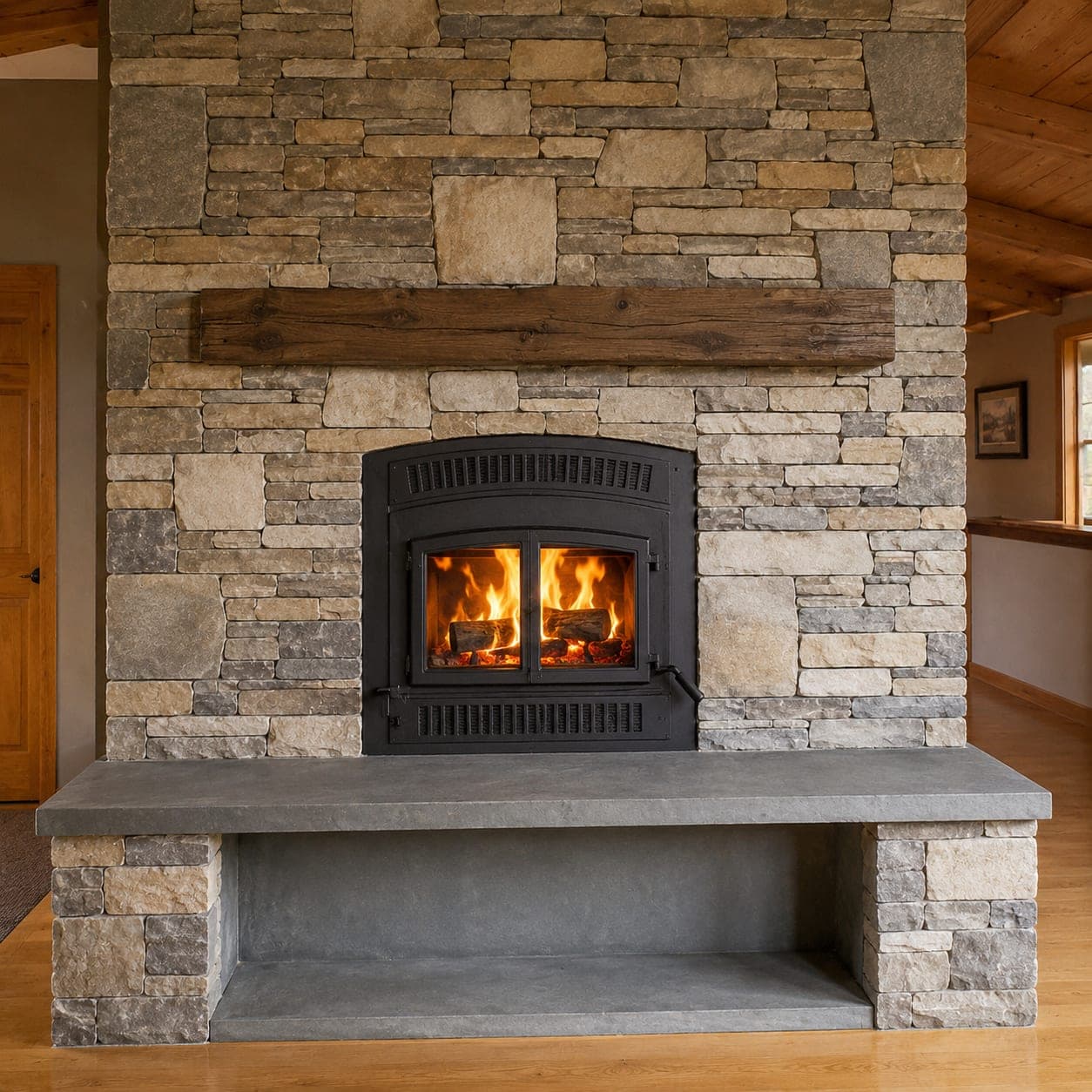
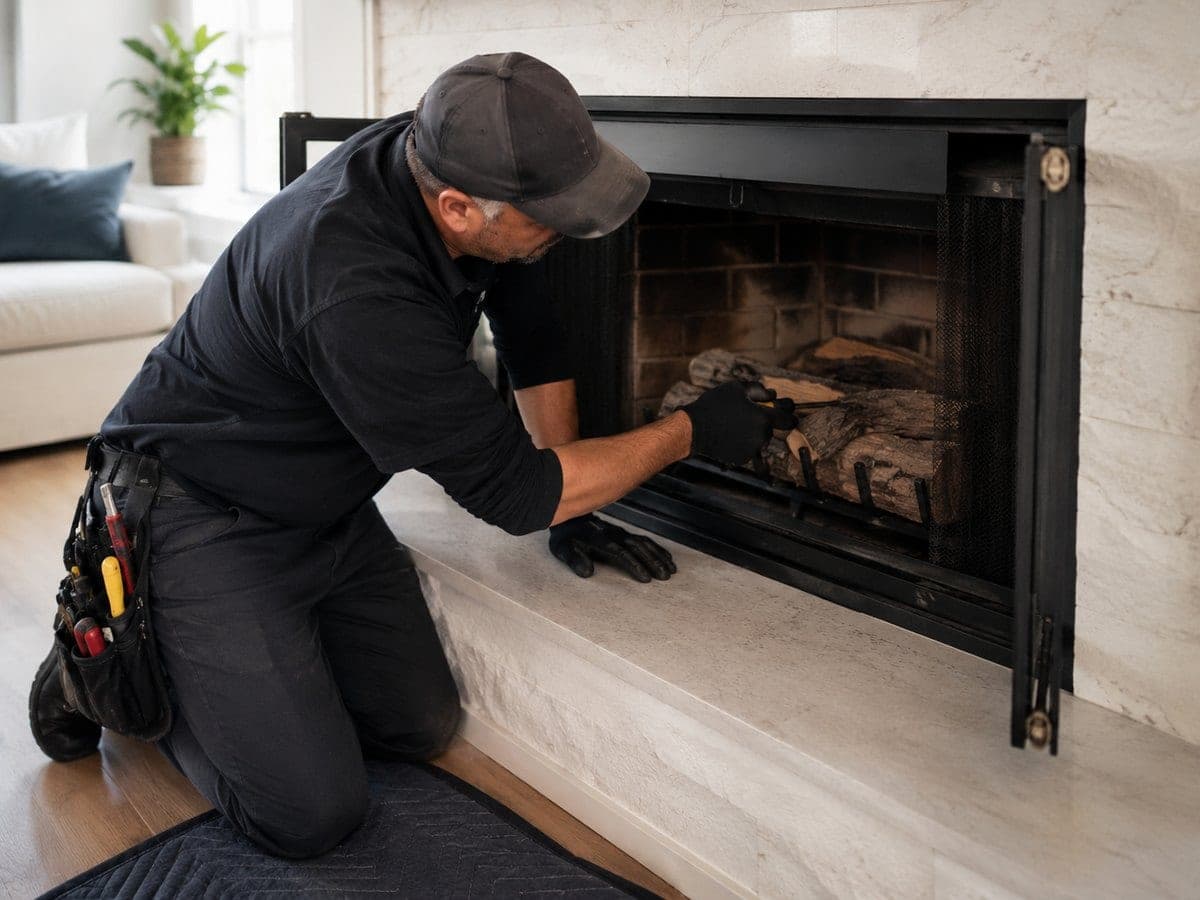
Fireplace cleaning focuses on the parts of the fireplace you can see and reach from inside the room. That means the firebox, the grate and andirons, the hearth, the damper and the area just above it, and any glass doors or screens. The goal is to remove old ash, loose soot and the creosote buildup that forms when wood smoke cools and condenses on the firebox walls and the damper.
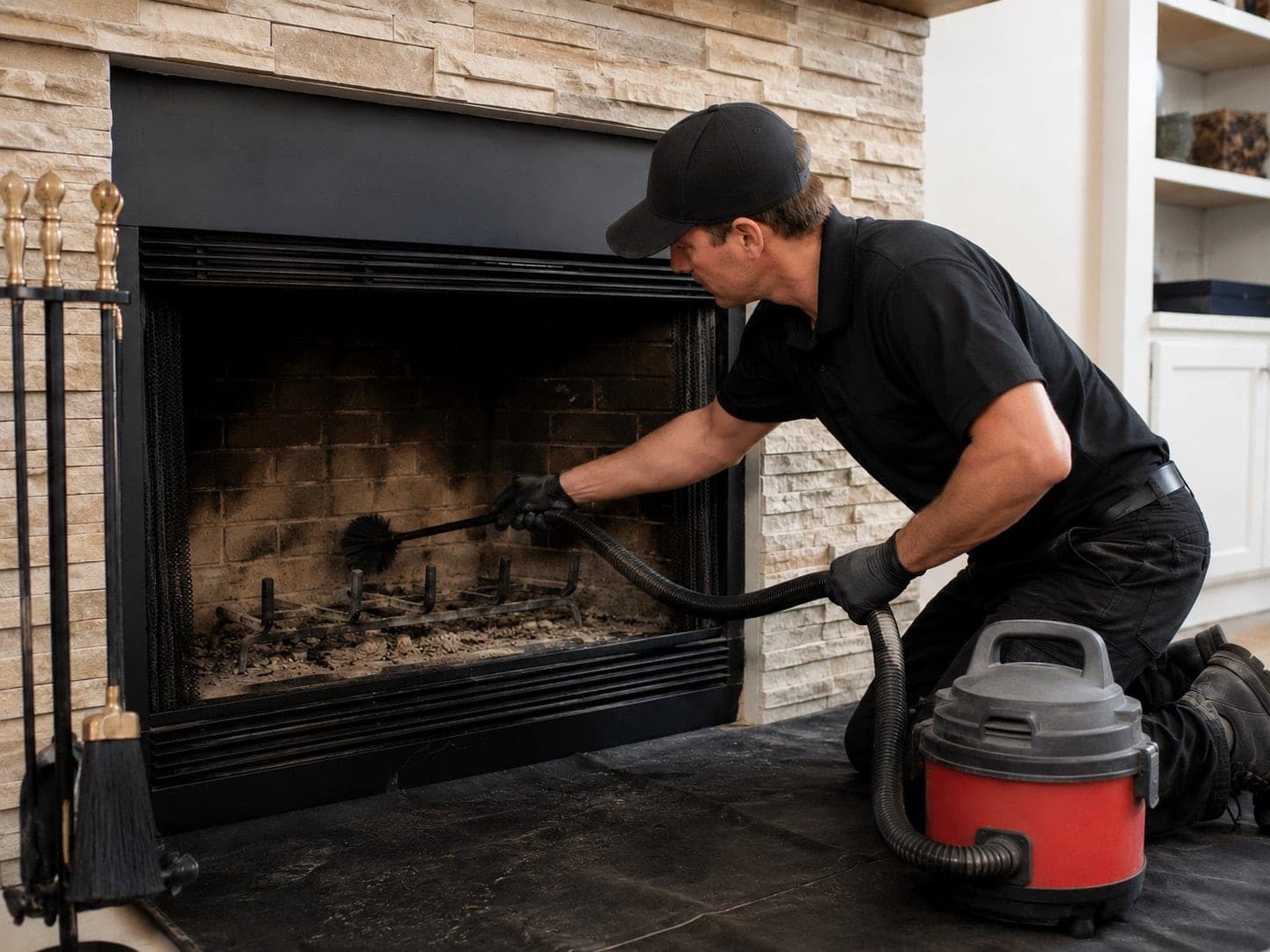
This is different from sweeping the chimney flue, which is a separate service that cleans the full length of the chimney above the fireplace. Many homeowners book both together, because a clean firebox under a dirty flue only solves half the problem.
Signs your fireplace needs cleaning
Common reasons homeowners call
- A thick layer of ash that stays in the firebox between fires
- Black, flaky or shiny tar-like deposits on the firebox walls or around the damper
- A smoky, sour or campfire smell in the room, especially on humid days or when the fireplace isn't in use
- Glass doors so sooty you can barely see the flame
- A damper that sticks, scrapes or won't close fully because of debris
- Smoke drifting into the room instead of going up the chimney
- The fireplace hasn't been used or cleaned in a long time and you want to use it again
Smoke coming back into the room isn't always a cleaning problem. If the fireplace still smokes after it has been cleaned, the cause may be the chimney's draft itself, and fixing a fireplace that won't draw properly is a separate job.
What happens during the visit
A typical fireplace cleaning, step by step
Protect the room
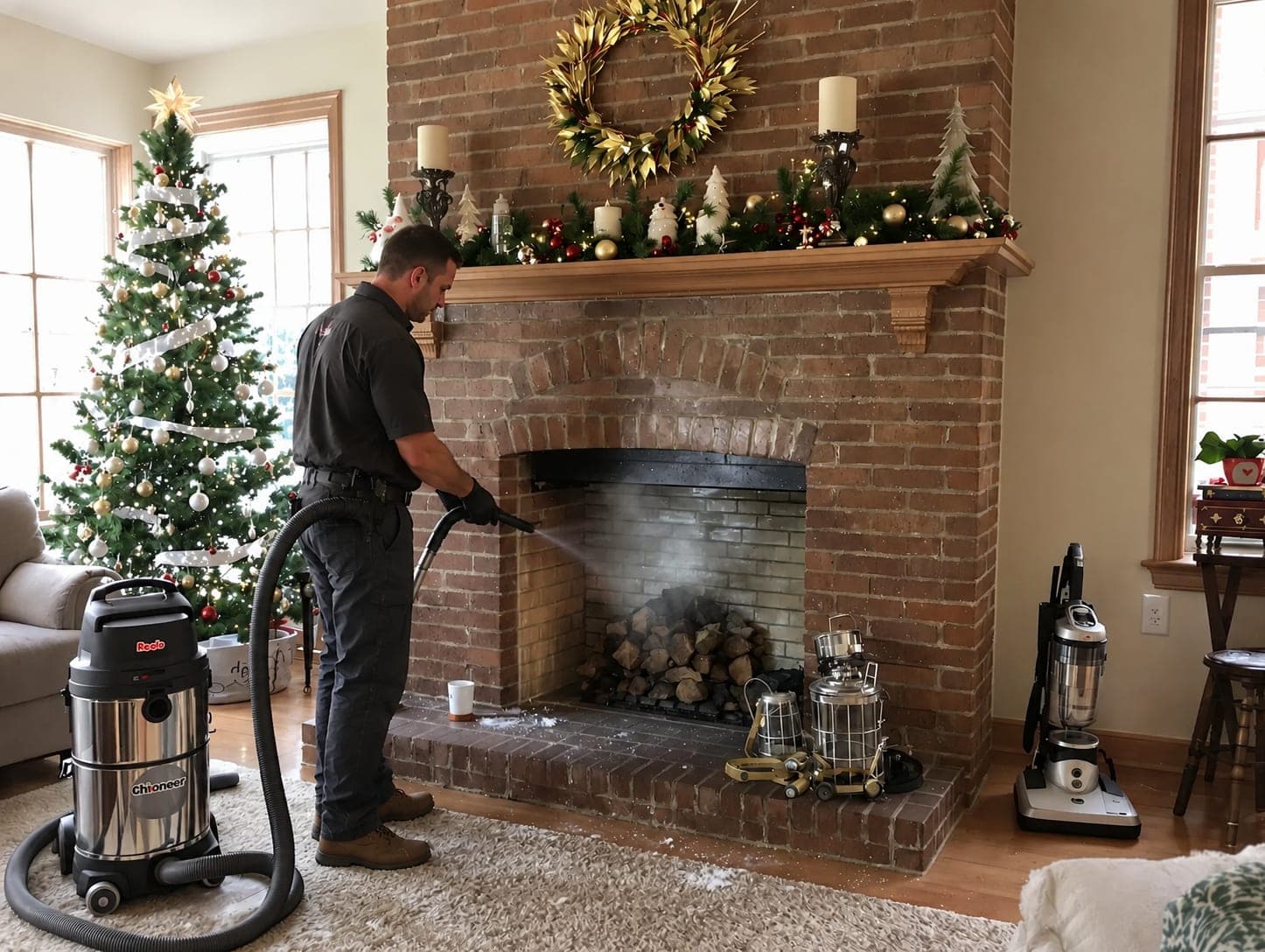
Drop cloths go down over the hearth and nearby flooring, and the work area is set up to keep soot and ash contained.
Look before cleaning
The technician checks the firebox, damper and doors so anything unusual is noted before it is disturbed.
Remove ash and debris
Old ash, charred wood and loose debris are cleared out of the firebox and off the grate.
Brush and scrape the firebox
Soot and creosote deposits are brushed and scraped from the firebox walls, the floor and the area around the damper.
Clean the damper and doors
The damper is cleaned and worked open and closed, and glass doors and screens are cleaned.
Walk you through what was found
You hear what was cleaned and whether anything, such as cracked firebox brick or a damaged damper, needs a closer look.
Wood-burning, gas and insert fireplaces
Wood-burning fireplaces produce the most ash and creosote, so they usually need the most hands-on cleaning. Gas fireplaces don't create ash, but their glass can develop a hazy film, and dust and debris can collect around the logs and burner. Gas fireplace and gas appliance work is offered, so a gas unit doesn't need a different company.
A fireplace insert sits inside the original firebox and has its own cleaning needs, so cleaning a fireplace insert is handled as its own service. The work covers all major brands of fireplaces and inserts.
If you're tired of hauling ash and are thinking about switching fuels, our guide to gas vs wood fireplace conversion covers the tradeoffs. If the existing unit is worn out, replacing or adding a fireplace is also an option.
Cleaning alongside inspection and chimney sweeping
Cleaning removes buildup, but it doesn't tell you whether the firebox, damper or chimney is in sound condition. A fireplace inspection looks at those parts more closely, and a chimney sweep cleans the flue above. If you aren't sure which you need, describe what you're seeing when you get in touch and the estimate will reflect it.
Safety and upkeep between cleanings
Creosote is flammable
Creosote that builds up in the firebox, damper area and flue can catch fire. Regular cleaning keeps those deposits from accumulating, which is the main safety reason to keep up with it.
- Burn dry, seasoned firewood. Wet or green wood smokes more and leaves more creosote behind.
- Don't burn trash, cardboard, wrapping paper or painted or treated wood.
- Let ashes cool completely, then store them in a metal container with a tight lid, outside and away from the house.
- Keep a thin layer of ash under the grate if you like, but don't let it build up against the grate or the firebox walls.
- Keep working smoke and carbon monoxide detectors in the home, especially near the fireplace and bedrooms.
- Open the damper before lighting a fire and close it only once the fire is fully out.
Booking a fireplace cleaning
Call or request an estimate and describe your fireplace, whether it burns wood or gas, and anything you've noticed, such as smoke, odors or a sticking damper. Commercial and property-manager work is offered too.