On this page
What fireplace insert cleaning covers
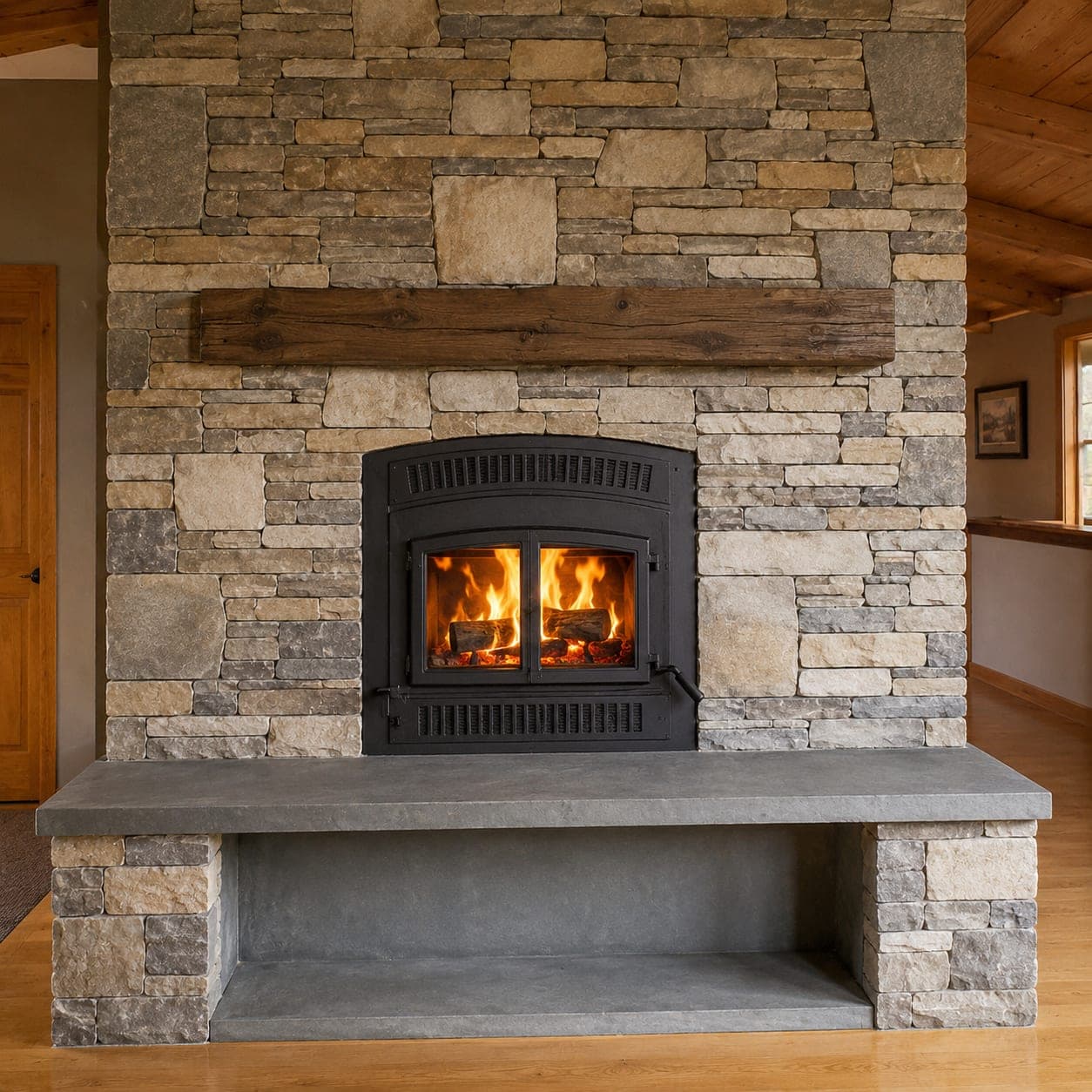
A fireplace insert is a closed firebox, usually steel or cast iron, set into an existing masonry or prefab fireplace. It connects to a liner that runs up the chimney. That design makes it more efficient than an open hearth. It also means soot and creosote settle on the baffle plate, inside the top of the insert, at the connection to the liner and along the liner itself. Cleaning an insert takes in that whole path. Sweeping the masonry chimney around it doesn't reach any of it.
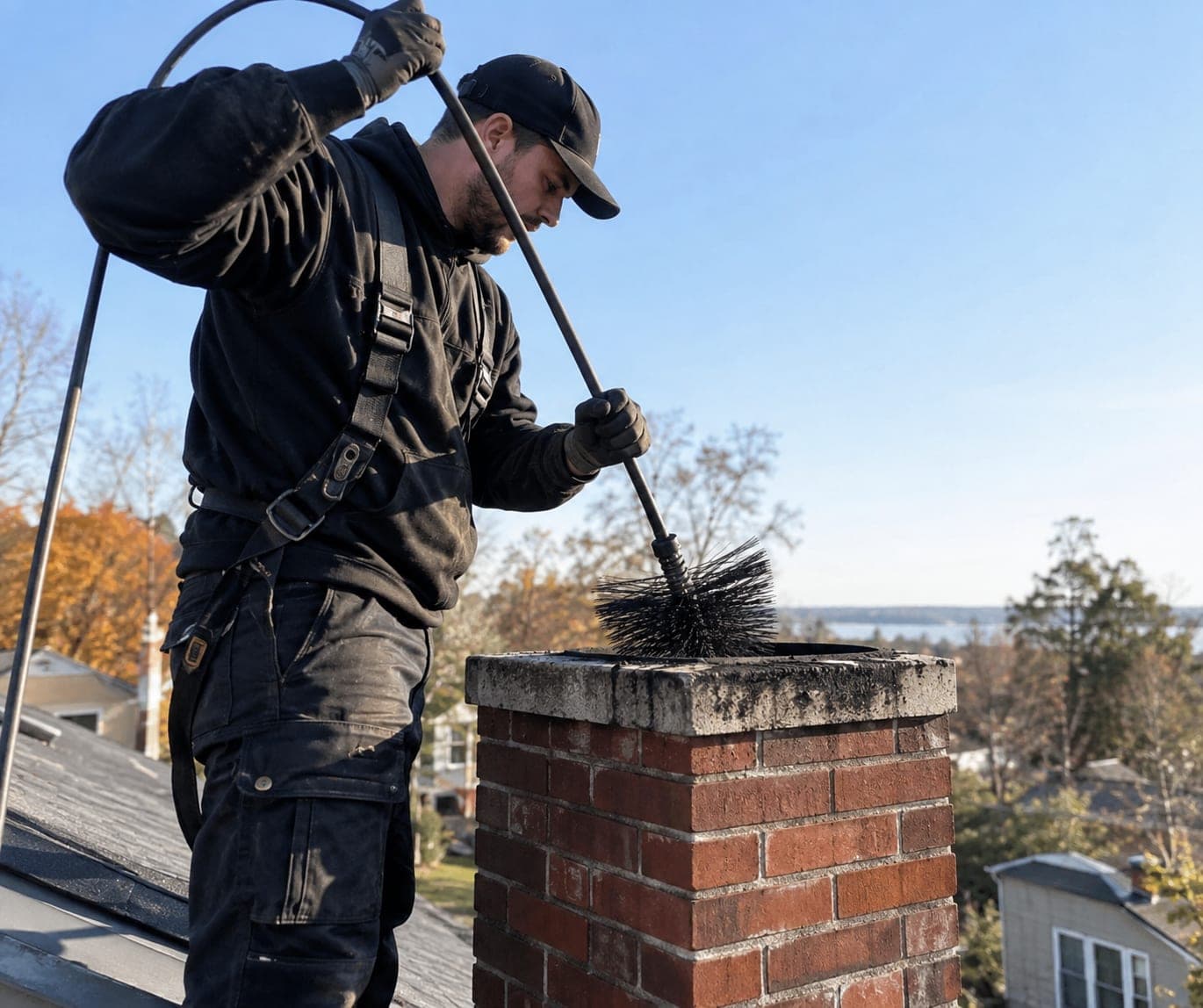
If your fireplace is open with no insert, our fireplace cleaning service is the better fit. If the flue itself is the concern, the chimney sweep service handles that work.
Wood inserts and gas inserts
- Wood-burning inserts build up ash, soot and creosote. The baffle and the liner are where creosote tends to collect most heavily.
- Gas inserts don't produce creosote. They still need the glass, burner area, logs or media and vent checked and cleaned, because film, dust and debris can affect how they burn. We offer gas fireplace and gas appliance work.
Signs your insert is due for cleaning
Common reasons homeowners call
- The glass blackens within one or two fires, even with dry wood
- Smoke rolls into the room when you open the door
- The fire is hard to start or dies down despite open air controls
- A strong smoky or tar-like smell, especially on humid days
- Flaky black deposits falling onto the firebox floor
- A full season of regular burning since the last cleaning
- You've bought a home with an insert and don't know its history
Running an insert at low, smoldering settings for long burns produces more creosote than hotter, shorter fires. If that describes how you use yours, plan on more frequent cleaning.
What the visit involves
Protect the room
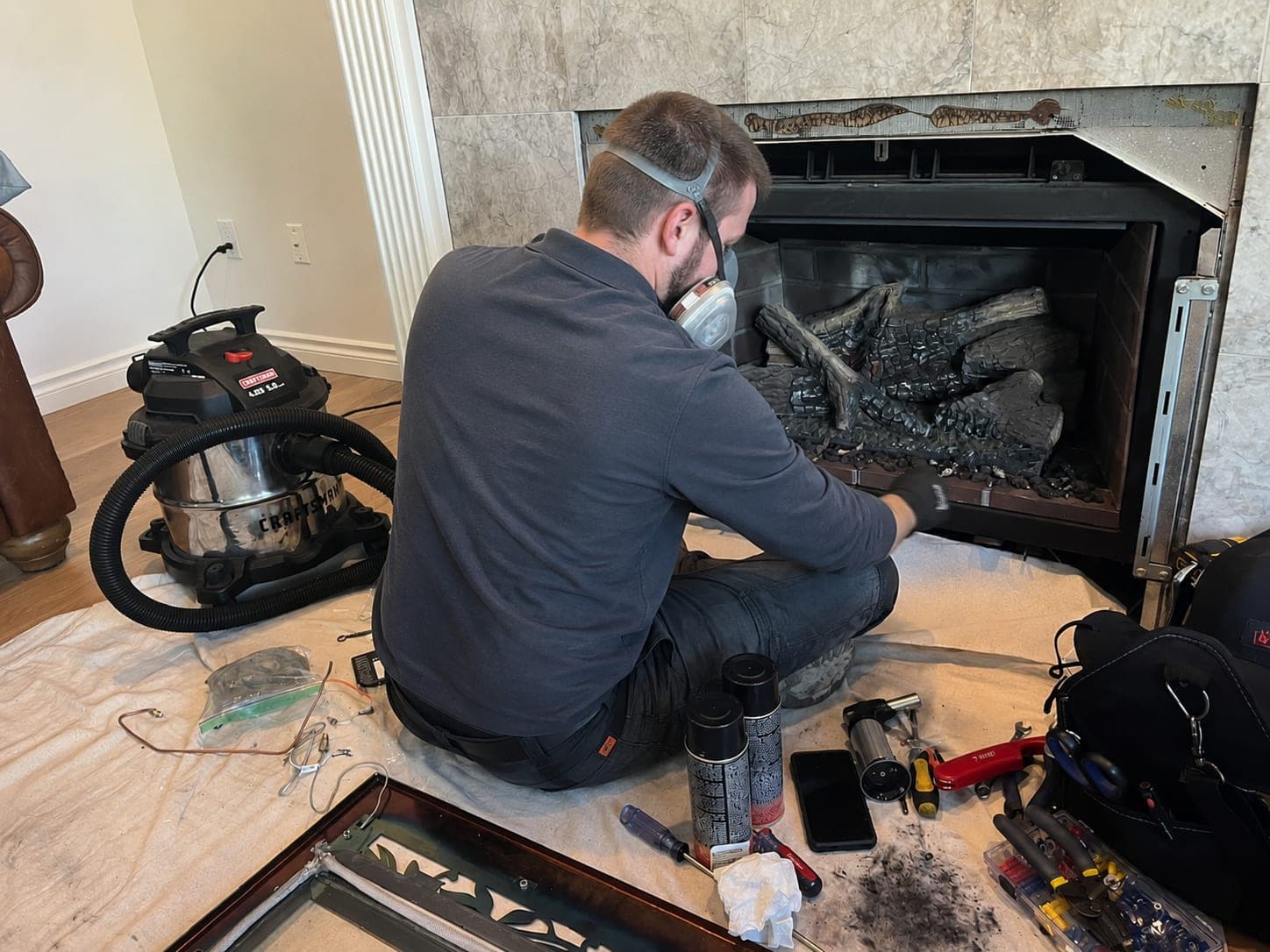
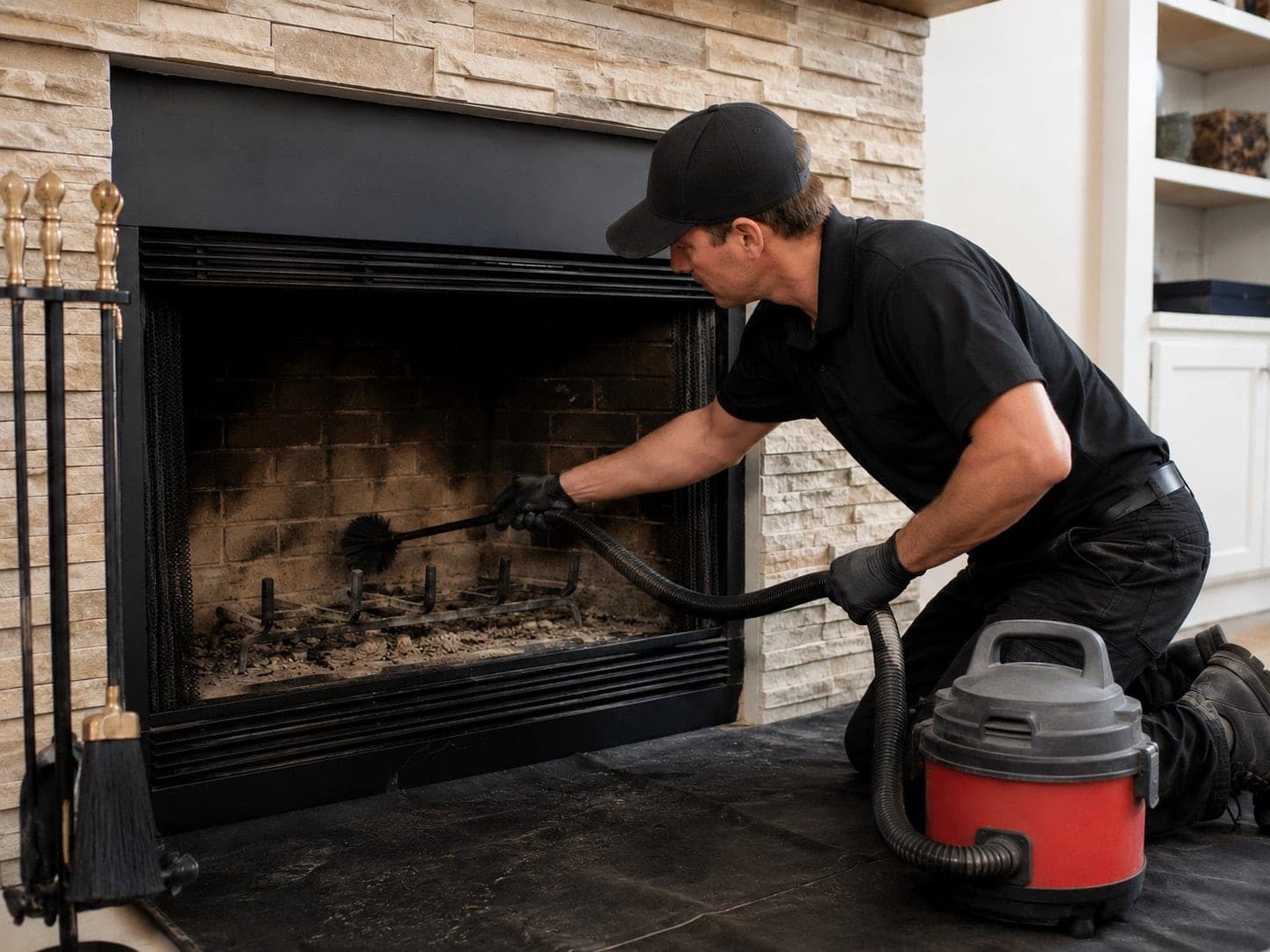
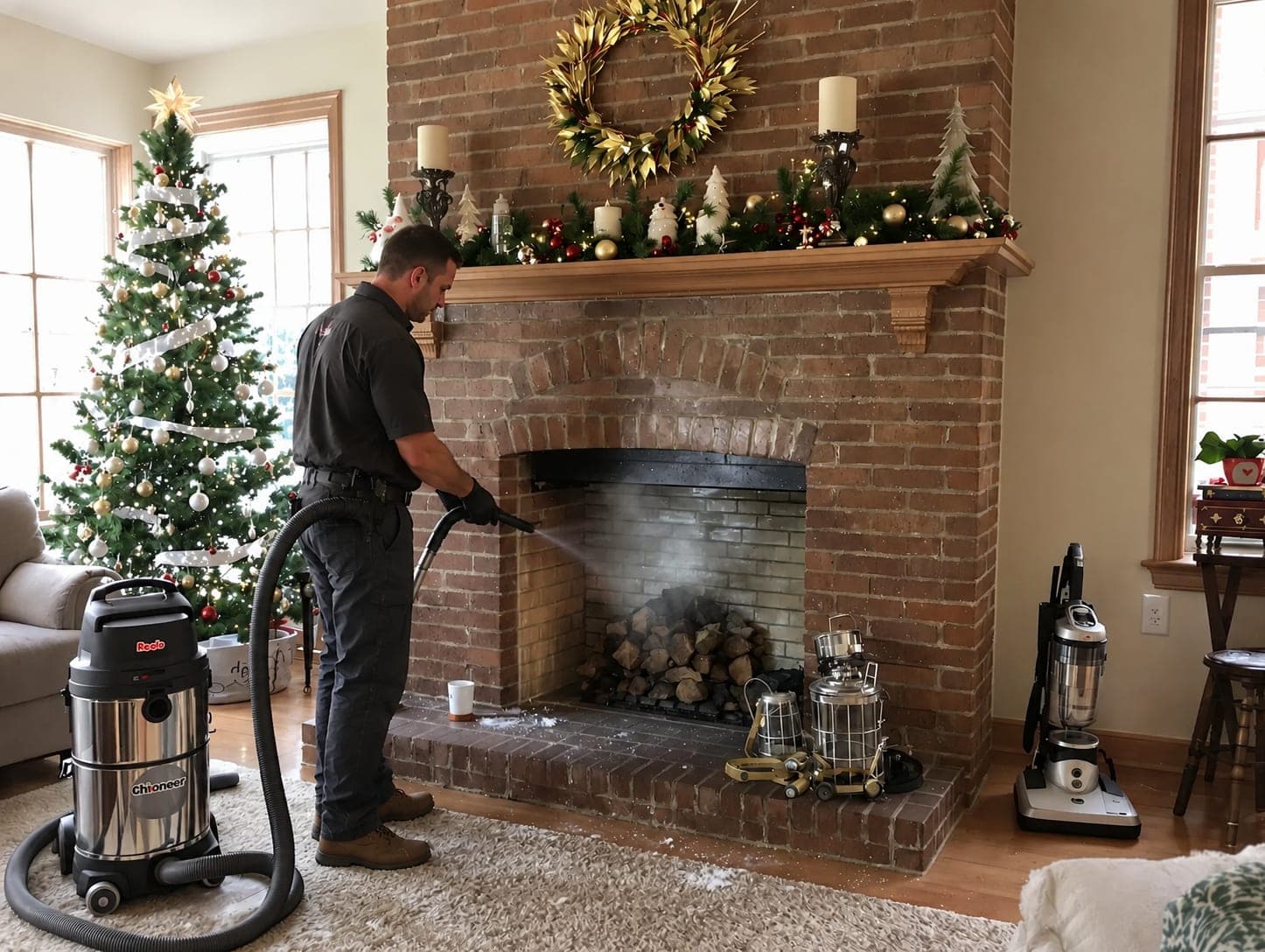
We put drop cloths around the hearth and set up a vacuum to keep soot out of the house.
Look before cleaning
With the insert cool, we check the door gasket, glass, firebrick or panels and baffle, and note how heavy the buildup is.
Clear the firebox and baffle
We remove ash, then take down or reach above the baffle to clear the soot and creosote that settle on top of it.
Clean the liner
We brush the liner that connects the insert to the top of the chimney, so the full venting path is cleared.
Glass and finish
We clean the door glass, reinstall the baffle and wipe down the surround.
Walk you through it
We tell you what we found, such as worn gaskets, cracked panels or unusual buildup, and what, if anything, should be addressed.
Safety and upkeep between cleanings
Creosote is flammable
Creosote that builds up in a liner or above the baffle can ignite. If you hear a loud roaring from the insert or see heavy smoke from the chimney top, close the air controls, get everyone out and call 911.
- Burn seasoned, dry hardwood. Wet wood smolders and coats the liner faster.
- Keep working carbon monoxide and smoke detectors near the room with the insert.
- Replace a door gasket that no longer seals. An air leak makes the fire hard to control.
- Have the insert and liner looked at once a year, even in years you burn less.
If your insert is old, cracked or a poor match for how you heat, cleaning may not fix it. In that case, fireplace insert installation is worth a conversation. If you're weighing fuel types, start with our guide to gas vs wood fireplace conversion.
Booking a fireplace insert cleaning
We work on all major brands of inserts, both wood and gas, and commercial and property-manager work is offered. Call or request an estimate to get on the schedule.
Free estimates.
Tell us whether your insert burns wood or gas and what you've noticed, and we'll take it from there.