On this page
What chimney flashing repair involves
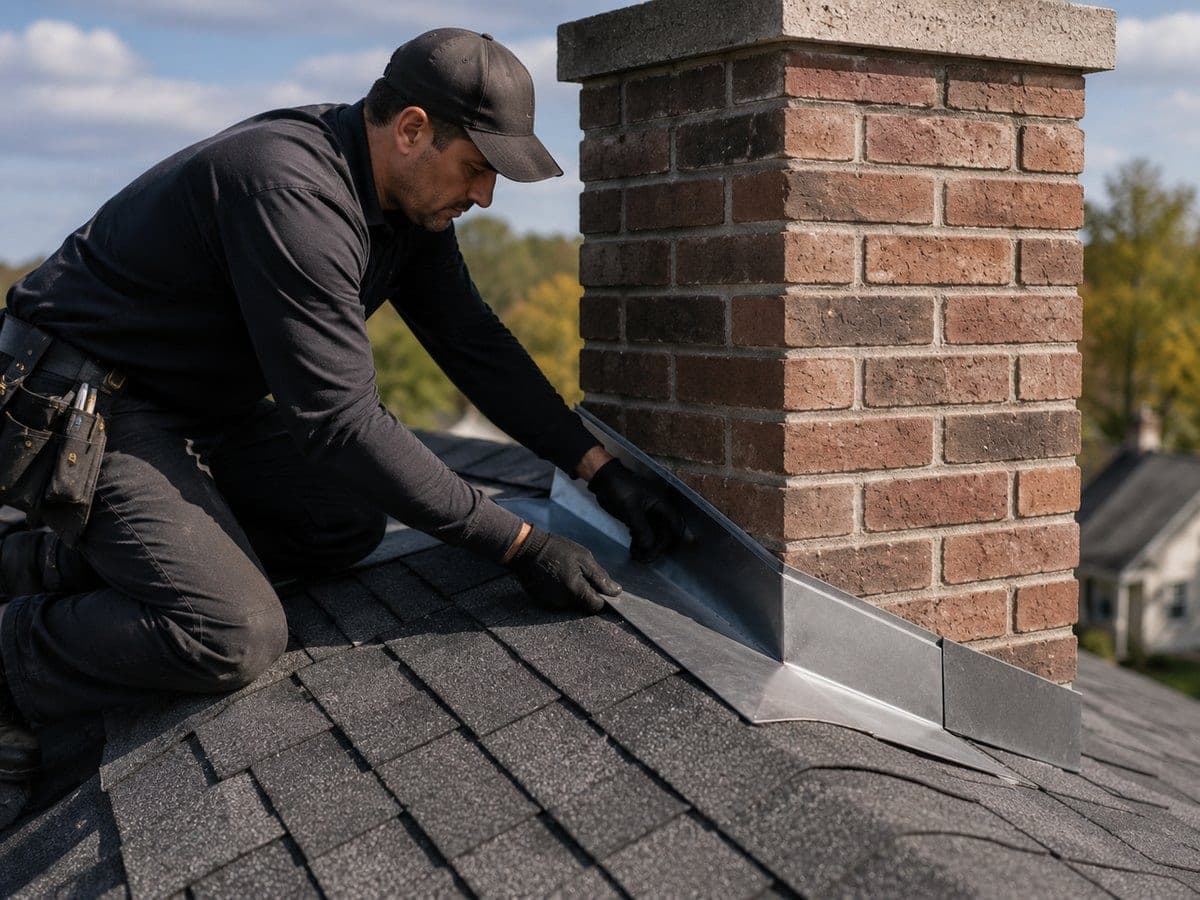
Flashing is the metal that closes the gap between the chimney masonry and the roof. Roofing and brick move differently as temperatures change, so caulk alone won't hold the joint. Instead, layers of metal overlap so water runs downhill and away from the opening.
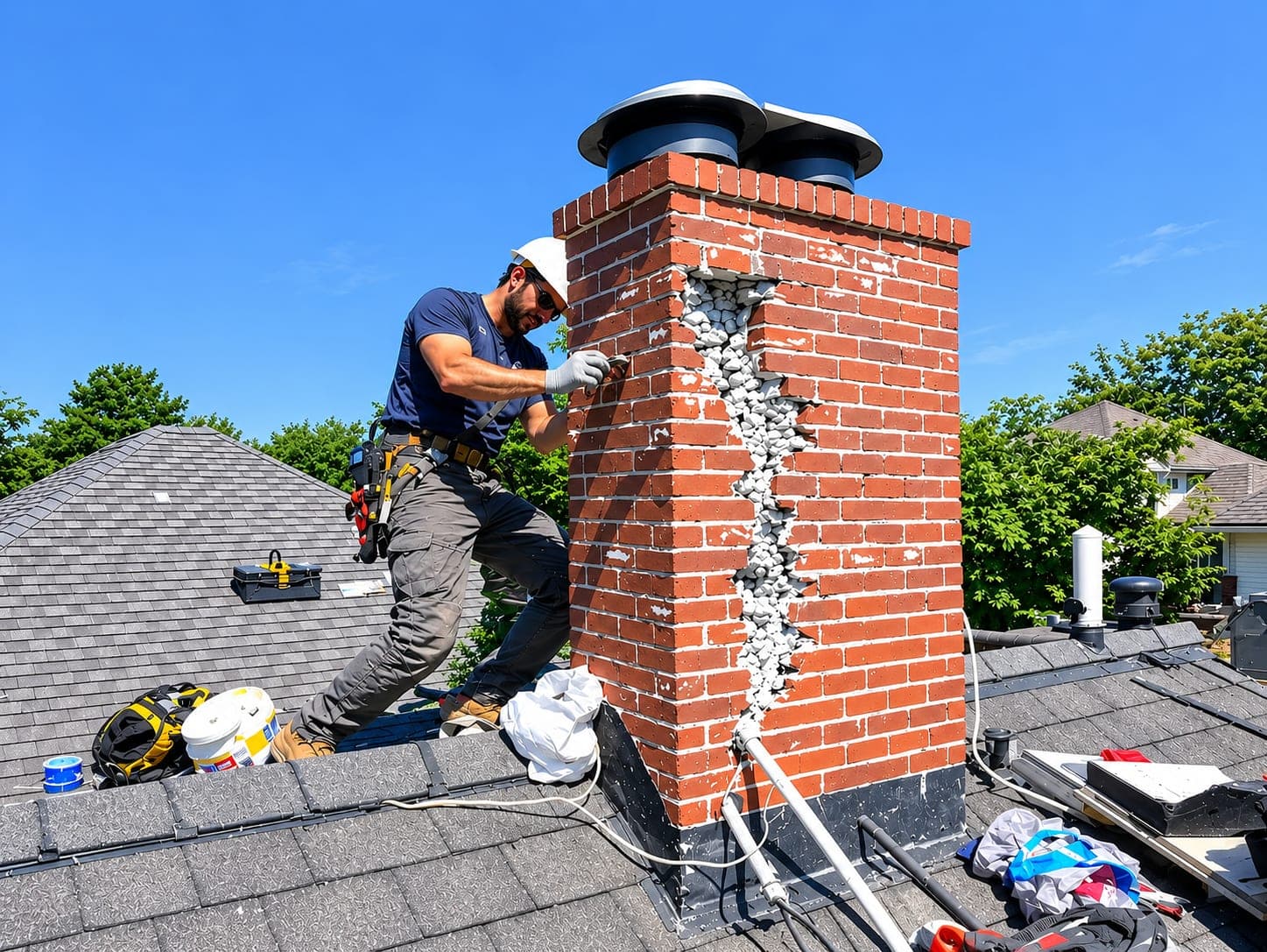
Chimney flashing repair means finding where that system has failed and fixing it. Sometimes the fix is resealing or refastening a section that has pulled loose. Other times the flashing is corroded, bent or was installed poorly, and replacing it is the honest answer.
The parts of a flashing system
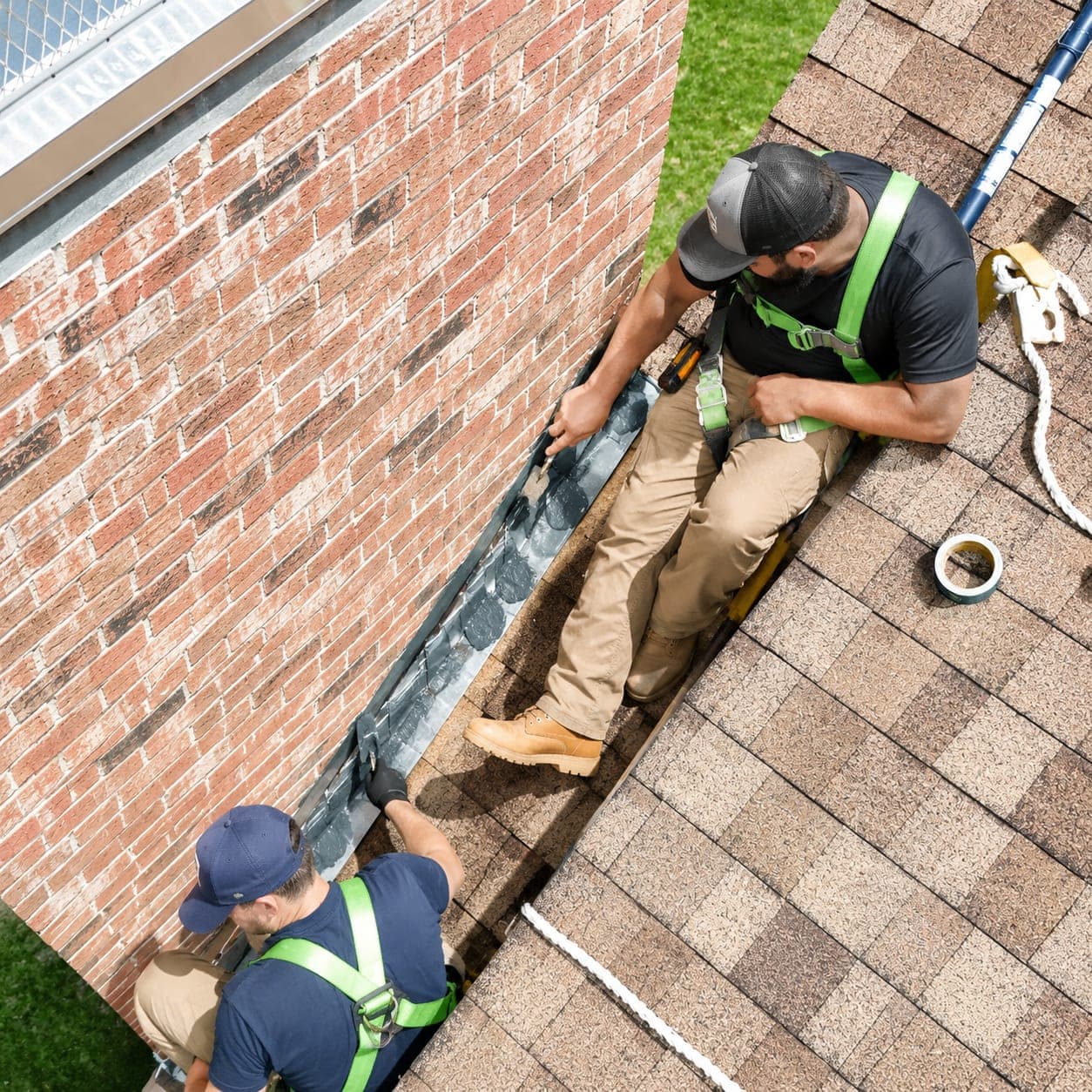
- Step flashing: individual L-shaped pieces woven in with the shingles along the sides of the chimney.
- Counter flashing: metal set into the mortar joints of the chimney that laps down over the step flashing, so water can't get behind it.
- Apron flashing: the piece across the lower, downhill face of the chimney.
- Back pan or cricket: on the uphill side, a pan or small peaked structure that diverts water around the chimney instead of letting it pool against the masonry.
Flashing only protects the roof joint. Water can also get in through the top of the chimney or through worn masonry, so we check the whole structure rather than assuming the flashing is the cause.
Signs your flashing needs attention
Common signs of failing chimney flashing
- Water stains or peeling paint on the ceiling or wall right beside the chimney
- Drips in the attic along the chimney, especially after heavy rain or snowmelt
- Damp or rotting roof decking or framing around the chimney
- Flashing that is lifted, bent, rusted or has visible holes
- Dried-out, cracked sealant or tar smeared over the joint as an earlier patch
- Counter flashing that has pulled out of the mortar joints
- Missing or loose shingles right next to the chimney
A leak near the chimney isn't always the flashing
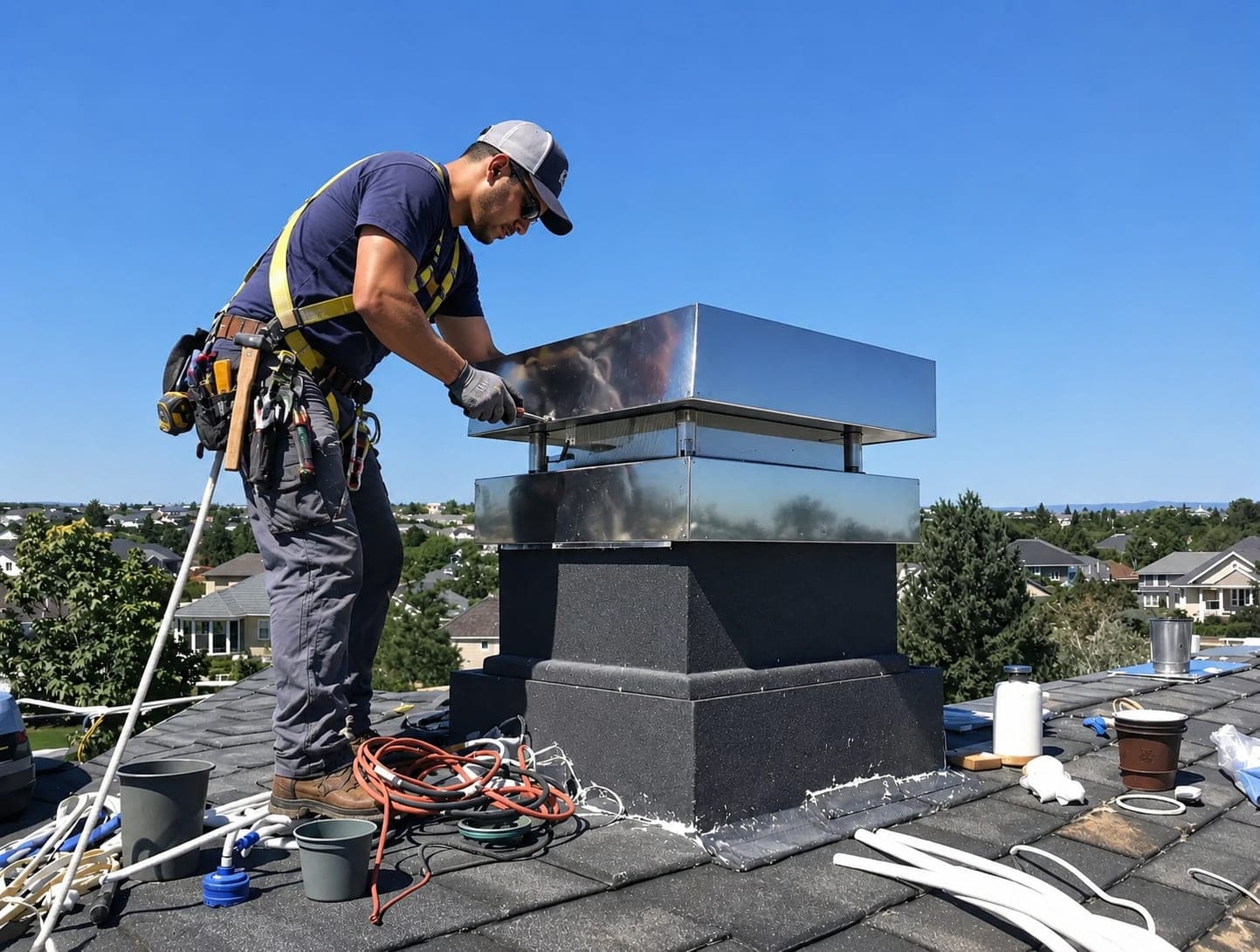
A cracked crown, a missing cap or porous brick can produce the same stain. If the flashing turns out to be sound, the problem may call for chimney repair work on the masonry or crown or a new chimney cap installed to keep rain out of the flue.
What the visit looks like, step by step
How a flashing repair visit works
Talk through the leak
We ask where you've seen water, when it shows up and whether it follows rain, wind or melting snow. That pattern narrows down the source.
Inspect inside and out
We look at the stained area and the attic, then examine the flashing, the counter flashing joints, the crown and the masonry from the roof.
Explain what we found
You get a plain explanation of whether the flashing is the cause and whether it can be repaired or should be replaced, along with a free estimate.
Do the repair
Repairs can mean refastening and resealing sections or cutting out and replacing failed pieces. Replacement means removing old flashing, installing new step, counter and apron pieces, and setting counter flashing properly into the mortar joints.
Check the finished work
We confirm the pieces overlap correctly, the joints are sealed and nothing was left loose around the roofing.
When the chimney itself is the bigger problem
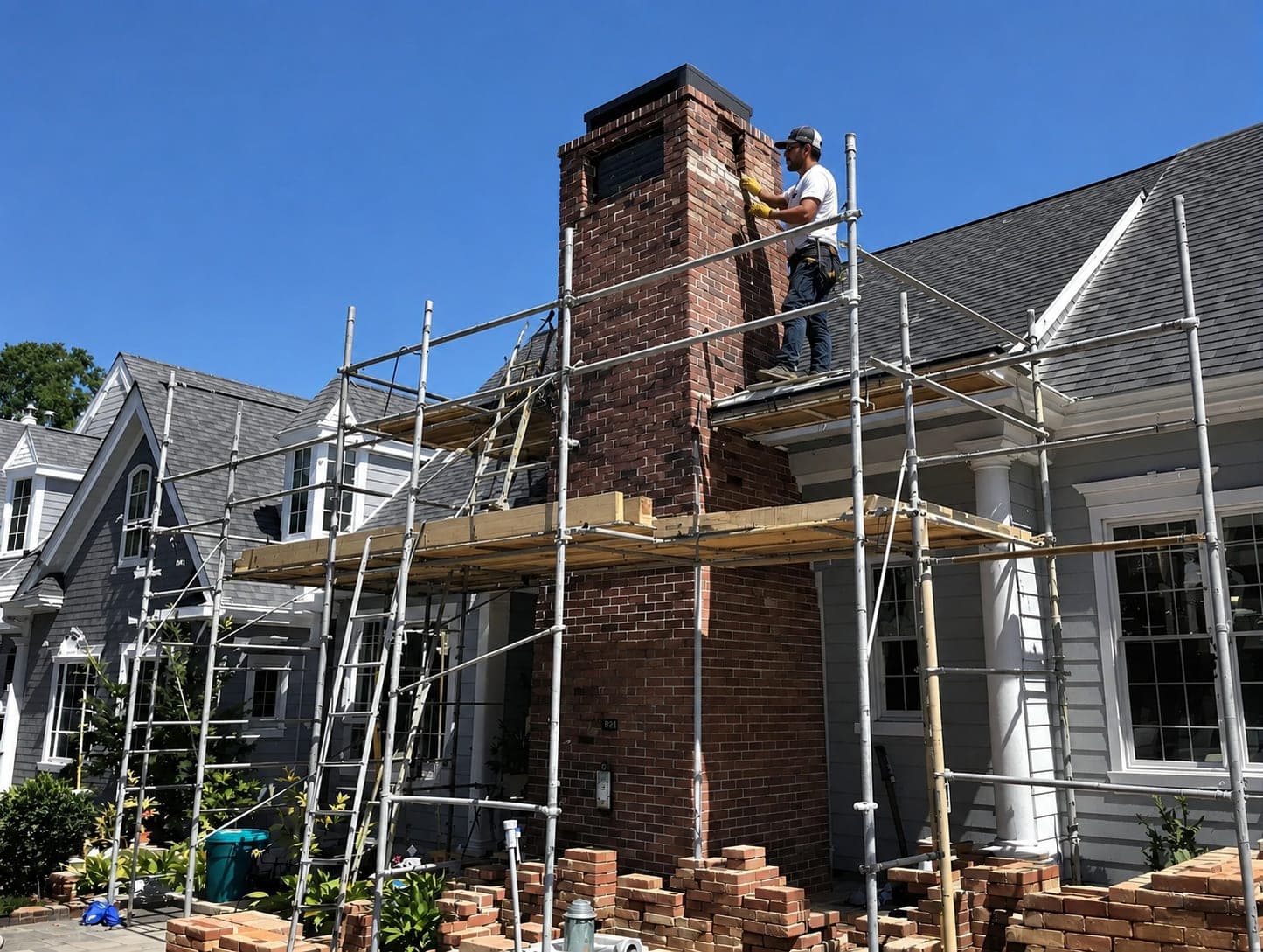
New flashing needs solid masonry to hold it. If the mortar joints the counter flashing sits in are crumbling, those joints may need tuckpointing first. If the brick above the roofline is badly deteriorated or leaning, rebuilding that section before reflashing can make more sense. Our guide to chimney rebuilding vs tuckpointing explains the difference. If a rebuild is the right call, here is how a chimney rebuild works.
For leaks that come in from the top of the chimney rather than the roof joint, it helps to know the difference between a chimney cap and a chase cover, since each one protects a different kind of chimney.
Maintenance that keeps flashing working
- Look at the chimney from the ground after major storms for lifted or bent metal.
- Check the attic around the chimney a couple of times a year for damp wood or stains.
- Don't rely on layers of roofing tar as a long-term fix. Tar dries out and can hide damage underneath.
- Have the flashing looked at whenever the roof is replaced, since that's the right time to install new pieces.
Booking a flashing repair
Free estimates. Call or request an estimate and tell us where you're seeing water. Commercial and property-manager work is offered as well.