On this page
What chimney animal & nest removal involves
A chimney without a cap is a tall, sheltered opening, and birds, squirrels, raccoons and bats treat it that way. Some build nests on the smoke shelf or damper. Others fall in and can't climb back out. Either way, the flue is now partly or fully blocked, and the material left behind can catch fire or hold smoke and gases inside the house.

Removal means getting the animal or nest out of the flue, clearing the twigs, leaves, droppings and remains around it, and confirming the chimney can vent again. If the nest is lodged high in the flue or packed tight against the damper, the job overlaps with our chimney blockage removal service.
Signs something is living in your chimney
Common signs homeowners notice
- Scratching, fluttering, chirping or squeaking from inside the fireplace or the wall around it
- Twigs, straw, leaves or feathers dropping onto the grate or hearth
- Droppings in the firebox or around the damper
- A musty, sour or rotting smell coming from the fireplace
- Smoke spilling into the room instead of going up the flue
- Birds or animals seen going in and out of the top of the chimney
- A damper that won't open or close fully
Don't light a fire to drive it out
A fire under a nest can ignite the dry material, and a blocked flue can push smoke and carbon monoxide back into the house. A trapped animal may also panic and come down into the room. Keep the damper and fireplace doors closed and call us instead. Only close it once the fireplace is completely cold and no stove, furnace or water heater vents into that flue.
What the visit involves, step by step
How we handle a chimney animal or nest call
Look before we touch anything
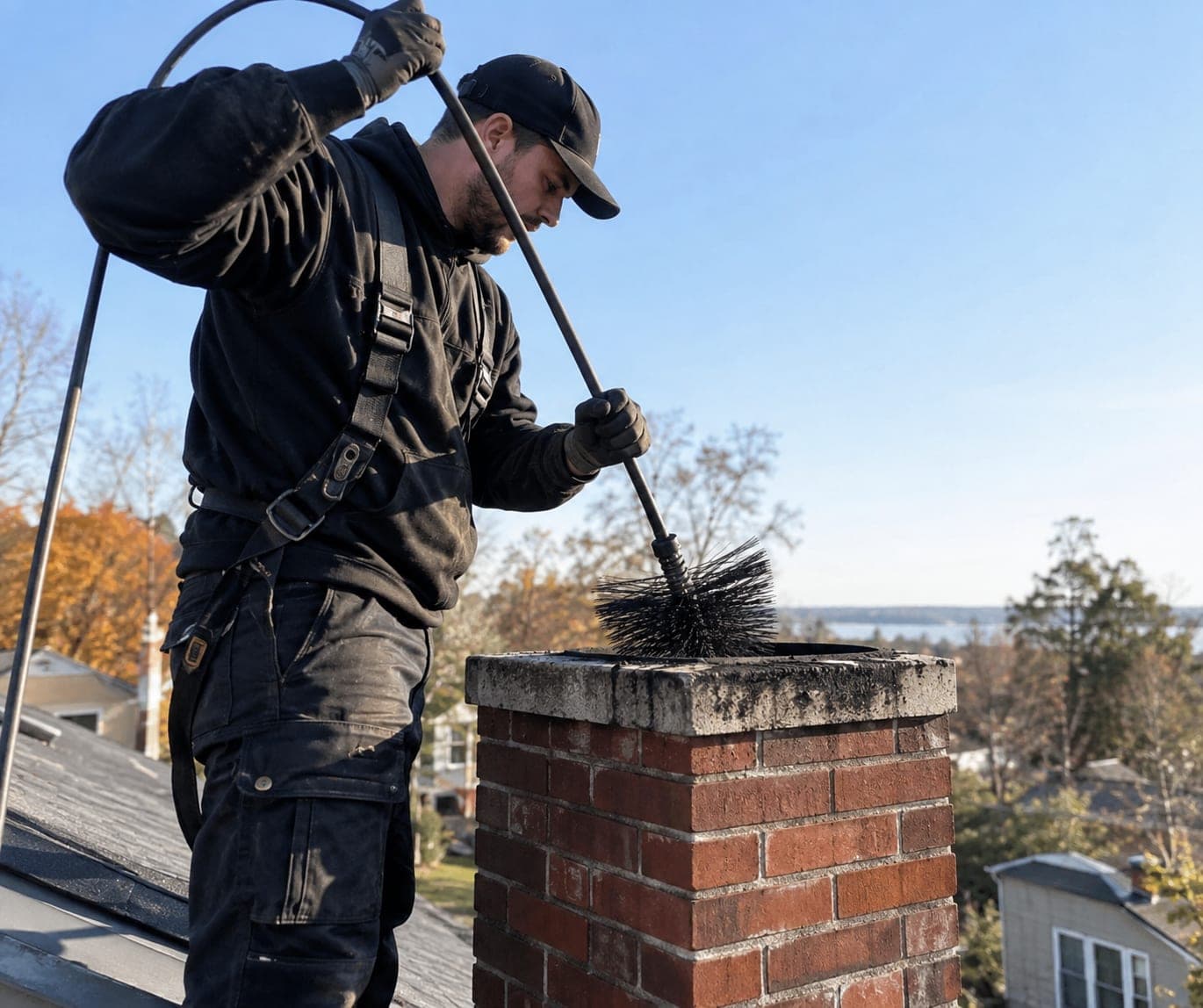
We check from the fireplace and, where needed, from the roof to see what's in the flue, where it's lodged and whether an animal is still inside.
Get the animal out
If an animal is still in the chimney, we work to get it out without driving it further down into the house or deeper into the flue.
Remove the nest and debris
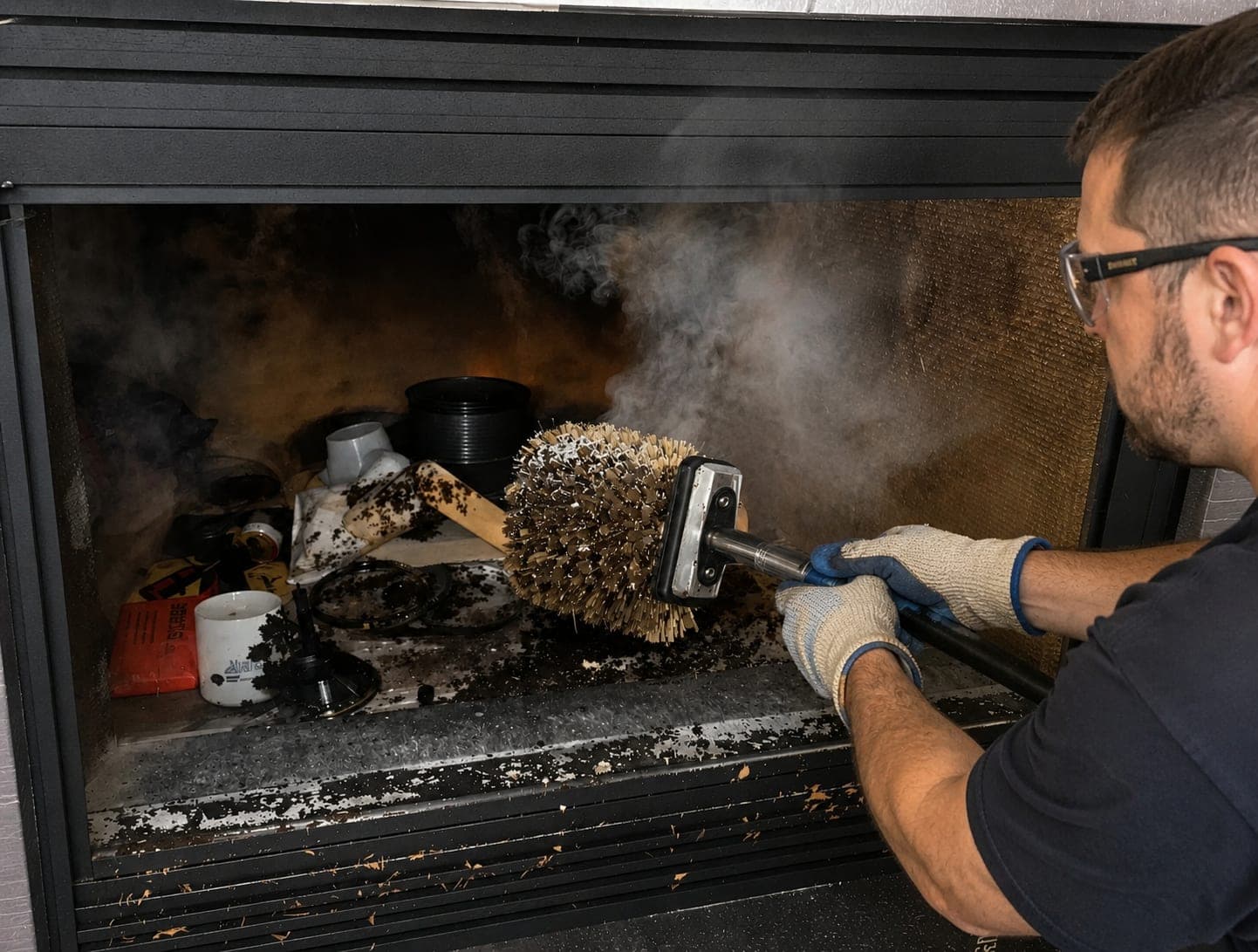
Nesting material, droppings and any remains come out of the flue, smoke shelf, damper area and firebox.
Clean what the nest left behind
Nests often sit on top of soot and creosote. Where the flue needs it, we follow up with a full chimney sweep so the whole liner is clear.
Check the flue and the top of the chimney
We confirm the chimney drafts, check the damper, and look at how the animal got in so you know what it would take to keep the next one out.
After the nest is gone: smell and prevention
Droppings and remains can leave an odor that lingers after the visible debris is gone, especially in damp weather. If the smell stays, how chimney odor removal works explains the next step.
An open flue will attract animals again. We install chimney caps and animal screens, and we can fit one once the chimney is clear. Nest material mixed with soot is also a fire risk, which is part of why chimney maintenance matters as creosote builds up.
Booking chimney animal & nest removal
We also handle commercial and property-manager work. Call or request an estimate, and tell us what you're hearing, seeing or smelling so we come prepared.