On this page
What fireplace conversion involves
A fireplace conversion changes the fuel your fireplace burns while keeping the opening you already have. Most homeowners convert from wood to gas. The work can be as simple as setting a gas log set into a sound firebox. It can also mean installing a sealed gas insert with its own venting run up the chimney.
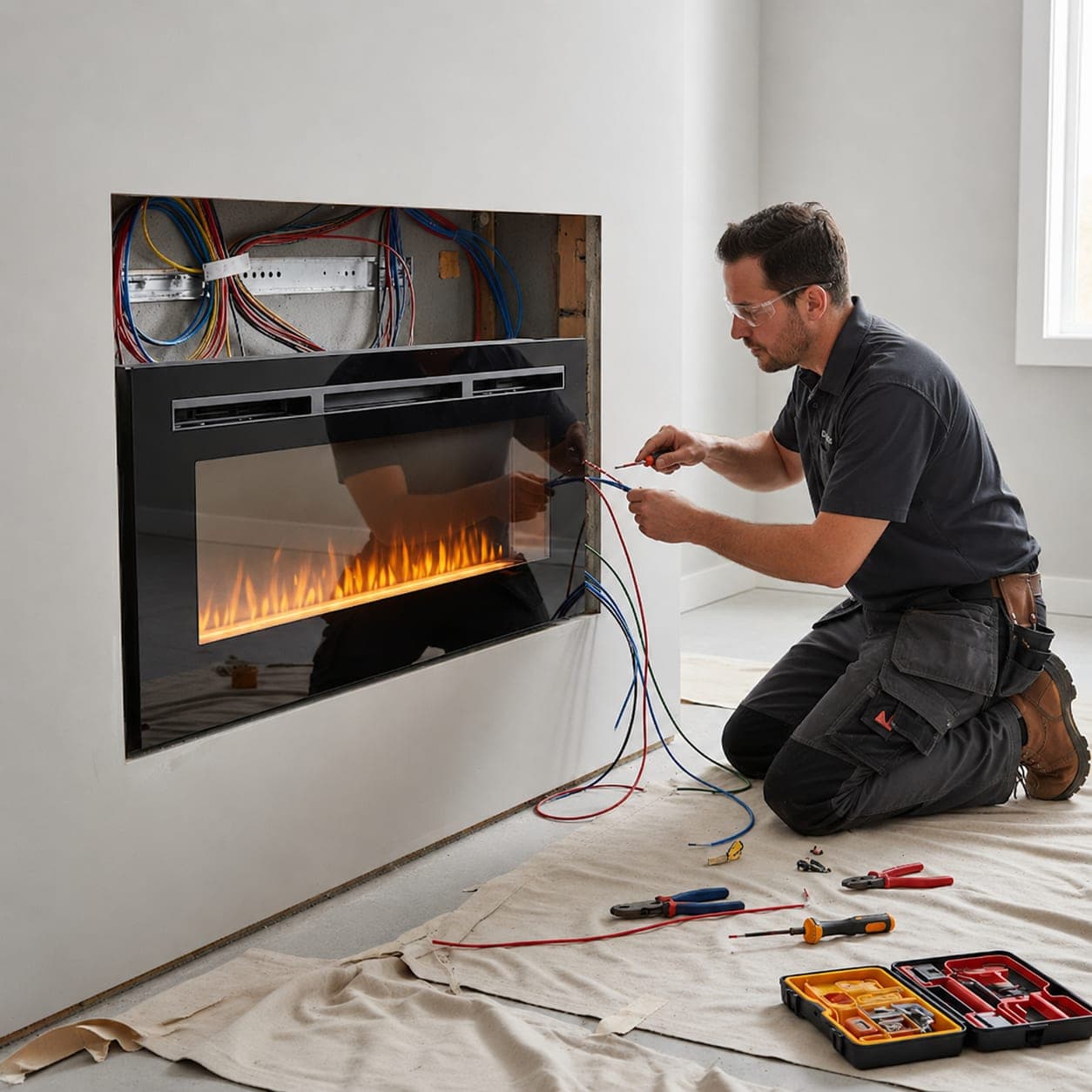
Every conversion starts from the same three questions. Is the firebox in good shape? Can the chimney safely carry exhaust for the new fuel? Is there a gas supply at the fireplace, or does one need to be run? The answers decide which option fits your home. If you're still weighing whether to switch at all, our guide to gas vs wood fireplace conversion walks through the tradeoffs.
Signs a conversion makes sense
- You rarely use the fireplace because buying, storing and carrying wood is a chore.
- You want a fire you can start with a switch or remote and shut off when you leave the room.
- Ash cleanup, sparks or creosote buildup have become an ongoing worry.
- The fireplace sits unused, and you'd rather have something you'll actually light.
- You're updating the room and want a cleaner look than an open wood firebox.
Some problems need fixing before or instead of a conversion. If smoke rolls into the room when you light a fire, a new fuel won't cure the cause. Start with fireplace draft repair so the chimney moves air properly. Cracked firebrick, a failing damper or loose mortar are also better handled first through our fireplace repair service, so the new setup sits in a sound firebox.
Gas fireplace conversion
Gas is the most common conversion, and we offer gas fireplace and gas appliance work. Two main routes are available, and the right one depends on your fireplace and how you plan to use it.
| Feature | Gas log set | Gas insert |
|---|---|---|
| What it is | Ceramic logs and a burner set into your existing firebox | A sealed, self-contained unit that fits into the fireplace opening |
| Main purpose | The look of a fire with easy lighting | Heating the room as well as the look of a fire |
| Venting | Typically uses the existing chimney, with the damper kept open as the unit requires | Usually vented through a liner run up the chimney |
| Firebox changes | Little or none if the firebox is sound | The opening is fitted with a surround around the insert |
What it is
- Gas log set
- Ceramic logs and a burner set into your existing firebox
- Gas insert
- A sealed, self-contained unit that fits into the fireplace opening
Main purpose
- Gas log set
- The look of a fire with easy lighting
- Gas insert
- Heating the room as well as the look of a fire
Venting
- Gas log set
- Typically uses the existing chimney, with the damper kept open as the unit requires
- Gas insert
- Usually vented through a liner run up the chimney
Firebox changes
- Gas log set
- Little or none if the firebox is sound
- Gas insert
- The opening is fitted with a surround around the insert
Both options need a gas supply at the fireplace. If there isn't one, gas line installation becomes part of the job. An insert usually also needs a chimney liner installed to vent it correctly. We work on all major brands of gas logs and inserts and can help you compare models that suit your fireplace.
When the existing fireplace can't take a conversion, for example because the firebox is badly damaged or the opening is the wrong size, a new unit may be the better path. Our fireplace installation work covers that option.
What the visit involves, step by step
How a conversion project runs
Request an estimate
Tell us what you have now and what you'd like to end up with. Estimates are free.
Inspect the fireplace and chimney
We check the firebox, damper, flue and chimney condition, and how the fireplace drafts, to confirm it can handle the new fuel.
Check the gas supply
We look at whether gas is already available at the fireplace or whether a line needs to be run to it.
Go over your options
We explain whether gas logs or an insert fits better, what venting each needs, and any repairs that should come first.
Prepare and install
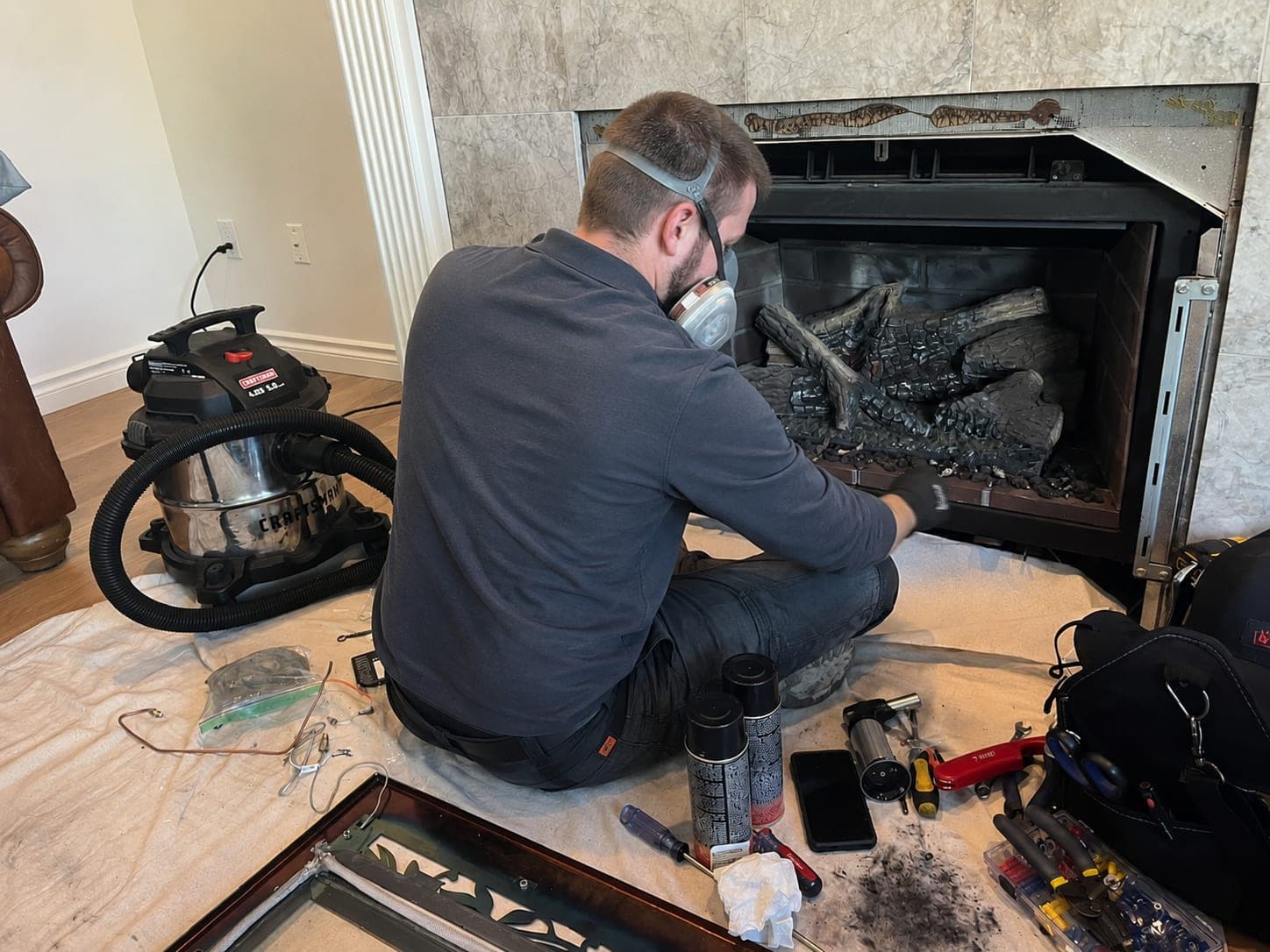
We clean the firebox and complete any needed prep. Then we install the gas line, liner, logs or insert the plan calls for.
Test and walk through
We light the unit, check ignition, flame and venting, and show you how to operate the controls.
Safety and upkeep after converting
Gas burns cleaner than wood, but a converted fireplace still needs attention. Venting has to stay clear, so nests, debris or a damaged liner can push exhaust back into the house. As general practice, keep working carbon monoxide detectors in the home and have the gas unit and its venting checked regularly. Stop using the fireplace and get in touch if you smell gas, see soot on the glass or logs, or notice the flame behaving differently than it used to.
If you smell gas
Don't light anything or flip switches near the fireplace. Leave the house and call your gas utility from outside. Once the immediate danger is handled, call us about the fireplace. We accept emergency calls.
Booking your fireplace conversion
Call or request an estimate, describe your current fireplace and the fuel you'd like to switch to, and we'll set up a time to look at it. Our 24-hour service runs Sunday–Friday. We also take on commercial and property-manager work if you're converting fireplaces across rental units or a business space.