On this page
What wood-burning fireplace repair covers
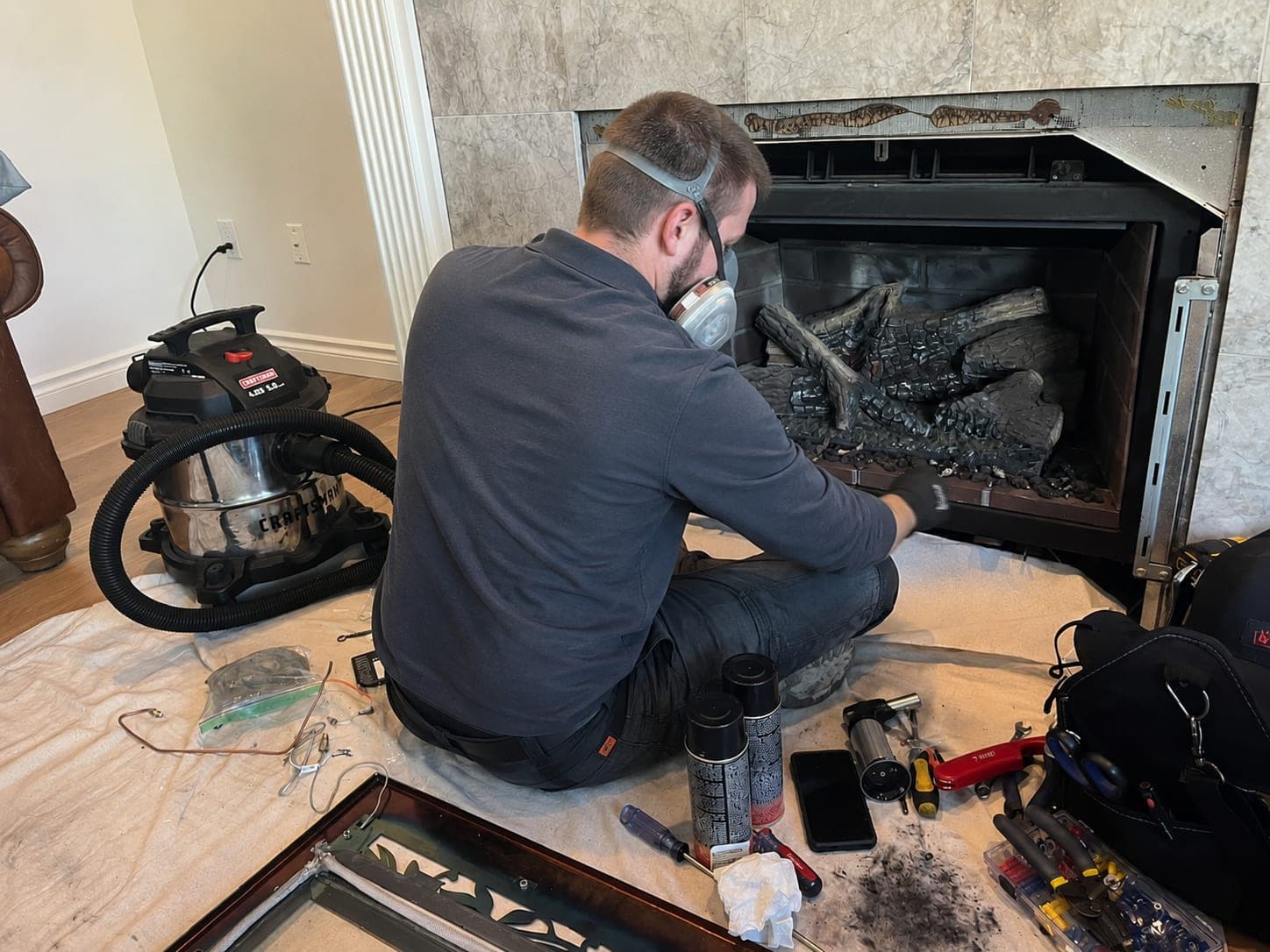
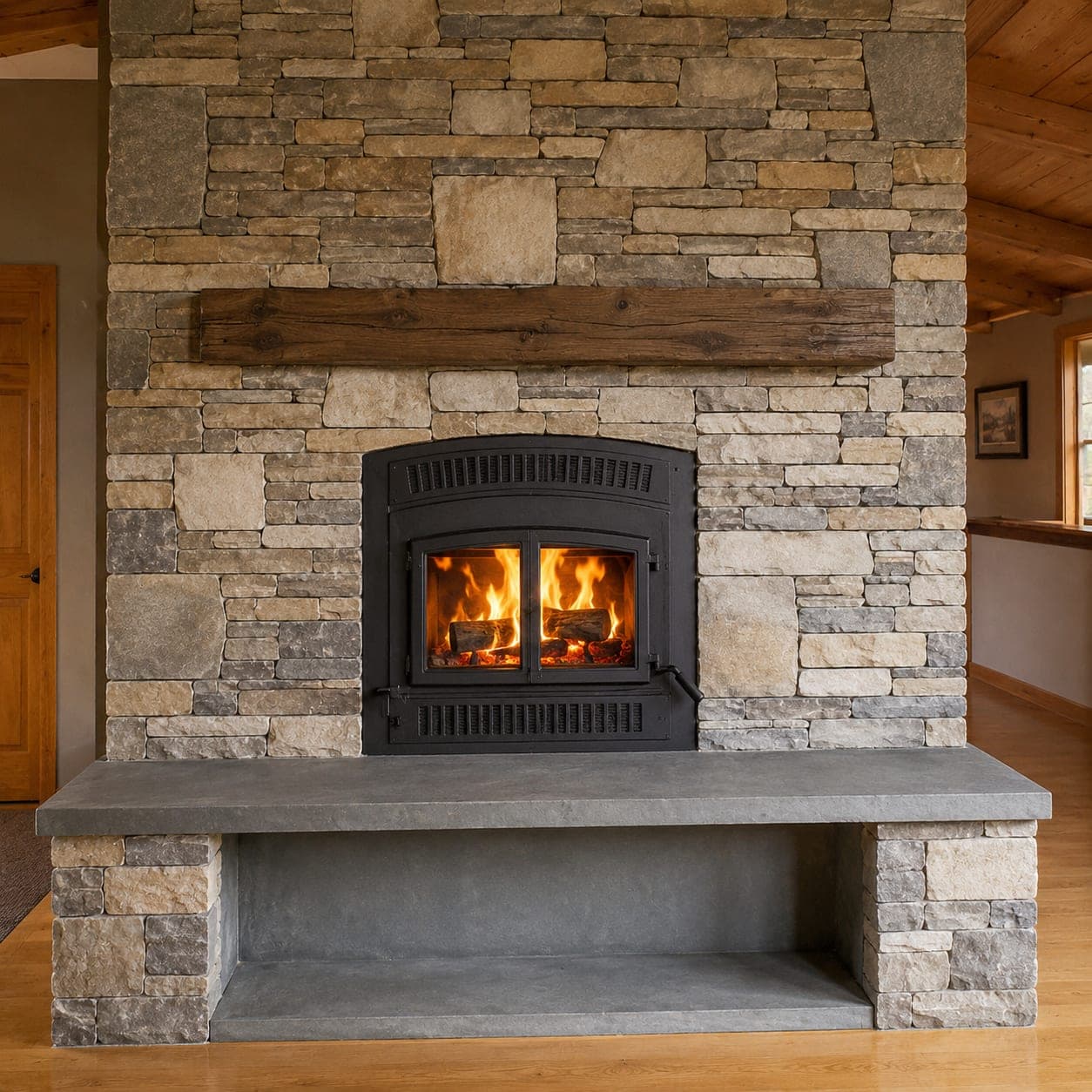
Wood-burning fireplace repair fixes the parts of a masonry or factory-built fireplace that take direct heat and smoke. That usually means the firebox walls and floor, the mortar joints between firebrick, the damper, the smoke chamber above it, and the doors or glass on the front. The goal is a fireplace that holds a fire safely, sends smoke up the chimney and closes off properly when it's not in use.
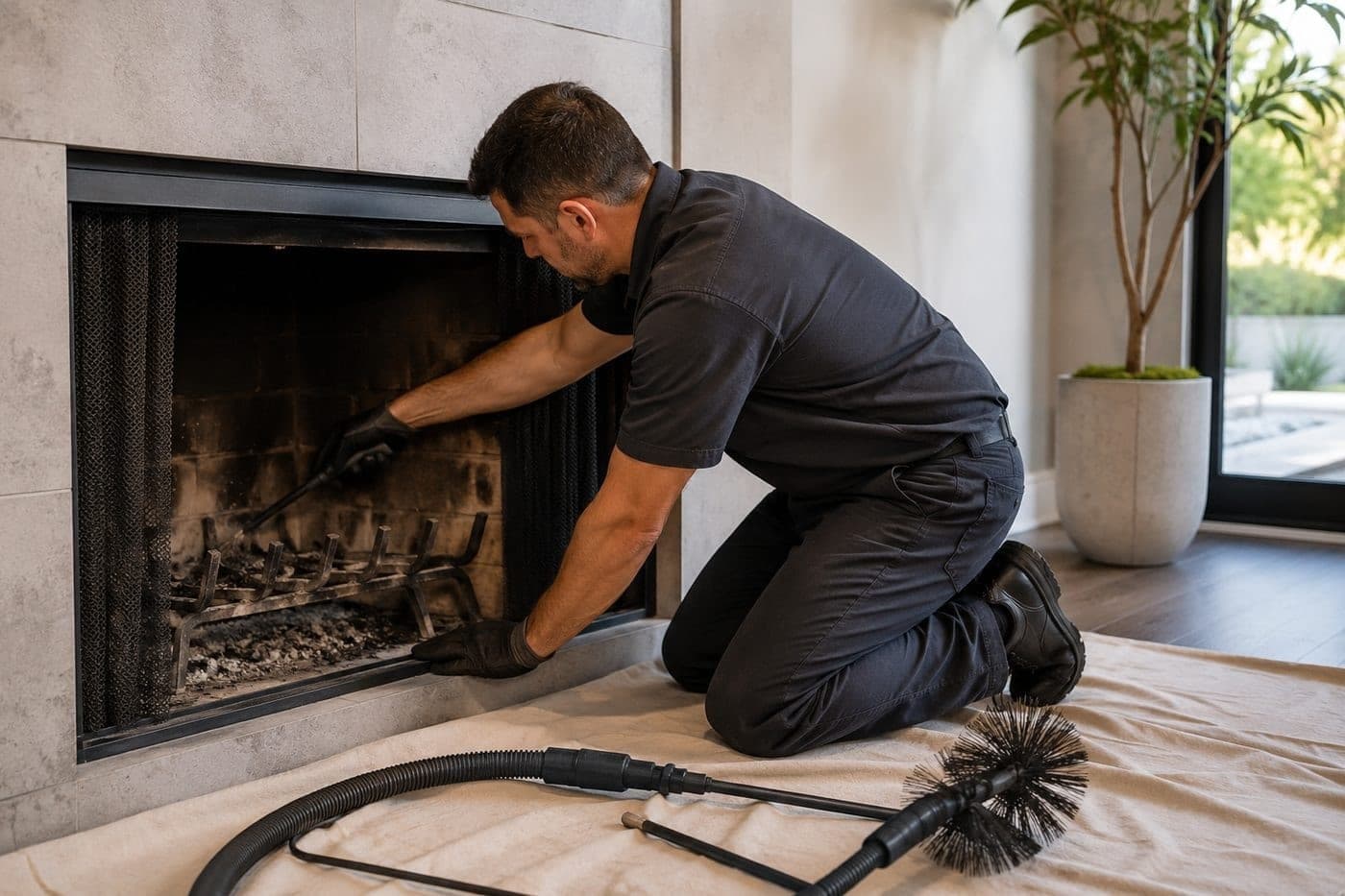
Wood fires are harder on a fireplace than gas flames. They burn hotter in spots, leave creosote and ash behind, and get stoked, poked and loaded with logs that knock against the brick. That's why wood-burning units tend to need different repairs than gas units, even though both fall under our broader fireplace repair service.
Parts we commonly repair
- Firebox: cracked or spalling firebrick, eroded or missing mortar joints, and a damaged hearth floor.
- Refractory panels: the molded liner panels in many factory-built wood fireplaces, which crack and crumble with age and heat.
- Damper: plates that stick, warp, won't seal or won't stay open.
- Smoke chamber: rough or deteriorated surfaces above the damper that can trap creosote and disrupt draft.
- Doors and glass: cracked glass, loose frames and worn gaskets on fireplace doors.
Signs your wood fireplace needs repair
Most fireplace damage is visible if you know where to look. Check with the fireplace cold and the ash cleaned out, using a flashlight.
Worth having looked at
- Cracks you can fit a fingernail into, or brick faces flaking off inside the firebox
- Mortar joints that are recessed, crumbling or gone
- Pieces of brick, mortar or panel material in the ash
- A damper handle that won't move, or a damper that won't close fully
- Smoke rolling into the room instead of going up
- A cold draft or strong smoky smell when the fireplace isn't in use
- Cracked door glass or doors that no longer close tight
Smoke coming back into the room is often an airflow issue rather than a broken part. When that's the main complaint, it helps to understand how fireplace draft repair works, since the fix may be in the damper, smoke chamber or flue rather than the firebox.
Stop using it if you see gaps
Open cracks or missing mortar in the firebox can let heat reach the framing and materials around the fireplace. If you find gaps you can see into, hold off on lighting fires until it has been repaired.
What the visit involves
Look at the whole fireplace
We check the firebox, hearth, damper, smoke chamber and doors, and ask how the fireplace has been behaving when you use it.
Pin down the cause
A crack, a draft problem and a leak can look alike from the room. We trace what's actually causing the symptom before recommending work.
Explain the repair and give a free estimate
You get a plain description of what needs fixing and why, so you can decide before any work starts.
Make the repair
Depending on the problem, that can mean repointing or replacing firebrick, fitting new refractory panels, repairing the damper or smoke chamber, or fixing doors and glass.
Check it before we leave
We confirm the damper operates and the repaired areas are sound, and tell you anything to watch for, such as letting fresh mortar cure before a hot fire.
Keeping a wood fireplace in good shape
Burning dry, seasoned wood, keeping fires to a reasonable size and clearing out ash regularly all reduce wear on the firebox. Having the fireplace and chimney looked at regularly catches loose mortar and damper problems while they're still small.
If a fireplace is beyond sensible repair, or you're tired of hauling wood, there are other routes. Some homeowners replace the unit through a new fireplace installation, and others weigh switching fuels after reading our guide to gas vs wood fireplace conversion. Gas fireplace and gas appliance work is offered too, so you can talk through both options.
Booking a wood-burning fireplace repair
We work on all major fireplace brands, and commercial and property-manager work is offered as well. Call or request an estimate to get started.