On this page
What prefab chimney & chase repair covers
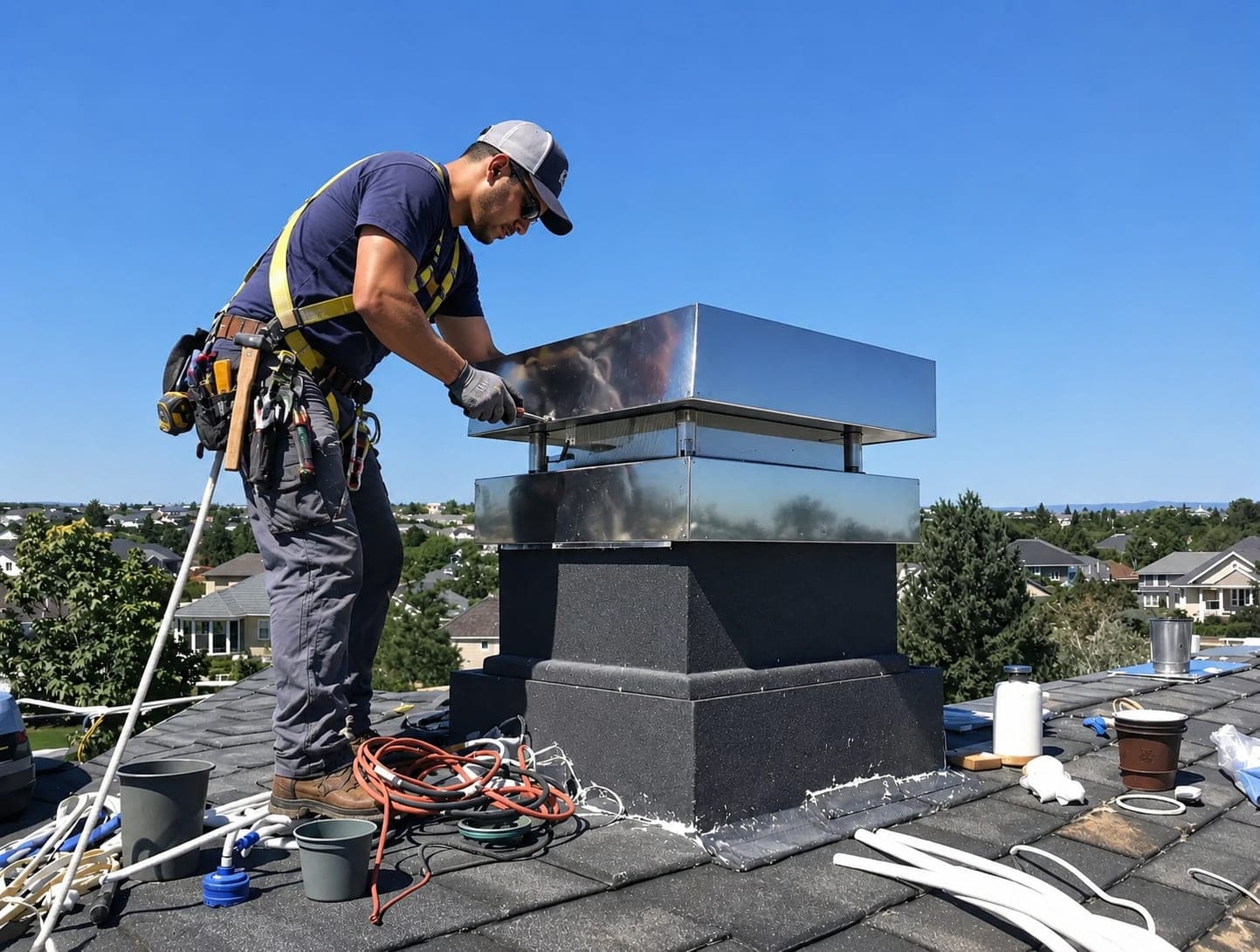
A prefab chimney is not brick. It is a factory-built system with a metal flue pipe that runs from the fireplace or stove up through a wood- or metal-framed enclosure. That enclosure, the chase, is usually finished with the same siding as the house. A metal chase cover seals the top, and a cap sits over the flue opening.
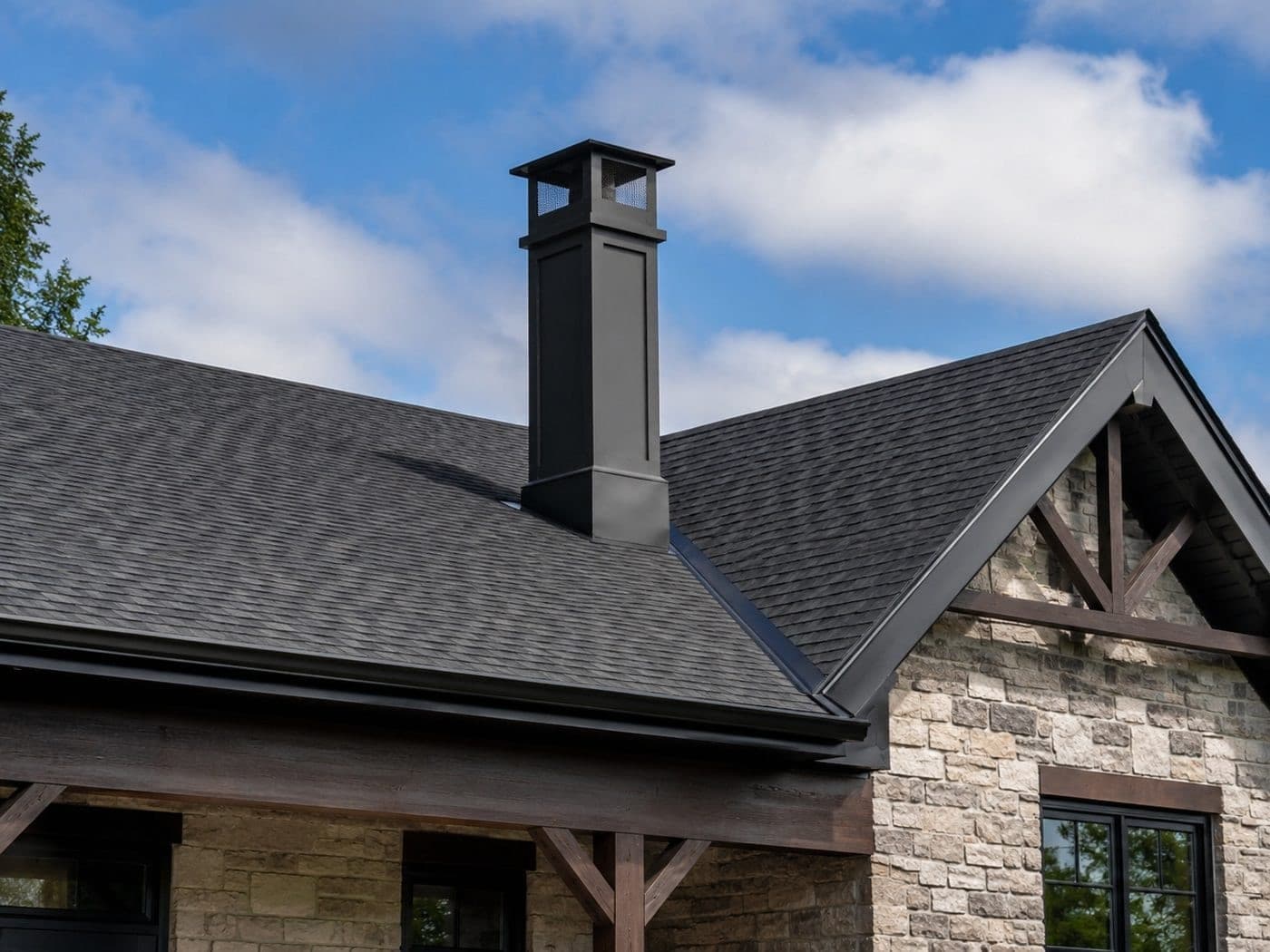
Because the chase is built like a wall, it fails like one. Water that gets past the top or the siding soaks the framing and insulation, rusts the flue pipe, and can drip down to the firebox. Repair means finding where the water or damage starts and fixing that first, then dealing with what it has already affected.
- Chase cover and cap: the metal top that sheds water. A rusted, dented or flat cover that holds water is the most common source of chase leaks. Small problems may be handled with chimney chase cover repair; a badly rusted or poorly fitted cover usually calls for chase cover replacement.
- Siding, trim and flashing: gaps, loose panels and failed seals where the chase meets the roof let water into the framing.
- Framing and sheathing: the wood inside the chase, which can soften or rot after repeated soaking.
- Flue pipe sections: the metal pipe itself, checked for rust, separated joints and damage.
Cap or cover?
The cap guards the flue opening; the chase cover seals the whole top of the chase. They fail differently and are sometimes confused. Our guide to chimney cap vs chase cover explains the difference.
Signs your prefab chimney or chase needs attention
Common signs
- Rust streaks running down the siding below the top of the chase
- Water stains on the ceiling or wall near the fireplace
- Rust inside the firebox, on the damper or on the top of a metal fireplace
- A musty or damp smell from the fireplace, especially after rain
- A chase cover that sags in the middle, holds puddles or has visible rust holes
- Siding on the chase that is loose, buckled, soft to the touch or separating at the corners
- Water dripping into the fireplace during storms
Any one of these is worth checking. Rust streaks and a pooling cover tend to show up first; soft siding and interior stains usually mean water has been getting in for a while.
What the repair visit involves
Step by step
Talk through what you have seen
Where the stains or rust are, when the leak shows up and how the fireplace is used helps narrow down where to look.
Inspect the top of the chase
The chase cover, cap, seams and fasteners are checked for rust, holes, dents and whether the cover sheds water or holds it.
Check the chase walls and roof line
Siding, trim, corners and flashing are looked over for gaps and soft spots that point to water in the framing.
Look at the flue system
The metal flue sections and the fireplace are checked for rust, separated joints and moisture damage from below.
Explain the findings and give a free estimate
You get a plain explanation of what is damaged, what is causing it and what the repair involves before any work starts.
Make the repair
The source of the water is fixed first, then the damaged parts of the chase or flue are repaired or replaced so the system is sound again.
Safety and upkeep for factory-built systems
Hold off on fires if the flue is damaged
If flue sections are rusted through, separated or visibly bent, stop using the fireplace until it has been checked. A damaged metal flue can let heat and smoke reach the wood framing around it.
Factory-built chimneys are designed as matched systems, so replacement flue parts, caps and covers should fit the system they go on rather than being improvised. Beyond that, the most useful upkeep is simple: look at the top of the chase from the ground now and then, watch the siding for rust streaks, and have the system cleaned and inspected before heavy use. Masonry chimneys need different repairs; chimney rebuilding vs tuckpointing covers how those choices are made, and our chimney repair service handles both kinds.
Booking prefab chimney & chase repair
Commercial and property-manager work is offered, and we work on all major brands of factory-built fireplaces and chimneys. Call or request an estimate to get a visit on the schedule.
Free estimates.
Tell us what you are seeing, whether it is rust on the siding or water in the fireplace, and we will take a look.