What Naperville's historic guidelines mean for chimney masonry repair
The Naperville Local Historic District was designated by the City Council in 1986. It currently includes approximately 320 properties, including part of the North Central College campus and 253 homes (source: Local & Federal Historic Districts | Naperville, IL). If your home is one of them, several City rules and guidelines affect how a damaged chimney should be repaired.
Contact City staff before work starts
Naperville's Guide to Building Permits asks owners to contact City staff about any work on a building in the historic district, because additional requirements may apply (source: City of Naperville Guide to Building Permits, revised 10/31/2022). For a historic-district home, check with the City before the repair date is set, and tell us when you request an estimate so the scope can account for anything the City requires.
Where the chimney sits can change the review
Naperville's summary of Certificate of Appropriateness (COA) requirements for its historic district says no COA or review is needed for secondary (interior side) or rear façades not visible from the street. On primary façades, a Historic Preservation Commission COA is required for removing original architectural features without replacement, and for exterior building materials that change reveal or profile or use materials not listed for administrative approval (source: City of Naperville - A Summary of COA Requirements, linked from Regulations for Historic Districts & Landmarked Properties).
In practice, a chimney on a rear wall that can't be seen from the street sits outside COA review. A street-facing chimney is different: removing an original feature without replacing it, or using brick or mortar that changes how the joints and faces look, can require a COA.
Mortar that matches the original
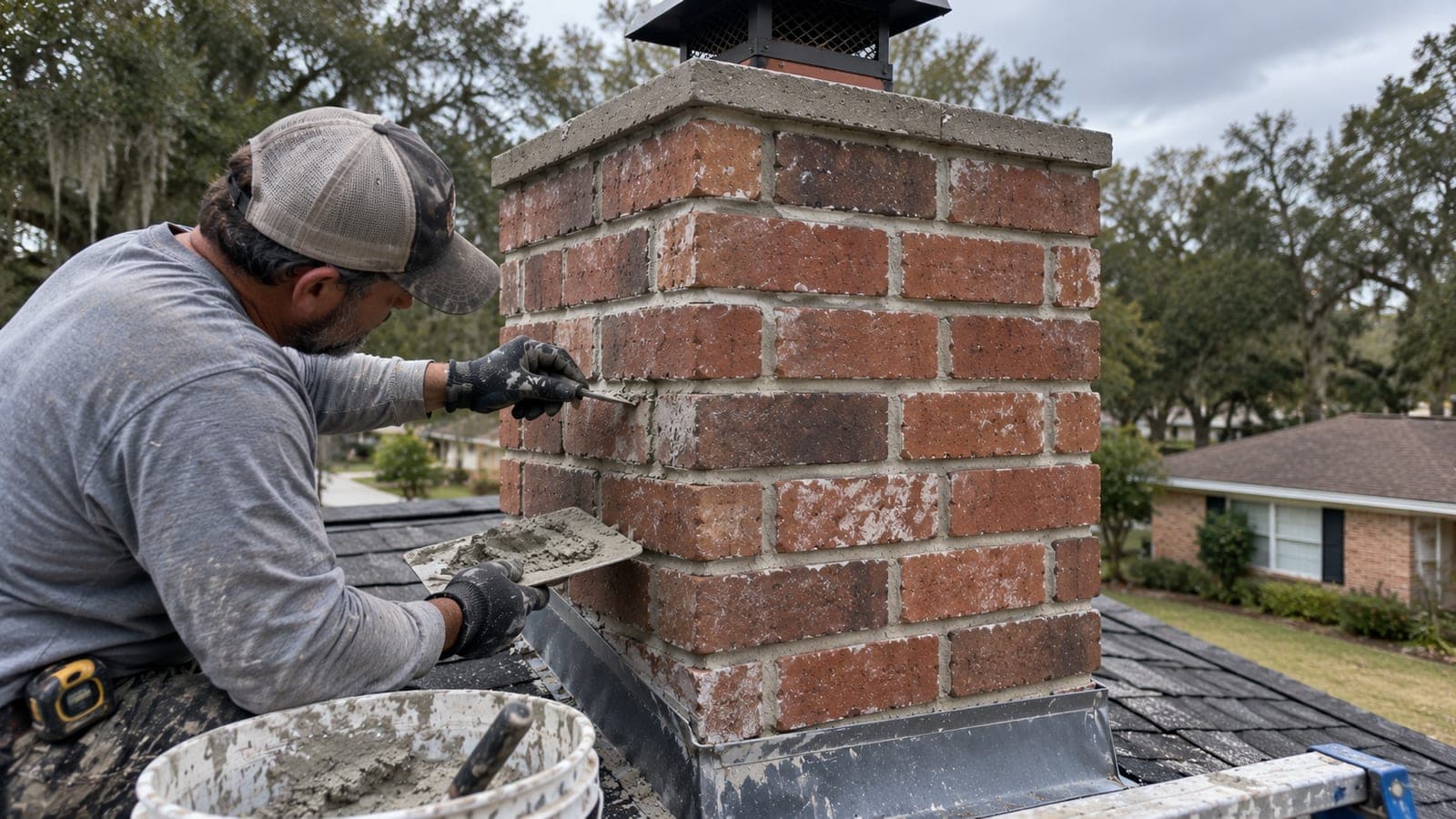
For historic Naperville buildings, the Historic Preservation Commission's design manual says to tuckpoint with mortar matching the original, use soft mortars on most pre-1920 homes, and avoid hard cement-based mortars unless original (source: City of Naperville Historic Preservation Commission - Historic Building Design and Resource Manual, adopted 2010). On an older chimney, the existing mortar needs to be identified before any joints are repointed.
No sandblasting or high-pressure washing
The same manual says to avoid sandblasting or any abrasive cleaning of masonry, and states that brick should never be cleaned with high-pressure water exceeding 300 psi (source: Historic Building Design and Resource Manual, adopted 2010). Cleaning before repair on a historic chimney has to stay gentle.
Older homes: brick, stone and stucco
The manual also states that most Naperville homes built before 1950 have chimneys, historically built of brick or stone and sometimes clad with stucco (source: Historic Building Design and Resource Manual, adopted 2010). If your chimney is stucco-clad, mention it when you get in touch, because cracks in the cladding can hide damaged masonry underneath.
Before you book a repair visit
- Find out whether your home is in the Naperville Local Historic District.
- If it is, contact City staff about the planned work.
- Note whether the chimney is on a street-facing wall or a rear or interior side wall.
- Note whether the chimney is brick, stone or stucco-clad.
- Take photos of fallen brick, open mortar joints or crown cracks to share when you request an estimate.
Chimney masonry repair in brief
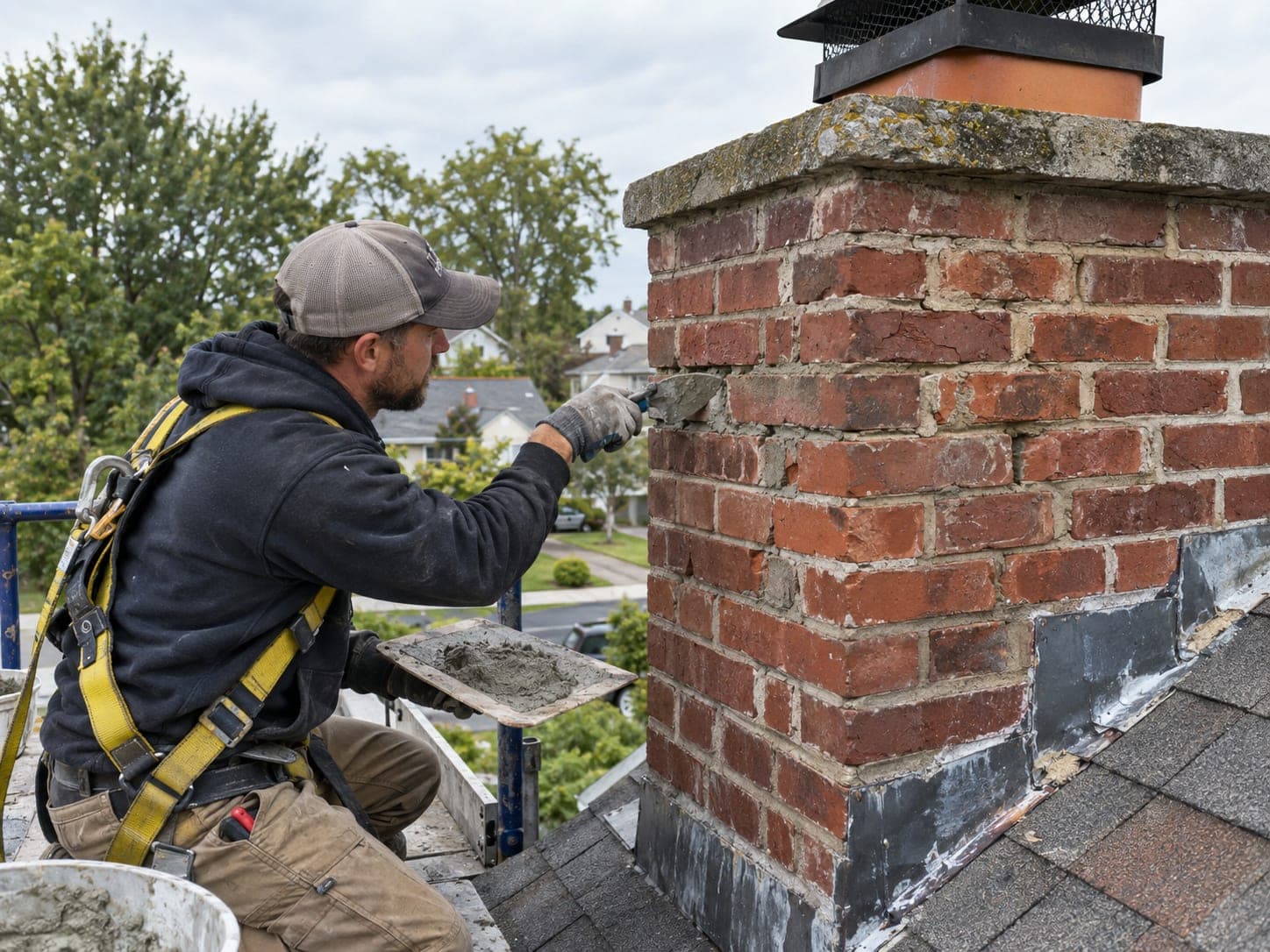
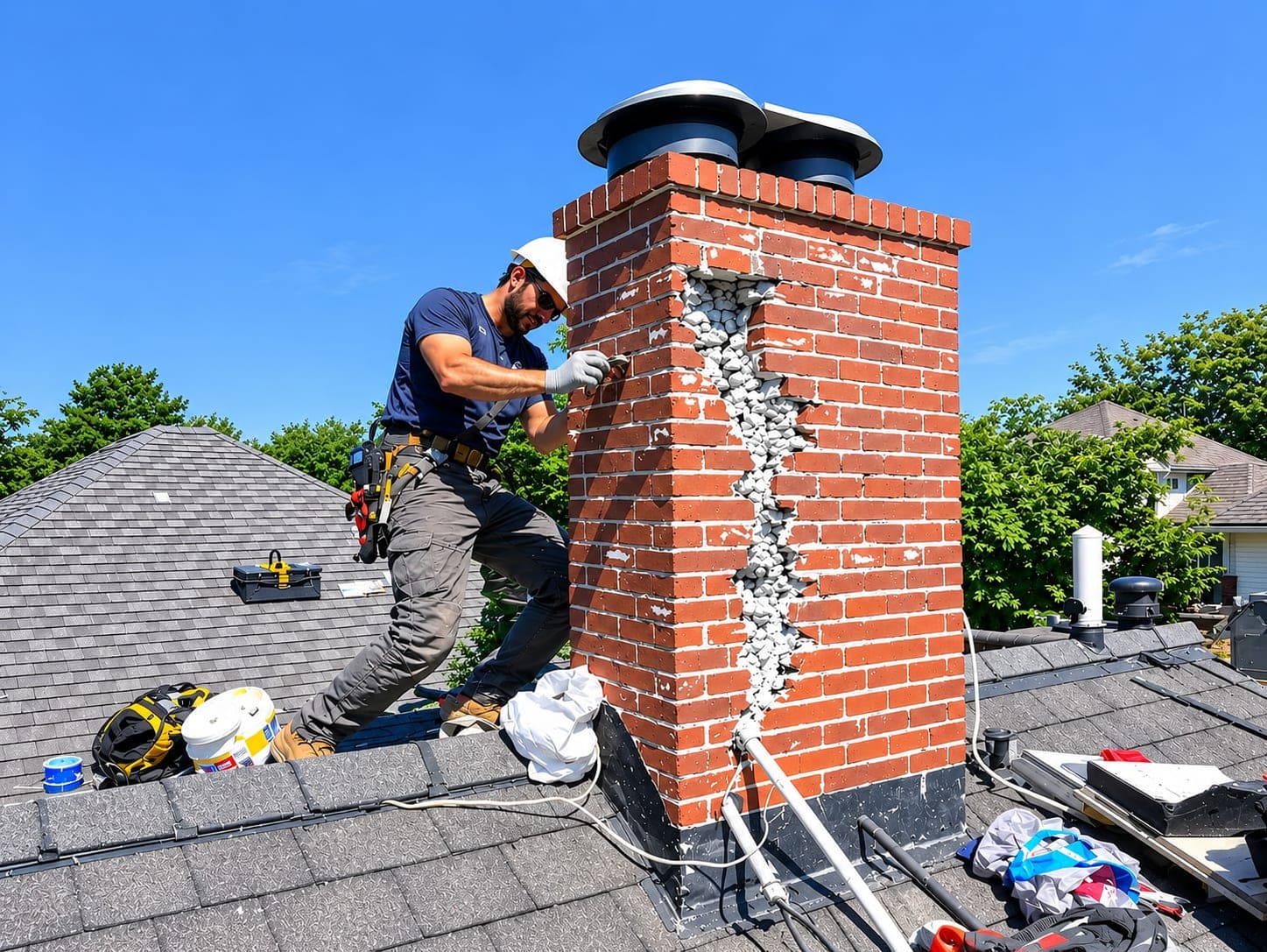
Masonry repair restores the brick or stone structure of a chimney stack. It covers cracked or spalling brick, deteriorated mortar joints, a damaged chimney crown and loose masonry near the top of the stack, where weather does the most harm. The goal is to stop water from getting into the masonry and keep the stack sound. Repairs range from repointing joints and replacing individual bricks to resealing or rebuilding a cracked crown. Our chimney masonry repair service covers the full scope.
When masonry repair is the right call, and when it isn't
- Masonry repair fits when the problem is in the brick, stone, mortar or crown: crumbling joints, cracked or flaking brick, or a cracked chimney crown.
- If water is getting in where the chimney meets the roof, the flashing may be the cause, and leak or flashing repair may fit better. Chimney repair in Naperville covers those broader fixes.
- When large sections of the stack are loose or leaning, a partial or full rebuild may be needed instead of spot repairs.
- A damaged chimney cap is usually replaced rather than repaired as masonry. Metal-topped prefab chimneys use a chase cover instead. Read chimney cap vs chase cover to tell which one you have.
Book your repair
Learn how chimney masonry repair works from inspection to finished joints, or look over everything else we handle in Naperville, then request an estimate.
Free estimates.
Get in touch to describe the damage and set up a visit.
Sources (3)
The sources of the Naperville facts on this page.
- 1Local & Federal Historic Districts | Naperville, IL
- 2City of Naperville Historic Preservation Commission - Historic Building Design and Resource Manual (adopted 2010)
- 3City of Naperville Guide to Building Permits (revised 10/31/2022); City of Naperville - A Summary of COA Requirements (COA Requirements Table), linked from Regulations for Historic Districts & Landmarked Properties; City of Naperville Historic Preservation Commission - Historic Building Design and Resource Manual (adopted 2010)