What Naperville's historic design manual means for chimney repair
The City of Naperville Historic Preservation Commission adopted a Historic Building Design and Resource Manual in 2010. It states that most Naperville homes built before 1950 have chimneys, historically built of brick or stone and sometimes clad with stucco (source: City of Naperville Historic Preservation Commission - Historic Building Design and Resource Manual, adopted 2010).
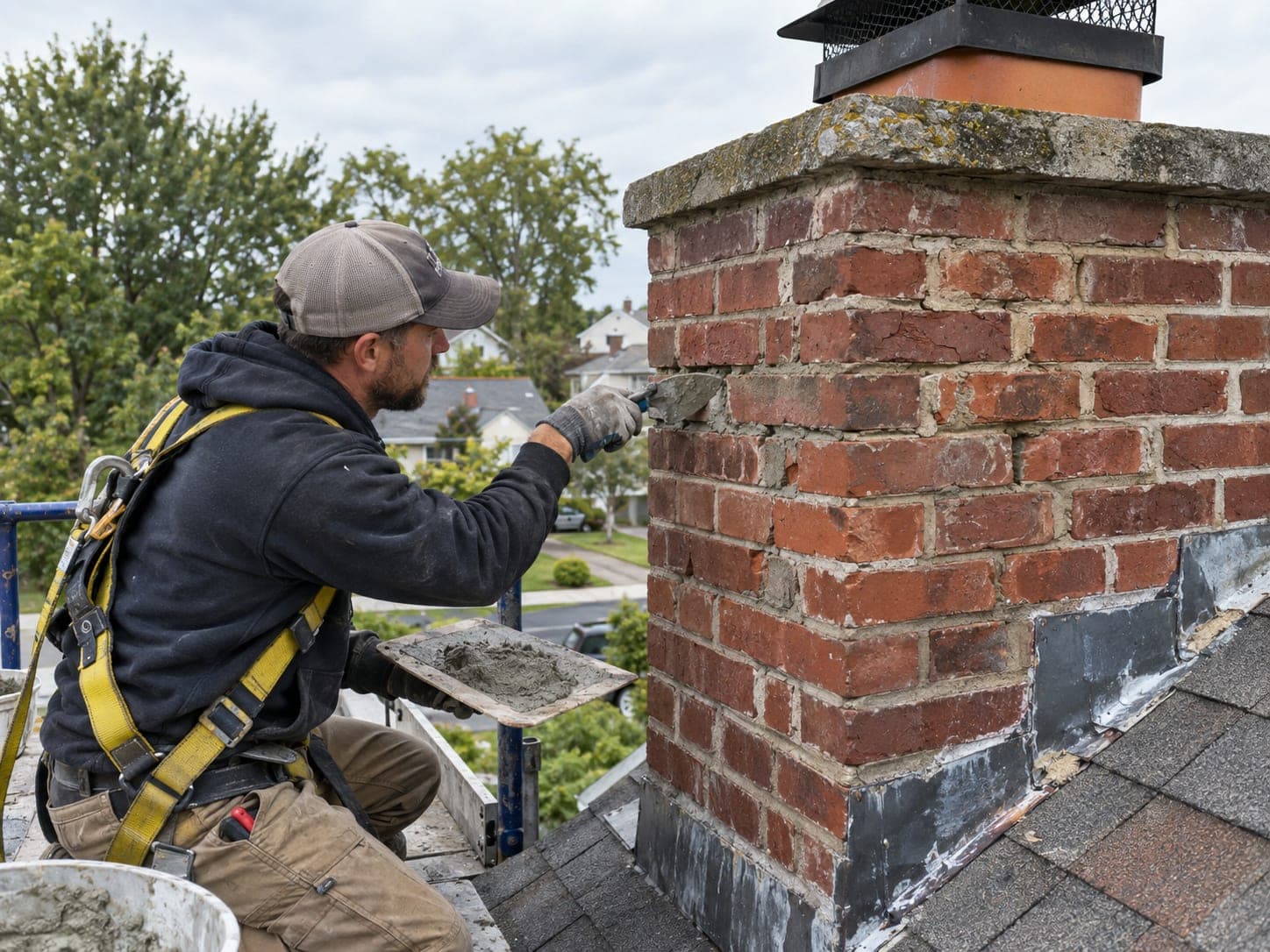
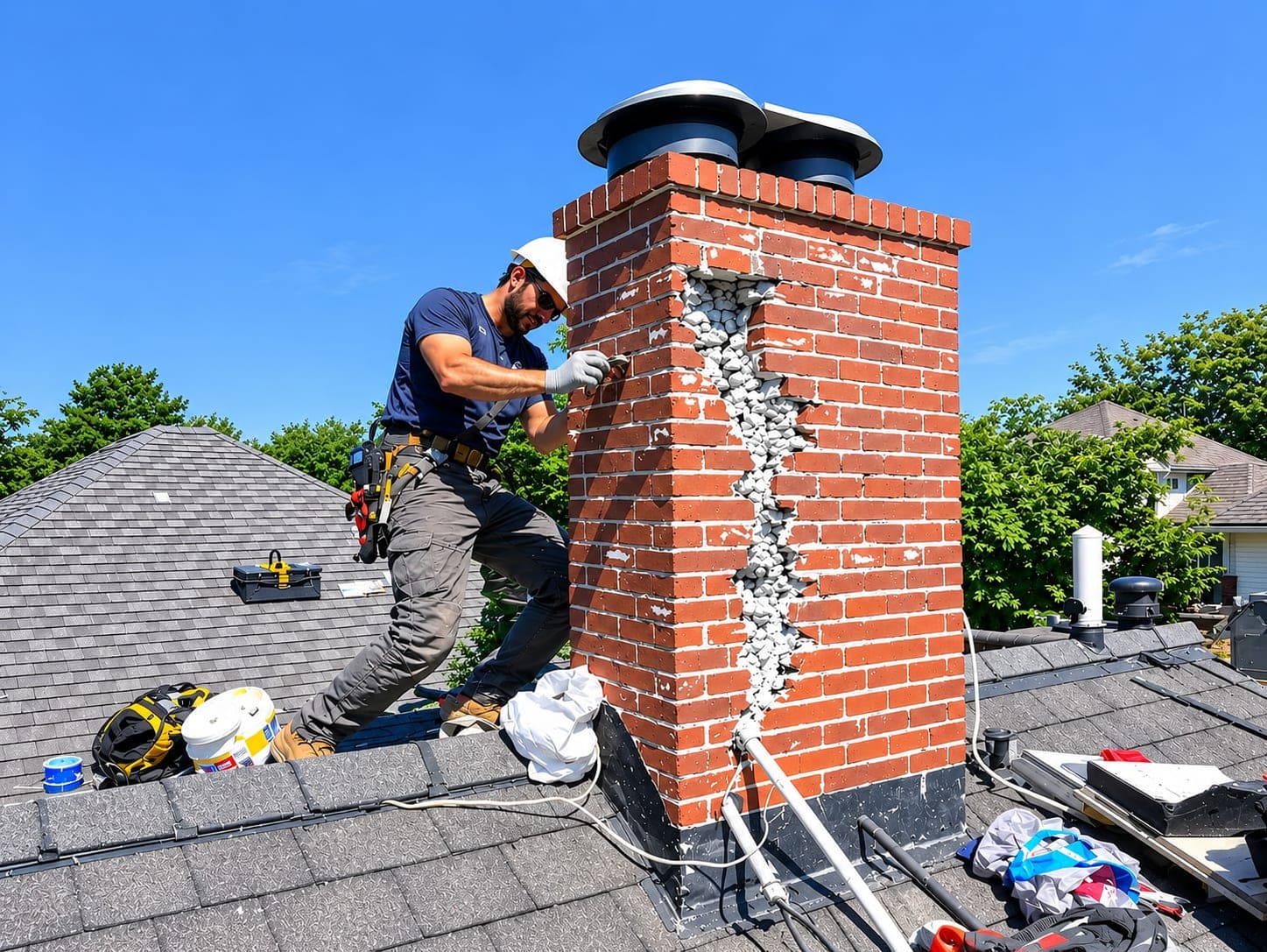
For owners of those homes, chimney repair is mostly masonry work: brick chimney repair, chimney mortar repair, crown repair and flashing. Stucco cladding needs particular attention, because a crack in the stucco can let water into the brick or stone behind it, where it isn't visible from the roof. A useful inspection checks both the surface and what is underneath before any repair is quoted.
Flashing: metal, overlapped and stepped
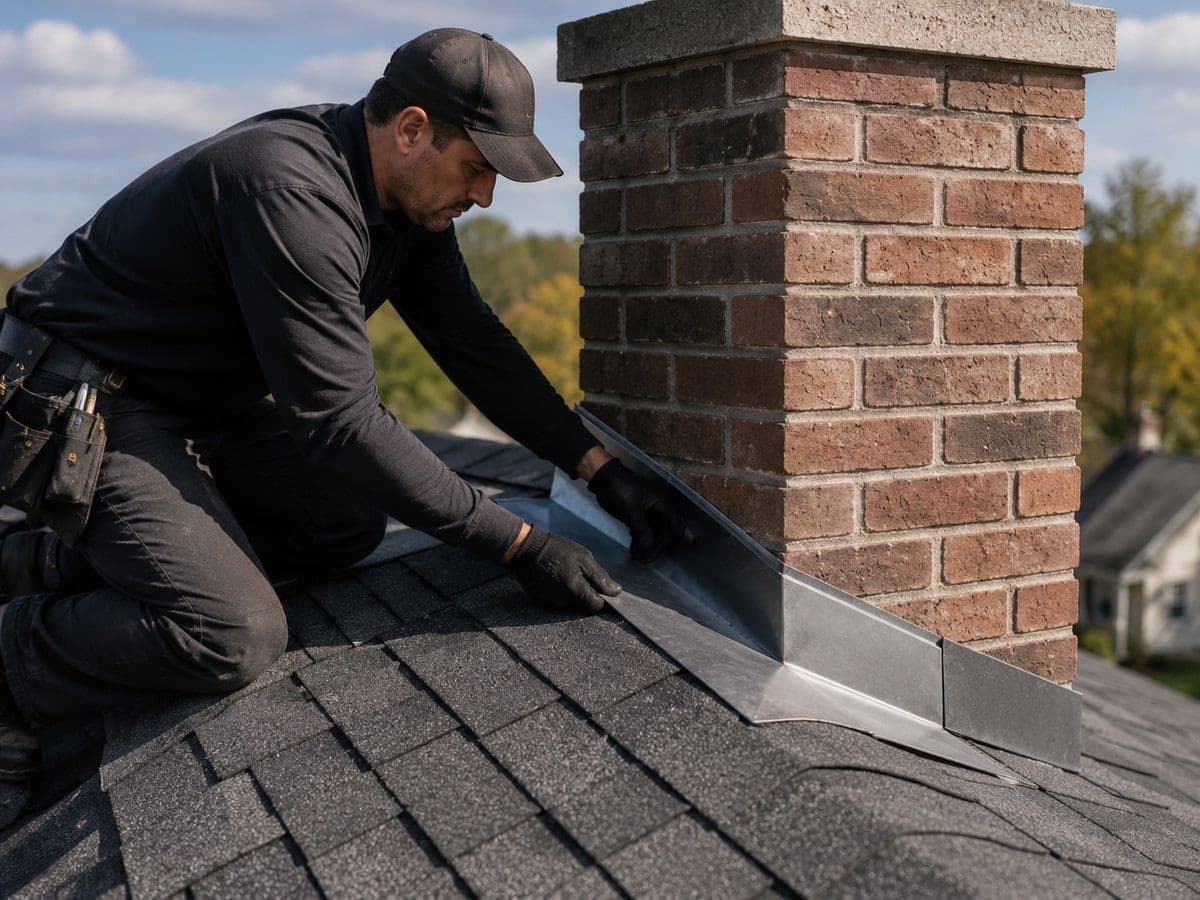
The same manual encourages metal chimney flashing instead of caulk or bituminous coating, base and cap flashing that overlap by at least 4 inches, and step flashing instead of box flashing (source: City of Naperville Historic Preservation Commission - Historic Building Design and Resource Manual, adopted 2010).
This affects the repair itself. When a leak traces to the joint between the chimney and the roof, the quick fix is often a bead of sealant or a coat of tar over the old flashing. The manual points the other way. When we replace failed flashing, we can install metal step flashing along the sloped sides, with cap flashing lapped over the base flashing by at least 4 inches. Ask for that in your estimate so you know what you're getting.
Questions to ask about a flashing repair
- Is the new flashing metal, or is it a sealant or coating?
- Is it step flashing along the sloped sides of the roof, or one bent box piece?
- How far does the cap flashing overlap the base flashing?
- Where does the cap flashing tie into the chimney: a cut mortar joint, or surface sealant only?
Rebuilding with the chimney's own brick
The manual also encourages rebuilding chimneys with salvaged brick from the existing chimney. It accepts rebuilding to match the original design and discourages removing or altering a chimney that is a significant feature of the home (source: City of Naperville Historic Preservation Commission - Historic Building Design and Resource Manual, adopted 2010).
When the top courses of a chimney have to come down, following that guidance means taking the brick down by hand and setting it aside. The sound bricks are cleaned and reused, and the chimney's height, shape and detailing are recorded first so the rebuilt section matches. Taking a deteriorated chimney down below the roofline is sometimes suggested as a simpler answer. The manual discourages that where the chimney is a significant feature of the house.
| Feature | Common shortcut | What the manual encourages or accepts |
|---|---|---|
| Leaking chimney-to-roof joint | Caulk or bituminous coating over old flashing | Metal flashing, base and cap overlapping by at least 4 inches |
| Flashing style | Box flashing | Step flashing |
| Damaged upper brick courses | New brick of a different look | Rebuilding with salvaged brick from the existing chimney |
| Chimney in poor shape | Removing or altering the chimney | Rebuilding to match the original design |
Leaking chimney-to-roof joint
- Common shortcut
- Caulk or bituminous coating over old flashing
- What the manual encourages or accepts
- Metal flashing, base and cap overlapping by at least 4 inches
Flashing style
- Common shortcut
- Box flashing
- What the manual encourages or accepts
- Step flashing
Damaged upper brick courses
- Common shortcut
- New brick of a different look
- What the manual encourages or accepts
- Rebuilding with salvaged brick from the existing chimney
Chimney in poor shape
- Common shortcut
- Removing or altering the chimney
- What the manual encourages or accepts
- Rebuilding to match the original design
What affects chimney repair in Naperville
- Naperville's Historic Building Design and Resource Manual, adopted by the Historic Preservation Commission, states that most Naperville homes built before 1950 have chimneys, historically built of brick or stone and sometimes clad with stucco. Source: City of Naperville Historic Preservation Commission - Historic Building Design and Resource Manual (adopted 2010).
- Naperville's Historic Building Design and Resource Manual encourages metal chimney flashing instead of caulk or bituminous coating, base and cap flashing that overlap by at least 4 inches, and step flashing instead of box flashing. Naperville's Historic Building Design and Resource Manual encourages rebuilding chimneys with salvaged brick from the existing chimney, accepts rebuilding to match the original design, and discourages removing or altering a chimney that is a significant feature of the home. Source: City of Naperville Historic Preservation Commission - Historic Building Design and Resource Manual (adopted 2010).
Chimney repair in brief
Chimney repair covers the parts that keep water out and smoke moving up: the crown, the cap, the flashing where the chimney meets the roof, the brick and mortar joints, the flue liner and the damper. On a factory-built chimney it also covers the chase and its cover. The job starts with an inspection to find where the damage begins, so the repair addresses the cause rather than patching the symptom. Our chimney repair service page explains each repair and when it's needed.
When a different job fits better
- If the main problem is loose brick, eroded joints or spalling faces across the chimney, the work is mostly masonry. Read about chimney masonry repair for homes in Naperville.
- If water is getting in at the very top and you aren't sure whether you need a cap or a full cover, our guide to chimney cap vs chase cover explains the difference before you book chimney cap repair or chase cover replacement.
Booking a repair
Same-day visits are available where the schedule allows, emergency calls are accepted, and 24-hour service runs Sunday–Friday. To understand the steps before we arrive, read how chimney repair works. For chimney, fireplace and vent work beyond repairs, browse everything we handle in Naperville.
Request an estimate
Call or get in touch to describe the problem: a leak, loose brick, a damaged cap or a draft issue.
Sources (1)
The sources of the Naperville facts on this page.
- 1City of Naperville Historic Preservation Commission - Historic Building Design and Resource Manual (adopted 2010)