What Naperville's code update and design manual mean for a new liner
Two City sources bear on relining a flue in Naperville. One sets which code editions apply to plans submitted now. The other covers how the City's preservation guidance treats liners, creosote and chimneys that no longer heat the house.
2024 codes for plans submitted on or after April 1, 2026
Under Ordinance 26-010 (February 2026), Naperville reviews all plans submitted on or after April 1, 2026 under the 2024 International Residential Code, 2024 International Fuel Gas Code, 2024 International Mechanical Code and 2024 International Fire Code, among others, with local amendments in the Naperville Municipal Code (source: Building Permits | Naperville, IL).
For a homeowner, this sets the rulebook. If your liner project goes to the City for review, it is checked against the 2024 editions plus Naperville's own amendments, not older editions. That matters most when the liner serves a gas fireplace or another gas appliance, because the fuel gas code is one of the adopted codes. Whether your particular job needs a permit is a question to put to City staff before work starts.
Liners, creosote and chimneys no longer in use
Naperville's Historic Building Design and Resource Manual encourages capping chimneys no longer used for heating, cleaning chimneys in regular use to prevent creosote build-up, and notes that flue liners can be applied to prevent creosote build-up (source: City of Naperville Historic Preservation Commission - Historic Building Design and Resource Manual, adopted 2010).
In practice, that guidance sorts chimneys by how they're used:
- Still used for heating: keep the chimney on a regular cleaning schedule. A new flue liner can be part of the plan to limit creosote build-up, but it does not replace sweeping.
- Retired from heating: the manual points toward capping rather than relining. Chimney cap installation for homes in Naperville covers that job.
- Topped by a metal chase instead of masonry: the right cover depends on the chimney type, and the difference between a chimney cap and a chase cover explains which one applies.
Chimney liner installation in brief
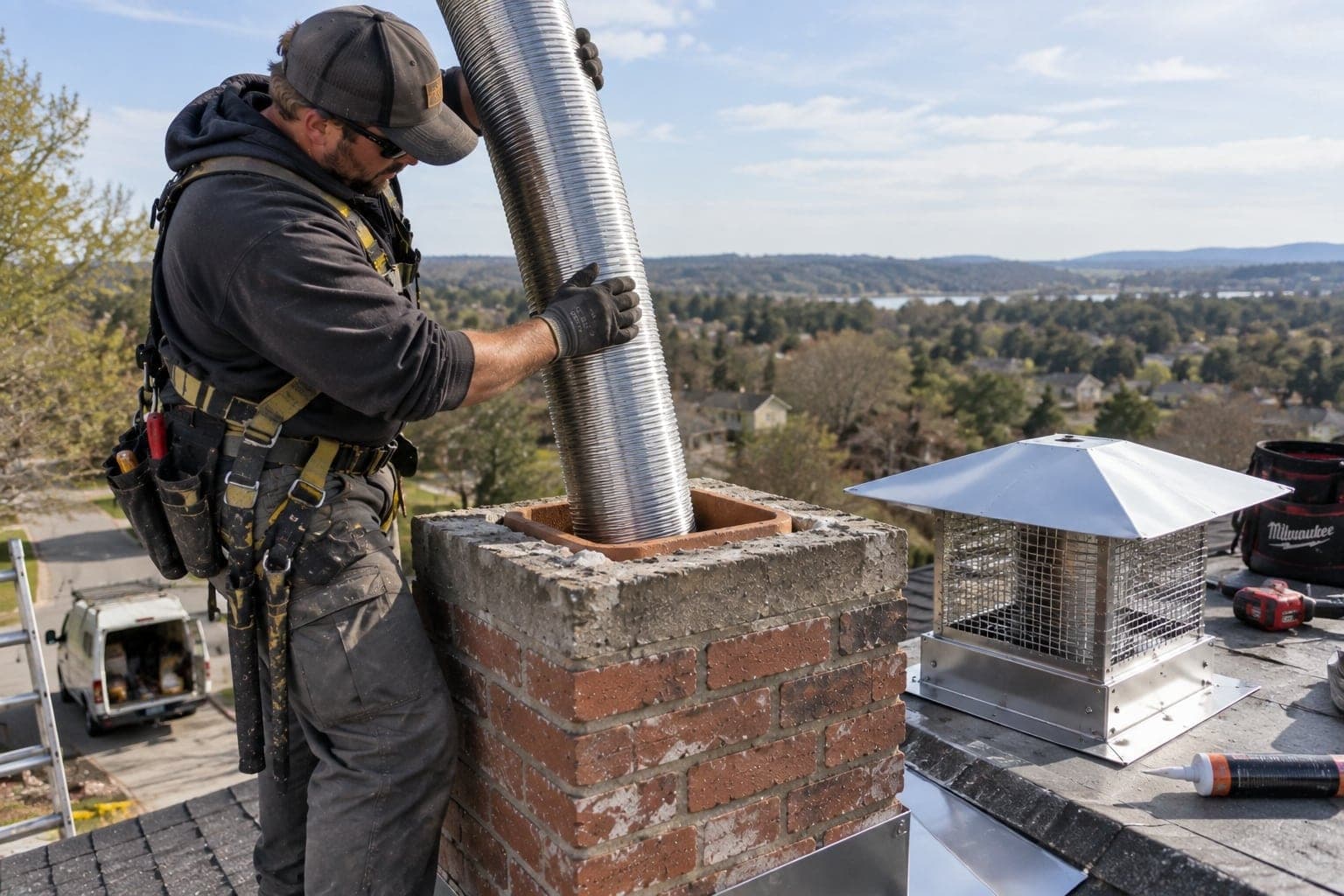
Installing a liner means fitting a new flue liner inside the chimney so smoke, gases and heat travel up a sound, correctly sized channel instead of against cracked tile or bare masonry. Many relining jobs use a stainless steel chimney liner run from the appliance or smoke chamber to the top of the chimney, connected and sealed at both ends. The existing flue is cleaned and checked first so the new liner goes into a clear chimney. Measuring, sizing and the steps of the install are covered in our chimney liner installation service overview.
When a new liner is the right job, and when it isn't
| What you're dealing with | Usually the better fit |
|---|---|
| Cracked, missing or crumbling flue tiles, or a flue that doesn't suit a new appliance | Chimney liner installation |
| A liner that is mostly sound with limited, localized damage | Chimney liner repair |
| Heavy creosote in a flue that is otherwise in good shape | Chimney sweep and creosote removal |
| A chimney you no longer use for heating | A chimney cap |
| You don't know what condition the flue is in | A chimney camera inspection before deciding |
Planning your liner project in Naperville
Before booking, it helps to know how chimney liner installation works from start to finish. For caps, repairs, inspections and fireplace work, our chimney and fireplace services in Naperville cover the rest of what we do in the area.
Request an estimate
Gas fireplace and gas appliance work is offered, and we work on all major brands.
Sources (1)
The sources of the Naperville facts on this page.
- 1Building Permits | Naperville, IL; City of Naperville Historic Preservation Commission - Historic Building Design and Resource Manual (adopted 2010)